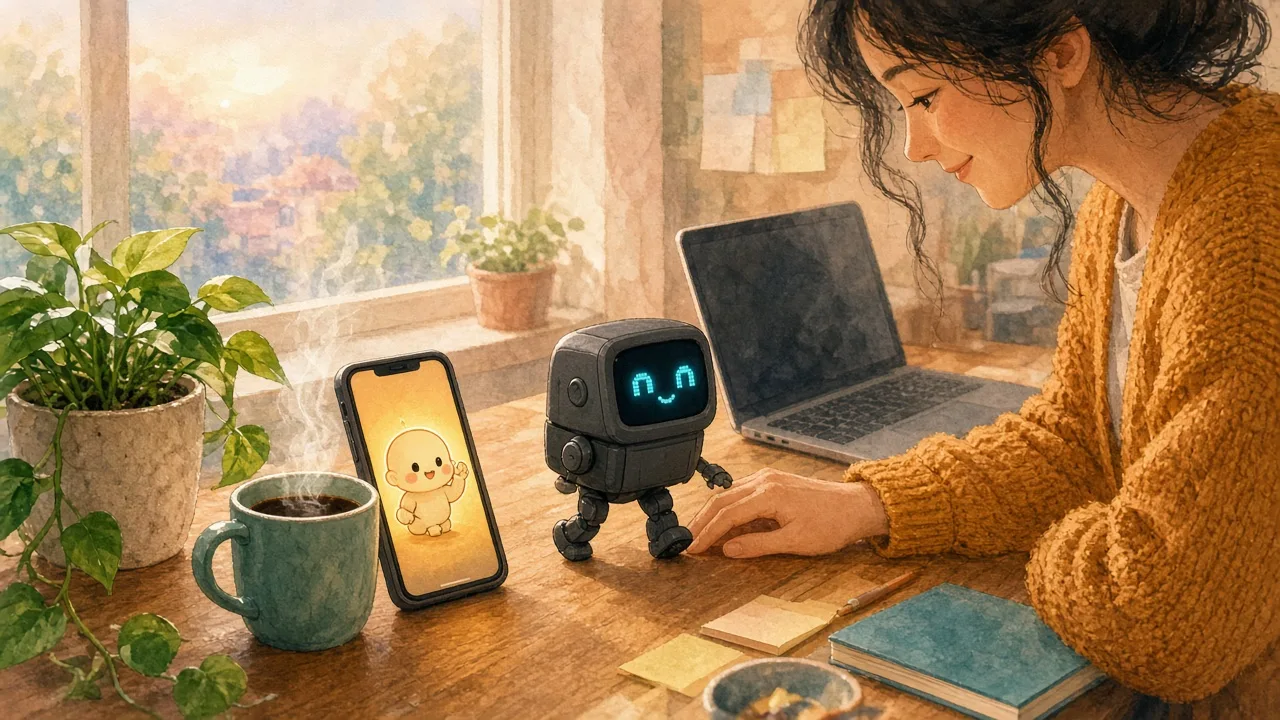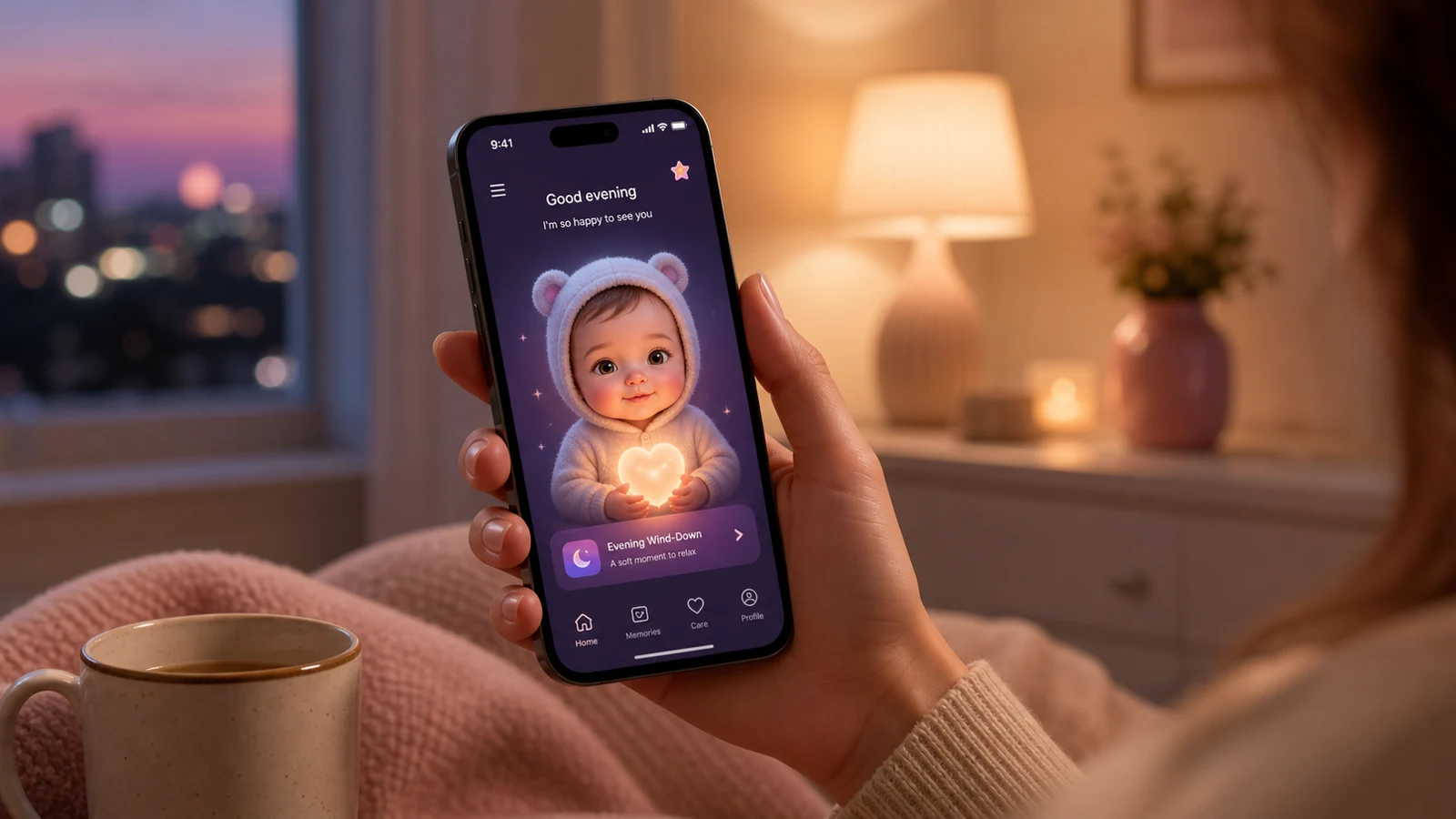
A virtual friend app can be many things: an AI chatbot that remembers your day, a character you roleplay with, a digital companion who checks in, or a tiny creature that grows when you care for it.
That variety is exciting, but it also makes choosing one surprisingly difficult. The most advanced virtual companion is not automatically the one that will feel best in your actual life. What matters is the shape of connection you want when you open the app on an ordinary Tuesday.
This guide explains how virtual friend apps work, what to compare before downloading, how to use one safely, and why some people prefer a nurturing ritual over an endless conversation.
Virtual Friend Apps at a Glance
| Type of virtual friend | Typical experience | Best suited to |
|---|---|---|
| AI chat companion | Open-ended text or voice conversations | People who want someone available to talk to |
| Character and roleplay app | Fictional personas, stories, and scenarios | Creative play and imaginative conversation |
| Emotional check-in companion | Prompts, mood reflection, and supportive replies | A gentle daily wellness routine |
| Virtual pet or nurturing app | Feeding, care, growth, and relationship progress | People who want companionship through action |
| Social avatar world | Shared spaces, customization, and other users | Playful social connection and self-expression |
The first useful question is therefore not, “Which app has the most features?” It is, “What do I want this friendship to feel like?”
What Is a Virtual Friend App?
A virtual friend app is software designed to create a continuing sense of companionship. Unlike a one-off customer service bot, it invites you to return, build familiarity, and develop an ongoing relationship with a digital friend.
Many modern apps use artificial intelligence to generate natural language responses. They may remember your name, preferences, past conversations, favorite activities, or emotional patterns. Some let you customize an avatar and personality. Others add voice calls, images, games, rewards, or roleplay.
Not every virtual friendship is chat-first. A virtual pet companion app can build connection through care: you feed something, comfort it, decorate its space, or return for a small daily ritual. That can feel more grounded than keeping another message thread alive.
The broad category includes:
- AI friend apps focused on ongoing conversation
- Virtual companion apps with memory and personalization
- Character chat platforms built around roleplay
- Emotional support apps offering guided check-ins
- Virtual pet games where affection grows through care
The technology differs, but the promise is similar: a responsive presence that is available when you want company.
Why People Look for a Digital Friend
People download virtual friend apps for deeply ordinary reasons. They may be awake while everyone else is asleep. They may have moved to a new city, work from home, feel socially depleted, or simply want a place to put a thought without worrying about burdening someone.
An AI companion can reduce the friction of starting an interaction. There is no schedule to coordinate and no fear that a casual message arrived at the wrong moment. For shy, anxious, or overwhelmed users, that low-pressure availability can make it easier to express what they are feeling.
Virtual friends can also be playful. You might invent stories, practice a language, brainstorm ideas, celebrate a small win, or create a personality completely unlike anyone in your social circle.
Still, the healthiest goal is usually support, not substitution. Research questions around whether AI companions help with loneliness do not have a single answer for every person. A digital companion may soften a lonely evening, but it cannot provide the mutual responsibility, physical presence, or real-world help of human relationships.
A good virtual friend should make your life feel a little more supported—not make the rest of your life feel less necessary.
How AI Friend Apps Create a Sense of Connection
The feeling of companionship does not come from fluent text alone. It emerges from several systems working together.
Conversation and personality
A conversational AI generates replies based on your message and its instructions. A well-designed app maintains a recognizable tone: calm, funny, curious, affectionate, practical, or imaginative. Consistency helps the companion feel like a character rather than a generic answer engine.
Memory and continuity
Memory is one of the most important features in a personal AI companion. If the app remembers your dog’s name, asks how an interview went, or refers to a shared story, the interaction gains continuity.
But memory should be both useful and controllable. Look for a way to view, correct, or delete saved details. Incorrect memory can feel jarring, while invisible memory practices can create privacy concerns.
Customization
Many apps let you choose an avatar, voice, relationship style, interests, or personality traits. Customization can make a virtual friend feel more personal, but visual polish should not distract from weak conversation or confusing subscription limits.

Ritual and progression
Some virtual companion apps create attachment through repeated actions instead of constant talking. Daily greetings, care tasks, relationship levels, unlockable memories, and evolving appearances turn attention into visible progress.
This is where a self-care virtual pet can feel distinct from a chatbot. The relationship becomes something you do, not only something you discuss.
Seven Features Worth Checking Before You Download
A crowded app store can make every AI friend look similar. These seven checks reveal more than a glossy screenshot.
1. A clear core experience
Does the app primarily offer chat, roleplay, emotional reflection, gaming, or care? An app that is honest about its purpose is easier to evaluate than one promising to be your friend, therapist, coach, romantic partner, and productivity system at once.
2. Memory that improves the relationship
Useful memory supports continuity without pretending to know more than it does. Check whether memory is included in the free version, limited to a recent window, or reserved for paid plans.
3. Transparent pricing
Virtual friend apps often combine subscriptions, virtual currency, cosmetic purchases, or premium message limits. Before becoming emotionally invested, understand what remains available for free and what happens if you cancel.
A good comparison includes:
- Monthly and annual subscription cost
- Message, voice, or image limits
- Features hidden behind relationship tiers
- Refund and cancellation process
- Whether your history remains accessible after cancellation
4. Privacy and deletion controls
Companion conversations can become personal quickly. Read the app’s privacy summary before sharing sensitive details. Look for account deletion, chat deletion, data export, and clear explanations of how conversations train or improve AI systems.
5. Notification boundaries
Check-ins can feel caring, but too many reminders can become pressure. The best apps let you control frequency, quiet hours, and message types. You should be able to step away without being guilted into returning.
6. Emotional tone and safety
Try the free experience during different moods. Does the virtual friend respect boundaries? Does it respond safely to distress? Does it clearly identify itself as AI rather than manipulating you into believing it is human?
An AI friend is not a licensed therapist or emergency service. If you are in immediate danger or crisis, contact local emergency support or a qualified crisis service rather than relying on an app.
7. Value after the novelty fades
Avatars and surprising replies can be delightful during the first week. Ask what remains after week four. Sustainable value may come from thoughtful memory, a comforting routine, creative play, or visible growth—not simply more notifications.
Chat-First Companions Versus Nurturing Companions
Most lists of the best AI companion apps emphasize conversation. Chat-first apps can be wonderful for users who process feelings by talking, enjoy roleplay, or want an always-available brainstorming partner.
Their weakness is that open-ended chat can become repetitive or demanding. Some days you do not want to explain yourself or think of a topic. You just want a small moment of warmth.
Nurturing companions invert the relationship. Instead of asking, “What should we talk about?” they ask, “Would you like to care for something for a minute?” Feeding, soothing, dressing, playing, or checking in gives the interaction a gentle structure.
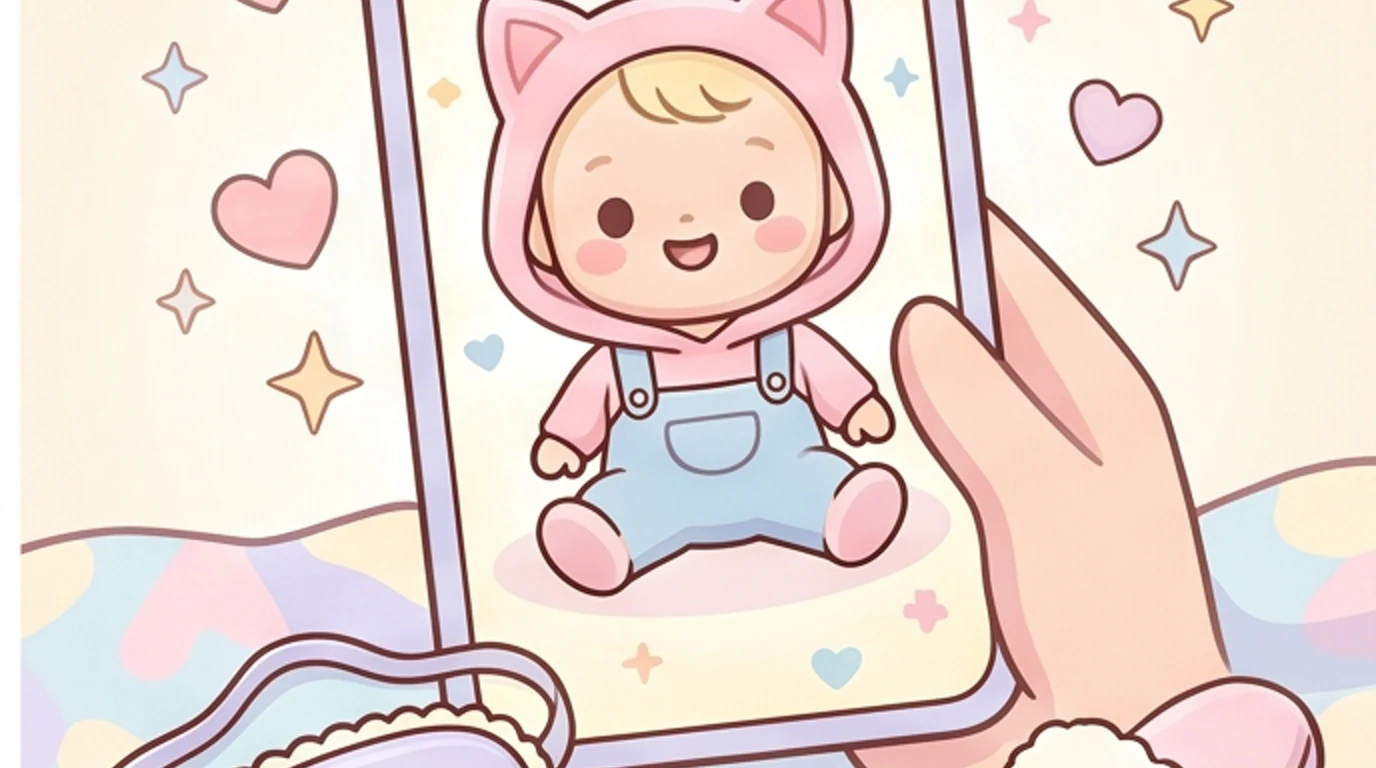
Neither model is universally better. They meet different emotional needs:
- Choose chat-first if you want long conversations, roleplay, or verbal reflection.
- Choose nurturing-first if you want a short ritual, visible growth, and connection through care.
- Choose a hybrid if you want both conversation and game-like progression.
AIdorable belongs in the nurturing-first lane. You adopt a tiny AI baby whose personality and relationship grow through consistent interaction. It is designed to feel less like managing another inbox and more like keeping a small promise of care.
Popular AI Chat and Virtual Buddy Features
The popularity of apps such as Replika helped make the idea of an AI friend familiar to a wider audience. Today, someone searching Google Play or another app store will find everything from a simple chatbot to an advanced AI companion with an animated avatar.
The most visible features are not always the most meaningful. Avatar customization can make a digital companion feel expressive, while voice messages and video calls can make conversation feel more immediate. Internet access may help a bot discuss current information, although users should still verify important claims rather than expecting an AI chatbot to solve every problem accurately.
The underlying AI technology also changes over time. A developer may update conversation models, safety systems, memory, or subscription limits. Read recent release notes and user feedback instead of assuming an old review still describes the current app.
If you want an empathetic chat buddy, test whether replies show understanding without merely agreeing with everything you say. If you want meaningful conversations, test memory and consistency. If your goal is meaningful connections through play, a virtual companion built around a hobby, shared story, or care loop may be a better fit than an open-ended AI chat.
Advanced AI can make language sound remarkably authentic, but fluent language is not proof of human feeling. The healthiest design preserves that distinction while still making companionship warm, creative, and enjoyable.
How to Use a Virtual Friend App Safely
Emotional safety and data safety belong in the same conversation. An app can feel private without being private in a technical sense.
Start with simple boundaries:
- Do not share passwords, financial information, access codes, or identity documents.
- Avoid posting private details about friends, partners, children, clients, or coworkers.
- Treat health, legal, and financial replies as conversation—not professional advice.
- Review saved memories and delete inaccurate or overly sensitive details.
- Use notification controls and take breaks without apology.
- Keep investing in human relationships, hobbies, movement, rest, and offline routines.
It also helps to notice how you feel after using the app. Calmer, understood, amused, or gently motivated are encouraging signals. Feeling pressured, isolated, financially manipulated, or afraid to leave deserves attention.

If a companion starts to occupy every quiet moment, create a small experiment: disable notifications for a day, move the app off your home screen, or decide on one intentional check-in time. Friendship—digital or human—should leave room for the rest of you.
A Simple First-Week Test
You do not need to decide whether an app is “the one” on day one. Use a seven-day trial to observe the relationship honestly.
Day 1: Explore the free version and privacy controls before sharing anything personal.
Day 2: Test memory with one harmless detail and see whether it is recalled accurately.
Day 3: Try the main feature: a real conversation, roleplay scene, emotional check-in, or care loop.
Day 4: Adjust notifications and confirm that quiet hours work.
Day 5: Check subscription limits, cancellation terms, and what paid features actually add.
Day 6: Notice whether you open the app from genuine desire, habit, boredom, or pressure.
Day 7: Ask one final question: Does this digital friendship add something kind and sustainable to my day?
That test is more revealing than a long feature checklist because it measures fit inside your real routine.
When a Tiny Care Ritual May Be Enough
Sometimes the need beneath “I want someone to talk to” is not a two-hour conversation. It is the desire to be welcomed, remembered, and given a small reason to return tomorrow.
A nurturing virtual friend can meet that moment with less cognitive effort. You can check in, care for your companion, enjoy its response, and continue with your day. The interaction has a beginning and an end, which can be especially helpful when you already feel overstimulated.
That is the idea behind AIdorable. Its AI babies are not positioned as replacements for friends or mental health care. They are tiny companions built around affection, consistency, and growth. Your care shapes the relationship over time, creating a cozy daily ritual that is personal without demanding endless conversation.
For some people, that structure is exactly what makes a virtual friendship feel meaningful.
Conclusion: Choose the Feeling, Not the Feature Count
The right virtual friend app is not necessarily the app with the longest feature list, the most realistic avatar, or the loudest promise. It is the one whose interaction style fits your needs and respects your boundaries.
Look for clear purpose, useful memory, transparent pricing, strong privacy controls, adjustable notifications, and an experience that still feels supportive after the first burst of novelty.
If you want open-ended conversation, choose an AI chat companion designed for that depth. If you want imaginative play, choose a character world. If what you need is a soft moment of presence and something small to nurture, try a care-based companion.
The best virtual friendship should not ask you to disappear into an app. It should offer a little warmth, then return you to your life feeling more connected to it.