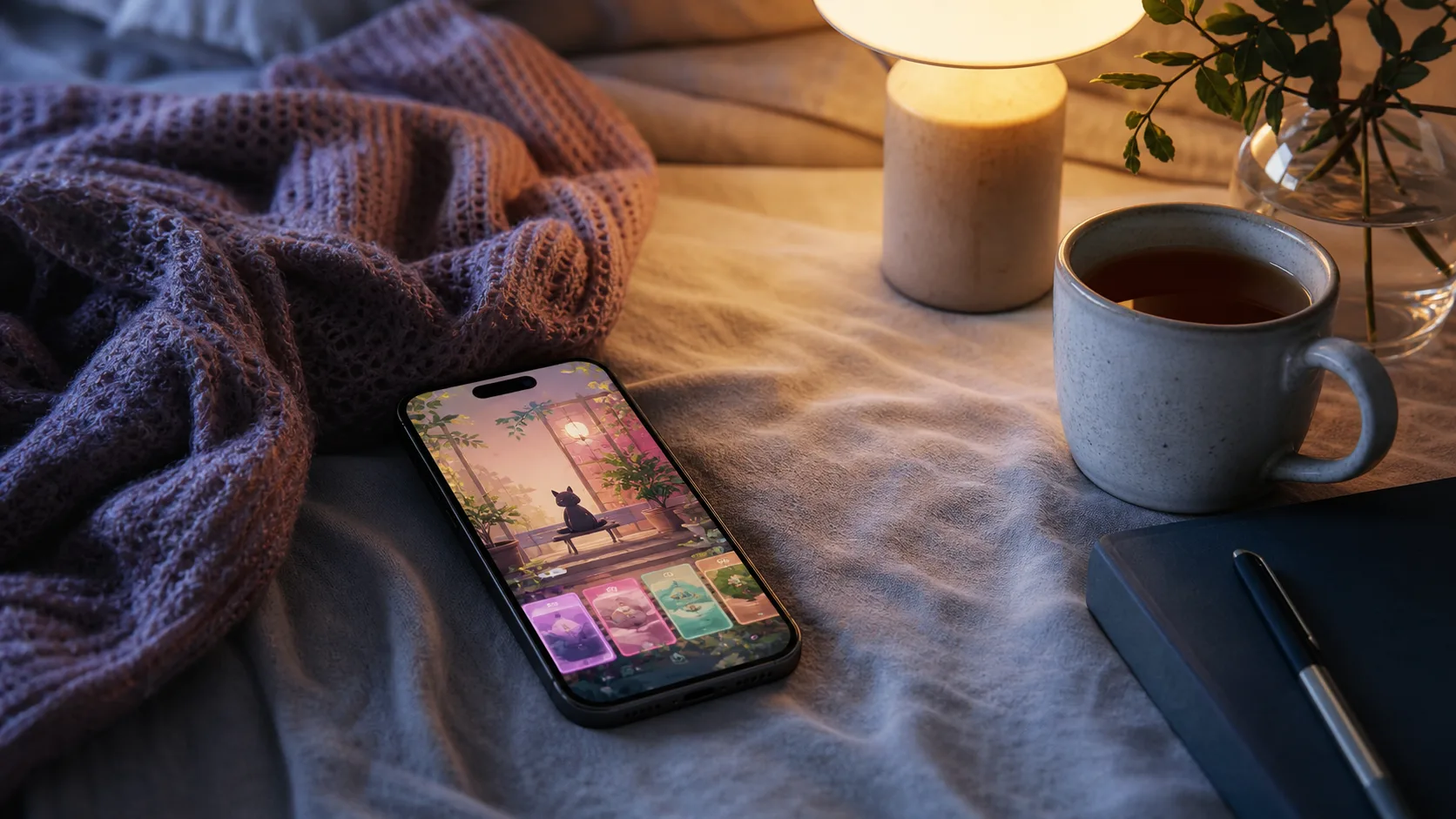
If self-care has started to feel like a second inbox, you are not imagining the problem. “Drink water,” “journal,” and “take three deep breaths” are gentle ideas until they become another list measuring everything you failed to do.
A self care virtual pet app tries a warmer approach: care for yourself, and something small responds. Your bird gains energy, your fantasy creature relaxes, or your digital companion grows because you completed one manageable action.
That feedback can make a daily routine feel less clinical. But it can also become one more streak, notification, or tiny face you are afraid to disappoint—so the real question is not simply whether virtual pet self-care works, but who it works for and under what conditions.
The best self-care pet does not make you earn your worth. It gives one kind action an immediate place to land.
Best Self-Care Virtual Pet Apps at a Glance
| App or category | Pet type | Free or paid? | Best for |
|---|---|---|---|
| Finch | Customizable bird | Useful free version; optional Finch Plus | Guided goals, reflections, breathing, and gentle structure |
| Amaru: The Self-Care Pet | Fantasy creature | Free to start; optional paid access | Mindfulness, journaling, minigames, and storybook atmosphere |
| Voidpet Garden | Creatures based on emotions | Free core; optional premium features | Emotional vocabulary, reflection, and imaginative play |
| Habitica | RPG avatar with collectible pets | Free core; optional purchases and subscription | Habit tracking for people motivated by quests and rewards |
| Tamagotchi-style games | Traditional digital pet | Varies by game | Pure nurturing, nostalgia, and play without wellness prompts |
Pricing and included features change. Check the current App Store or Google Play listing, privacy label, trial terms, and renewal price before subscribing.
Our short verdict: Finch is the strongest general recommendation. Choose Amaru for mindful fantasy, Voidpet Garden for emotional exploration, or Habitica for game-like productivity.
What Is a Self Care App With a Virtual Pet?
A standard habit app records an action. A self care app with virtual pet mechanics turns the action into a relationship: check in with yourself, then see your pet react, explore, collect something, or become more comfortable.
Most versions use a simple loop:
- Cue: a reminder, widget, or pet animation invites you back.
- Tiny action: you choose a mood, set a goal, journal, breathe, stretch, or drink water.
- Immediate reward: the pet gains energy, starts an adventure, unlocks an item, or responds affectionately.
- Return: the pleasant response makes tomorrow’s action easier to remember.
Self-care rewards are often delayed. A pet’s bright reaction makes one glass of water or a short breathing exercise feel complete now.
Behavior science would describe this as reducing friction and bringing the reward closer to the behavior. The companion also adds a hint of relatedness: instead of managing yourself like a project, you are participating in a small care exchange.
Have you ever adopted a pet and found a routine inside the relationship?
People often do things for an animal that they struggle to do for themselves: get out of bed, go outside, refill water, notice the time. A digital pet cannot recreate a living animal’s needs or bond, but it borrows the same motivational shape.
The useful feeling is not fear that the pet will suffer. It is the softer thought, I will check in because this small companion is part of my day. The healthiest apps create attachment without punishment.
If the nostalgic pet-care part is more appealing than the wellness tools, our guide to adult Tamagotchi-style experiences explores that lane, while this review of virtual pet apps for adults compares more creature-first options.
What Is Finch App?
Finch is a popular self-care pet app built around a customizable bird. You choose daily goals and complete activities such as reflections, breathing exercises, soundscapes, movement, or mood check-ins; those actions give your “birb” energy for adventures and help it grow.
Finch succeeds because the wellness features and pet loop are tightly connected. A cold checkbox becomes progress for a companion with clothes, a home, destinations, and a visible personality.
Finch is especially good for:
- people who like choosing several small goals each day
- beginners who want prompts rather than a blank journal
- anyone motivated by outfits, collectibles, and visible progress
- friends who enjoy sending encouragement through an app
- users who want substantial free functionality before paying
The trade-off is density. There are goals, journeys, shops, currencies, events, exercises, and customization layers; that abundance can feel supportive to one person and like another dashboard to someone else.
In practical terms, a new user can select a goal, complete a task, and watch the pet finch respond. Positive actions may earn rainbow stones, a stone-style currency used for an outfit, room item, or other cute reward. The app can also send a notification, let you add friends, and help you track progress throughout the day.
That makes Finch feel gamified without becoming a pure productivity game. It can engage someone who struggles with a plain checklist because completing self-care has a visible result: the virtual pet bird gets energy, goes on an adventure, and becomes a small buddy in the routine.
Is Finch self-care pet a good app?
Yes—for many people, Finch is a genuinely good app. It makes self care approachable, offers a broad toolkit, and is popular for understandable reasons. Its core concept is compassionate rather than punitive, and the bird gives routine tasks emotional texture.
It is not automatically the best fit for everyone. If tracking activates perfectionism, too many options create decision fatigue, or you want nurturing without a goal system, a simpler Finch app alternative may feel better.
For a deeper feature-by-feature comparison, see our guide to apps like Finch. If you are curious how pet, relationship, and conversational apps differ, AI companion apps covers the broader category.
The Best Alternatives Depend on the Feeling You Need
Amaru: best for mindfulness in a gentle fantasy world
Amaru combines a fantasy pet with feeding, petting, customization, minigames, journaling, goal-setting, breathing, and mindfulness exercises. It feels more like visiting a quiet illustrated world than opening a productivity tool.
Choose it when atmosphere and play help you slow down. It may be a better fit than Finch if you want meditation and pet care to lead, rather than a large daily goal list.
Voidpet Garden: best for exploring emotions through creatures
Voidpet Garden turns feelings such as sadness, anxiety, anger, or wonder into collectible creatures you can observe and interact with. Its strongest idea is emotional externalization: a difficult feeling becomes something you can name, approach, and get curious about.
That can make reflection less intimidating, especially if standard mood trackers feel sterile. Some features are paid, and any AI or journaling function deserves a careful privacy check before you share sensitive mental health information.
Habitica: best for habits that feel like quests
Habitica turns tasks, habits, and dailies into a retro role-playing game with an avatar, equipment, pets, mounts, and group challenges. It is more productivity game than wellness app virtual pet, but it belongs in the comparison because its reward loop is powerful.
Choose Habitica if points, teamwork, and game systems energize you. Avoid it if missed tasks, damage, or a crowded list make self-care feel like performance.
Tamagotchi-style apps: best for nurturing without self-optimization
Sometimes you do not need prompts, cognitive exercises, or a mood score. You just want to feed something cute, clean its room, decorate a tiny space, and return tomorrow.
That is why cozy mobile games and traditional virtual pets can function as informal care rituals even when they make no wellness claims. They offer play and nurturing, not a plan to fix you.
Do Virtual Pets Actually Improve Self-Care Habits?
They can, but the pet is a motivational design choice—not medicine and not magic. Its value comes from what it changes about the moment before an action.
A useful self-care virtual pet may help by:
- making an abstract goal concrete: “support my mental health” becomes “do one check-in”
- creating immediate feedback: your companion responds before the long-term benefit arrives
- lowering the emotional temperature: a playful screen can feel safer than a clinical tracker
- supporting consistency: the same cue and action can become part of a stable habit
- adding gentle companionship: a recurring character can make a solitary routine feel less lonely
Research on habit formation consistently points toward repetition in a stable context, not flawless performance. A pet can become the cue and reward around that repetition, but the action still needs to be small enough for your real life.
The mechanic works poorly when opening the app takes too long, rewards bury the actual care activity, notifications become noise, or the pet’s disappointment is used to manufacture guilt. A good care loop leaves you feeling more capable after you close the app.
This is especially important for neurodivergent users, people with chronic stress, or anyone trying to manage anxiety, depression, fitness, sleep, medication, brushing teeth, or another small daily challenge. The right pattern is not "do everything perfectly." It is "return, choose one action, and make the next step easier."
A custom reminder can be enough: brush, drink water, take care of one basic need, earn rewards, and move on with enough steadiness to thrive.
Are Streaks Helping or Hurting?
Streaks can motivate, but they turn sour when a number starts feeling like a verdict. If one missed day creates guilt, look for flexible streaks, rest days, recovery goals, and "welcome back" language.
The point is not to never miss. The point is to return gently. A pet should make the doorway easier to cross, not turn self-care into another chore.
How to Choose the Right Self-Care Pet App
Choose by friction, not by feature count
Ask what usually breaks your daily routine:
- I forget: choose clear, adjustable reminders and a fast home-screen check-in.
- I cannot start: choose the fewest taps and the smallest default goal.
- I get bored: choose adventures, customization, collections, or story progress.
- I get overwhelmed: avoid dense dashboards and too many suggested tasks.
- I feel judged: look for rest days, easy recovery, and neutral language after absences.
- I want connection: choose a responsive companion rather than points alone.
Check the business model and privacy
“Free” can mean fully usable, heavily limited, ad-supported, or a short trial. Before entering personal reflections, check what is stored, whether data may be shared, how deletion works, and which features require payment.
Review the current subscription renewal terms rather than relying on an old review. A fair free tier should let you understand the core habit loop before asking you to buy cosmetics, extra exercises, or premium conversation.
For any iOS or Android download, check the current App Store or Google Play listing, the privacy label, the subscription renewal price, and whether the developer also posts feature changes on Instagram or its own site. App stores update randomly, so old screenshots can be misleading.
If you use the app for sensitive reflection, avoid writing anything you would not want stored in an account. A self-care tool can offer insight and encouragement, but privacy still matters.
Run a seven-day, no-guilt experiment
Choose one app and one action, not a complete life reset. At the end of a week, keep it only if the pet helped you begin more often, felt comforting rather than demanding, and made returning after a missed day easy.
Quick Answers to the Questions People Ask
What is the best self-care pet app?
Finch is the best overall recommendation for most people because it combines a warm virtual bird with goals, reflections, breathing, mood tools, and a useful free core. Amaru is stronger for fantasy mindfulness, Voidpet Garden for emotional exploration, and Habitica for RPG-style productivity.
Is the self-care pet app free?
Finch, Voidpet Garden, Habitica, and many similar apps are free to download or use at a basic level, then offer optional paid features. Amaru also offers an accessible starting experience, but store terms vary; always check the current listing before downloading or starting a trial.
What is the best free self-care app?
If you specifically want a pet mechanic, Finch is one of the best free self-care apps because its central goals, check-ins, and bird-care loop remain useful without a subscription. If a quest system motivates you more than mindfulness, Habitica is a strong free alternative.
What is the name of the self care app with virtual pets?
The app most people mean is Finch: Self-Care Pet. Other names in the category include Amaru: The Self-Care Pet and Voidpet Garden; each uses a different kind of companion and emotional reward.
Struggling with habits, self-love, or depression?
A gentle app may help you remember goals, practice mindfulness, or make one caring action easier. It cannot diagnose depression or replace therapy, medication, community, or professional mental health care.
If symptoms are persistent, worsening, or making daily life hard, consider speaking with a qualified clinician. If you may hurt yourself or cannot stay safe, contact local emergency or crisis support now rather than relying on an app.
When You Want Nurturing More Than Habit Tracking
Some people do not want another productivity system at all. They want the emotional rhythm underneath the pet mechanic: notice something small, respond, and feel their care remembered.
That is the softer lane AIdorable explores. You adopt a virtual AI baby who grows, learns, and remembers you—not as therapy or a test of readiness for parenthood, but as a gentle relational ritual for nurturing instincts. If that feeling is familiar, our guide to apps for women with baby fever offers more low-pressure options.
Conclusion: The Best App Makes Returning Feel Safe
A self care virtual pet app can help when it makes care concrete, immediate, and a little more tender. Finch deserves its popularity; it is broad, polished, and unusually useful for people who want daily structure with a companion beside it.
The right choice may still be Amaru’s mindful fantasy, Voidpet Garden’s emotional creatures, Habitica’s quests, or a simple Tamagotchi-style game. What matters is not the longest streak or cutest pet—it is whether the app helps you begin, supports your life, and welcomes you back without shame.
Choose the companion that makes one act of care easier. Then let “enough for today” be enough.