When your thoughts are loud, opening a complicated game can feel like adding one more demand. The right stress relief mobile games do the opposite: they give your attention somewhere soft to land.
That might mean arranging colors, tending a tiny garden, walking through a beautiful world, or caring for a digital companion. You are not trying to win the evening. You are giving your nervous system a small, manageable activity instead of another stream of alerts.
If you already love cozy games, this guide will help you choose the right kind of play for the mood you are actually in.
Quick Guide: Choose a Mobile Game for Your Stress Level
| If you feel... | Try this style | Good place to start |
|---|---|---|
| Mentally scattered | Simple pattern or puzzle game | I Love Hue Too |
| Overstimulated | Quiet visual journey | Monument Valley |
| Restless | Flowing movement | Alto's Odyssey |
| Emotionally drained | Cozy care or nurturing game | AIdorable or Cats & Soup |
| Burnt out | Slow life simulation | Stardew Valley |
| Creatively blocked | Open-ended building | Townscaper |
| Short on time | One tiny, complete task | Prune |
The important question is not “What is the most relaxing game?” It is “What kind of input would feel kind to me right now?”
Why Mobile Games Can Help With Stress Relief
A calm mobile game narrows your attention. Instead of holding ten unfinished worries at once, you solve one puzzle, plant one crop, or complete one care action. That small focus can interrupt rumination without asking you to force your mind blank.
Games also offer visible progress. Real-life stress is often vague and unresolved; gameplay can provide a clear beginning, action, and result. Even a tiny success may restore a sense of agency when the rest of the day felt chaotic.
The effect depends on design. Gentle gameplay can soothe, while aggressive ads, countdown timers, rankings, and constant notifications can increase pressure. If a game makes your jaw tighten or turns rest into obligation, it is not serving as stress relief anymore.
For a deeper look at the connection between care loops and emotional regulation, see our guide to virtual pets and stress neuroscience.
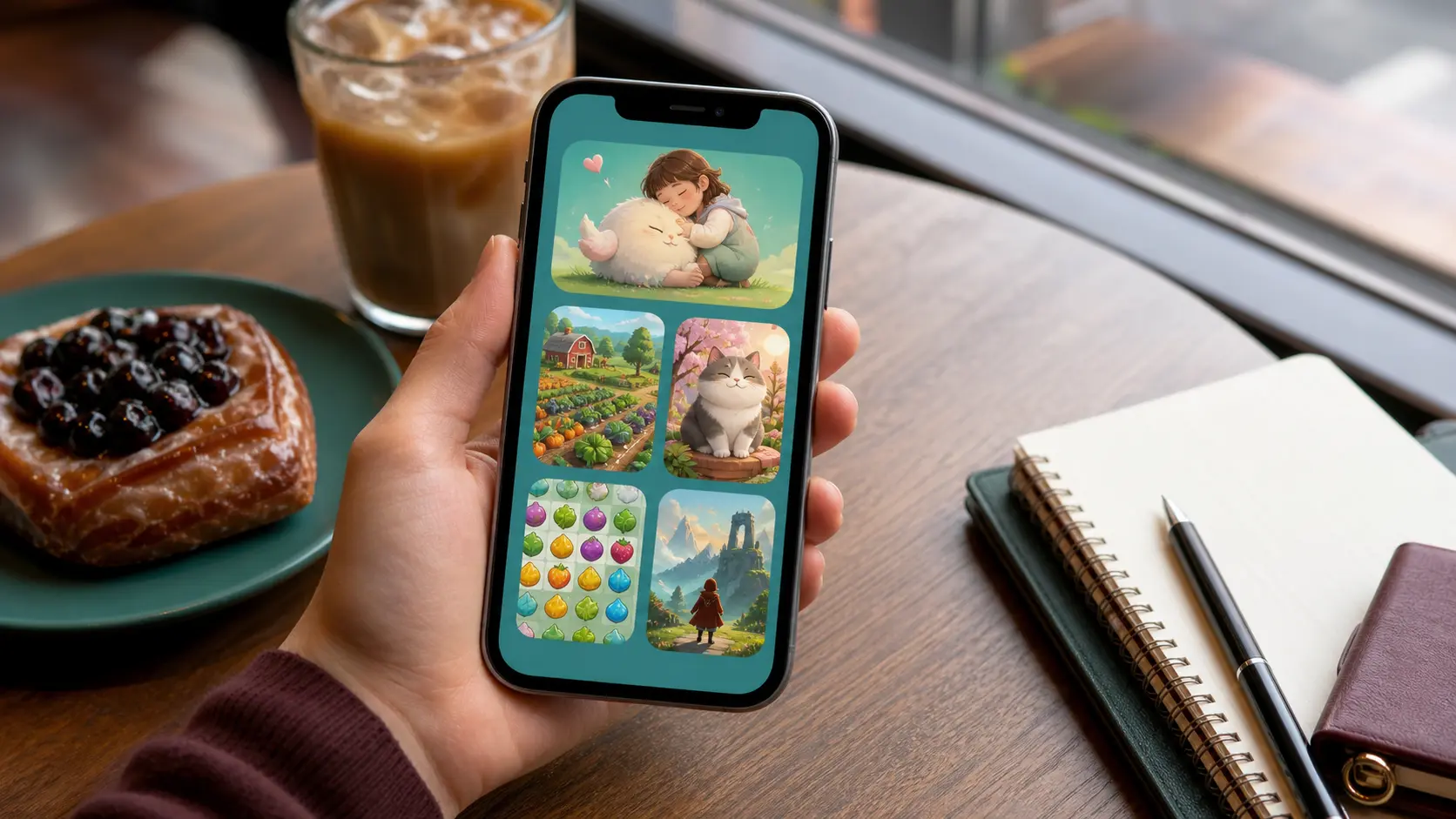
12 Best Stress Relief Mobile Games
1. Monument Valley — Best for Quiet Visual Focus
Monument Valley turns impossible architecture into a series of elegant spatial puzzles. You rotate structures, reveal hidden paths, and guide a silent character through dreamlike scenes.
Its value is not difficulty. It is the combination of deliberate movement, restrained sound, and a puzzle that feels understandable one step at a time. Choose it when the world feels visually noisy and you want ten minutes of beauty with a clear purpose.
2. I Love Hue Too — Best for Racing Thoughts
This color-sorting puzzle game asks you to place tiles into smooth gradients. There is no dramatic story to follow and no complex control scheme to remember.
The repeated act of noticing subtle color differences can pull attention away from a mental loop. It is especially useful when you are too tired for strategy but still need enough structure to stay present.
3. Alto's Odyssey — Best for Restless Energy
In Alto's Odyssey, you glide across dunes, float over gaps, and move through changing weather. The one-touch controls are simple, while the forward motion gives restless energy somewhere to go.
Zen Mode removes scores, coins, and failure, making the experience less about performance and more about rhythm. That setting is the better choice when you are specifically using mobile gaming to unwind.
4. Prune — Best for a Five-Minute Reset
Prune is about shaping a growing tree toward light. You trim branches, avoid obstacles, and watch the remaining limbs bloom.
Each level is compact enough for a brief break. The interaction feels tactile and complete, which makes it one of the better games to help during a packed workday when you cannot disappear into a long session.
5. Stardew Valley — Best for Slow, Cozy Progress
Stardew Valley gives you a farm, a community, and a daily rhythm of planting, fishing, exploring, and building relationships. It can be wonderfully calming because progress is personal rather than competitive.
The days do have a clock, so it may not suit everyone during acute stress. Play gently: choose one or two activities instead of trying to optimize every minute. If nurturing is what helps you decompress, explore more games where you take care of something.
6. Animal Crossing: Pocket Camp Complete — Best for Friendly Routine
This cozy mobile game centers on decorating spaces, gathering materials, meeting animal neighbors, and completing light requests. Its cheerful world can provide familiarity after an unpredictable day.
It works best when you treat tasks as invitations rather than chores. Ignore completionism, arrange a space you like, and let the friendly interactions be enough.
7. Cats & Soup — Best for Cute, Passive Comfort
Cats & Soup combines adorable cats, gentle cooking animations, and mostly idle progress. You can check in, collect rewards, decorate, and watch the tiny kitchen continue working.
The soothing appeal comes from low stakes and visual warmth. Be mindful of monetization prompts, though. Close anything that disrupts the calm instead of letting reward loops dictate your session.
8. Townscaper — Best for Creative Play Without Failure
Townscaper lets you tap to build colorful seaside towns. There are no objectives, enemies, or incorrect designs. The system turns simple choices into arches, stairs, gardens, and rooftops.
This is useful when stress comes from being evaluated all day. You can create something pleasing without needing it to be productive, impressive, or finished.
9. AIdorable — Best for a Nurturing Daily Ritual
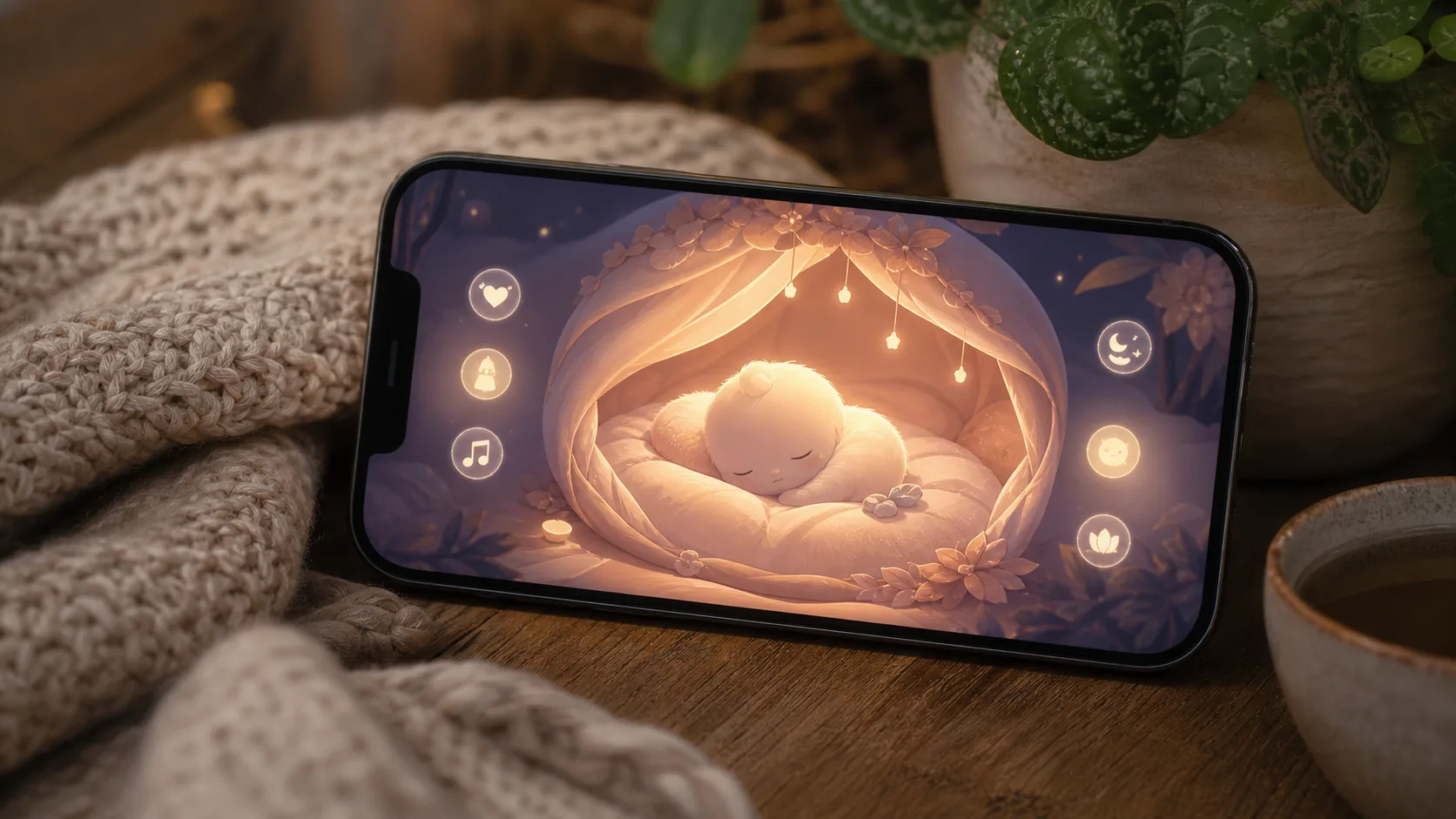
AIdorable is a virtual AI baby experience built around short moments of care. Instead of chasing a high score, you check in, interact, and help a tiny companion grow through consistent attention.
That makes it different from a traditional stress relief game. The soothing element is purposeful tenderness: a small ritual that asks, “Can I care for one little thing right now?” It may fit days when distraction feels empty but a full self-care routine feels too demanding.
You can learn how nurturing play works in our guide to the virtual pet self-care app.
10. My Oasis — Best for Ambient Calm
My Oasis is an idle relaxation game in which a small landscape grows over time. Soft music, simple taps, and gradual environmental changes create an atmosphere rather than a challenge.
Try it when you want minimal gameplay and mostly need a gentle visual anchor. Headphones can make the soundscape more immersive, but silence is perfectly fine if audio feels overstimulating.
11. Two Dots — Best for Familiar Puzzle Flow
Two Dots uses a simple connection mechanic that is easy to understand and satisfying to repeat. Its clean presentation and short levels can provide the “one clear task” feeling many people want from relaxing mobile games.
Later levels can become difficult, however. If limited moves or repeated failures stop feeling playful, switch to an easier level or another game. Stress relief is not the time to prove persistence.
12. Pokémon Sleep — Best for Turning Bedtime Into a Ritual
Pokémon Sleep makes sleep tracking feel playful by letting you discover Pokémon around your sleeping Snorlax. It is less a game to play intensely and more a soft structure around winding down.
Use it only if tracking helps rather than pressures you. The best bedtime tool is one that supports sleep—not one that keeps you looking at your phone or worrying about perfect data.
A restorative game does not have to make you forget your life. It only needs to make the next few minutes feel safer, simpler, and more manageable.
Match the Gameplay to What Your Body Needs
Different forms of stress call for different forms of attention. Before you download another app, pause for a ten-second check-in.
- If your mind is racing: choose a repetitive puzzle with a narrow visual field.
- If you feel numb or lonely: try a nurturing companion or friendly cozy world.
- If you feel trapped: choose flowing movement or gentle exploration.
- If you feel judged: use a creative sandbox with no failure state.
- If you are exhausted: pick passive, low-input gameplay rather than a deep simulation.
- If you are procrastinating: set a short timer so the reset has a clear ending.
This is why a list of “10 best” games can only take you so far. The right game changes with your energy, sensory load, available time, and emotional need.
How to Keep Relaxing Games From Becoming Another Stressor
Mobile games are designed to hold attention, so boundaries matter even when the game looks wholesome.
Turn off nonessential notifications
A calming game should not summon you back with urgency. Disable reminders, sales alerts, and streak warnings. You decide when the ritual begins.
Avoid competitive modes when you are already activated
Leaderboards, player-versus-player events, and timed challenges can be fun on a good day. During stress, they may shift your body toward vigilance rather than calm.
Use a short intention
Before opening the app, say what you want: “I am going to play one puzzle while my breathing settles.” This keeps the session purposeful without making it rigid.
Notice the after-effect
After five to fifteen minutes, look away from the screen. Are your shoulders lower? Is your breath slower? Do you feel clearer—or only compelled to continue?
If you feel worse, that is useful information. Try a different style, take a screen-free break, or use one of these broader self-care activities for stress.
A Simple 10-Minute Stress Relief Game Ritual
You do not need an elaborate wellness routine. Try this:
- Put your phone on Do Not Disturb.
- Choose one game based on your current state, not habit.
- Set a gentle ten-minute timer.
- Let yourself play without optimizing or multitasking.
- When the timer ends, take three slow breaths before deciding what comes next.
The pause at the end matters. It helps your brain register the game as a transition rather than an endless escape.
When a Game Is Not Enough
Stress relief games are tools, not treatment. They can offer a break, focus, or comforting routine, but they cannot resolve unsafe circumstances, severe burnout, panic, or ongoing mental health symptoms.
If anxiety is persistent, disrupts sleep, or makes daily life difficult, consider talking with a qualified mental health professional. If you are in immediate danger or may harm yourself, contact local emergency services or a crisis resource in your country.
There is no failure in needing more support. A mobile game can be one soft part of a larger care plan.
Conclusion: Choose the Game That Leaves You Gentler
The best mobile games for stress relief are not necessarily the prettiest or most popular. They are the ones whose pace, sound, and gameplay meet you where you are.
Choose a color puzzle for busy thoughts, a cozy simulation for slow comfort, a creative sandbox for freedom, or a nurturing companion when you want a small sense of connection. Keep the session intentional, remove pressure where you can, and stop when the game has done its job.
Sometimes stress relief is not a dramatic transformation. Sometimes it is one quiet puzzle, one tiny tree, or one cared-for companion—and enough calm to take the next step.