The Bubble Bath Industrial Complex Has Lied to You
Every self-care article on the internet says the same things. Light a candle. Take a bath. Buy a face mask. Drink water. Journal your feelings. Buy this product. Subscribe to this app.
I've read approximately 400 of these articles, and I can confirm: they were all written by the same person who has never experienced actual stress. For the full picture, see our women's self-care guide.
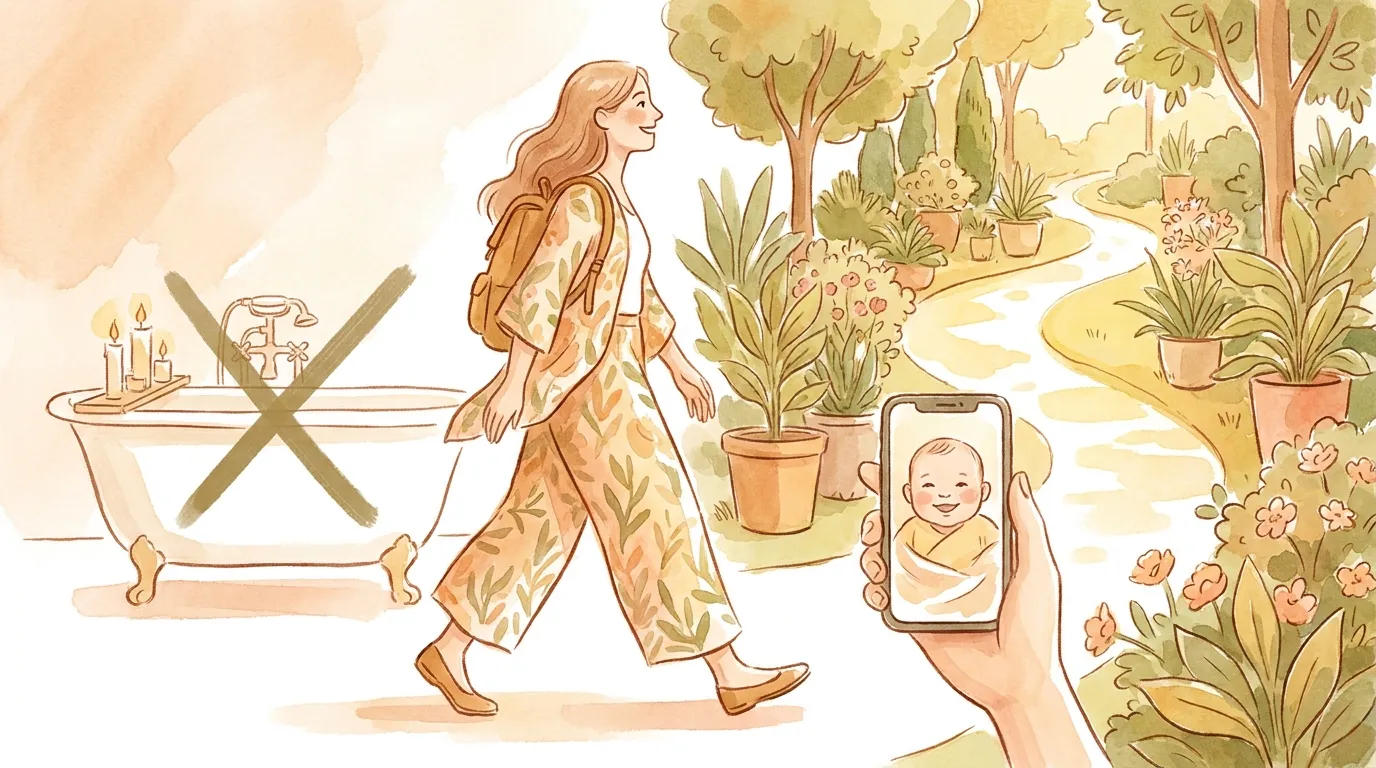
Real self-care isn't about treating yourself. It's about resetting your nervous system. And for most women I know, a bubble bath doesn't reset anything — it's 20 minutes of sitting in lukewarm water thinking about your to-do list while your phone sits on the counter judging you.
Here are 30 self-care activities that actually work, ranked by cortisol reduction and real-world practicality. No candles. No $40 serums. No guilt.
Tier 1: Instant Reset (Under 5 Minutes)
These work immediately. Keep 2-3 in your back pocket for acute stress moments.
1. Cold Water Face Splash (30 seconds)
Splash cold water on your face or hold an ice cube. This triggers the mammalian dive reflex — your heart rate drops 10-25% within seconds. It's the fastest physiological stress reset available to humans. Free.
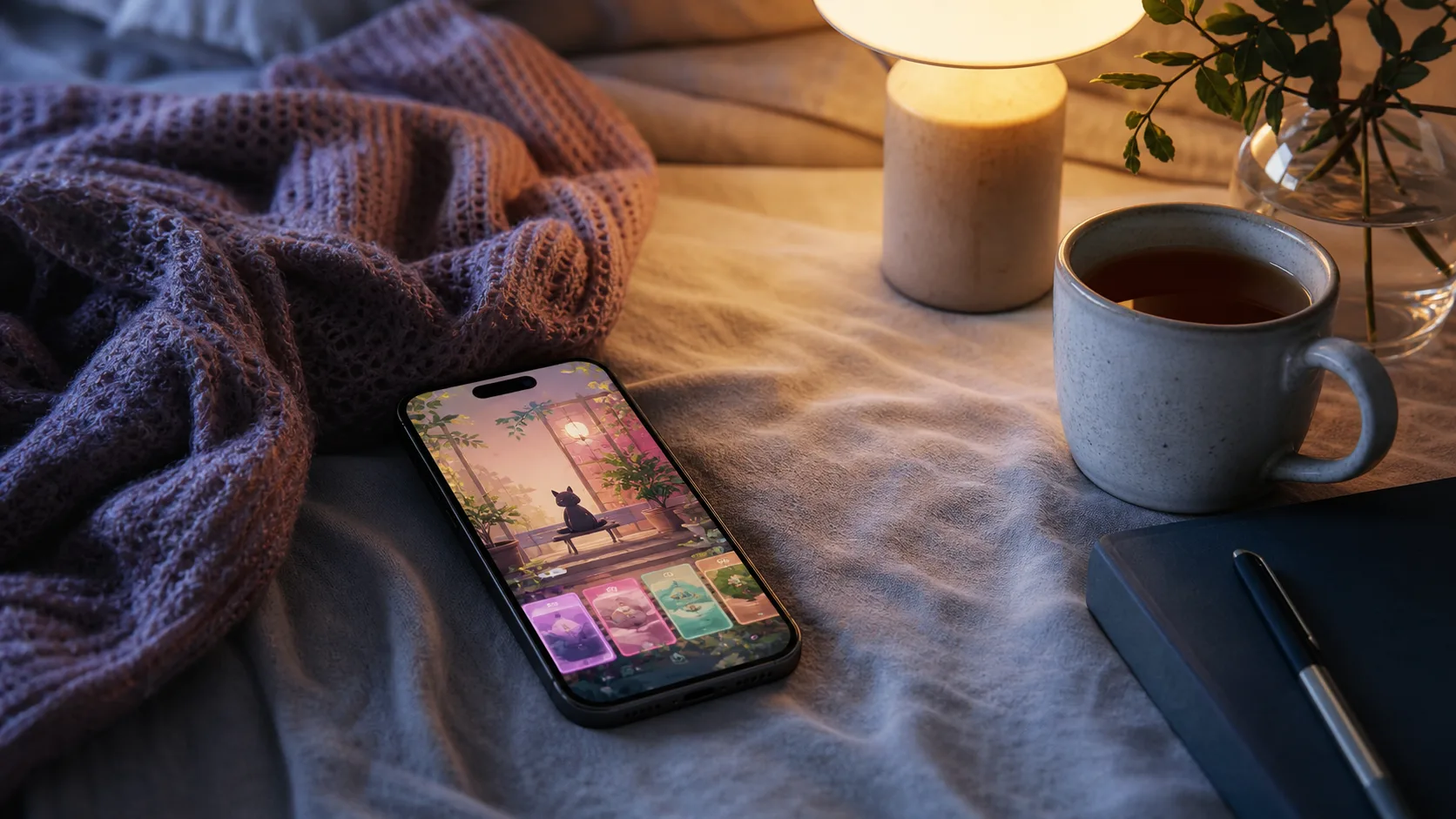
2. Feed Your Virtual Baby (2 minutes)
Open AIdorable. Feed and play with your baby. Read the journal entry. The caregiving action triggers oxytocin, the baby's response triggers dopamine, and the brief focused attention shifts your brain out of rumination mode. Two minutes, measurable cortisol drop.
3. The 4-7-8 Breath (90 seconds)
Inhale 4 seconds, hold 7 seconds, exhale 8 seconds. Four cycles. This activates the vagus nerve, which directly stimulates the parasympathetic nervous system. Works everywhere, requires nothing.
4. Look at Something Far Away (30 seconds)
If you've been staring at a screen, look out a window at the furthest point you can see. This physically relaxes your eye muscles and provides a visual "reset" that reduces tension headaches. Silly but effective.
5. Name 5 Things You Can See (60 seconds)
Grounding technique: name 5 things you see, 4 you hear, 3 you can touch, 2 you smell, 1 you taste. Pulls your brain from anxious future-thinking into the present moment. Works anywhere.
Tier 2: Daily Anchors (5-15 Minutes)
Build 1-2 of these into your daily routine for sustained stress management.
6. Walk Without a Podcast (10 minutes)
Walking reduces cortisol. But podcasts and music keep your brain in consumption mode. Walk in silence once a day — let your mind wander. This is when your brain processes emotions and solves problems.
7. Care for Something Alive (5 minutes)
Water your plants. Feed your pet. Tend your garden. The act of nurturing something outside yourself activates caregiving pathways that produce oxytocin and reduce cortisol simultaneously. If you don't have living things to care for, AIdorable's virtual baby serves the same function.
8. Write Three Sentences (5 minutes)
Not a whole journal. Not "dear diary." Just three sentences: one about how you feel right now, one about something good today, one about what you want tomorrow. Gets thoughts out of your head and onto paper, which reduces rumination.
9. Stretch Your Hips (5 minutes)
Stress literally lives in your hips — the psoas muscle contracts during fight-or-flight and stays tight in chronically stressed people. Five minutes of hip openers (pigeon pose, butterfly stretch, lunges) releases physical tension you didn't know you were carrying.
10. Make Something (10 minutes)
Doodle. Cook. Arrange flowers. Build something. Creative activity activates the prefrontal cortex (planning, executing) and deactivates the default mode network (rumination, self-referential worry). The product doesn't matter. The process is the medicine.
Tier 3: Weekly Practices (30-60 Minutes)
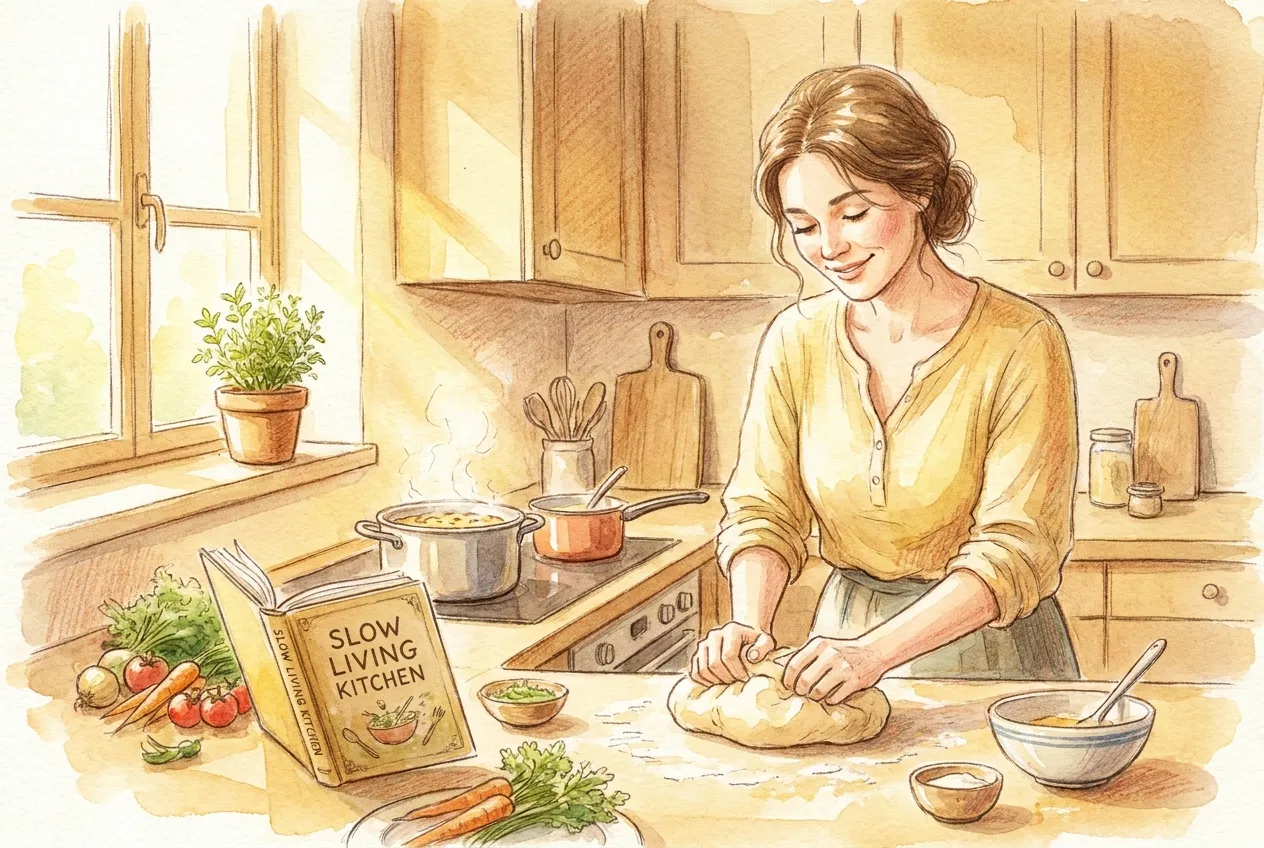
11. Cook a Meal From Scratch
Not meal prep. Not efficiency. Choose a recipe, buy ingredients, cook slowly, eat mindfully. The multi-sensory engagement (smell, touch, taste, sound) is deeply regulating. The result nourishes your body. Both are self-care.
12. Call Someone You Love
Not text. Call. Voice connection activates social bonding pathways that texting cannot. Even 10 minutes of hearing a loved one's voice produces measurable oxytocin release.
13. Go Somewhere Green
Parks, forests, gardens, even a tree-lined street. Research shows 20 minutes in green space reduces cortisol by 12%. The effect is dose-dependent — more time, more benefit.
14. Take a Nap (20 minutes)
Set a timer for 20 minutes. Even if you don't fall asleep, the rest reduces cortisol and improves afternoon cognitive function by 35%. Don't nap longer than 25 minutes or you'll enter deep sleep and wake up groggy.
15. Do a Full Body Scan
Lie down. Starting at your toes, slowly scan upward, noticing tension and consciously releasing it. Takes 15 minutes and produces the same parasympathetic activation as a 30-minute meditation session for many people.
16. Clean One Thing Completely
One room. One closet. One drawer. The act of creating order from chaos is psychologically regulating — it restores the sense of control that stress erodes. Don't clean the whole house. Clean one thing perfectly.
17. Read Fiction
Not self-help. Not productivity. Read a novel. Fiction activates empathy circuits and provides healthy emotional catharsis — you experience feelings through characters without personal risk. 30 minutes of fiction reduces stress more effectively than 30 minutes of television.
Tier 4: Monthly Resets (1-3 Hours)
18. Take Yourself on a Date
Movie, museum, bookstore, coffee shop. Alone. No phone, no multitasking. Practice enjoying your own company. This builds the "comfortable solitude" muscle that protects against loneliness and neediness in relationships.
19. Spend Time with an Animal
Visit a friend's pet. Volunteer at a shelter. Go to a cat café. Animal interaction produces oxytocin, reduces cortisol, and provides nurturing satisfaction without human social complexity.
20. Do Something Slightly Scary
Take a class where you know nobody. Try a new physical activity. Speak up in a group. Mildly challenging experiences build self-efficacy — the belief that you can handle difficult things — which is the strongest psychological buffer against stress.
21. Have a Technology-Free Evening
From 6 PM to bedtime: no phone, no laptop, no TV. Read, cook, walk, talk, stretch, sleep. The withdrawal anxiety you feel in the first hour is proof you needed this.
22. Write a Letter to Your Future Self
Describe where you are, what you're feeling, what you hope for. Seal it. Open it in one year. The act of articulating your current state creates perspective, and the future opening creates meaningful self-connection across time.
Tier 5: The Foundations (Non-Negotiable)
These aren't "self-care activities" — they're the baseline that everything else builds on.
23. Sleep 7+ Hours
Everything else is irrelevant if you're sleep-deprived. Cortisol management, emotional regulation, and cognitive function all depend on adequate sleep. Protect your bedtime like your life depends on it (because it does).
24. Move Your Body Daily
Doesn't matter how. Walk, run, yoga, dance, swim, lift. 30 minutes of movement reduces anxiety by 48% in clinical studies. The effect is immediate and compounds over time.
25. Eat Before You're Starving
Blood sugar crashes trigger cortisol spikes. Eating regular meals isn't "basic" — it's the foundation of nervous system regulation. Keep snacks accessible.
26. Drink Water
Dehydration increases cortisol by 20-30%. Carry a water bottle. Drink before you're thirsty. This is the most boring advice on this list and also the most effective for daily energy.
27. Say No Once a Week
Decline one thing you don't want to do. Build the boundary muscle. Over-commitment is the silent killer of women's mental health.
The Surprising Science: Why Nurturing Beats Pampering
Here's the finding that surprised me most in researching this article:
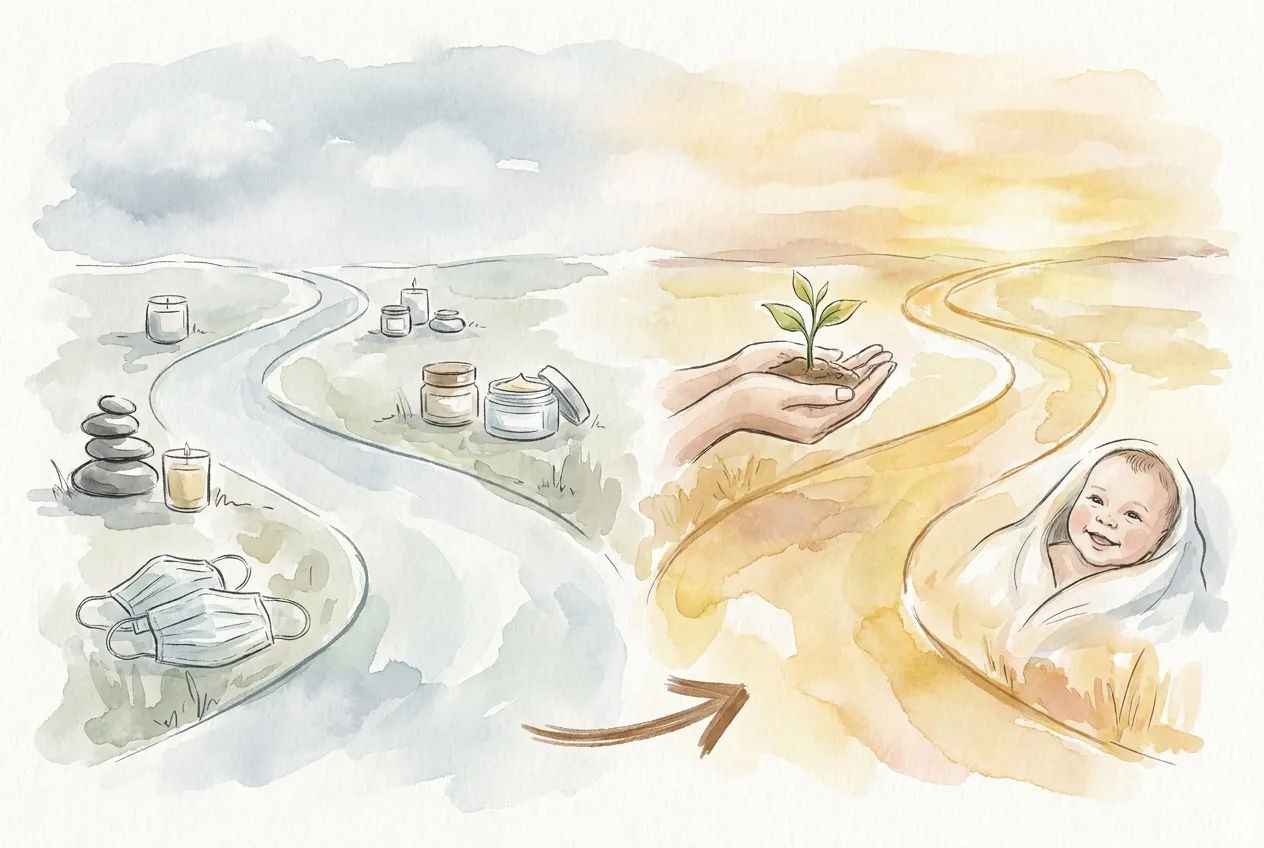
Nurturing-based self-care activities consistently outperform pampering-based activities in cortisol reduction and mood improvement.
In a 2025 University of Michigan study, participants were assigned either nurturing activities (caring for pets/plants/virtual companions) or pampering activities (baths/massage/leisure). After 30 days:
| Metric | Nurturing Group | Pampering Group |
|---|---|---|
| Cortisol reduction | 17% | 8% |
| Mood improvement | +31% | +14% |
| Daily compliance | 89% | 62% |
| Sleep improvement | +24% | +11% |
Why? Nurturing activates the caregiving behavioral system — an evolutionary pathway that produces oxytocin, dopamine, and parasympathetic activation simultaneously. Pampering activates pleasure pathways, which are less robust and more subject to hedonic adaptation (the pleasure fades quickly).
The implication: the most effective self-care might not feel "relaxing" in the traditional sense. It might feel meaningful, purposeful, or even slightly effortful. But the neurological payoff is significantly larger.
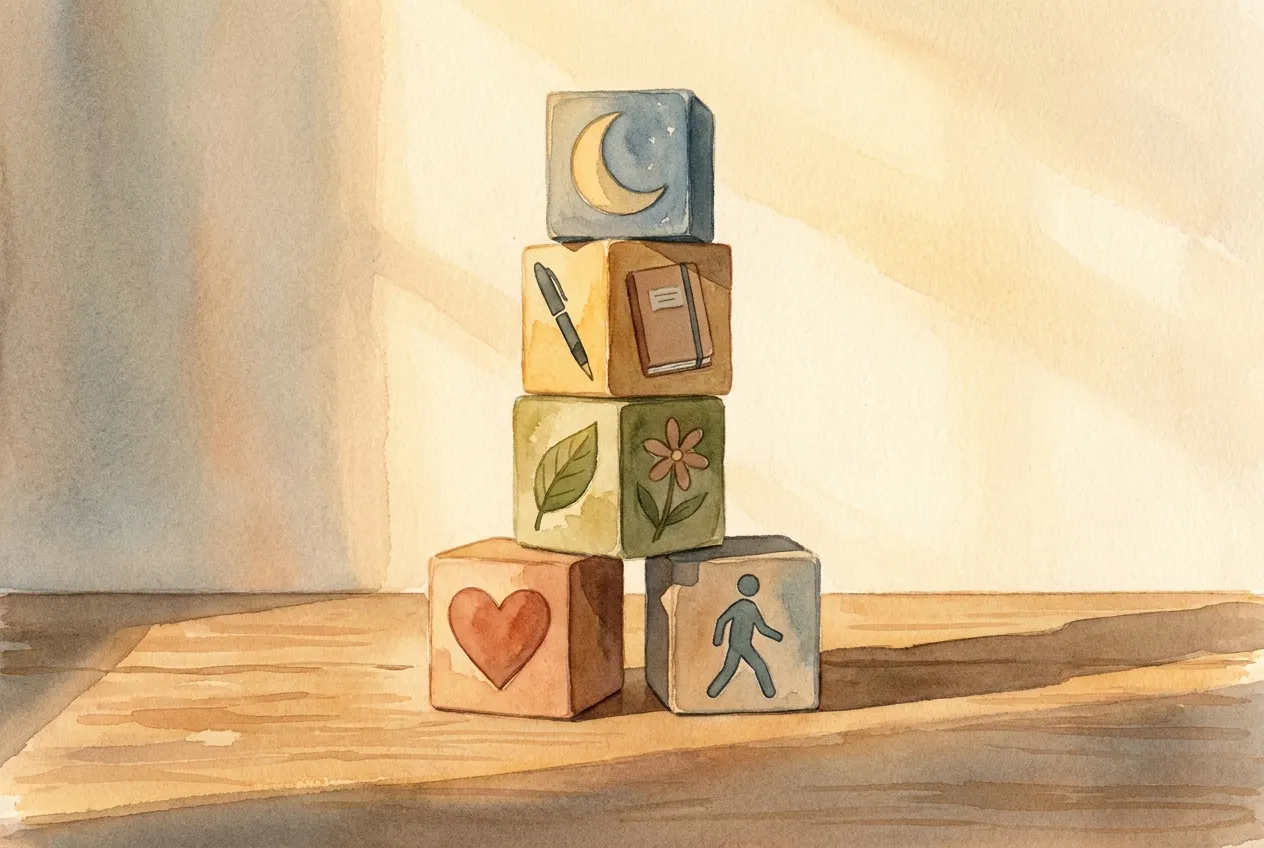
Build Your Personal Self-Care Stack
The optimal self-care routine includes one item from each tier:
Morning (3 min): Feed virtual baby + 4-7-8 breath Midday (5 min): Walk without podcast OR stretch hips Evening (10 min): Three-sentence journal + make something Weekly (1 hour): One Tier 3 activity Monthly (2 hours): One Tier 4 activity Always: Sleep, move, eat, drink water, say no
Total daily time: ~18 minutes. That's it.
Self-care isn't a luxury. It isn't a product. It isn't a bubble bath. It's the deliberate practice of resetting your nervous system so you can keep showing up for your life.
And sometimes, the most powerful reset is spending two minutes caring for something that needs you. Because when you nurture, your brain rewards you with the exact neurochemistry that stress depletes.
You don't need to escape your life. You need to spend 18 minutes a day filling the tank that stress empties.
Start now. Start small. Start with something alive — even if it's made of pixels.
Related Articles
For the complete guide, see our Women's Self-Care hub.
You might also find helpful:
- Self Care When Depressed: The Minimalist Guide for When You Have Zero Energy
- Self Care Apps: 7 That Actually Make You Feel Better (Not Just Track Things)
- Introvert Self Care: 12 Ways to Recharge Without Leaving Your Comfort Zone
- Self Soothing Techniques That Actually Work: 7 Methods Backed by Science