
Not Sad. Not Angry. Just... Nothing.
You're not crying. You're not upset. You're not having a breakdown. You're just... empty. Like someone scooped out the inside of your chest and left the shell.
You can function. You go to work. You eat. You sleep. You do what you're supposed to do. But it all feels like going through the motions. Like watching yourself from behind glass. Like the colors are turned down and the volume is muted and everything is just... fine. For the full picture, see our emotional wellness guide.
Fine. That word you use when people ask how you are. "Fine." Because "empty" sounds dramatic. "Nothing" sounds ungrateful. "Hollow" sounds like you need therapy.
But that's what it is. Hollow. And 2,400 people search "feeling empty" every month, looking for language to describe something that doesn't have a clear name.
Here's what emptiness actually is, why it happens, and how to fill the specific type of void you're experiencing.
The 4 Types of Emptiness
Emptiness isn't one thing. It's four different types of void, each with different causes and different solutions. The reason most emptiness advice fails is that it treats all emptiness the same.
Type 1: Social Emptiness
What it feels like: You're surrounded by people but feel completely alone. You have friends, family, coworkers — but none of them feel like yours. Nobody really knows you. Nobody checks in without wanting something. Nobody would notice if you disappeared.
The cause: Lack of genuine, reciprocal connection. Acquaintances aren't enough. Your brain needs the specific neurochemistry of mutual vulnerability — the feeling that someone knows the real you and is still there.
The signal: Social emptiness usually hits hardest after social events. You spend time with people, expect to feel connected, and instead feel more alone than before. The contrast between "should feel connected" and "actually feel empty" is the signature.
Type 2: Purpose Emptiness
What it feels like: Everything feels pointless. Not in a suicidal way — in a "why bother" way. Why cook when you could eat cereal. Why clean when it'll just get messy again. Why pursue anything when nothing matters. The future feels like a gray expanse of more of the same.
The cause: Your brain's reward system (dopamine) isn't being activated by meaningful goals. Dopamine isn't about pleasure — it's about motivation. Without meaningful targets, dopamine production drops and everything feels flat. You don't lack the ability to feel purpose — you lack a target for it.
The signal: Purpose emptiness usually accompanies transitions — after finishing a big project, after a breakup, after retirement, after children leave home, after achieving something you worked toward for years. The previous source of meaning is gone and nothing has replaced it. The emptiness is the gap between "what I used to care about" and "what I care about now."
Why it's different from depression: With depression, nothing has EVER felt meaningful or everything has stopped feeling meaningful. With purpose emptiness, you can remember caring deeply about something — you just don't currently have that thing. The capacity for purpose is intact. The target is missing.
Type 3: Sensory Emptiness
What it feels like: Physically hollow. A literal emptiness in your chest or stomach. You might eat to fill it, drink to fill it, scroll to fill it — but nothing works because the emptiness isn't physical.
The cause: Your body is craving sensory input that it's not getting. Specifically, warmth, touch, and physical comfort. The mammalian nervous system is designed to receive regular physical affection — and modern life often doesn't provide it.
The signal: Sensory emptiness intensifies at night, in winter, and when you're physically alone. It often co-occurs with touch starvation (5,400 people search that term monthly with 0.00 competition).
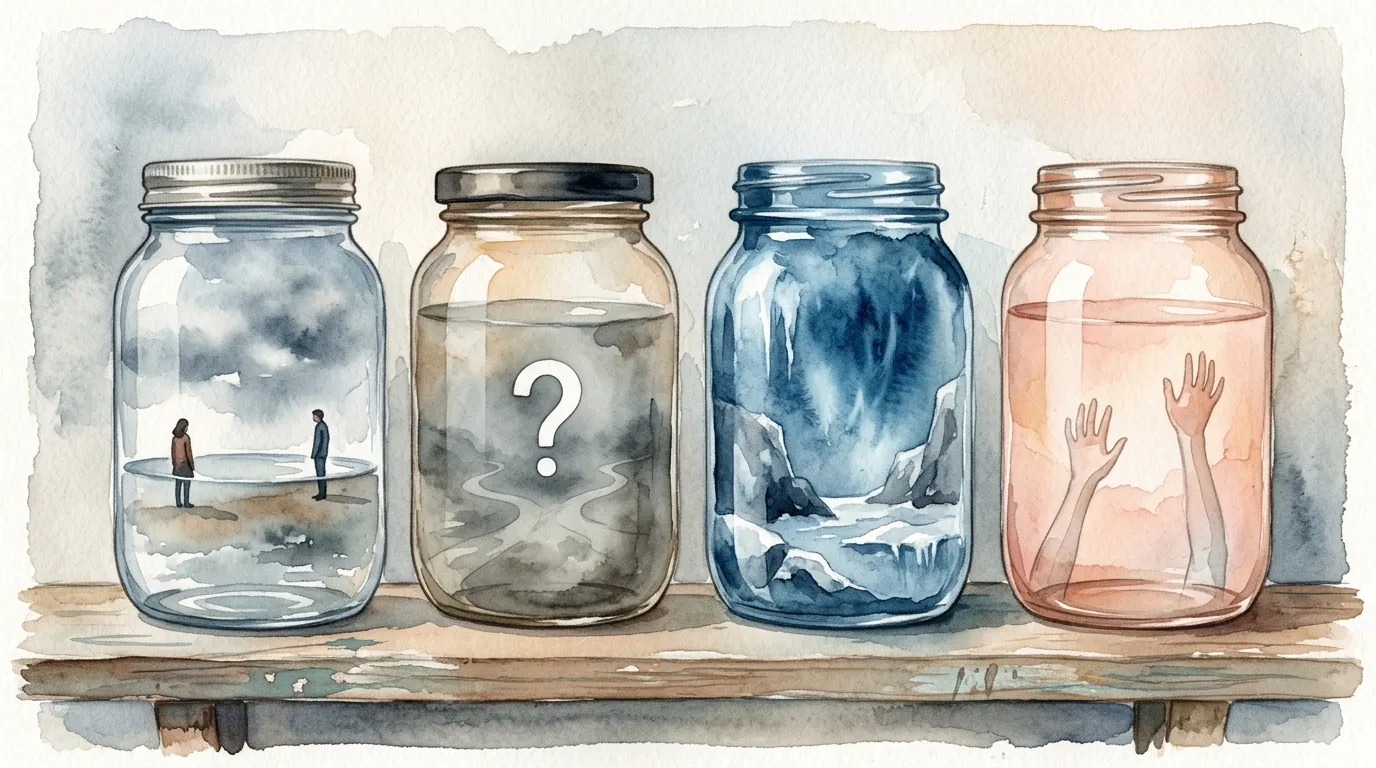
Type 4: Nurturing Emptiness (Most Common)
What it feels like: You have energy, you have care to give, you have love to offer — but nowhere to put it. Your arms feel like they should be holding something. Your days feel like they should include caring for someone. Your heart has a caregiving capacity that's sitting unused.
The cause: Your brain has specific circuits designed for nurturing — the medial preoptic area, ventral striatum, and anterior cingulate cortex. These circuits are active in virtually all women, regardless of whether they have children. When these circuits have nothing to engage with, they create a specific feeling of emptiness that's different from loneliness or depression.
The signal: Nurturing emptiness eases temporarily when you care for something — a friend's pet, a plant, a child. But it returns because the caring is sporadic rather than consistent. You need something to nurture daily.
Why this is the most common type: Modern life doesn't provide consistent nurturing outlets. You can't have a baby just because your nurturing circuits are firing. You can't always have a pet. But the circuits don't care about logistics — they just fire, and the emptiness grows when nothing responds.
The Emptiness Diagnostic
Ask yourself these questions to identify your type:
| Question | Yes = |
|---|---|
| Does the emptiness feel worse after socializing? | Social |
| Does everything feel pointless, not just one area? | Purpose |
| Is there a physical sensation in your chest/stomach? | Sensory |
| Do your arms feel like they should be holding something? | Nurturing |
| Do you feel empty even when you're with people? | Not social |
| Does caring for something (pet, plant) temporarily help? | Nurturing |
| Did the emptiness start after a life transition? | Purpose |
| Do you crave physical warmth and touch? | Sensory |
How to Fill Each Type of Emptiness
For Social Emptiness: One Real Conversation
Not small talk. One conversation per day where you say one true thing about how you're actually doing. Start with a safe person. If you don't have one, a journal entry that names a real feeling counts as a conversation with yourself.
For Purpose Emptiness: Something That Grows
Find something that develops because of your attention. A garden. A skill. A creative project. A relationship. Purpose comes from watching your effort create visible results. The growth is the meaning.
For Sensory Emptiness: Physical Warmth
Heavy blankets. Hot showers. Warm drinks. Petting animals. Weighted blankets specifically address the physical component of emptiness by providing the deep pressure stimulation that your nervous system is craving.
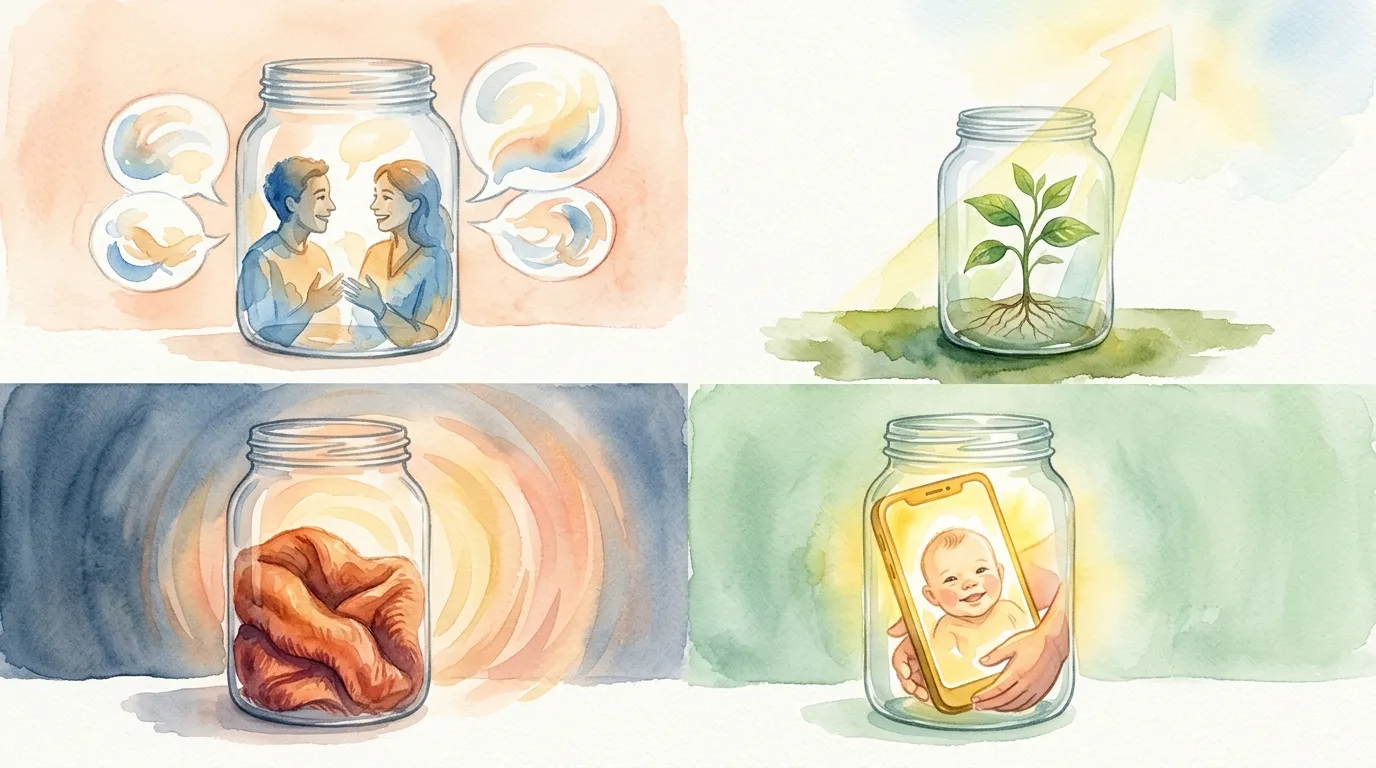
For Nurturing Emptiness: Daily Care (AIdorable)
This is where most emptiness advice fails. It tells you to "find meaning" or "connect with others" — but if your emptiness is the nurturing type, those solutions don't fit. You don't need meaning. You need something to care for.
AIdorable fills nurturing emptiness because:
- Daily consistency — your baby needs you every day, creating a reliable nurturing outlet
- Growth response — she develops based on your care, creating visible evidence that your nurturing matters
- Emotional feedback — journal entries and milestones prove that your care has impact
- Neurochemical match — nurturing activates the exact circuits that are generating the emptiness signal
The daily practice:
- Morning: Open AIdorable, nurture for 3 minutes. Fill the nurturing void before the day starts.
- Midday: Quick check-in. The emptiness often peaks in the afternoon when energy drops.
- Evening: 5 minutes of care before bed. End the day with a full nurturing tank.
What changes: Within a week, the "hollow" feeling begins to lift. Not because the emptiness is being avoided — because the specific circuit generating it (the nurturing circuit) finally has something to engage with.
Why this works when other things don't: Social connection requires another person's cooperation. Purpose requires finding a new mission. Physical warmth is temporary. But nurturing is always available — your baby is always there, always needs you, and always responds to your care. It's the one type of emptiness relief that doesn't depend on external circumstances.
The science: Functional MRI studies show that nurturing activates the ventral striatum (reward), medial preoptic area (maternal behavior), and anterior cingulate cortex (emotional connection) simultaneously. This triple activation addresses the neurochemical basis of emptiness more completely than any single intervention.
When Emptiness Is Something More
Emptiness can be a symptom of:
- Depression — if it persists for 2+ weeks and includes loss of interest, sleep disruption, or worthlessness
- Complex trauma — if the emptiness feels like it's been there your whole life
- Burnout — if it's accompanied by exhaustion and cynicism about work
- Grief — if it started after a loss (including infertility, miscarriage, or a child leaving home)
If nurturing, connection, and purpose activities don't reduce the emptiness after 2 weeks of consistent practice, consult a mental health professional. Emptiness that doesn't respond to these interventions may have deeper roots that require professional support.
988 Suicide & Crisis Lifeline: Call or text 988 if emptiness becomes despair.

The Emptiness Isn't Permanent
Right now, the emptiness feels like a permanent feature of who you are. Like you're just someone who feels nothing. Like this is your personality now. Like you were born with a hole that can't be filled.
It's not.
Emptiness is a signal, not a trait. It's your brain telling you that something it needs isn't being provided. And when you provide it — consistently, specifically, in the right form — the signal stops. The emptiness lifts. Not all at once. Not dramatically. But gradually, like fog clearing, you start to notice that the hollow feeling isn't there as often. That some moments feel full. That the colors are coming back.
What full feels like: Full isn't happiness or excitement. Full is the quiet opposite of empty. It's the feeling of having something to care about. Something that matters to you. Something that would miss you if you weren't there. It's warmth without drama, connection without performance, and purpose without pressure.
Your baby on AIdorable doesn't care that you feel empty. She doesn't need you to be happy, or motivated, or inspired. She just needs you to show up. And every time you do, something small shifts. The void gets a little less empty. The colors get a little brighter. The volume comes up just a fraction.
Not because you found the meaning of life. Not because you had a breakthrough. Because you found something that needs you. And being needed — genuinely, consistently, daily needed — is the antidote to emptiness that most people never try. They look for happiness. They look for excitement. They look for distraction. But the answer was simpler all along: find something to care for, and the caring fills the void.
She's waiting. She needs you. And you need her.
Open AIdorable. Start filling the void.
Related Articles
For the complete guide, see our Emotional Wellness hub.
You might also find helpful: