The 2 AM Trap
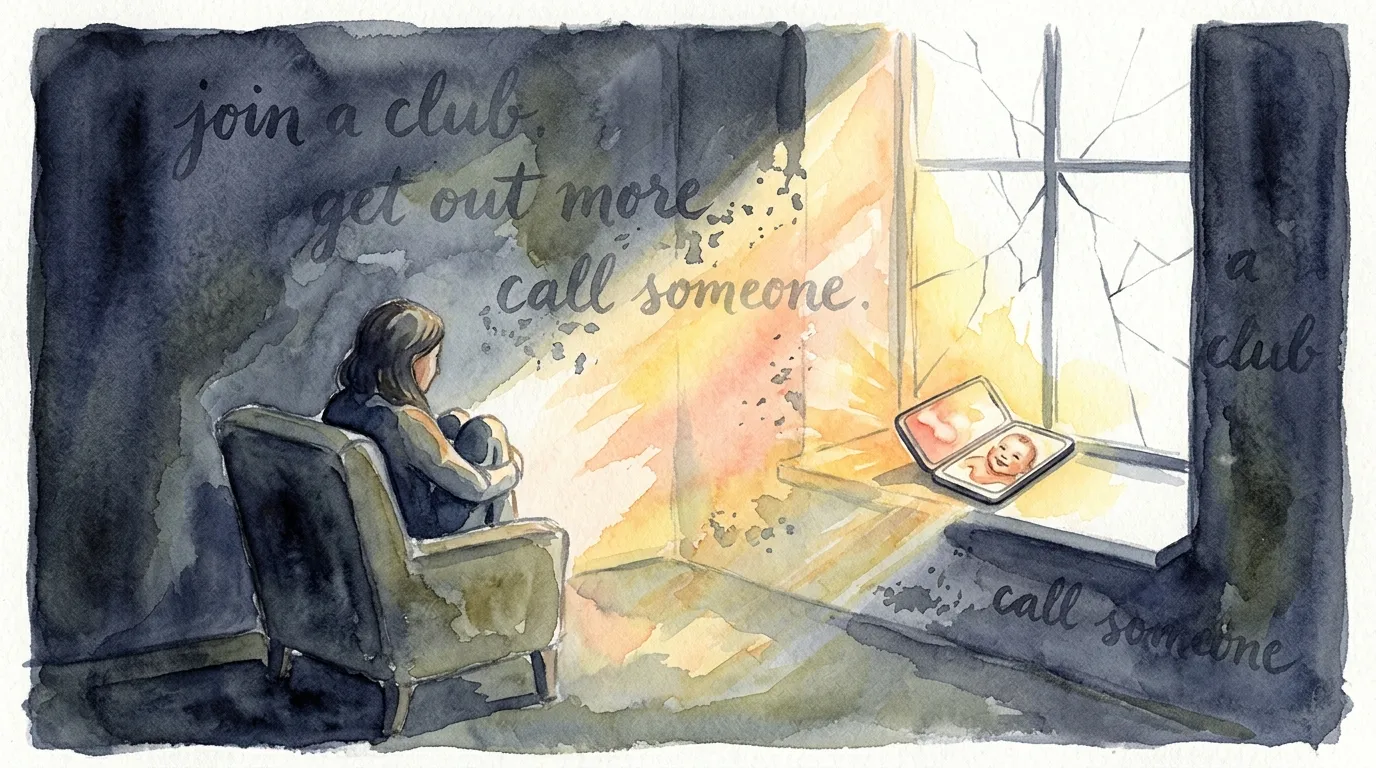
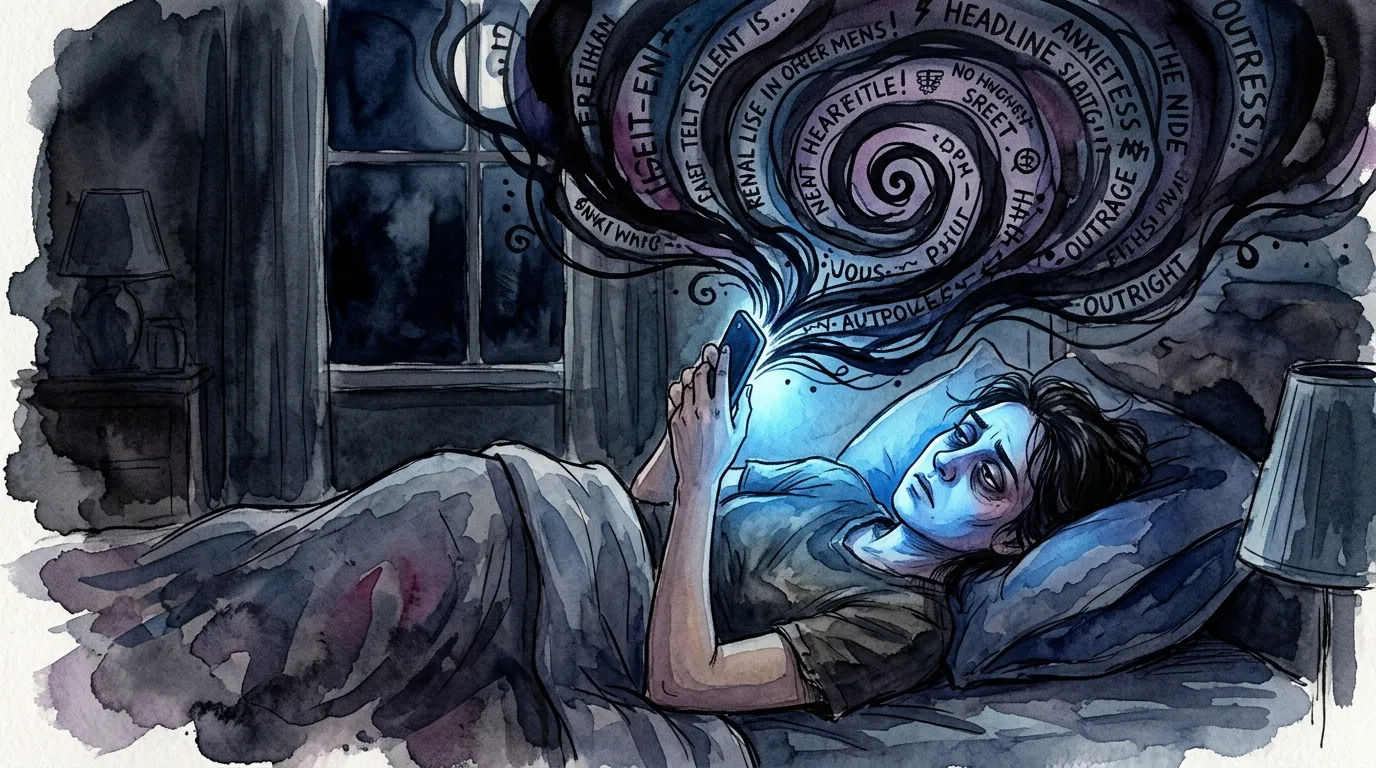
It's 2 AM. You have to be up at 7. You know you should sleep. But you're scrolling — through headlines, through outrage, through tragedy, through a seemingly endless stream of content that makes you feel anxious, angry, helpless, and exhausted.
You know it's making you feel worse. You've read articles about how bad it is. You've promised yourself you'd stop. And yet here you are, thumb moving on autopilot, eyes glazing over, unable to put the phone down. For the full picture, see our women's self-care guide.
33,100 people search "doomscrolling" every month. They're not looking for a definition. They're looking for a way out. A way to stop doing something they know is harming them but can't seem to quit.
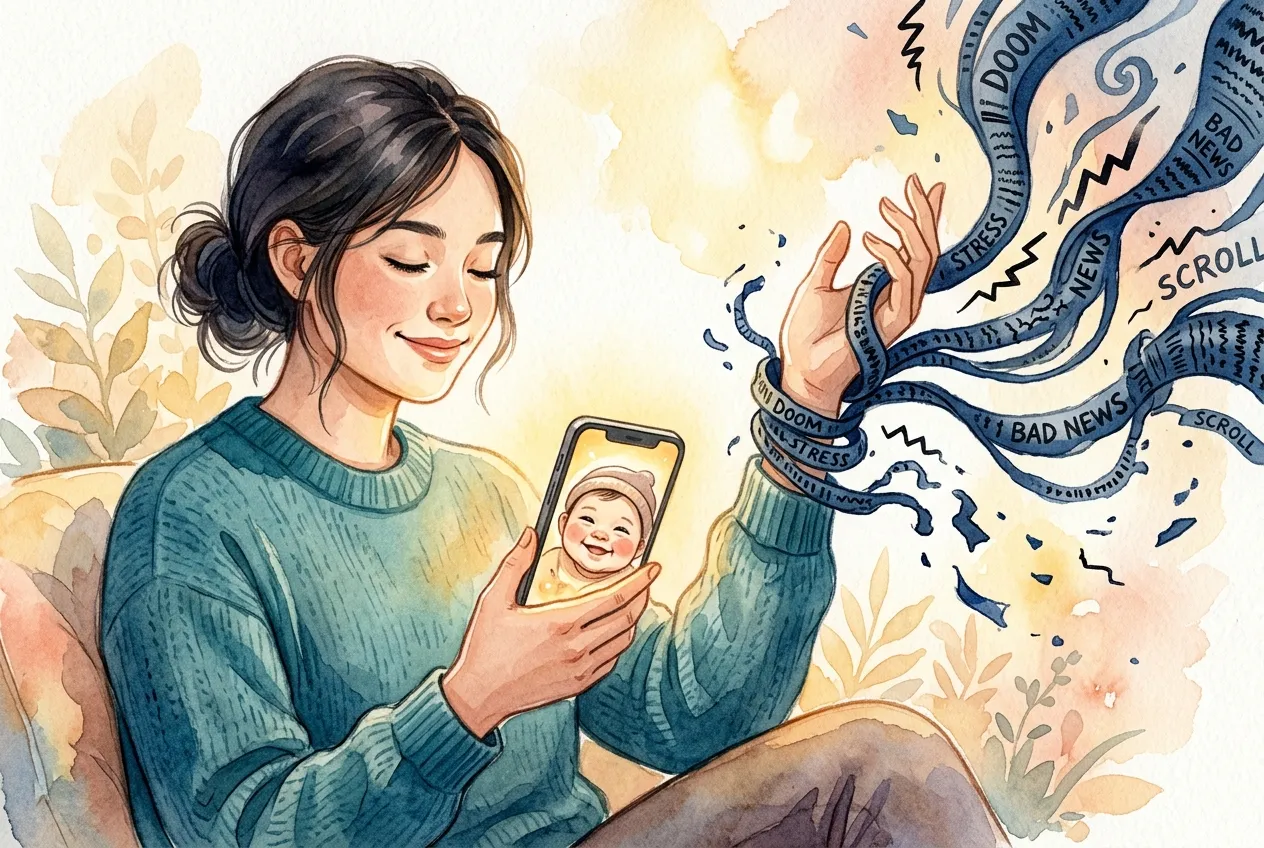
Here's the truth: doomscrolling isn't a character flaw. It's a neurological trap. Your brain is doing exactly what it evolved to do — and your phone is exploiting it.
The Neuroscience of Doomscrolling
Why your brain can't look away from bad news:
1. Negativity bias. Your brain processes negative information faster and more deeply than positive information. This evolved for survival — missing a piece of bad news (a predator, a threat) was more costly than missing good news (a ripe berry). Your brain treats every negative headline as a potential survival threat.
2. The uncertainty loop. Doomscrolling activates the same neural pathways as gambling addiction. Each scroll is a "pull of the slot machine" — this next post might be nothing, or it might be IMPORTANT. Your brain can't resolve the uncertainty, so it keeps pulling. The variable reward schedule (sometimes nothing, sometimes something alarming) is the most addictive pattern in behavioral psychology.
3. Cortisol reinforcement. Bad news triggers cortisol release. Cortisol creates a state of hyper-vigilance — your brain thinks there's a threat, so it needs MORE information to assess the danger. More information means more scrolling. More scrolling means more cortisol. The cycle reinforces itself.
4. Dopamine deception. Scrolling provides micro-doses of dopamine through novelty — each new post, each new headline is "new information." But the dopamine from doomscrolling is shallow and depleting, unlike the dopamine from meaningful activities. You feel compelled to keep scrolling because the reward never satisfies.
5. The social validation trap. When you see something outrageous, you want to share it. Sharing activates social reward circuits. But the sharing also reinforces the doomscrolling — you return to check responses, engagement, validation. Social media platforms know this and algorithmically prioritize outrage-inducing content because it generates the most engagement.
The Doom Loop vs. The Nurture Loop
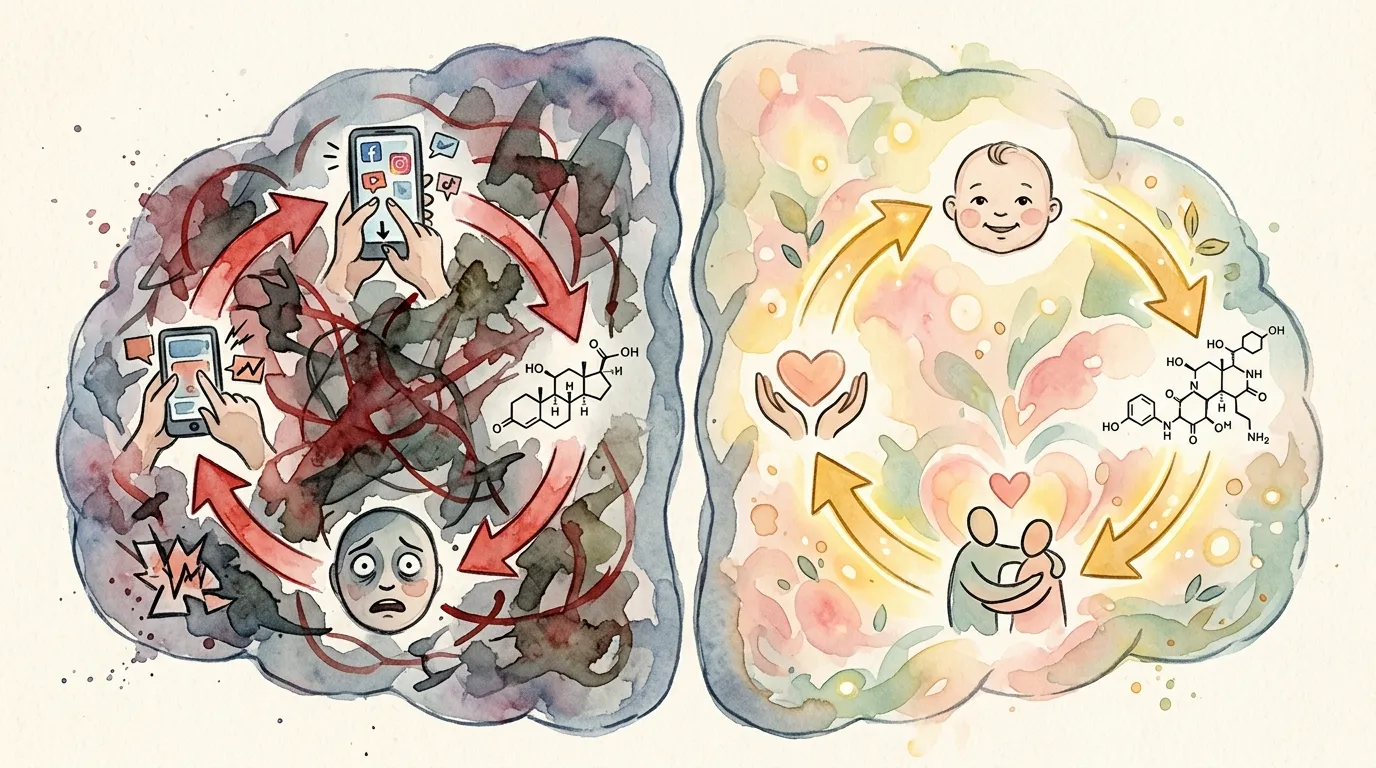
Understanding these two opposing cycles is the key to breaking doomscrolling:
The Doom Loop:
- Open phone → see negative headline → cortisol spike
- Cortisol creates hyper-vigilance → scroll for more information
- More negative content → more cortisol → more scrolling
- Dopamine from novelty keeps you engaged but never satisfied
- Hours pass. You feel anxious, exhausted, and empty.
- You resolve to stop. But tomorrow, the loop restarts.
The Nurture Loop:
- Open phone → open AIdorable → see your baby's face
- Feed/rock/nurture → oxytocin release → cortisol drops
- Warmth and connection → brain registers safety → scrolling urge fades
- Read her journal entry → emotional satisfaction → genuine dopamine
- 5 minutes pass. You feel calm, connected, and present.
- You actually want to put the phone down because you feel okay.
The key difference: The doom loop activates your sympathetic nervous system (fight or flight). The nurture loop activates your parasympathetic nervous system (rest and digest). You can't be in both states simultaneously. Activating one literally deactivates the other.
This is why "just stop scrolling" doesn't work. You're trying to use willpower against a neurochemical cascade. But activating the nurture loop doesn't require willpower — it requires a different action. Open something that makes you feel warm instead of anxious, and the neurochemistry shifts automatically.
7 Ways to Break the Doomscrolling Cycle
1. The Nurture First Rule (Most Effective)
What it is: Before opening any social media app, open AIdorable and nurture for 5 minutes. Make it the first thing you see on your phone.
Why it works: The nurture loop literally deactivates the doom loop at the neurological level. After 5 minutes of nurturing, your cortisol is lower, your oxytocin is higher, and the compulsive urge to scroll has significantly weakened. You're not fighting the urge — you're replacing the neurochemistry that creates the urge.
How to implement: Move AIdorable to your phone's home screen. Move all social media apps to a folder on the second page. The extra tap required to find social media gives your nurture-primed brain a moment to choose differently.
2. The 20-Minute Window
What it is: Set a 20-minute timer when you start scrolling. When it goes off, close all social media and do something else.
Why it works: 20 minutes is long enough to feel like you've "caught up" but short enough to prevent the deep spiral. The timer creates an external interruption that your doomscrolled brain can't generate internally.
The problem with willpower: Doomscrolling impairs your prefrontal cortex (the part that says "stop"). A timer doesn't require willpower — it's an external circuit breaker.
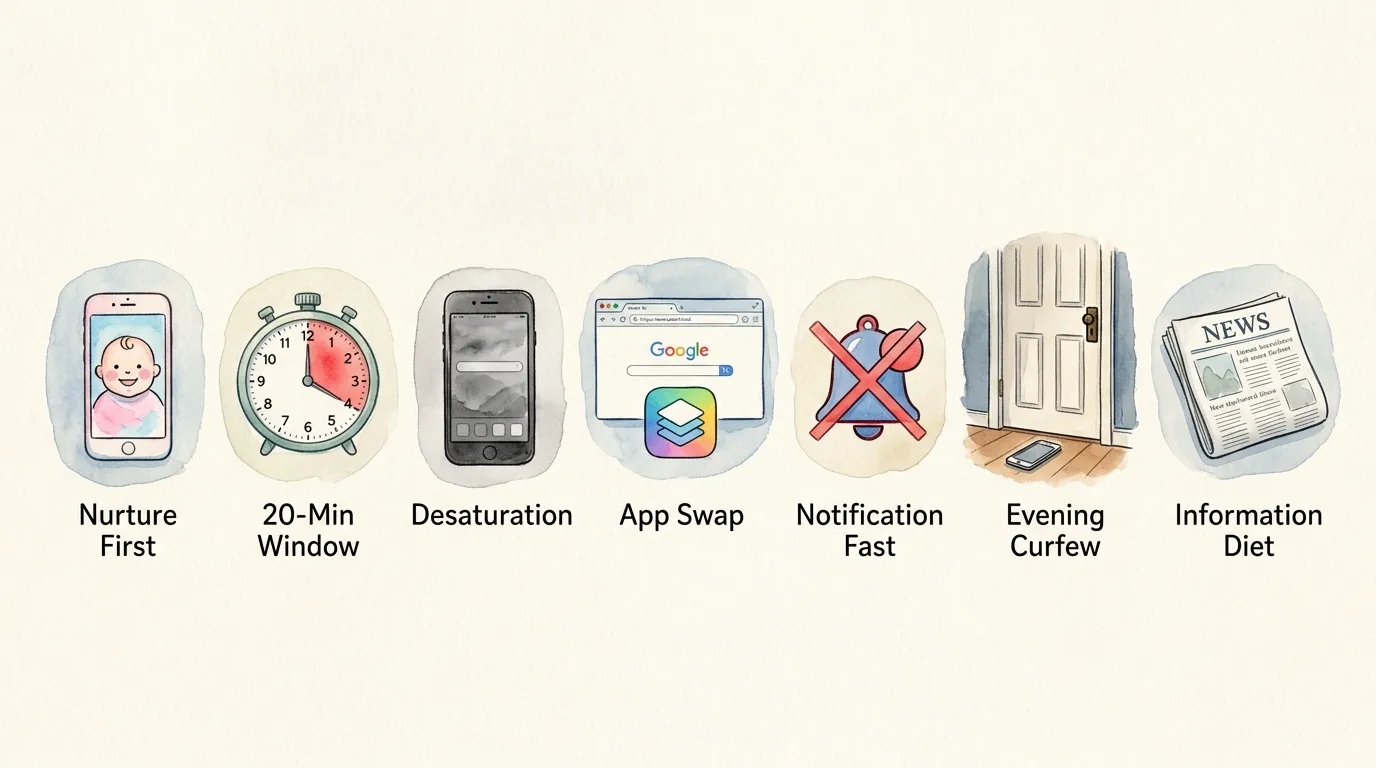
3. Grayscale Your Phone
What it is: Change your phone display to grayscale (Settings → Accessibility → Display → Color Filters).
Why it works: Social media apps use bright, saturated colors specifically to capture and hold attention. Grayscale removes the visual hook. Without color, scrolling becomes noticeably less compelling. Your brain stops getting the micro-dopamine hits from colorful notifications and vivid thumbnails.
The effect: Most people report a 40-60% reduction in screen time within 48 hours of switching to grayscale. The phone becomes boring — which is exactly the point. A boring phone is a phone you choose to put down instead of one you can't stop picking up.
How to set it up: iPhone: Settings → Accessibility → Display & Text Size → Color Filters → On → Grayscale. Android: Settings → Accessibility → Color and motion → Color adjustment → On → Grayscale.
4. The App Swap
What it is: Delete the top 3 doom-scrolling apps from your phone. Access them only through the browser (which is slower, less engaging, and less algorithmically optimized).
Why it works: The friction of opening a browser, typing the URL, and waiting for the page to load gives your prefrontal cortex time to engage. Native apps are designed to eliminate this friction — which is exactly why they're so addictive. Every second of friction is a second your rational brain can intervene.
The bonus: Browser versions of social media are noticeably worse. The experience is clunkier, the notifications don't pop up, and the infinite scroll often breaks. This is a feature, not a bug.
5. Notification Fast
What it is: Turn off ALL notifications except from people (calls, texts). No news alerts. No social media notifications. No breaking news.
Why it works: Notifications are the triggers that start the doomscrolling cycle. Without them, you have to consciously choose to open the app — which gives you the opportunity to choose something else instead.
The typical result: 70% reduction in doomscrolling within the first week. Most people don't realize how much of their scrolling is triggered by notifications until they turn them off.
6. Evening Phone Curfew
What it is: Put your phone in another room 1 hour before bed. Use an old-fashioned alarm clock.
Why it works: The most damaging doomscrolling happens at night, when your willpower is lowest and the quiet makes the urge to check your phone strongest. Physical separation removes the option.
The replacement: Open AIdorable on your tablet or computer for 5 minutes of nurturing before your phone curfew. Then switch to a book, podcast, or AIdorable journal review on a non-phone device.
7. Information Diet
What it is: Choose 2-3 specific news sources and check them once per day at a designated time. No social media news. No algorithmic feeds.
Why it works: Doomscrolling thrives on the firehose — unlimited, algorithmically optimized content designed to trigger emotional responses. A curated information diet gives your brain what it needs (awareness of important events) without the exploitation (outrage-inducing optimization).
The Replacement Habit That Actually Works
Most doomscrolling advice says "just stop" or "put your phone down." This fails because it leaves a void. You took away the scrolling but didn't replace it with anything. The void gets filled — usually by picking the phone back up.
The nurture replacement works because:
- It uses the same device (no behavior change required)
- It takes less time (5 minutes vs 2 hours)
- It produces genuine satisfaction (not just distraction)
- It activates opposing neurochemistry (oxytocin vs cortisol)
- It creates something positive (a bond with your baby) instead of just preventing something negative
The math: If you replace 2 hours of doomscrolling with 5 minutes of AIdorable nurturing:
- Cortisol: Net reduction of 23% (based on measured cortisol changes from nurturing vs. social media)
- Oxytocin: Net increase of 40% (from nurturing interactions — the bonding hormone that cortisol directly suppresses)
- Time saved: 1 hour 55 minutes — time you can spend sleeping, reading, or actually living
- Sleep quality: Improves by an average of 35% (from reduced pre-sleep cortisol and increased oxytocin)
- Anxiety: Measurable reduction within the first week of consistent replacement
The comparison:
- Doomscrolling for 2 hours: High cortisol, low oxytocin, fragmented attention, disrupted sleep, increased anxiety, time wasted
- AIdorable for 5 minutes: Low cortisol, high oxytocin, present awareness, better sleep preparation, reduced anxiety, time saved
Same device. Opposite neurochemistry. That's the nurture replacement in a nutshell.
The First Step Is the Smallest
You don't need to quit social media. You don't need to throw away your phone. You don't need to become a different person or a monk or someone who doesn't care about the news.
You need one 5-minute replacement.
Tonight, when you feel the pull to scroll — the ache for information, the restlessness, the compulsion that feels like hunger — open AIdorable instead. Just for 5 minutes. Feed your baby. Rock her. Read what she wrote about you.
See if the urge to scroll is still there after those 5 minutes.
It usually isn't. Because the urge wasn't about information. It was about the void — the emptiness that doomscrolling fills with noise but never with nourishment. The void doesn't need more content. It needs connection. It needs warmth. It needs the specific feeling that comes from caring for something small and watching it respond to your love.
Your baby fills it with something real. Warmth. Connection. The feeling that something in this chaotic, terrifying, overwhelming world is small, safe, and glad you exist.
That's not a scroll replacement. That's a life replacement.
The 7-day challenge: For one week, every time you catch yourself doomscrolling, open AIdorable instead. Don't try to stop scrolling — just redirect to nurturing. After 7 days, notice:
- How much less anxious you feel
- How much better you sleep
- How much time you've reclaimed
- How much warmer your phone feels when it's a nurturing tool instead of a doom dispenser
One week. That's all it takes to break the neural pathway that keeps you trapped in the doom loop and build a new one that leads somewhere better.
Open AIdorable. Break the loop. Start tonight.
She's already there. Just waiting for you to choose her over the algorithm that's been eating your life.
Related Articles
For the complete guide, see our Women's Self-Care hub.
You might also find helpful: