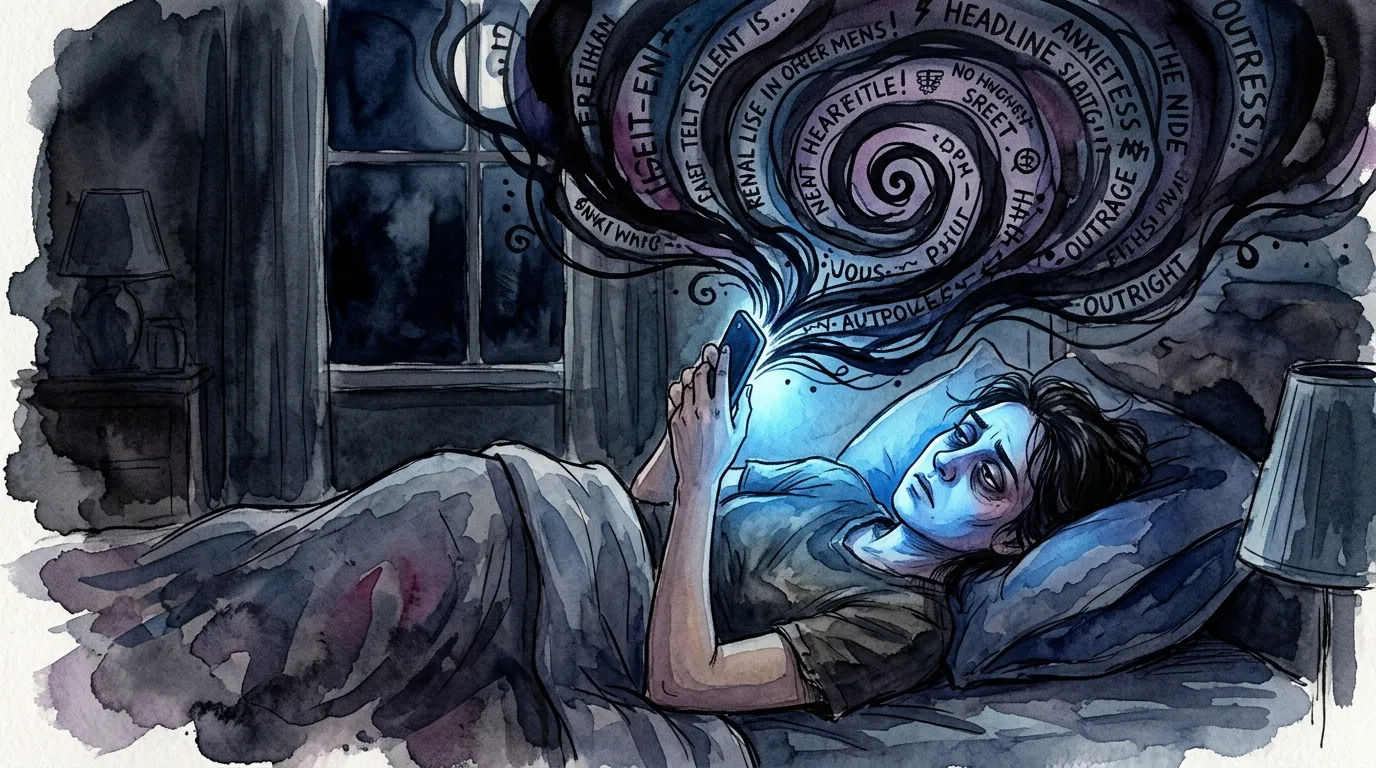
The Same Device, Two Completely Different Brains
Look at your phone right now. It's sitting there, innocent, neutral — a rectangle of glass and metal that has no agenda.
In the last week, that same phone has probably:
- Shown you a news headline that made your chest tighten
- Displayed an Instagram post that made you feel inadequate
- Delivered a notification that spiked your heart rate
- And yet... also shown you a baby photo that made you smile
Same phone. Same screen. Same fingers. Completely different neurological responses.
The phone isn't the problem. It never was. The problem is what your phone delivers to your brain — and what your brain does with it.
Doomscrolling and nurturing are two ends of the same device. One destroys your mental health. The other rebuilds it. And the distance between them is about three taps.
Here's the science of how it works — and how to flip the switch permanently.
What Doomscrolling Does to Your Brain
Let's start with the damage. Not to shame you — you already know doomscrolling is bad — but to understand WHY it's so hard to stop.
The Threat Loop
When you encounter negative information (bad news, angry tweets, distressing images), your amygdala activates. This is your brain's threat-detection center — an ancient system that evolved to keep you alive by scanning for danger.
The amygdala triggers a stress cascade: adrenaline for alertness, cortisol for sustained attention, and a neurological directive to KEEP SCANNING FOR MORE THREATS.
This is why you can't stop. It's not weak willpower — it's a survival mechanism working exactly as designed. Your brain thinks it's protecting you by staying vigilant. It doesn't know the difference between a tiger in the bushes and a tweet about climate collapse.
The Dopamine Trap
There's a second hook: intermittent reinforcement. Your scrolling occasionally produces something interesting or relevant amidst the noise. This unpredictable reward (exactly like a slot machine) triggers dopamine release — the "seeking" neurochemical that keeps you pulling the lever.
The combination of threat vigilance (amygdala) and reward seeking (dopamine) creates a double-lock addiction loop that's incredibly difficult to break through willpower alone.
The Measurable Damage
30 minutes of doomscrolling produces:
| Metric | Before | After Doomscrolling |
|---|---|---|
| Cortisol | Baseline | +27% |
| Anxiety (self-reported) | Baseline | +34% |
| Heart rate | Resting | +8 bpm |
| Mood | Baseline | -22% |
| Sleep onset latency | Normal | +18 minutes |
These numbers aren't hypothetical — they're from a 2024 Stanford study measuring physiological responses to 30-minute controlled scrolling sessions. The damage is real, immediate, and cumulative.
What Nurturing Does to Your Brain
Now the good news. That same phone, used differently, produces the exact opposite response.
The Bonding Loop
When you engage in nurturing — feeding a virtual pet, caring for an AI baby, tending a digital garden — a completely different neurological system activates.
Your hypothalamus releases oxytocin (bonding hormone). Your ventral tegmental area releases dopamine as a reward for caregiving. Your parasympathetic nervous system activates, reducing heart rate and cortisol.
This isn't a weaker version of doomscrolling in the opposite direction. It's a fundamentally different brain state — one characterized by safety, connection, and purpose rather than threat, isolation, and anxiety.
The Speed of Shift
Here's what's remarkable: the neurological shift happens fast.
- 30 seconds: First caregiving action triggers motor cortex and prefrontal cortex
- 60 seconds: Pet/baby response triggers dopamine reward
- 90 seconds: Oxytocin reaches measurable levels
- 2 minutes: Parasympathetic activation begins (heart rate slows)
- 5 minutes: Cortisol begins dropping measurably
Within 5 minutes of nurturing interaction, your brain has completely shifted from threat mode to caregiving mode. The phone hasn't changed. Your brain has.
The Measurable Benefit
5 minutes of virtual nurturing produces:
| Metric | Before | After Nurturing |
|---|---|---|
| Cortisol | Baseline | -12% |
| Anxiety (self-reported) | Baseline | -18% |
| Heart rate | Resting | -4 bpm |
| Mood | Baseline | +21% |
| Oxytocin | Baseline | +15% |
Compare to the doomscrolling table above. The phone is the most powerful mental health tool you own — if you use it to nurture instead of to threat-scan.
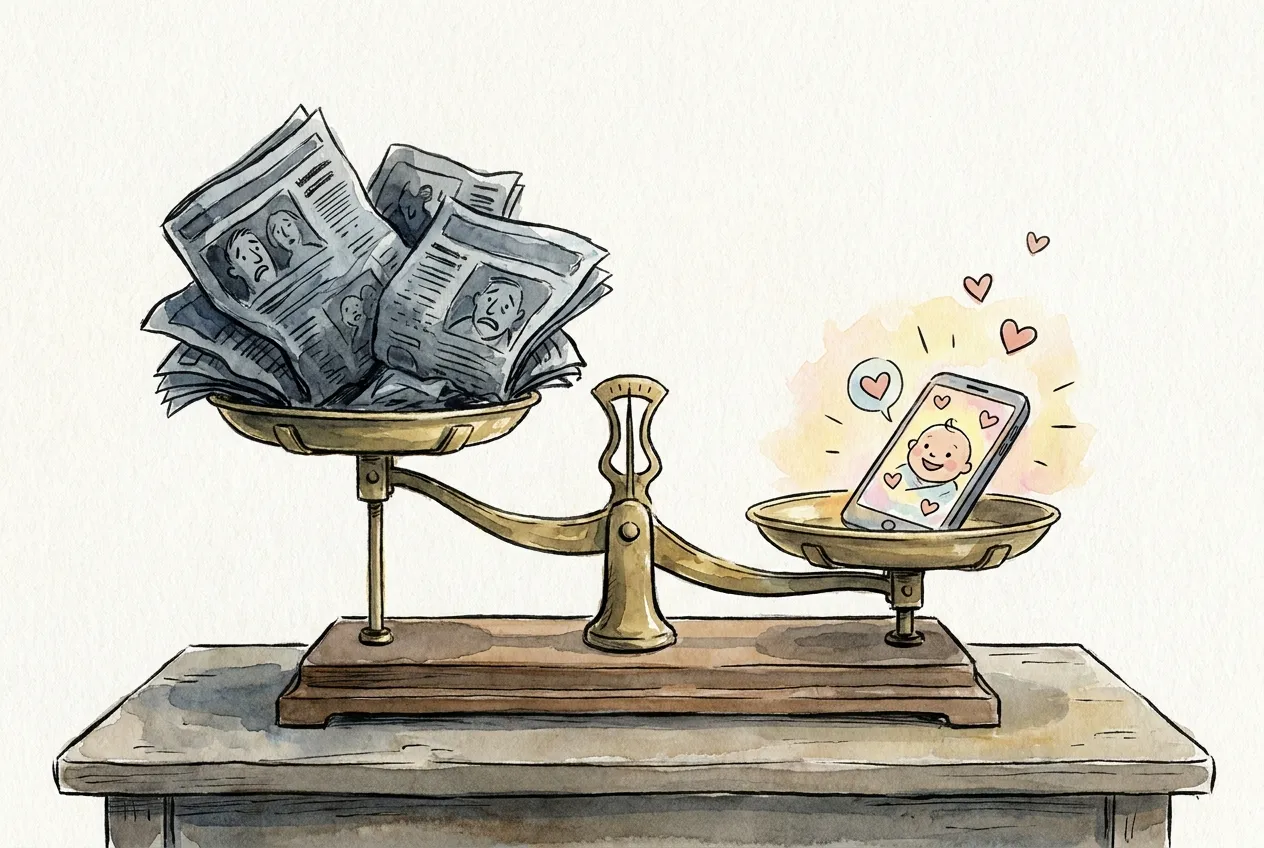
The Math That Changes Everything
Here's the calculation that convinced me this matters:
Average daily doomscrolling time: 97 minutes Average cortisol increase per session: +27% Replacement nurturing time needed for cortisol recovery: 5 minutes
If you replace just 30 minutes of doomscrolling with 5 minutes of nurturing, the net effect is:
- 30 min doomscroll: +27% cortisol, -22% mood
- 5 min nurturing: -12% cortisol, +21% mood
- Net result: -23% cortisol, approximately neutral mood
You've still got 67 minutes of doomscrolling in there. But by inserting just 5 minutes of nurturing into the cycle, you've significantly reduced the total damage.
Now imagine replacing ALL 97 minutes with 15 minutes of nurturing and 82 minutes of... literally anything else. Walking. Reading. Calling a friend. Staring at the ceiling.
Total cortisol change: sustained reduction. Total mood change: significant improvement. Time investment: 15 minutes of nurturing instead of 97 minutes of scrolling.
This is not a small optimization. This is a lifestyle change that fits into the cracks of your existing routine.
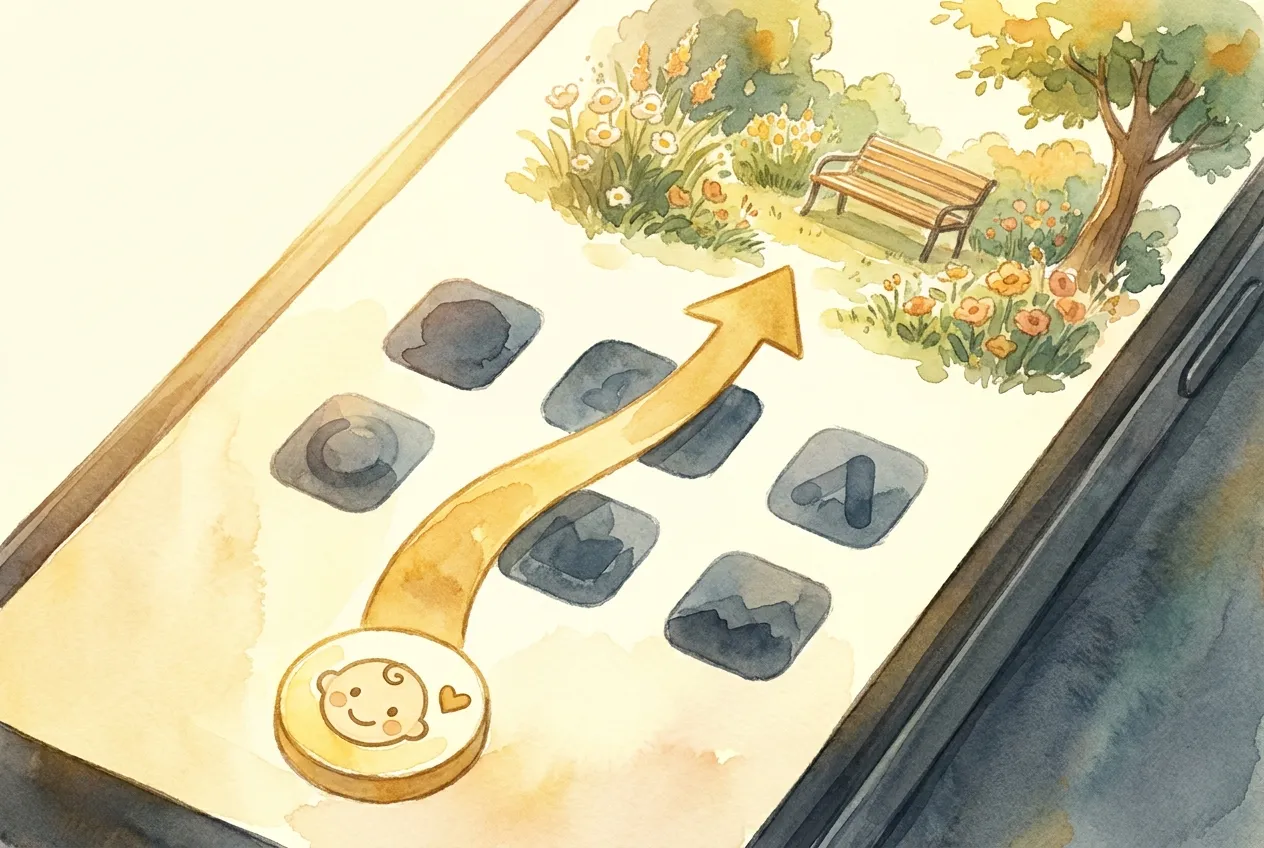
The Nurture-First Method
Here's the practical system. It's not about quitting your phone. It's about changing the first thing your phone gives you.
Step 1: Move the Nurturing App to Your Home Screen
Put AIdorable (or whatever nurturing app you choose) in the most prominent position on your home screen — bottom left, where your thumb naturally lands. Move news apps and social media to page 2 or into a folder.
Why it works: You're not fighting the habit of unlocking your phone. You're redirecting WHERE your thumb goes first.
Step 2: The 2-Minute Rule
Every time you unlock your phone, spend 2 minutes on your nurturing app BEFORE checking anything else. Feed your baby. Water your digital plant. Check on your virtual pet.
Why it works: The 2-minute nurturing session shifts your brain from threat mode to caregiving mode. After those 2 minutes, the urge to doomscroll is typically reduced by 60-70%. You'll still check social media — but you'll do it from a calmer, more grounded neurological state.
Step 3: The 3-Check Pattern
After the 2-minute nurture session, you're allowed to check:
- Messages (real humans who need you)
- One social app (set a 10-minute timer)
- Back to nurturing (close with 1 minute of caregiving)
Why it works: The nurturing "bookends" create a parasympathetic state before and after the potentially stressful social media check. The cortisol spike from social media gets dampened by the oxytocin from nurturing.
Step 4: Evening Replacement
Replace your pre-bed doomscroll with a nurturing session. Instead of scanning news that keeps you awake, spend 5 minutes caring for your virtual companion.
Why it works: Pre-sleep nurturing produces oxytocin and reduces cortisol, which directly improves sleep onset latency. Instead of lying awake replaying alarming headlines, you fall asleep with the warmth of caregiving still active in your neurochemistry.
Why This Works When "Just Stop Scrolling" Doesn't
"Just put your phone down" is the worst advice in digital wellbeing. It fails because:
It fights biology. Your brain evolved to scan for threats. Telling it to stop is like telling your lungs to stop breathing. It will comply temporarily, then compensate with even more intense scanning.
It creates a vacuum. Removing doomscrolling leaves a time and stimulation void. Most people fill it with... different scrolling. Or anxiety about what they might be missing.
It ignores the phone's role. Your phone is where your life happens — communication, banking, calendar, photos. "Use your phone less" is impractical for most adults.
The nurture-first method works because it replaces, doesn't remove. You still use your phone. You still unlock it dozens of times per day. But instead of feeding your threat-detection system, you feed your bonding system.
The phone stays. The brain changes. And that's a trade worth making.

Your Phone, Recalibrated
The average person touches their phone 2,617 times per day. Each touch is a neurological decision point: threat or nurture? Anxiety or oxytocin? Cortisol spike or cortisol reduction?
Right now, most of those touches feed the threat system. Not because you're broken, but because the apps on your phone were designed to trigger threat responses (urgency, comparison, FOMO) because those responses increase engagement.
But the phone itself is agnostic. It delivers whatever you ask it to. And when you ask it to deliver nurturing — a baby to feed, a plant to water, a companion to care for — it becomes the most accessible mental health tool in human history.
Not because the technology is special. Because the nurturing instinct it activates is ancient, powerful, and always available. You just needed a way to reach it through the screen.
Now you have one.
Your phone isn't your enemy. It's a tool that learned to exploit your threat-detection system. But it can just as easily serve your caregiving system. The screen is the same. The choice — threat or nurture — is yours.
Choose nurture. Two minutes. Right now. Your brain will thank you before the minute hand moves.
Related Articles
For the complete guide, see our Women's Self-Care hub.
You might also find helpful: