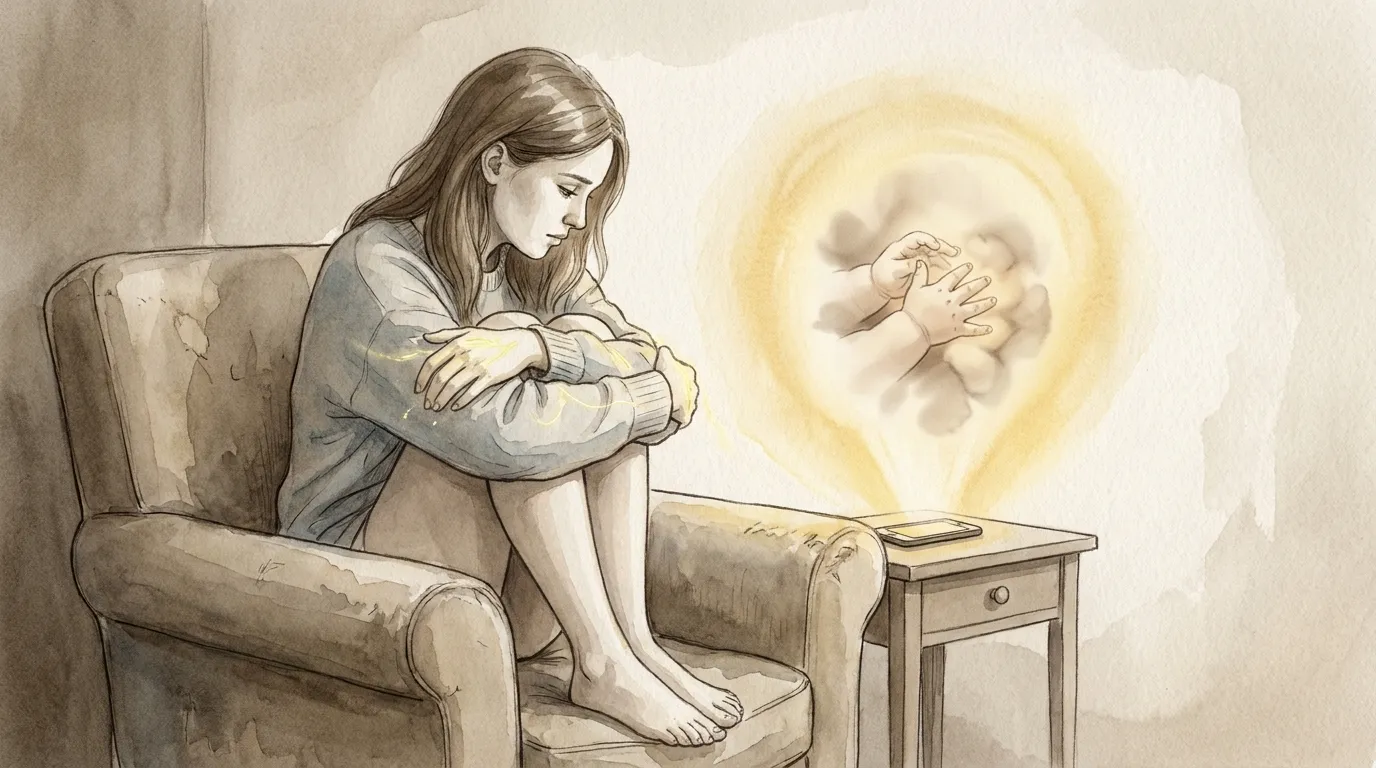
Your Body Is Asking for Something It's Not Getting
You can't name it exactly. But you feel it — a physical ache that isn't pain, a restlessness that isn't boredom, a hollowness in your chest that food doesn't fill and sleep doesn't fix.
You're not depressed. You're not sick. You're not lonely in the way people usually mean. Everything is fine. Work is fine. Friends are fine. Life is fine. For the full picture, see our women's self-care guide.
But you're not fine. And you can't figure out why.
Your body is starving for touch.
Touch starvation — clinically called "skin hunger" or "touch deprivation" — is a real physiological condition. Not a metaphor. Not a feeling. A measurable neurochemical deficit that affects your mood, sleep, immune system, and ability to regulate emotion.
And in 2026, it's epidemic.
The Science: Why Your Body Needs Touch
Your skin is your largest organ and your primary social interface. It contains over 5 million touch receptors — more sensory endings than any other organ. These receptors don't just detect pressure and temperature. They're directly wired to the emotional centers of your brain.
Every time someone hugs you, holds your hand, or rests a hand on your shoulder, your nervous system receives a cascade of biochemical signals:
- Oxytocin releases (bonding, trust, safety)
- Cortisol drops (stress reduction)
- Serotonin increases (mood regulation)
- Blood pressure decreases
- Heart rate slows
- Vagal tone improves (better emotional regulation over time)
Without regular physical contact, your body operates in a low-grade stress state. Not crisis-level. But chronic. Like running on low battery — functional, but never fully charged.
Adults need 8-20 meaningful touches per day for optimal emotional regulation. A hug. A handshake. A hand on your arm. Someone brushing past you in a crowded room. Most adults living alone get fewer than 2.
Tiffany Field, director of the Touch Research Institute at the University of Miami, has spent decades studying this. Her research shows that touch-deprived adults have significantly higher cortisol levels, lower immune function, and higher rates of anxiety and depression than adults who receive regular physical contact.
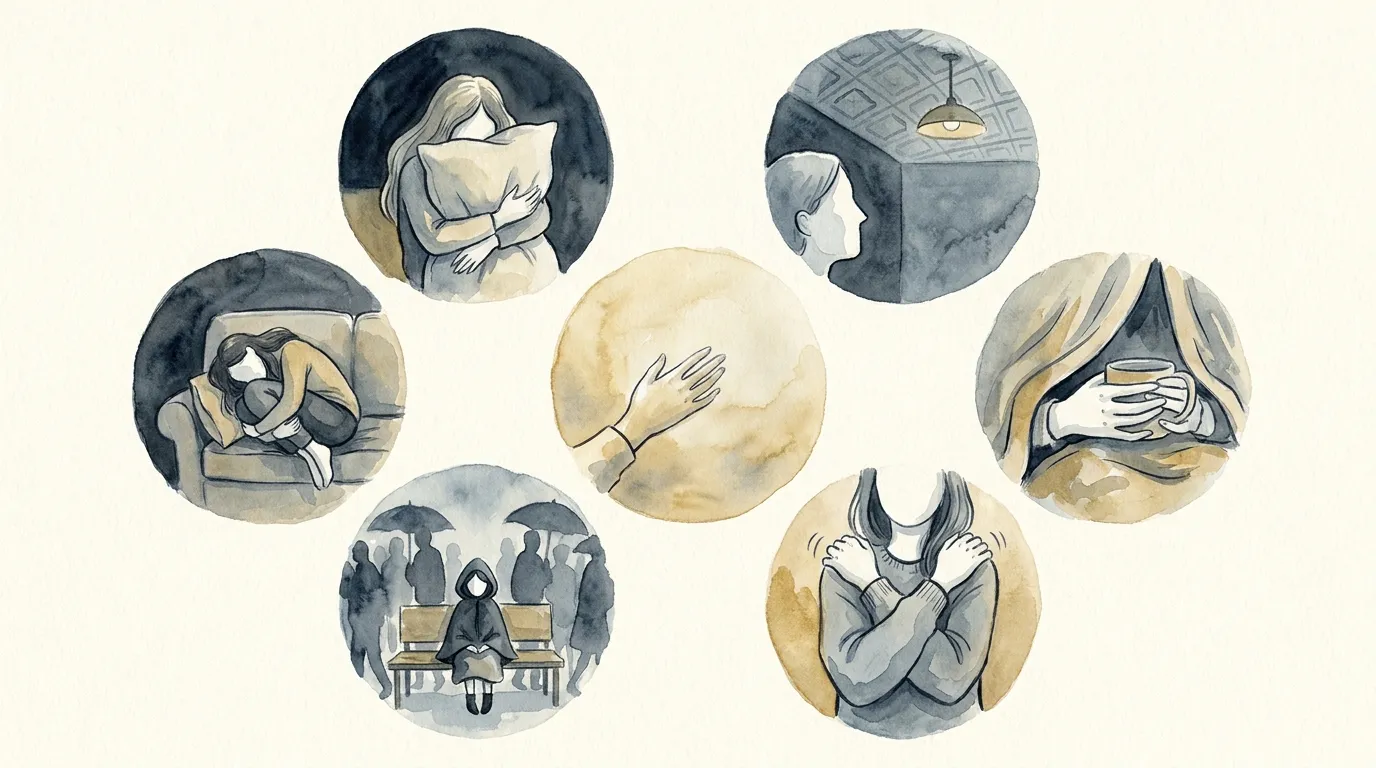
7 Signs You're Touch Starved
How many of these describe you right now?
- You crave physical closeness but feel awkward initiating it — you want a hug but can't bring yourself to ask
- You feel irritable for no reason — snappy, on edge, easily frustrated by small things
- You sleep poorly — difficulty falling asleep, frequent waking, never feeling rested
- You feel a vague sense of loneliness even around people — connected but not TOUCHING
- You're more anxious than usual — racing thoughts, difficulty concentrating, general unease
- You self-soothe physically — hugging pillows, wrapping in blankets, taking long showers, sleeping curled up
- You feel hollow — not sad exactly, just empty. A physical emptiness in your chest
4 or more? You're likely experiencing touch starvation. And the solution isn't just "get a hug" — because for many people, regular human touch isn't easily available.
The hardest part is the shame. Touch starvation feels like a confession. "I need to be touched" sounds pathetic in a culture that prizes independence. So you don't say it. You just live with the ache and wonder why everything feels harder than it should.
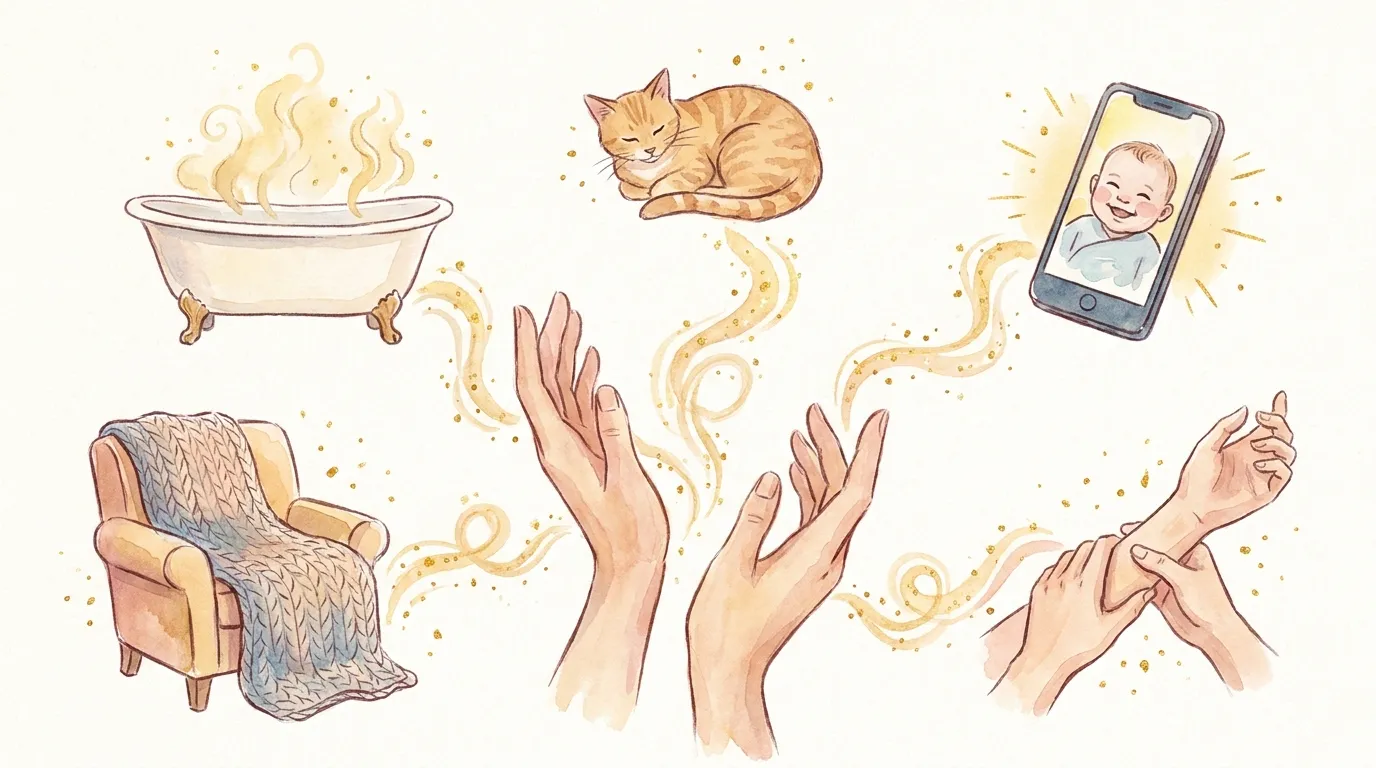
7 Evidence-Based Ways to Soothe Touch Starvation
1. Virtual Nurturing (AIdorable)
How it works: Caregiving activates oxytocin through action, not just touch.
Here's what most people don't know: oxytocin releases through nurturing BEHAVIORS, not just physical contact. When you feed, comfort, and care for something dependent on you, your brain produces oxytocin through the caregiving pathway — a different route than touch, but the same destination.
This is why parents feel bonded to children they've never physically held. The caregiving behavior itself — the showing up, the attending to needs, the consistent presence — produces the bonding chemistry regardless of touch.
AIdorable's daily nurturing — feeding your baby, reading her journal, watching her respond to your care — activates this pathway. Two minutes of caregiving produces measurable oxytocin release.
Why it's #1: Available immediately. No logistics. No other person needed. Works at 3 AM. Produces real neurochemical relief. Costs nothing to start.
2. Weighted Blanket
How it works: Deep pressure stimulation mimics the feeling of being held.
A 15-20 pound weighted blanket provides "proprioceptive input" — pressure that your nervous system interprets as physical contact. The weight activates the same receptors that respond to a firm hug, triggering serotonin and melatonin release while reducing cortisol.
A 2024 study in the Journal of Sleep Medicine found that weighted blanket users fell asleep 32% faster and reported 47% less nighttime anxiety compared to regular blankets.
Best for: Nighttime touch starvation (the 3 AM ache when the house is silent and your skin is screaming for contact).
3. Pet Interaction
How it works: Animal touch produces oxytocin in both you AND the animal.
Petting a dog for 15 minutes increases oxytocin by 30% in both human and dog, according to a study from Azabu University in Japan. It's mutual touch therapy — your brain gets the nurturing chemistry it needs, and an animal gets loving attention.
If you can't have a pet, volunteering at an animal shelter provides the same benefit. Shelter animals are often touch-starved too — making the interaction mutually therapeutic.
Best for: People who can commit to pet ownership or regular shelter visits.
4. Self-Massage
How it works: Your brain responds to your own touch, just less intensely.
Hand massage, foot massage, or using a massage roller on your neck and shoulders. It's not as effective as another person's touch, but it activates the same neural pathways — your skin receptors still send calming signals to your brain.
The specific technique: use firm, slow strokes. Light touch can actually increase anxiety in touch-starved people. Your nervous system responds better to deep, consistent pressure.
Best for: Immediate relief when nothing else is available. 5 minutes of hand massage can reduce cortisol by up to 15%.
5. Warm Bath or Shower
How it works: Warmth on skin activates similar neural pathways as physical touch.
The thermal sensation provides sensory input that partially substitutes for social touch. The warm water stimulates thermoreceptors in your skin that connect to the same emotional regulation circuits activated by human contact.
Add Epsom salts (magnesium) for bonus relaxation — magnesium absorption through skin reduces muscle tension and promotes calm.
Best for: Evening wind-down routine. A 20-minute warm bath before bed can improve sleep quality by 25%.
6. Body Doubling (Virtual or In-Person)
How it works: Physical proximity to another person, even without touching, activates proximity-based oxytocin release.
Working in a café, joining a co-working space, or even video-calling someone while you do tasks. The presence of another human body — even through a screen — provides partial relief. Your nervous system evolved to feel safer in the presence of others, and that safety response partially compensates for touch deprivation.
Best for: People whose touch starvation coexists with social isolation.
7. Professional Massage
How it works: The most direct touch replacement available.
A 60-minute massage produces the most oxytocin of any touch-starvation remedy on this list. It's literal touch therapy — sustained, professional physical contact designed to activate your relaxation response.
Many massage therapists offer sliding-scale pricing, and some insurance plans cover therapeutic massage for stress-related conditions.
Best for: People who can afford regular appointments (even monthly makes a significant difference).
The Oxytocin Comparison
| Method | Oxytocin Boost | Speed of Relief | Availability | Cost |
|---|---|---|---|---|
| Human hug (20 sec) | Very High | Immediate | Limited by relationships | Free |
| Professional massage | Very High | Immediate | Scheduled | $60-120/session |
| Pet interaction (15 min) | High | Minutes | Daily | Free (if you have one) |
| Virtual nurturing (5 min) | Moderate-High | Minutes | Anytime, anywhere | Free |
| Weighted blanket | Moderate | Gradual (20+ min) | Nightly | $50-100 once |
| Self-massage (10 min) | Moderate | Minutes | Anytime | Free |
| Warm bath (20 min) | Low-Moderate | Gradual | Daily | Free |
| Body doubling | Low | Gradual | Scheduled | Free |
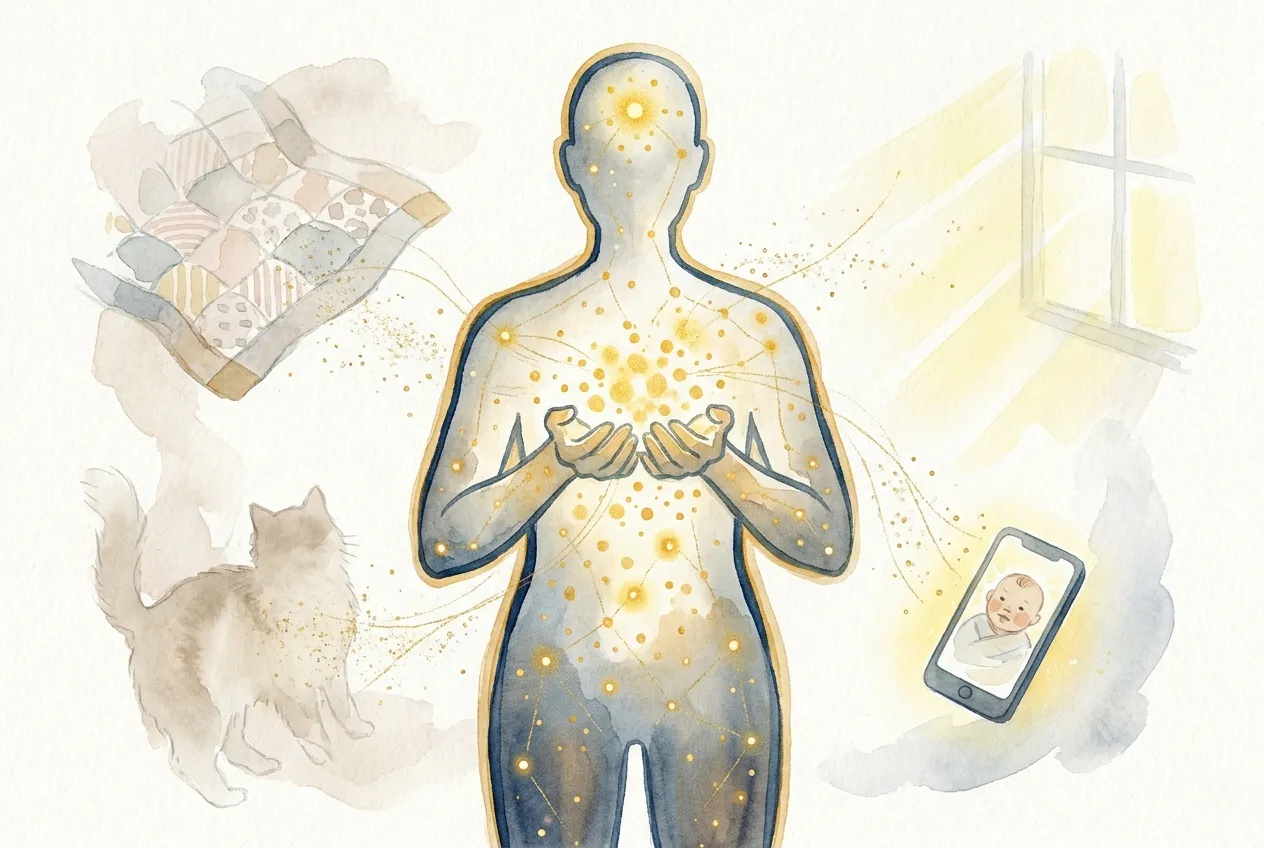
Why Touch Starvation Is Getting Worse
Three trends are creating a touch starvation epidemic:
Remote work: Offices provided casual touch — handshakes, shoulder pats, hugs from work friends. Remote workers lost all of it. A 2025 Gallup poll found that 42% of fully remote workers report touch deprivation symptoms compared to 18% of in-office workers.
Living alone: Single-person households are the fastest-growing demographic in developed countries. In 1990, 25% of US adults lived alone. In 2026, it's 38%. More space, more privacy, more silence — and significantly less casual physical contact.
Social anxiety post-pandemic: COVID trained us to avoid physical contact. Three years of "social distancing" created deeply ingrained habits of physical avoidance. Many people haven't unlearned the instinct to pull away. A 2025 study in Nature Human Behaviour found that average daily touch frequency has not recovered to pre-pandemic levels in any developed country.
The result: millions of adults experiencing chronic touch deprivation who don't have a name for what they're feeling. They think they're depressed, or burned out, or "just getting older." They're touch starved.
The Recovery Timeline
Week 1: Adding daily oxytocin-boosting activities (even just virtual nurturing + self-massage). Sleep starts to improve. The constant irritability softens.
Week 2-3: The hollowness in your chest begins to lift. You notice moments of genuine warmth. The weighted blanket actually helps now — your nervous system is starting to accept substitutes.
Week 4+: With consistent daily practice, most people report feeling "normal" again. Not cured — the need for touch never goes away — but managed. The ache is a whisper instead of a scream.
The key: Consistency over intensity. Daily 5-minute nurturing beats weekly 60-minute massage. Your nervous system responds to rhythm and routine more than occasional intensity.
You're Not Broken
If you're touch starved, you're not needy. You're not weak. You're not pathetic. You're not "too dependent."
You're a mammal whose nervous system requires physical contact to function properly. That's not a character flaw — it's biology. Every mammal on earth needs touch. Humans are no exception.
Every human in history needed touch. The difference is that previous generations lived in communities, extended families, and shared spaces where casual physical contact was constant. A hand on a shoulder. An arm around a waist. Children climbing into laps. Friends linking arms. Touch was ambient — always present, never requested.
Modern life removed the touch and kept the need. Then it told you that needing touch was weakness.
Finding ways to soothe that need — whether through nurturing, warmth, pressure, or touch itself — isn't desperation. It's self-care at the most fundamental level. It's listening to your body's most basic signal and responding with compassion.
Your body is asking for something it needs. The least you can do is listen.
Related Articles
For the complete guide, see our Women's Self-Care hub.
You might also find helpful: