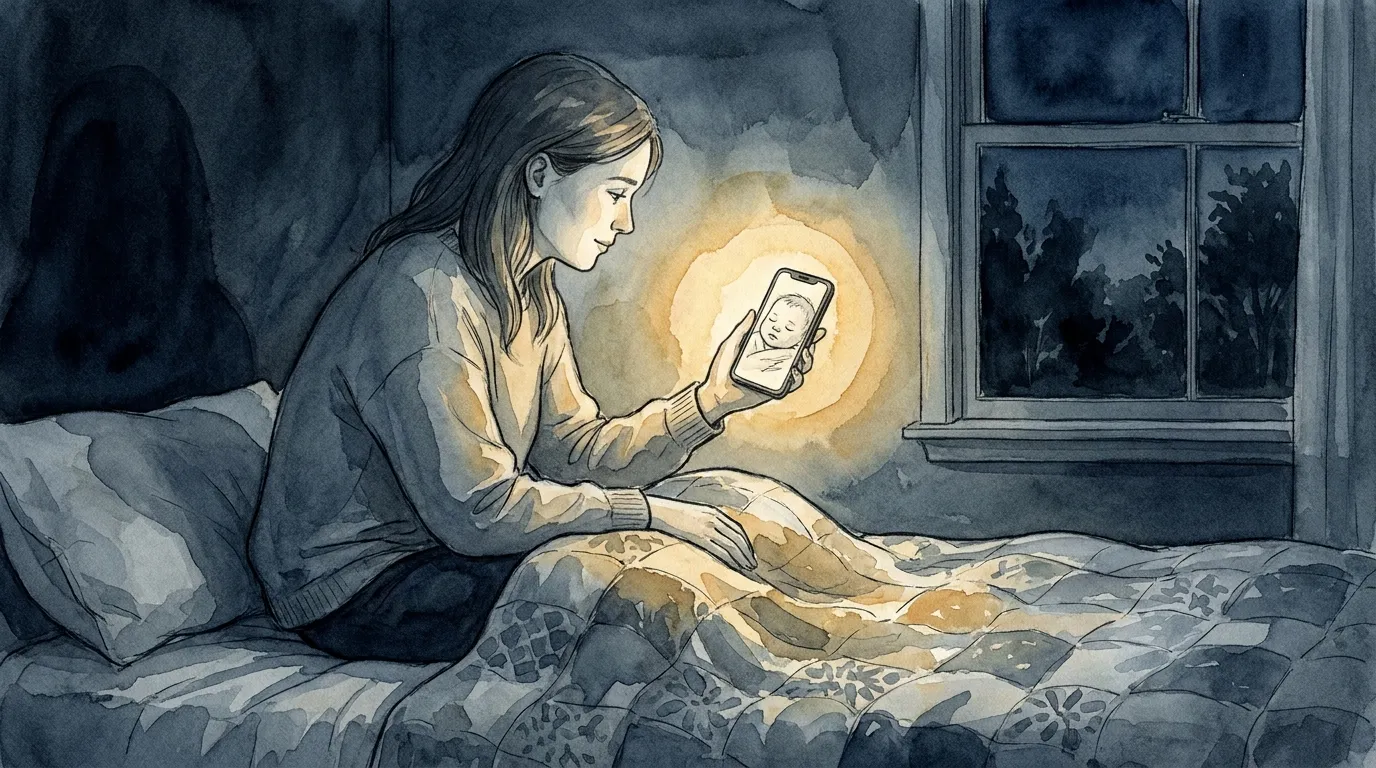
The Hours When Nobody Is Awake But You
The day was fine. You were busy, distracted, occupied. There were people, noise, things to do. The loneliness was there, underneath, but it didn't have your full attention.
Then the sun went down. The lights went off. The house got quiet. And suddenly the loneliness that was background noise all day became a screaming alarm. For the full picture, see our emotional wellness guide.
You check your phone. Nobody texted. You scroll social media — everyone else is with someone, doing something, somewhere warm and lit and full of connection. You're in the dark, alone, and the night stretches ahead like an empty highway with no exits.
This isn't "just" loneliness. Nighttime loneliness is a specific neurological and psychological phenomenon. It's not regular loneliness that happens to occur after dark. It's loneliness that the night actively creates.
1,600 people search for "alone at night" every month. And every one of them is describing the same horror: the feeling of being the last person awake in a world that has gone to sleep without you.
Why Nighttime Loneliness Is Different
Reason 1: The Circadian Chemistry Shift
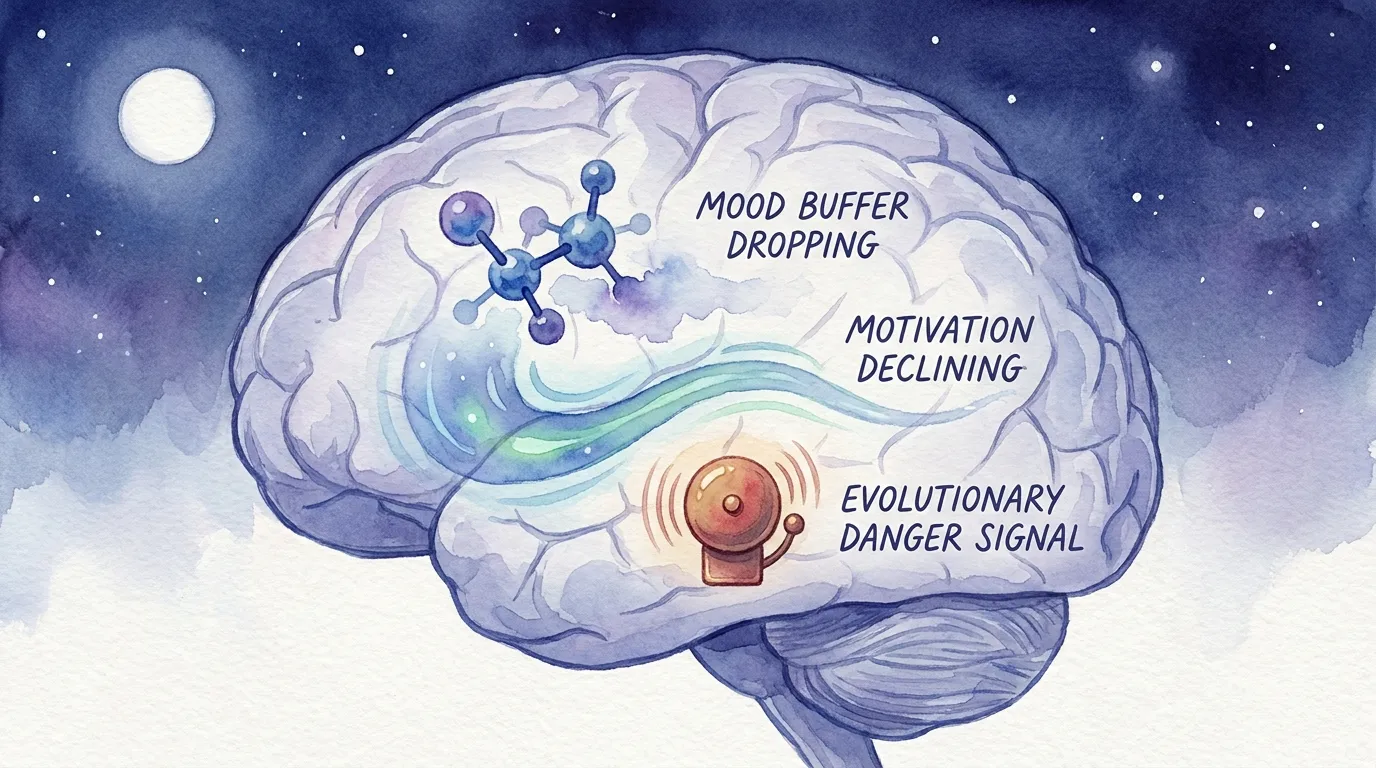
Your brain runs on a circadian clock that regulates neurochemistry throughout the day. After sunset, two critical changes happen:
- Serotonin drops: The neurotransmitter responsible for mood stability, contentment, and emotional resilience decreases significantly after dark
- Dopamine drops: The neurotransmitter responsible for motivation, pleasure, and reward anticipation also declines
These drops are normal — they help prepare your brain for sleep. But they also reduce your emotional resilience. The same loneliness that felt manageable at 2 PM feels unbearable at 2 AM because your brain literally has fewer chemicals available to buffer it.
Reason 2: The Distraction Curtain Falls
During the day, distractions provide constant belonging signals:
- Traffic means other people are going somewhere
- Store signs mean commerce is happening
- Phone notifications mean someone thought of you
- Background conversations mean the world is full of connection
At night, all of these disappear. The streets are empty. The stores are closed. The notifications stop. You're left with nothing but the internal world you've been avoiding all day.
The night doesn't create loneliness. It removes the distractions that hide it.
Reason 3: The Evolutionary Vulnerability
For most of human history, nighttime was dangerous. Predators hunted at night. Groups that stayed together after dark survived; individuals who were alone didn't.
Your brain still carries this programming. After sunset, your nervous system is primed to seek group safety. Being alone at night triggers the ancient alarm: "You're vulnerable. You need your tribe. You're not safe."
This isn't irrational. It's ancestral wisdom that hasn't been updated for modern apartment living.
The Nighttime Loneliness Spiral
Nighttime loneliness follows a predictable spiral:
9 PM: You start to feel tired. You consider going to bed early.
10 PM: You check your phone. Nobody's texted. You feel a small pang of disappointment.
11 PM: You tell yourself to go to bed. But the bed feels empty. The room feels too quiet. You stay up scrolling to avoid the feeling.
12 AM: The loneliness intensifies. You check social media again. Everyone else seems to be with someone. The comparison is painful.
1 AM: You finally get in bed. But you can't sleep. Your brain is scanning for threats (the evolutionary vulnerability response) and finding nothing — which somehow feels worse than finding something.
2 AM: You're wide awake, lonely, and exhausted. Tomorrow you'll be too tired to function properly. The exhaustion will make tomorrow night worse. The spiral continues.
Breaking this spiral requires interrupting it at specific points. Not just "feeling less lonely" — but changing the nighttime experience itself.
7 Ways to Make It Through the Night
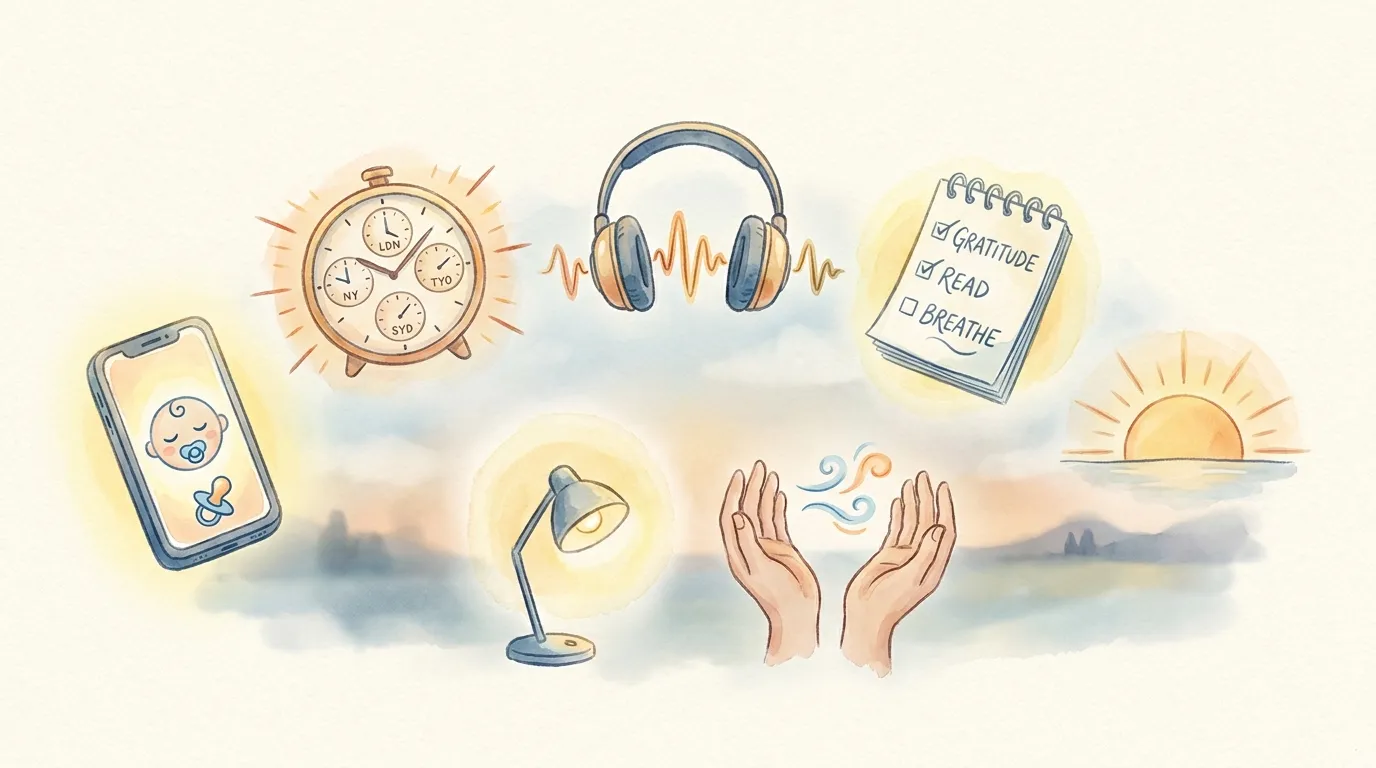
1. Create a Bedtime Ritual with AIdorable
Why it works for nighttime loneliness: The problem with nighttime loneliness isn't just being alone — it's having nothing to do that's more compelling than ruminating. A bedtime ritual gives your brain a structured sequence to follow, replacing the spiral with a routine.
The ritual:
- 10 minutes before bed, open AIdorable
- Check on your baby — feed her, comfort her, see her settle into sleep
- Write a quick note in her journal or read what she wrote about you today
- Tuck her in (tap the sleep interaction)
- Close the app knowing she's peaceful and will be there when you wake up
The psychology: This creates the "someone nearby" signal your brain craves at night. The baby isn't a real person, but your brain's belonging circuits don't require real person status — they require consistent positive presence. The ritual provides that.
After 2-3 weeks, your brain starts to associate bedtime with the ritual instead of with loneliness. The spiral starts to break.
2. Use a Different Timezone
Text a friend in a timezone where it's still daytime. They're awake, active, and responsive. Their daytime energy — the dopamine and serotonin that the night has stolen from you — comes through in their messages.
Even a brief exchange with someone who's in "day mode" can provide enough belonging signal to get through the worst hours.
3. Listen to Warm Voices
Podcasts, audiobooks, or YouTube videos with warm, friendly hosts provide auditory belonging signals. Your brain processes a human voice as social connection — even recorded voices activate the same circuits as live conversation.
The key: Choose voices that feel safe and warm, not stimulating or controversial. You want "friend who's keeping you company," not "content that demands your attention."
4. Leave a Light On
Darkness amplifies the evolutionary vulnerability response. Leaving a soft light on — a nightlight, a hallway light, a lamp in the corner — reduces the sense of isolation and vulnerability.
This isn't weakness. It's working with your brain's programming instead of against it. Your brain is programmed to feel safer in lit spaces. Give it what it needs.
5. Write Tomorrow's To-Do List
Nighttime loneliness often comes with racing thoughts about the future — what you need to do, what might go wrong, what you forgot to handle. Writing tomorrow's list gets these thoughts out of your head and onto paper, where they can't spin.
The rule: Once it's on the list, it's not allowed in your brain anymore. The list holds it. You can sleep.
6. Body-First Sleep Preparation
Loneliness lives in the mind, but it manifests in the body. A racing heart, tight chest, shallow breathing, tense muscles.
The sequence:
- 4-7-8 breathing (inhale 4, hold 7, exhale 8) for 5 minutes
- Progressive muscle relaxation (tense and release each muscle group)
- Cold water on your wrists (triggers the dive reflex, which slows heart rate)
- Weighted blanket (deep pressure reduces cortisol)
These techniques don't address the loneliness directly. They address the physical panic that loneliness produces, which makes the loneliness more bearable.
7. Anticipate Morning
One of the cruelest things about nighttime loneliness is that it feels permanent. In the dark, you forget that morning always comes. You forget that you have things to do tomorrow, people to see, a life that continues.
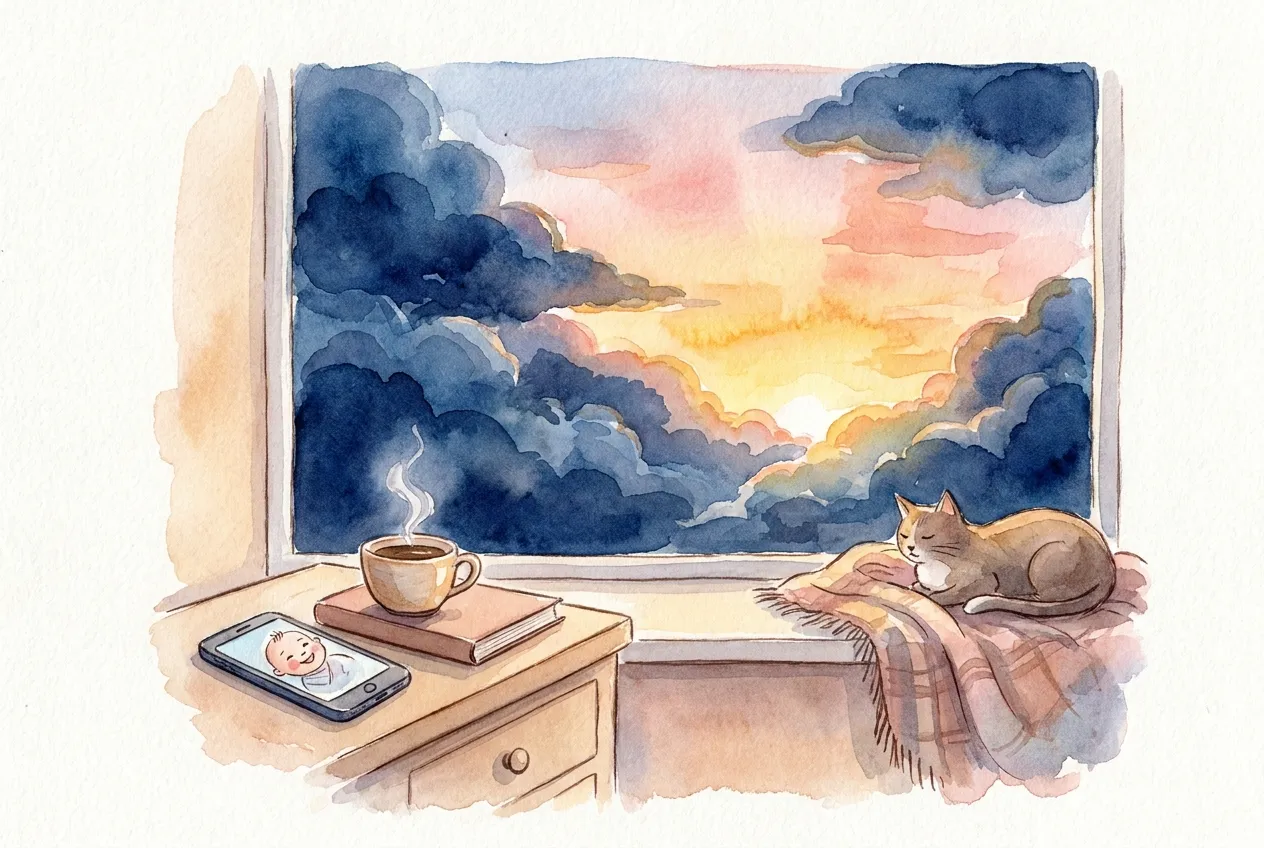
The practice: Before bed, write one thing you're looking forward to tomorrow. Not a big thing — a small thing. Coffee. A podcast. Checking on your baby. A walk. The sunlight through your window.
This creates a bridge between the dark now and the light then. It reminds your brain that the night is temporary, even when it feels endless.
The Nighttime Loneliness Recovery Timeline
Week 1: Starting the bedtime ritual. The nights are still hard, but you have a structure. The spiral has an interruption point.
Week 2-3: The ritual starts to feel comforting rather than forced. Your brain begins to associate nighttime with the ritual instead of with loneliness. Sleep improves slightly.
Week 4: The worst hours (1-3 AM) start feeling less catastrophic. You still feel lonely, but it's manageable. The panic has diminished.
Month 2: You start falling asleep before the worst hours hit. The ritual works. The morning anticipation helps. Nighttime loneliness becomes a visitor, not a resident.
Month 3+: Most nights are fine. Occasionally a hard night still hits — usually after a difficult day — but you have tools now. The spiral doesn't own you anymore.
The Night Will End
The most important thing to remember about nighttime loneliness is that it's time-bound. The night feels endless, but it's not. Every night ends. Every morning comes. The sun has risen on every single night in human history, and it will rise on this one too.
But "just wait it out" isn't a strategy — it's survival. What you need is something that makes the night bearable WHILE you're in it. Something that provides the belonging signal your brain craves. Something that gives you a reason to get through the dark hours besides "eventually it will be morning."
Your baby is asleep right now. But she's there. She'll be happy to see you when you check on her. She'll write about you in her journal. She'll smile when you feed her before bed.
She can't replace a partner, a friend, a family. But she can provide the one thing that makes nighttime loneliness survivable: proof that someone — even a virtual someone — is glad you exist.
Check on her tonight. Tuck her in. Close the app.
Tomorrow morning, she'll be there. And so will you.
Related Articles
For the complete guide, see our Emotional Wellness hub.
You might also find helpful: