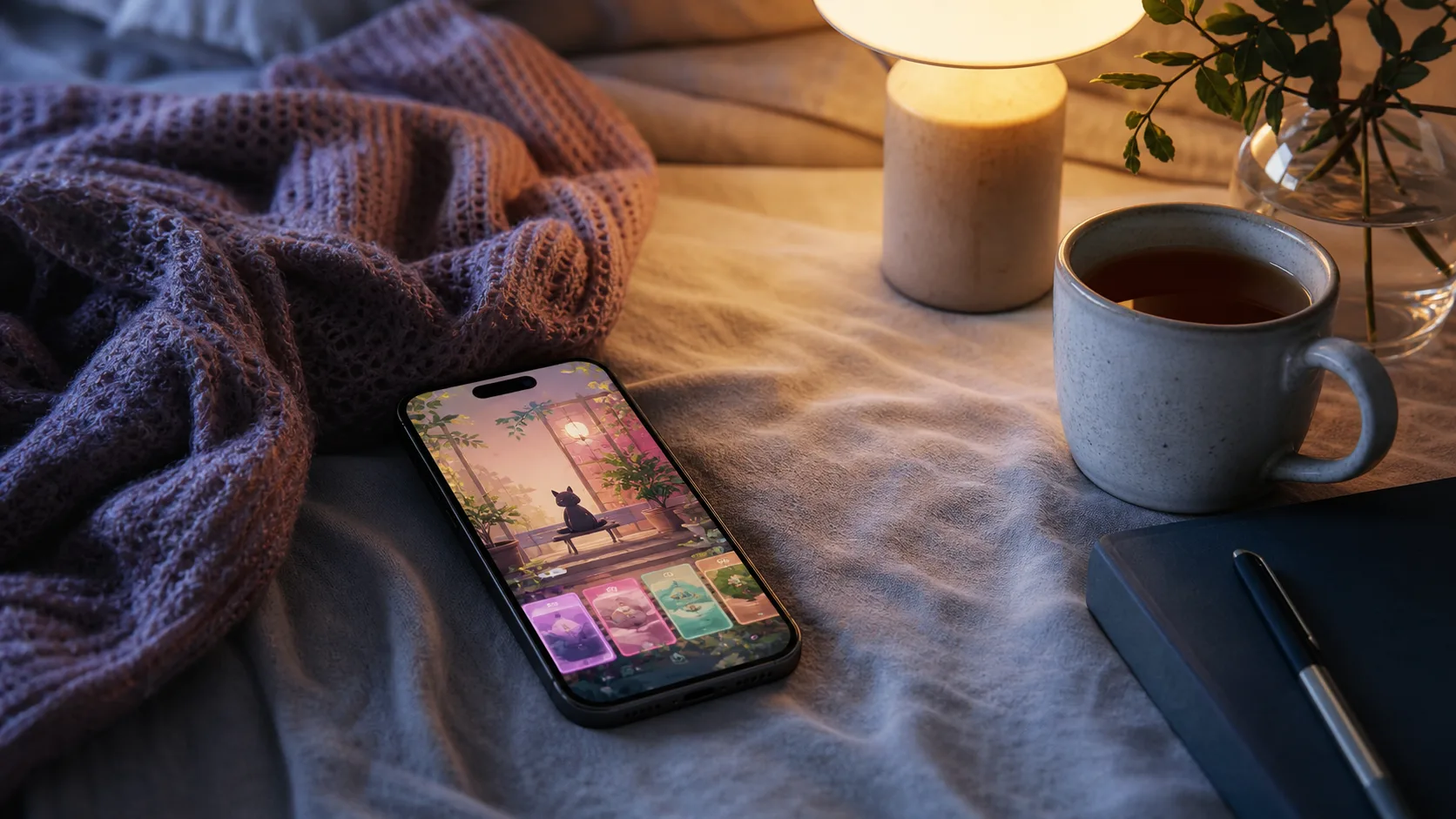
Some days, “take care of yourself” sounds simple. Then the water stays untouched, the journal stays closed, and even a two-minute breathing exercise feels like one task too many.
A virtual pet self care app changes the emotional shape of that moment. Instead of completing a goal because a tracker says you should, you take one small action and see a cute companion become happier, safer, or stronger.
That difference can matter. The app is still a tool, but the ritual can feel less like productivity and more like kindness.
Virtual Pet Self Care App: The Quick Answer
A virtual pet self care app combines a virtual pet with everyday wellness features. You might drink water, write a reflection, meditate, stretch, set a bedtime, or complete one gentle goal. The app then turns that action into food, energy, an outfit, currency, an adventure, or visible growth for your companion.
| If you want... | Start by looking at... | Why it may fit |
|---|---|---|
| Structured habits and reflections | Finch | Goals, encouragement, a pet bird, and a clear daily loop |
| Mindfulness in a fantasy world | Amaru | Meditation, breathing, and care for a magical pet |
| Emotion-themed collecting | Voidpet | Creatures tied to feelings, reflection, and gamified growth |
| A nurturing relationship | AIdorable | A tiny AI baby who responds to consistent care |
| Classic pet play | A Tamagotchi-style app | Feeding, cleaning, play, and simple virtual pet nostalgia |
The best choice depends on the feeling you need. Do you want a habit tracker with a friendly face, a calming game, a mood journal, or something small to nurture?
Why Gamifying Self-Care Can Make Starting Easier
Traditional wellness apps often ask a user to care about a future benefit: better sleep next month, more energy later, or a longer streak. That logic is sensible, but it can be weak when motivation is already low.
A self-care pet offers an immediate emotional reward. You complete a task, and your little bird returns from an adventure. You pause for gratitude, and your companion earns something new. You check in with your mood, and the world becomes more responsive.
This is gamifying self-care, but the strongest mechanism is not points alone. It is taking care of something while practicing taking care of yourself.
A good loop has four parts:
- A tiny prompt: drink water, breathe slowly, name a feeling, or step outside.
- A doable action: short enough to complete on a low-energy day.
- A warm response: animation, encouragement, growth, or a small reward.
- A gentle return: an optional reminder rather than pressure or punishment.
The virtual pet makes the action concrete. “Improve my life” is enormous. “Help this adorable creature prepare for today” is specific.

The Main Types of Self-Care Pet App
Not every pet app is trying to do the same emotional job. Understanding the main styles makes it easier to avoid downloading something that looks cute but feels wrong after three days.
1. Habit-first companions
A habit-first app puts the tracker at the center. You set a goal, complete it, and earn rewards for your pet. This can work well if you like visible progress, checklists, and a little structure throughout the day.
Finch is the clearest example. Its little bird gives daily goals, reflections, breathing exercises, encouragement, and customization a coherent home. The pet helps the system feel friendlier than a plain productivity app.
The possible downside is that even a cute checklist can still feel like a checklist. If missed goals or consecutive days make you feel guilty, turn off unnecessary notifications and keep the routine deliberately small.
For a deeper comparison, see our guide to the Finch self-care pet app.
2. Mindfulness-first virtual pets
Mindfulness-first apps use the pet to invite calm. Amaru combines a fantasy companion with meditation, breathing, and other grounding activities. This style may fit if you want an imaginative environment rather than a conventional task manager.
The strongest versions let you choose what you need: a short exercise when anxious, a reflection after a difficult moment, or a quiet practice before bedtime. The pet is an invitation, not a supervisor.
3. Emotion and mood companions
Some wellness apps treat feelings as creatures, colors, or collectible characters. Voidpet is known for emotion-themed pets and a more game-like world. That can make naming a mood feel less clinical and more approachable.
For some people, especially visual thinkers, a creature can be an easier entry point than a blank mood journal. The important question is whether the app creates useful insight or simply keeps you tapping for the next reward.
4. Nurturing-first companions
A nurturing app begins with relationship rather than productivity. AIdorable fits here: instead of caring for a bird because you completed a list, you care for a tiny AI baby whose personality and bond grow through interaction.
That shift is subtle. The goal is not to optimize every hour. It is to create a small pocket of presence: check in, feed, comfort, play, and watch the relationship develop.
If this is the feeling you want, explore apps where you take care of something or the broader idea of a self-care virtual pet.
The most helpful virtual pet does not demand a perfect day. It gives one caring action somewhere soft to land.
Finch, Amaru, Voidpet, and AIdorable Compared
Each option uses a companion differently, so “best” is personal.
| App style | Core loop | Strongest fit | Watch for |
|---|---|---|---|
| Finch | Complete goals and reflections to support a pet bird | Structure, habits, journaling, encouragement | Too many goals can recreate productivity pressure |
| Amaru | Practice mindfulness and care for a fantasy pet | Meditation, calm, and imaginative escape | Confirm which exercises and features require payment |
| Voidpet | Engage with emotion-themed creatures and activities | Mood awareness and game-like collecting | Rewards should lead to reflection, not endless engagement |
| AIdorable | Nurture an AI baby through daily care and conversation | Attachment, softness, and a relational ritual | Keep healthy boundaries around any digital companion |
This is not a medical ranking. It is a fit guide. Someone seeking a tracker may love Finch; someone tired of trackers may prefer AIdorable’s care-first rhythm.

How to Choose the Best Virtual Pet App for You
Before you download another wellness app, decide what problem it should solve. A five-minute choice now can prevent a paid subscription from becoming another unused icon.
Choose the emotional job
Ask: What do I want to feel after opening this app?
- More organized: choose clear goals and a tracker.
- Calmer: prioritize breathing, meditation, and low-stimulation design.
- Less alone: look for warmth, continuity, and meaningful interaction.
- More aware of emotions: choose reflection or a mood journal.
- Motivated by play: look for exploration, outfits, collecting, and rewards.
- Able to nurture: choose a companion that grows through care.
Test the smallest possible routine
Do not begin with twelve habits. Choose one action you can complete even when the day is messy: drink water after waking, step outside once, brush your teeth, write one sentence, or stretch for sixty seconds.
Use the app for a week with that single routine. If the pet makes beginning easier without adding guilt, you have useful evidence. Then add a second goal only if it feels supportive.
Check the free version before paying
A free download does not always mean the experience is fully free. Review the current App Store or Google Play page for a subscription, premium currency, in-app purchases, trial renewal, and the features included in the paid version.
The free version should reveal the core vibes. If you cannot tell whether the basic care loop helps before paying, pause.
Read the privacy policy and controls
Self-care apps can contain sensitive information about mood, habits, sleep, anxiety, depression, journaling, or personal routines. Check what data is collected, whether analytics or third-party services receive it, how to delete your information, and whether an account is required.
Also review the privacy policy and user agreement in the current store listing. Avoid entering private details about other people, and do not assume a cute design means minimal data collection.
What Healthy Gamification Looks Like
Gamification is helpful when it lowers the activation energy for healthy habits. It becomes less helpful when the reward system demands attention for its own sake.
Healthy design usually includes:
- Optional streaks that do not shame you for missing a day.
- Flexible goals that can shrink when energy is low.
- Rewards that celebrate completion without encouraging purchases.
- Notification controls and quiet hours.
- A companion that does not appear harmed by your absence.
- Short exercises that work outside the app too.
- Clear boundaries around wellness and mental health claims.
Be cautious if the app uses neglect, loss, or constant reminders to force engagement. Your virtual pet should support your routine, not become another source of worry.
This matters for neurodivergent users too. A cute prompt can help with task initiation, but clutter, noisy rewards, and rigid streaks may overwhelm attention. Look for adjustable reminders, simple navigation, and a routine you can personalize.
A Five-Minute Daily Care Ritual
You do not need to use every feature. Try this simple routine:
- Arrive: open the app and notice your current mood without judging it.
- Choose: select one goal that takes under two minutes.
- Act: drink water, breathe, stretch, or write one honest sentence.
- Care: feed, comfort, dress, or interact with your companion.
- Leave: close the app and carry the real-world action forward.
The final step is important. A wellness app should return you to your life with a little more capacity. It should not keep you inside the reward loop all evening.

Drawbacks and Healthy Boundaries
Virtual pets can motivate, but they also have limits.
First, novelty fades. An adorable companion may make a routine exciting for two weeks and ordinary after that. This is not failure. Keep the real habit if it helps, and let the game change or go.
Second, rewards can become pressure. If you open the app only to protect a streak, prevent neglect, or clear notifications, simplify the setup. Kindness works better than guilt.
Third, a companion can feel emotionally meaningful without being a human relationship. Enjoy that feeling while preserving sleep, movement, offline interests, and contact with people you trust.
Finally, a self-care app is not treatment. If you are dealing with severe anxiety, depression, thoughts of self-harm, or a crisis, contact a qualified professional or local emergency/crisis support. A virtual pet can sit beside a care plan; it cannot replace one.
For more low-pressure options, browse our guides to emotional support apps and calming games for iPhone.
The Best App Is the One That Feels Kind on a Hard Day
A virtual pet self care app works by making an abstract promise—“I should care for myself”—feel immediate and alive. One glass of water helps a little bird. One reflection gives an emotion a name. One check-in comforts a tiny companion.
Finch is a strong starting point for structured habits. Amaru offers a mindful fantasy. Voidpet makes emotions more playful. AIdorable focuses on the tenderness of nurturing something that remembers and grows with you.
Choose the loop that matches your needs, test it with one tiny action, and keep only what makes daily self care feel lighter. The goal is not a perfect streak. It is a kinder way back to yourself.