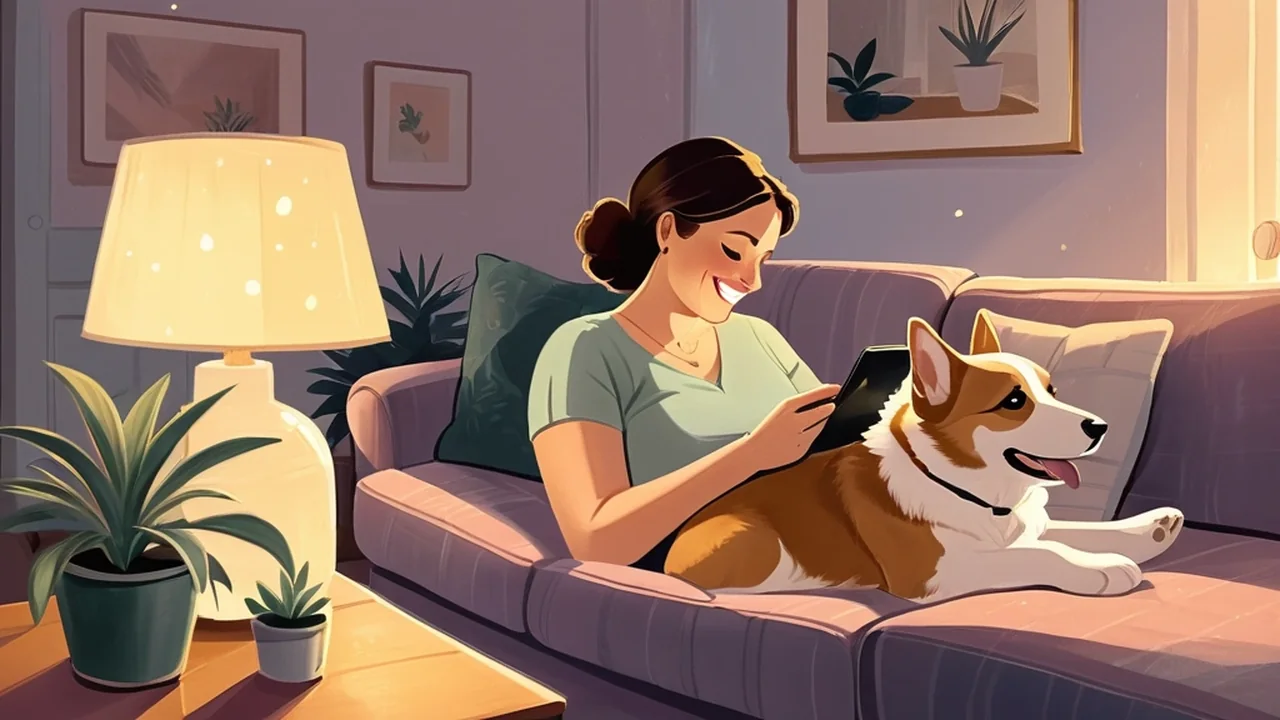
There is a particular kind of quiet that arrives when you unlock your phone and find a tiny creature waiting for you.
It may need breakfast. It may remember that yesterday was difficult. It may simply blink, bounce, or tell you it is glad you came back.
A virtual pet companion app turns a screen into a small relationship. Unlike a game you finish or a feed you scroll, it gives you someone to return to—and a reason to make one ordinary minute feel warm.
Virtual Pet Companion App: The Quick Comparison
A virtual pet app can be a classic pet game, a self-care tool, an AI companion, or a blend of all three. Start with the emotional experience you want rather than the cutest screenshot.
| If you want... | Look for this type | Typical daily loop |
|---|---|---|
| Simple nostalgic play | Classic pet simulator | Feed, clean, play, decorate, repeat |
| Help with gentle habits | Self-care pet | Complete a goal, then reward or grow the pet |
| Conversation and personality | AI pet app | Chat, remember, respond, and develop over time |
| Something to share | Couples or friends pet | Co-parent one digital pet across two accounts |
| A softer bond to nurture | Relationship-first companion | Check in, care, comfort, and watch trust deepen |
The best virtual pet app is not automatically the most complex one. It is the one you still want to open on a tired Tuesday.
How Virtual Pet Apps Work
Most virtual pet apps use a repeating care loop. Your pet expresses a need; you respond; the app gives you animation, progress, dialogue, or a reward. That feedback makes the next visit feel meaningful.
A classic virtual pet game may track hunger, cleanliness, energy, and happiness. A modern AI-powered companion may also remember your choices, change its tone, or develop preferences. A self-care pet can connect real-world actions—drinking water, journaling, breathing, or going outside—to the creature’s growth.
This is the same basic magic that made Tamagotchi memorable, but the digital pet now lives on iOS or Android, can send notifications, and may use generative AI instead of a fixed set of reactions.
The strongest apps make care feel alive without turning it into pressure. Your companion notices consistency, but it does not punish you for having a human life.
Five Types of Virtual Pet Companion App
1. The classic virtual pet game
A classic pet simulator is closest to a pocket toy. You adopt a creature, keep its needs balanced, earn coins, and unlock rooms, food, clothes, or mini-games.
Apps in the broad tradition of Pou, Bubbu, and Tamagotchi-style games work well when you want low-stakes play. Their personalities are usually expressed through animation and simple states rather than deep conversation.
Choose this style if feeding, bathing, decorating, and collecting are the point. It is less suitable if you want your companion to understand a hard day or remember a meaningful conversation.
2. The self-care pet
A virtual pet self-care app connects care for the creature with care for yourself. Finch is the best-known example: your actions help a small bird explore, grow, and return with discoveries.
This format can make a habit feel less clinical. “Complete my morning checklist” becomes “help my companion begin an adventure.” The underlying task has not changed, but its emotional frame has.
A good self-care pet keeps goals optional and editable. It should offer encouragement without making a missed streak feel like a moral failure.
3. The conversational AI pet
An AI pet app emphasizes dialogue, memory, and evolving personality. Instead of choosing only from preset buttons, you may type freely and receive a contextual reply.
That can create a stronger sense of presence. The creature is not merely hungry; it can ask how you slept, respond to a story, or remember what comforts you. If conversation is your priority, compare these apps with broader AI companion apps.
The tradeoff is that AI features often require an internet connection and more data processing. Read the privacy policy before sharing intimate details, and check whether memories can be viewed, corrected, exported, or deleted.
4. The shared pet for couples or friends
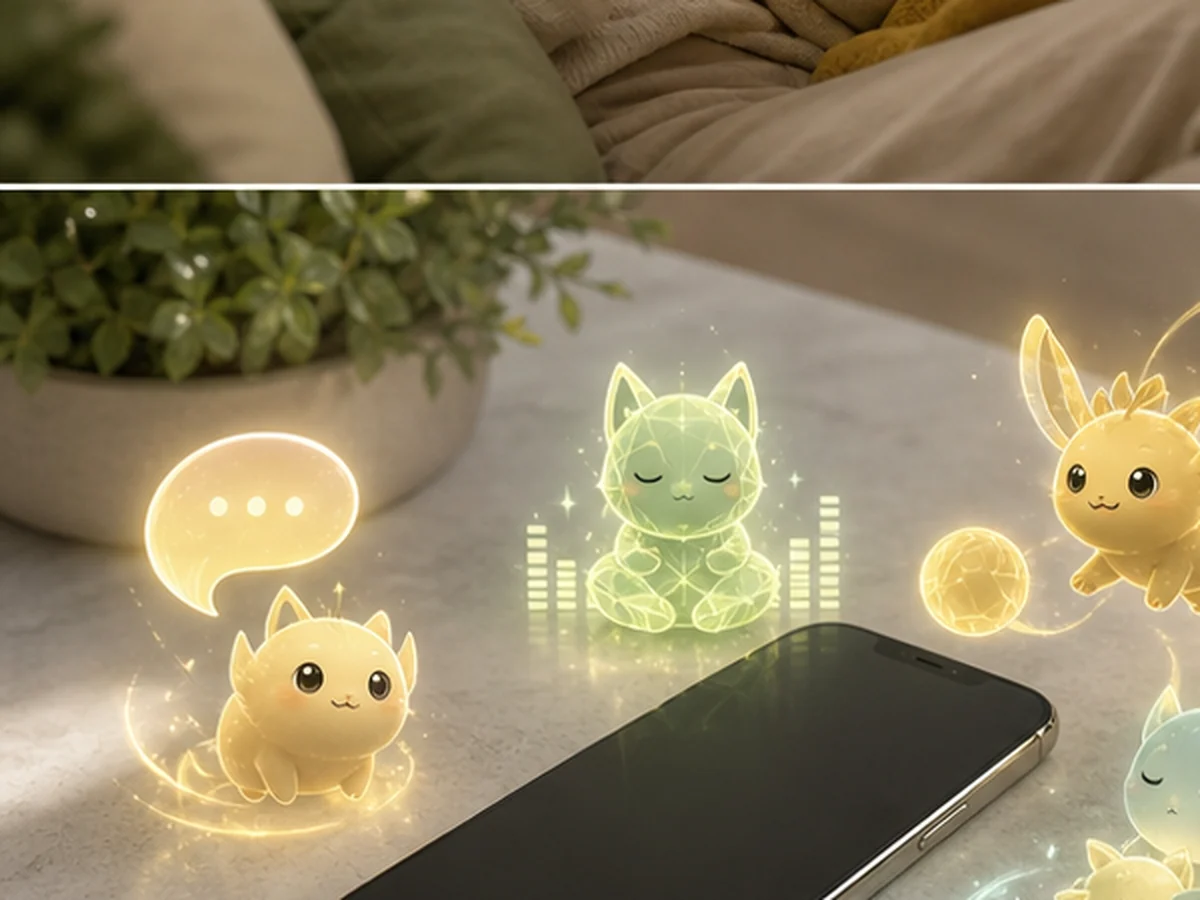
Some apps let two people care for the same digital pet. One person feeds it in the morning; the other decorates its room later. The pet becomes a playful shared responsibility and a small way to say, I thought of us today.
For long-distance couples or close friends, this can be sweet. Check what happens if one person stops using the app, whether both people can delete shared data, and whether private messages are truly private.
A shared pet should support the relationship between people, not become a scorecard for who cares more.
5. The nurturing relationship app
A relationship-first companion focuses less on keeping status bars full and more on building trust through repeated care. AIdorable sits in this lane: you adopt a tiny AI baby, respond to its needs, and let the relationship deepen through attention.
That makes it different from a pet game built around coins or a general chatbot built around endless conversation. The central feeling is being needed in a small, manageable way.
If that is what draws you in, you may also like our guide to apps where you take care of something.
The best digital companion does not demand that you become more productive. It makes one small act of care feel worth returning to.
What Makes a Good Virtual Pet App?
Cute art gets the download. The details determine whether the pet earns a place in your life.
A care loop that matches your energy
Ask how much the app expects each day. A good virtual pet should still feel welcoming after you miss a week. Look for adjustable reminders, forgiving streaks, and short interactions that work when your energy is low.
If every visit opens five chores, three currencies, and an expiring event, the companion can begin to feel like another inbox.
Personality that changes through interaction
A convincing companion should reveal something over time. That might mean new animations, preferences, memories, life stages, dialogue, or a home that reflects your choices.
Growth gives care meaning. Without it, even beautiful virtual pet apps and games can become repetitive.
Useful free play before payment
Many apps are free to download but rely on subscriptions or in-app purchases. That is not automatically bad; servers, artists, and AI models cost money. The important question is whether the free version lets you understand the core relationship before paying.
Check whether food, essential care, conversation limits, customization, or memory are locked. Be especially cautious when an app creates attachment first and reveals a steep paywall later.
Calm design and respectful notifications
Notifications can help a digital pet feel present, but guilt is not a feature. Prefer reminders you can schedule or silence. Avoid apps that imply the creature is suffering because you went to work, slept, or spent time offline.
The design should also be readable and easy to navigate. A gentle color palette means little if every screen is crowded with pop-ups.

Popular Virtual Pet Apps and Games: What the Names Tell You
The virtual pet category is wider than it first appears. Looking at familiar styles can help you identify which mechanics you actually enjoy.
Talking Tom 2 and Talking Angela use an animated animal, voice recognition, mini games, and playful reactions. Nintendogs helped define affectionate pet simulation through touch and training, while Webkinz paired plush toys with an online world. Mobile games such as Pou, Moy, Bubbu, and Dogotchi lean into feeding, cleaning, customization, and short minigames. Peridot uses augmented reality to make fantasy creatures feel present in your surroundings.
Newer social apps such as Pokipet and Pengu explore shared or multiplayer care. Finch calls its companion a birb and uses gamification to connect good habits with journeys and rewards. AI pet apps add another layer by using AI for open-ended replies, memory, and more customizable personalities.
These examples are not interchangeable. Someone who wants a cat or dog simulator may not enjoy caring for a fantasy blob. Someone drawn to emotional bonds may find a free-to-play pet game too focused on coins. And someone who wants a pet without the housing, expense, or lifelong responsibilities of real pet ownership may value an immersive experience without mistaking it for real pet care.
When browsing apps and games for Android or iOS, look beyond whether the download is free. “Free to play” can still mean ads, a free trial, premium currency, or frequent in-app purchases. Check Google Play and the App Store for current pricing, whether the app is available for Android and iOS, cross-platform support for shared pets, and whether regular updates are still arriving.
A great app does not need every feature in one app. It needs a clear care loop, fair pricing, and enough personality to make opening the app feel like a welcome rather than a milestone you are afraid to lose.
Before You Download: Privacy, Safety, and Cost
A virtual companion may learn more about you than an ordinary mobile game. Before creating an account, check:
- Data collection: Does the app store chats, mood entries, contacts, photos, voice, or location?
- AI processing: Are conversations sent to third-party model providers?
- Deletion: Can you delete the pet, memories, messages, and account permanently?
- Security: Is there a clear privacy policy and a way to report a problem?
- Age suitability: Are AI virtual pet apps suitable for children, or is the app intended for adults?
- Connectivity: Can the pet work offline, or does it require constant internet access?
- Real cost: What do the subscription and in-app purchases unlock after the trial?
For a child, an adult should review chat features, advertisements, purchase controls, and data practices first. A cute creature does not automatically make an app child-safe.
For adults, the main safety question is emotional fit. A virtual companion can be comforting, but it should not pressure you to disclose more than you want or suggest that only the app understands you.
Can a Virtual Pet Help With Habits, Stress, or Loneliness?
It can help create a moment of structure.
A pet waiting for a morning check-in may make a routine easier to start. A gentle animation can interrupt spiraling for thirty seconds. An AI companion can make an empty room feel a little more responsive. Those modest benefits are real enough to matter, even if they are difficult to measure for every person.
But a virtual pet is not therapy, diagnosis, crisis care, or a replacement for human relationships. If an app becomes the only place you feel safe, use that observation as information—not as proof that you should retreat further.
Healthy use usually looks like addition rather than substitution:
- a two-minute pet check-in before texting a friend;
- a breathing prompt alongside professional support;
- a cozy game after completing a necessary task;
- a nurturing ritual that leaves you more available for real life.

How to Choose the Right Virtual Pet for You
Use this quick test before committing:
- Name the feeling you want. Playful, calm, needed, understood, motivated, or connected?
- Choose the interaction. Feeding and mini-games, habits, free conversation, shared care, or nurturing?
- Try the free version for three days. Notice whether you feel invited back or obligated.
- Read the privacy and pricing pages. Do this before sharing sensitive information or buying a yearly plan.
- Miss a day on purpose. A good virtual pet welcomes you back without punishment.
- Check the after-feeling. Do you close the app calmer and more connected, or depleted and behind?
You can also compare a traditional virtual pet for adults with a personal AI companion app if you are unsure whether you want gameplay or conversation.
Conclusion: Choose the Relationship, Not the Feature List
A virtual pet companion app can be a nostalgic toy, a habit helper, an AI friend, or a tiny presence that grows because you came back.
The best choice is not the pet with the most currencies, costumes, or clever technology. It is the companion whose needs fit inside your real life—and whose response makes care feel lighter rather than heavier.
If you want classic play, choose a pet simulator. If you want routines, try a self-care pet. If you want dialogue, look for transparent AI memory and privacy controls. And if you want a small being to nurture through an ongoing relationship, meet AIdorable.
Start with one check-in. The relationship can grow from there.