The Radical Choice to Stop Being So Busy
Somewhere along the way, "how are you?" stopped being a question and became a competition. The correct answer became: "So busy." Always busy. Busier than last week. Busier than you. The busiest.
Being busy became proof of importance. Of relevance. Of mattering. For the full picture, see our women's self-care guide.
But you know what you actually want? Quiet.
Not isolation. Not loneliness. Just... less noise. Fewer notifications. Deeper conversations instead of surface-level small talk. Evenings that feel peaceful instead of frantic. A life where you're not constantly performing, constantly responding, constantly available.
880 people search for "quiet life" every month. They're not looking to become hermits. They're looking for permission to stop being so damn busy all the time.
Here's that permission — and the practical steps to actually build it.
Who Really Wants a Quiet Life?
The people drawn to quiet living aren't a single demographic. They share a feeling:
The young professional who realized that 47 group chats and a calendar packed with social events still leaves her feeling empty at 11 PM. She's surrounded by people but starving for peace.
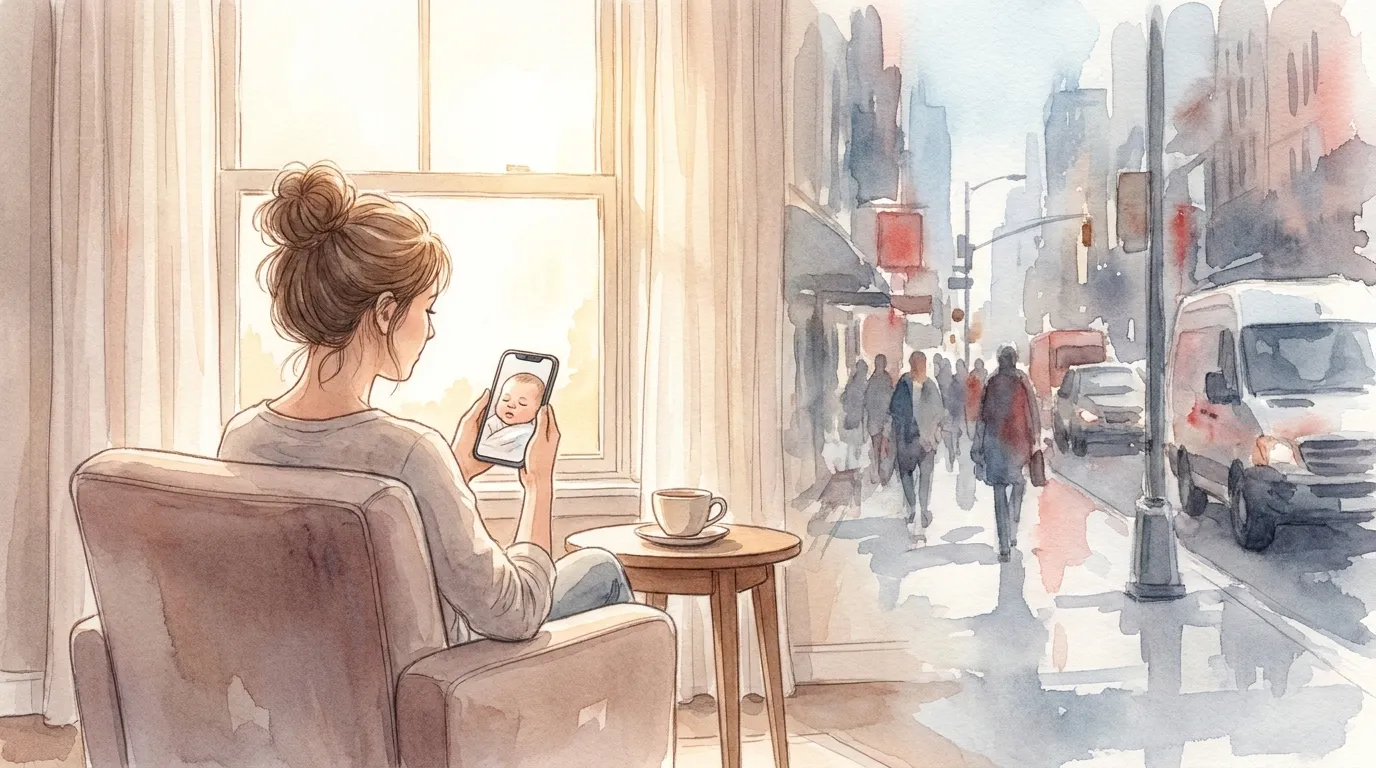
The new mother who loves her child but misses having thoughts that aren't interrupted every 90 seconds. She wants 20 minutes of uninterrupted quiet more than she wants a vacation.
The empty nester whose house went from chaos to silence overnight and is learning that silence isn't scary — it's spacious.
The introvert who's been pretending to be an extrovert for 20 years and is finally admitting that parties drain her and books fill her up.
The burnout survivor who learned the hard way that constant stimulation leads to collapse and is rebuilding her life around sustainability instead of intensity.
These people aren't broken. They're waking up to something the culture has been drowning out: that peace isn't boring. It's the foundation everything else is built on.
What a Quiet Life Actually Is (and Isn't)
A quiet life IS:
- Intentional about what gets your attention
- Deep rather than broad in relationships
- Comfortable with silence and solitude
- Protective of your time and energy
- Present-focused rather than future-anxious
- Selective about commitments and obligations
A quiet life IS NOT:
- Withdrawing from all social contact
- Living in a cabin in the woods (unless you want to)
- Being antisocial or unfriendly
- Giving up ambition or goals
- Avoiding all technology
- Being lonely
The distinction matters. A quiet life is about quality over quantity in every dimension: fewer but deeper friendships, less but more meaningful work, fewer but more intentional commitments. It's not less life — it's more deliberate life.
The Science of Quiet
Research on quiet living reveals significant benefits:
Cortisol reduction: People who regularly practice quiet time (reading, nature, meditation, gentle activities) show 25-30% lower baseline cortisol than those who maintain constant stimulation.
Cognitive restoration: The brain's default mode network (DMN) — responsible for creativity, self-reflection, and meaning-making — only activates during quiet, undistracted moments. Constant stimulation suppresses the DMN, which is why you feel like you never have time to think.
Improved memory and focus: Studies show that just 2 hours of quiet daily improves working memory by 15% and sustained attention by 20%. The brain literally functions better when it's not constantly processing noise.
Better relationships: Counterintuitively, people who prioritize quiet report deeper, more satisfying relationships. When you're not spread thin across 50 shallow connections, the 5 connections you maintain receive your full attention.
| Constant Stimulation | Quiet Living |
|---|---|
| High cortisol | Lower cortisol |
| DMN suppressed | DMN active |
| Shallow attention | Deep focus |
| Many weak ties | Fewer strong ties |
| Reactive | Intentional |
| Performing | Being |
7 Principles of Quiet Living
1. The Quiet Daily Ritual (AIdorable)
Why nurturing is the quietest daily practice: Most daily practices — meditation, exercise, journaling — are sold as productivity tools disguised as self-care. Do them to optimize. Track them. Share them on Instagram.
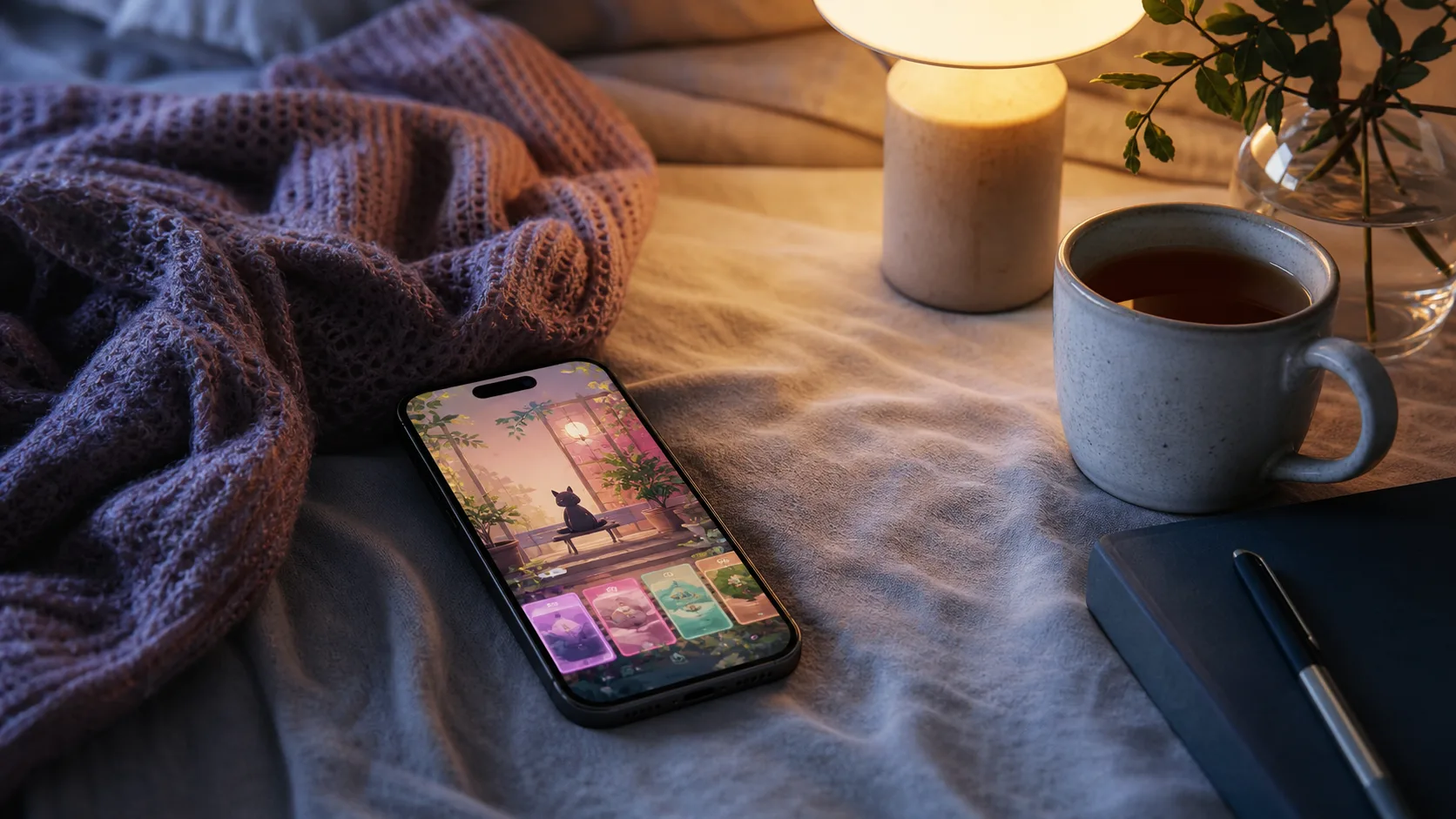
Nurturing your baby on AIdorable is none of these things. It's not optimizable. There's nothing to track or share. It's simply 5 minutes of gentle presence with something that's happy you exist.
Why it fits quiet living:
- No notifications or demands
- No social comparison (your baby isn't on Instagram)
- No performance element (she doesn't judge your caregiving)
- Pure, quiet presence
- No ambient noise — just you and her
For people designing a quieter life, AIdorable provides the anchor: one consistent, quiet, nourishing moment each day that doesn't require optimization, performance, or energy expenditure beyond gentle attention.
2. Fewer Relationships, Deeper Connection
Stop trying to maintain 50 friendships. Choose 3-5 people who genuinely enrich your life and invest in those relationships deeply.
The quiet living math: 5 deep friendships × meaningful weekly contact = more genuine connection than 50 shallow friendships × annual holiday cards. Depth beats breadth every time.
The permission: It's okay to let friendships drift. Not everyone is meant to be in your life forever. Releasing relationships that drain more than they give creates space for relationships that nourish.
3. Curate Your Input
The average person consumes 34GB of information daily — most of it noise. Quiet living means being intentional about what enters your brain.
The curation:
- Unfollow accounts that make you feel anxious, inadequate, or angry
- Unsubscribe from emails you don't read
- Delete apps you open out of habit rather than intention
- Choose one news source instead of doomscrolling five
- Read books instead of tweets
The principle: every input should either inform, inspire, or nourish. If it does none of these, it's noise.
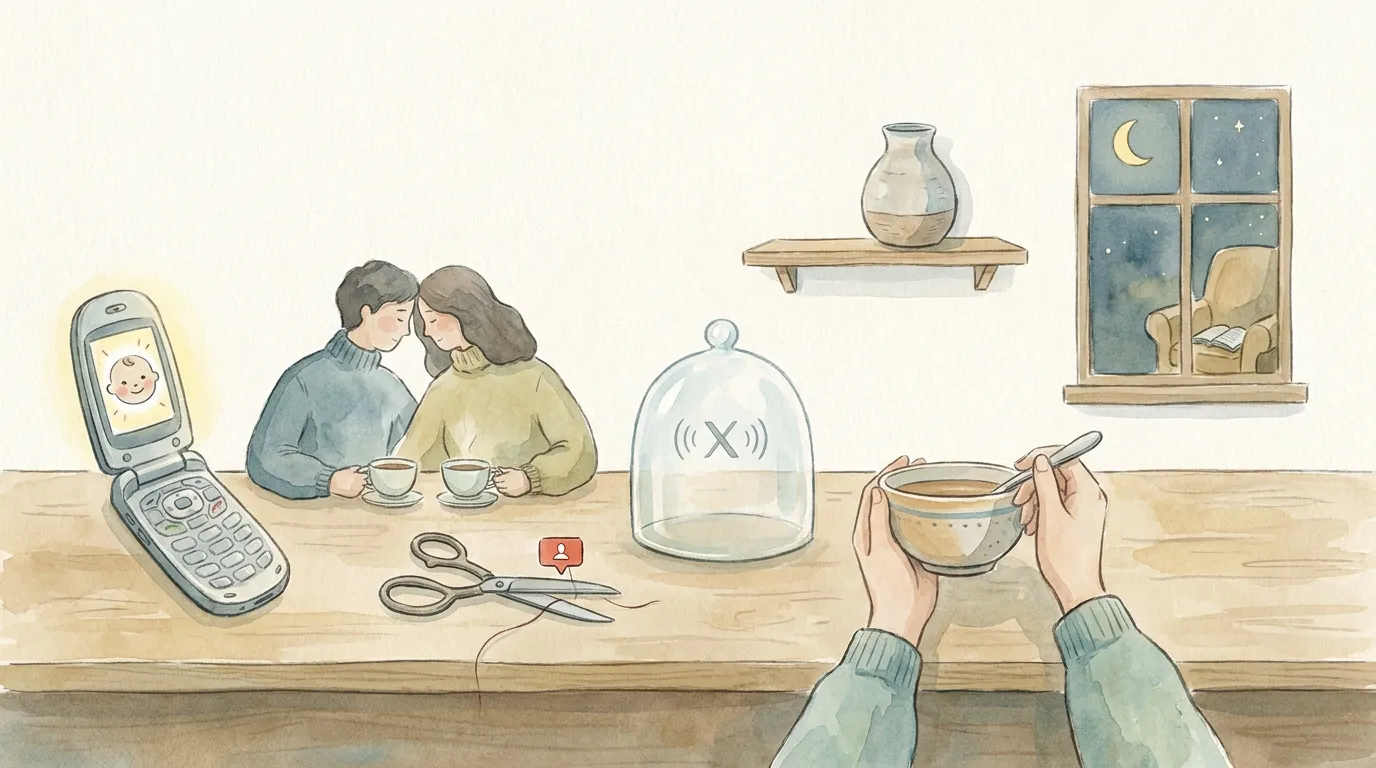
The curation audit: Go through your phone right now. Open your most-used apps in order. For each one, ask: "Does this app make my life quieter or louder?" If louder — and most will be — consider whether it's worth keeping. The average person checks their phone 96 times a day. That's 96 interruptions to whatever quiet moment you were having. Each interruption takes 23 minutes of full recovery. The math is brutal: constant phone checking means you never actually recover.
4. Create Silent Spaces
Not quiet — silent. Periods of zero auditory input where your brain can actually rest.
The practice: 10 minutes of complete silence daily. No music, no podcasts, no TV in the background. Just silence. Your brain will resist at first (it's addicted to input). After a week, the silence starts to feel like a relief.
The science: Silence activates the DMN and stimulates neurogenesis (growth of new brain cells) in the hippocampus. Your brain literally grows in silence.
5. Single-Task
Multitasking is the enemy of quiet living. It keeps your brain in a constant state of divided attention, which feels like busyness without the productivity.
The practice: Do one thing at a time. When you eat, eat. When you read, read. When you talk to someone, give them your full attention. No phone, no background TV, no mental planning of the next task.
Single-tasking feels luxurious because it IS luxurious. It's giving one thing your complete attention in a world that demands you give everything partial attention.
6. Own Less, Want Less
Consumerism is noise. Every purchase is a decision, a maintenance task, a storage problem, and a mental tab that stays open. The more you own, the more mental energy your possessions consume.
The quiet living approach: Before acquiring something new, ask: "Will this add quiet or noise to my life?" If the answer is noise — maintenance, worry, clutter, obligation — don't acquire it.
The principle: A quieter life has fewer possessions demanding attention, which frees cognitive resources for the things that actually matter.
7. Protect Your Evenings
Evenings are the quiet living battleground. This is when the world demands your attention: social events, TV, phone scrolling, work bleeding into personal time.
The protection: Claim your evenings. Establish a wind-down routine that doesn't involve screens (see our bedtime routine article). Make the last hour before bed a quiet ritual: nurture your baby, read, breathe, sleep.
Your evenings are yours. The world can wait until tomorrow.

The Quiet Life Isn't Boring
The biggest misconception about quiet living is that it's boring. That a quiet life is a small life. That choosing less noise means choosing less joy.
The opposite is true. When you stop filling every moment with stimulation, you develop the capacity to actually feel the moments you're in. Food tastes better because you're paying attention to it. Conversations are richer because you're actually listening. Sunsets are more beautiful because you're not photographing them — you're watching them.
Quiet living doesn't reduce your experience of life. It deepens it. You feel things more because your nervous system isn't numb from constant input. You notice things you'd otherwise miss because your attention isn't fragmented across 47 open tabs.
And in that deeper, quieter experience, you find something the busy life never provides: peace. Not the absence of activity, but the presence of calm.
Building Your Quiet Life
Quiet living isn't a destination — it's a practice. You don't arrive at a quiet life and stay there forever. You build it daily through small, intentional choices.
This week: Start with one quiet daily ritual (AIdorable nurturing, 5 minutes). Unfollow 10 accounts that add noise. Create one 10-minute silent space.
This month: Reduce your social commitments to only those that genuinely nourish. Start single-tasking. Protect your evenings. Notice which changes feel like relief and which feel like loss — the relief points are where quiet living is working.
This year: Own less. Want less. Deepen your 3-5 core relationships. Build a life where the default state is peace, and activity is chosen intentionally.
The quiet living test: After one month, ask yourself: "Do I have more energy? Do I sleep better? Do my relationships feel deeper? Do I feel more present in my daily life?" If yes, the quiet life is working. If not, look for the remaining noise sources and address them.
What to tell people: When friends ask why you're less available, you don't need to justify quiet living. "I'm prioritizing rest and depth right now" is a complete answer. Anyone who pressures you to be busier is not someone who belongs in your quieter life.
The reframe that changes everything: A quiet life is not a smaller life. It's a more spacious one. Same amount of life — just more room to actually live it. More room to feel, to think, to notice, to be present. More room for the things that matter and less room for the things that don't.
Your baby is the quietest companion you'll ever have. She doesn't add noise to your life. She adds presence. And presence is what a quiet life is built on.
Open the app. Sit with her. Let the silence do its work.
It's not boring. It's the most interesting thing you'll do all day.
Related Articles
For the complete guide, see our Women's Self-Care hub.
You might also find helpful: