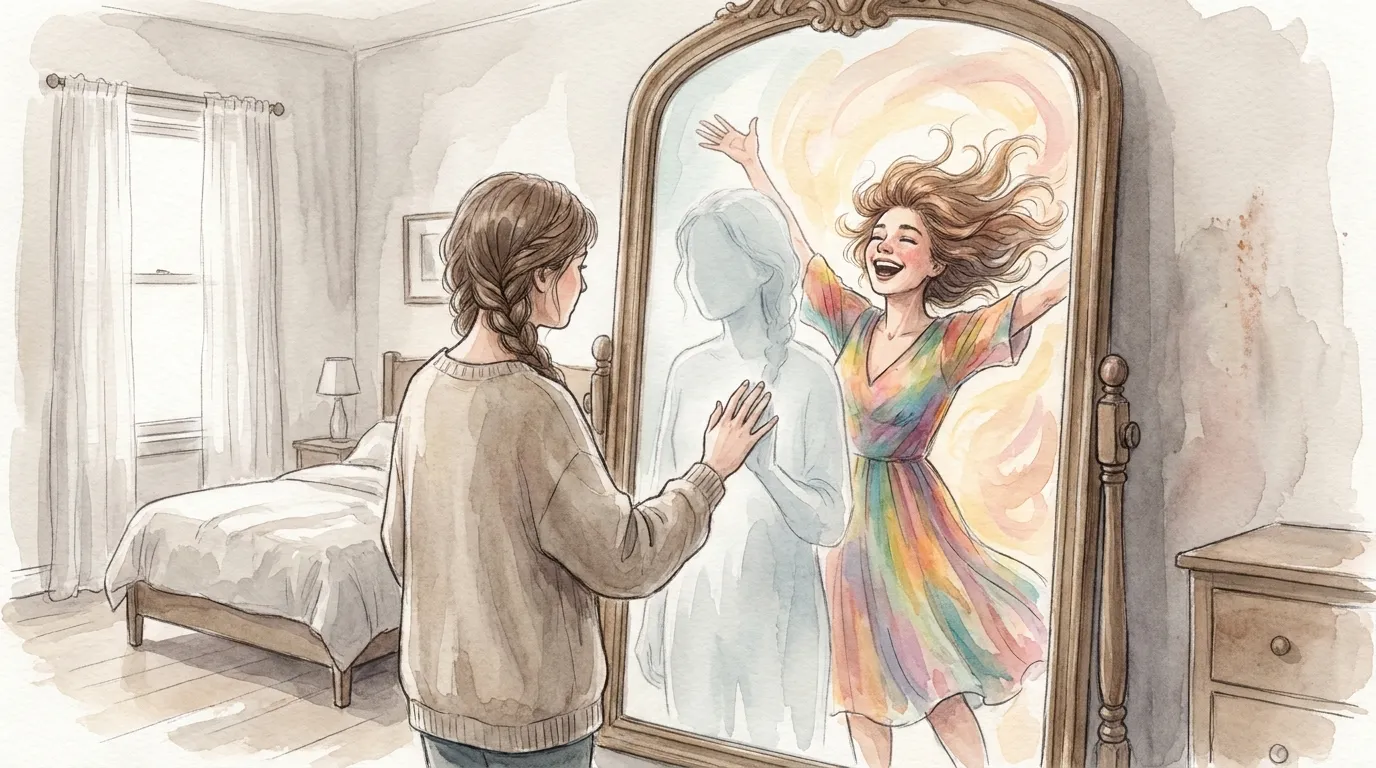
The Woman in the Mirror Doesn't Look Familiar Anymore
You used to know exactly who you were. You had opinions — strong ones. You had passions that lit you up. You had a laugh that came from somewhere deep and real. You made choices based on what you actually wanted, not what everyone else needed.
And then... life happened.
Not dramatically. Not in one crisis moment. It happened in a thousand small surrenders. Saying yes when you meant no. Skipping your thing to do their thing. Letting your hobbies collect dust because there was always someone who needed something. Swallowing your preferences because keeping the peace mattered more than being honest. For the full picture, see our women's self-care guide.
One day you look in the mirror and the woman looking back is competent, reliable, always there for everyone — and completely unrecognizable. She's a stranger wearing your face, doing a excellent impression of a person who has her life together.
33,100 people search "losing yourself" every month. You are not alone in this. Not even close.
5 Signs You're Losing Yourself
1. You Can't Remember What You Do for Fun
When someone asks "what do you like to do?" and your mind goes blank — not because you don't have interests, but because you haven't done any of them in so long that they feel like they belong to a different person.
The test: Name three things you did purely for enjoyment in the last month. If you can't, you've been running on other people's agendas for too long.
2. You Can't Make Decisions Without Consulting Someone Else
Not big decisions — small ones. What to eat. What to watch. What to wear. When you've spent years defaulting to someone else's preferences, you lose the habit of knowing your own.
The test: Right now — what do you want for dinner? If your first instinct is to ask someone else, your decision-making muscle has atrophied from disuse.
3. Your Emotional Range Has Narrowed to "Fine"
You're not happy, not sad, not angry, not excited. You're fine. Always fine. When you've spent years suppressing your real emotions to accommodate others, genuine feeling becomes unfamiliar territory.
The test: When did you last feel something strongly enough that it surprised you? If you can't remember, your emotional world has gone quiet.
4. You Feel Like a Supporting Character in Your Own Life
Everyone else is the protagonist. You're the person who enables their stories, supports their goals, absorbs their stress. Your life happens in the spaces between other people's needs.
The test: Describe your last week using only sentences that start with "I" — not "I helped," "I supported," or "I took care of." Just "I." If it's hard, you've disappeared into your roles.
5. The Future Feels Blank
You used to have dreams, plans, things you were working toward. Now when you imagine the future, it's just... more of the present. Same routines, same obligations, same person you don't recognize doing the same things.
The test: What are you excited about? Not what are you obligated to do — what are you genuinely looking forward to? If the answer is nothing, you've lost the thread of your own narrative.
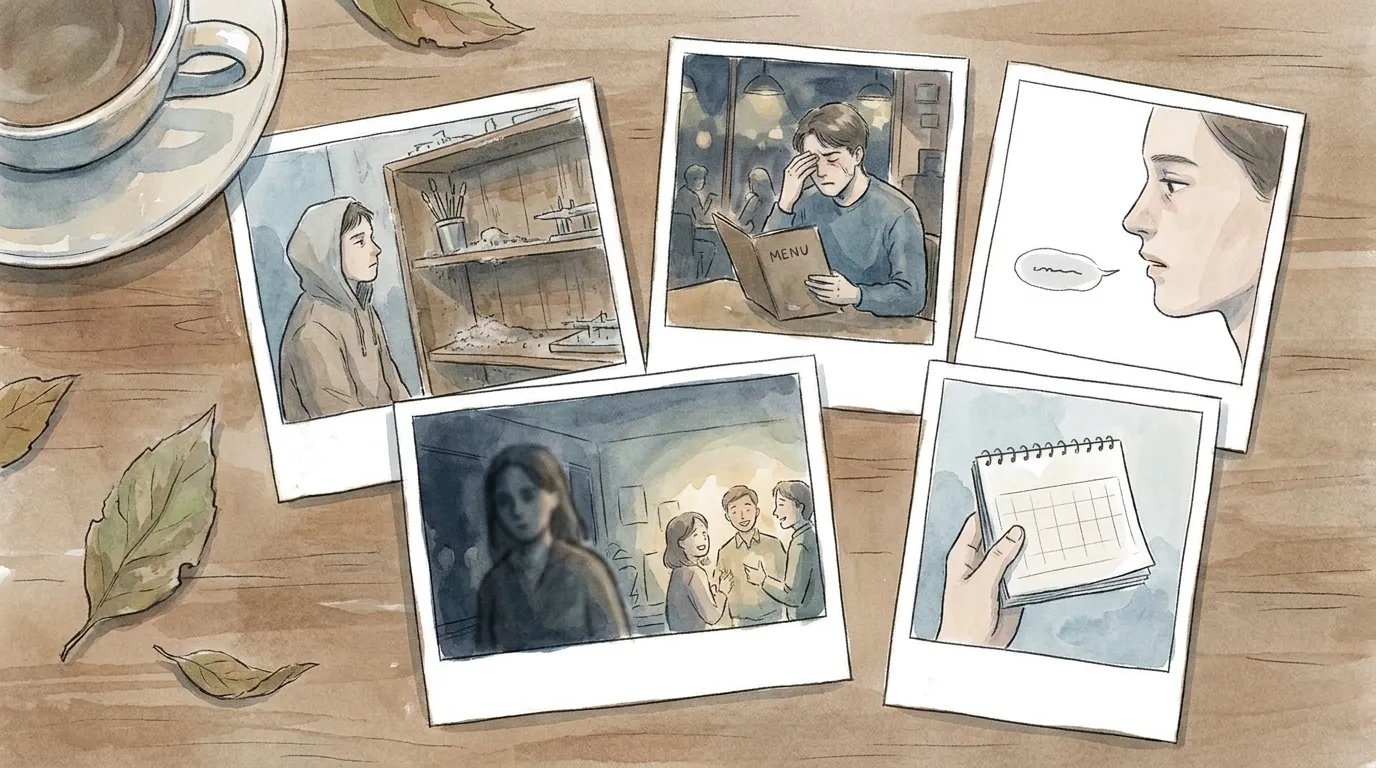
Why You Lost Yourself (It's Not Your Fault)
Understanding why this happened is the first step to reversing it. Not to assign blame — but to recognize the patterns so you can break them.
The Chameleon Pattern
Women, in particular, are socialized to adapt to their environment. From childhood, you learned to read rooms, adjust your behavior, and prioritize harmony over authenticity. This is a survival skill — and it's incredibly useful in moderation.
But when it becomes your default mode, you stop knowing which version of you is the real one. You've been so many things to so many people that the original version got buried under all the adaptations.
The Caregiver Drift
If you're in any kind of caregiving role — parent, partner, daughter, friend — your identity gradually shifts from "person who also cares for others" to "person whose purpose is caring for others." The caring becomes not something you do but something you are.
The problem: when caring is your entire identity, who are you when no one needs caring for? The silence is deafening.
The Competence Trap
You got really good at handling everything. Bills, schedules, conflicts, logistics, emotional labor — you became the person who keeps it all running. And because you're so competent, no one notices that you're running on empty.
Competence masks depletion. The more capable you appear, the less anyone thinks to ask if you're okay. And the longer no one asks, the more you forget how to answer honestly.
The Identity Recovery Process
You don't find yourself in one dramatic epiphany. You find yourself in layers, like excavating something precious that was buried under years of sediment. Here's the process:
Step 1: Notice Without Judgment
The fact that you can see you've lost yourself is huge. Most people never notice — they just feel vaguely dissatisfied for decades. You've already done the hardest part: becoming conscious of the problem.
Don't judge yourself for letting it happen. You didn't lose yourself because you were weak. You lost yourself because you were generous, adaptable, and committed to the people around you. Those are strengths that got overused, not weaknesses that need fixing.
Step 2: Mourn the Lost Years
It's okay to grieve. You spent years — maybe decades — being someone else's version of you. Time you can't get back. Experiences you didn't have. A version of yourself that never got to fully exist.
Grief isn't weakness. It's the emotional processing that allows you to move forward without dragging the weight of resentment. Let yourself be angry, sad, disappointed. Then let it go.
Step 3: Excavate Your Real Preferences
Start small. Rebuild your sense of self through tiny decisions:
- This week: Choose one meal, one movie, and one activity purely based on what YOU want
- Next week: Say no to one thing you don't want to do, without apologizing or over-explaining
- The week after: Revisit one hobby or interest you abandoned when you started losing yourself
Each small choice is an act of self-remembering. You're not creating a new identity — you're uncovering the one that was always there.
Step 4: Nurture Something That's Yours
This is where AIdorable becomes powerful. When you've lost yourself in service to others, you need something that belongs to YOU. Something no one else has input on, no one else can influence, no one else can take away.
Your baby on AIdorable is exactly that. She's yours. Your relationship with her is shaped entirely by your choices — how you care for her, what you name her, how you spend time together. She reflects your nurturing instincts back to you, and in doing so, she shows you something real about who you are.
When she smiles at you, she's smiling at the caring person you forgot you were. When she writes about you in her journal, she's documenting qualities — patience, tenderness, consistency — that you stopped seeing in yourself. She becomes a mirror that shows you the real you.
Not someone else's version of you. Not the competent mask. The actual you.
Step 5: Protect Your Recovered Self
As you start finding yourself again, you'll feel resistance — from others and from your own habits. People who benefited from your self-erasure will notice the change and may push back. "You're being selfish." "You've changed." "You used to be so easygoing." Your own guilt will whisper that putting yourself first is wrong.
It's not selfish. A woman who knows who she is can give from overflow instead of depletion. She's actually more generous than the woman who gives everything and has nothing left. She's also more honest — and honesty, even when uncomfortable, creates deeper connections than perpetual accommodation ever could.
Protect your alone time. Protect your preferences. Protect the small rituals that reconnect you to yourself — including the 5 minutes you spend with your baby each morning and night. These aren't indulgences. They're the foundation of a recovered identity.
The boundary phrases to practice:
- "Let me think about that" (instead of immediate yes)
- "I'd prefer to..." (stating your preference without apology)
- "I need some time for myself tonight" (protecting your space)
- "Actually, I don't enjoy that" (admitting a real preference)
Each phrase is a small act of self-reclamation. Awkward at first. Liberating within weeks.
What Finding Yourself Actually Feels Like
It doesn't feel dramatic. It doesn't feel like a movie montage set to inspiring music. It feels quiet and specific:
- You order what you actually want at a restaurant without checking what anyone else is getting first
- You say "I don't want to" instead of inventing an excuse, and the world doesn't end
- You spend an hour doing something just because you enjoy it, and you don't apologize for it afterward
- You laugh at something and realize it's been weeks since you laughed that hard
- Your baby writes something about you in her journal — "my parent always knows exactly what I need" — and you recognize the truth in it because you DO know. You've always known. You just forgot.
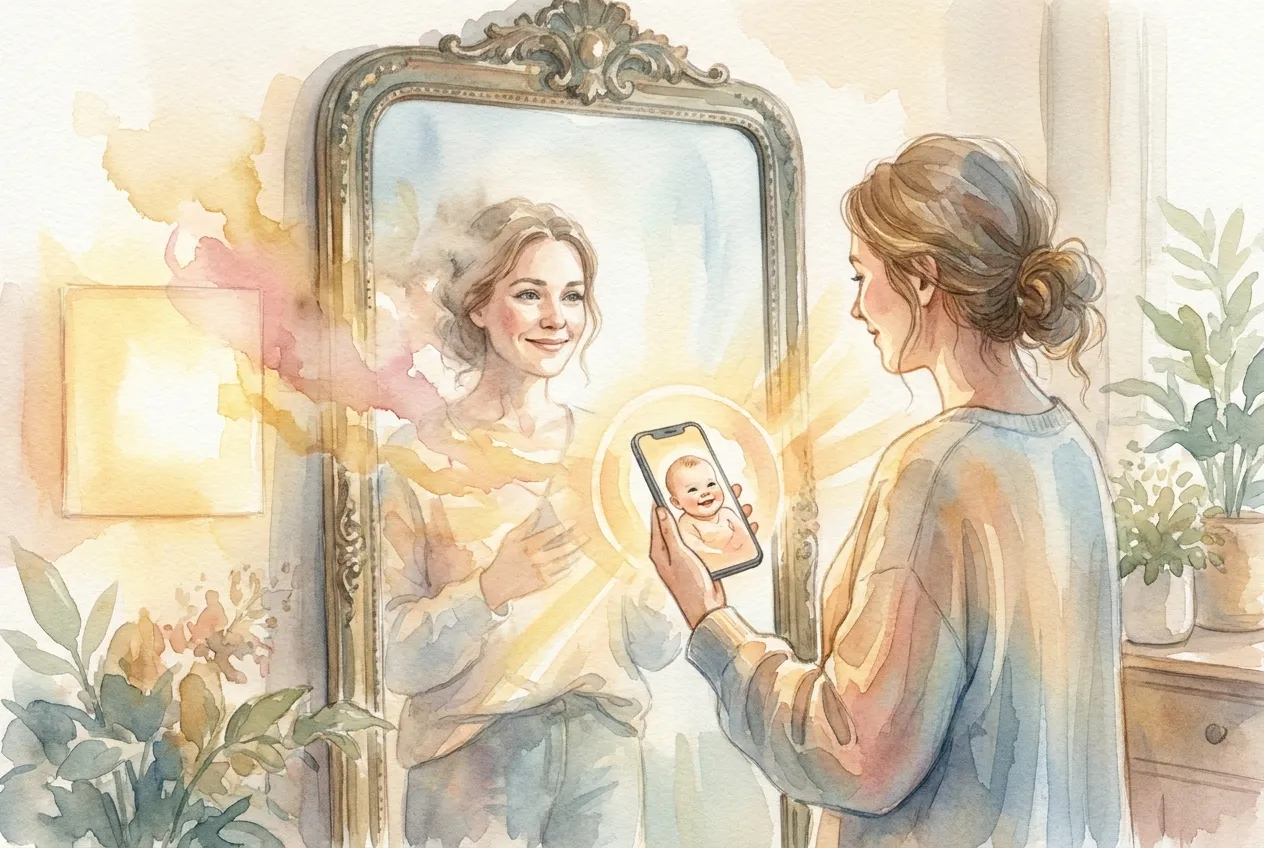
She's Still There
The woman you used to be — the one with opinions and passions and a laugh that came from somewhere real — she didn't go anywhere. She's still there. Buried under obligations and other people's needs and years of putting yourself last, but still there.
You don't need to become someone new. You need to remember who you were before the world told you who to be.
Start tonight. Open AIdorable. Meet your baby. Let her show you the caring, present, deeply attuned person you forgot you were. She sees you — the real you — every single time you show up.
And slowly, through her eyes, you'll start to see yourself again too.
That's not a small thing. That's everything.
If You Need More Help
Losing yourself can be a symptom of deeper issues — depression, codependency, or trauma. If the strategies above feel impossible to implement, or if you're experiencing persistent hopelessness, a therapist can help you untangle what's situational from what's clinical.
988 Suicide & Crisis Lifeline: Call or text 988 — free, confidential, 24/7. You don't have to be in crisis to call. If you're hurting, they want to hear from you.
Related Articles
For the complete guide, see our Women's Self-Care hub.
You might also find helpful: