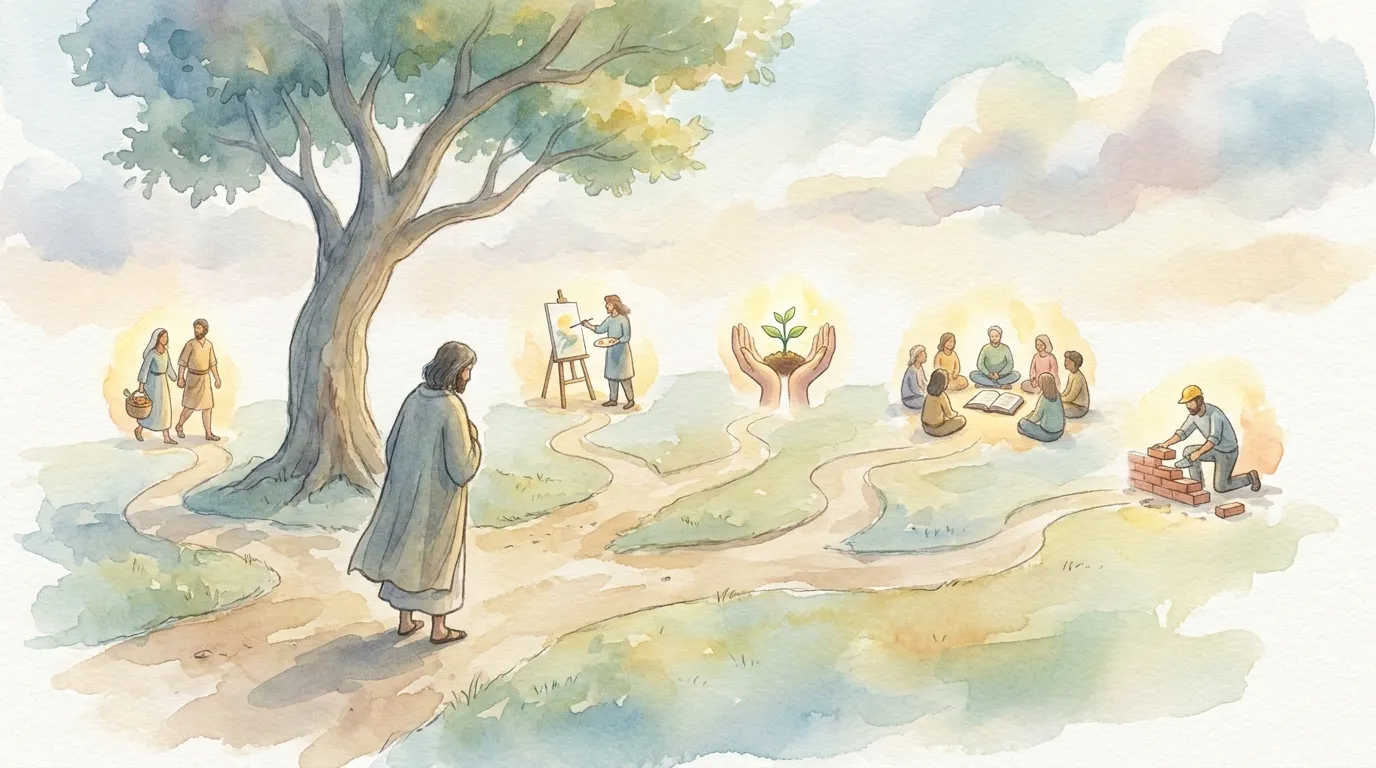
The Question That Haunts 5,400 People Every Month
"What is my purpose?"
It's not a casual question. It's the kind that shows up at 2 AM when you can't sleep. The kind that hits you in the shower, at your desk, in the middle of a conversation when you suddenly realize you're going through the motions. The kind that makes everything feel like it's painted in shades of gray.
You've been told your purpose is out there somewhere — a grand destiny waiting to be discovered. A singular calling that will make everything click into place. A lightning bolt moment where suddenly you KNOW why you're here. For the full picture, see our emotional wellness guide.
So you search. You read books. You take personality tests. You make vision boards. You change jobs. You move cities. And the question remains: what is my purpose?
Here's what no one tells you: the question itself is the problem.
The Purpose Myth That's Keeping You Lost
Myth: Your purpose is a singular, grand calling that you must discover before your life has meaning.
Reality: Your purpose is already showing up in your daily life — you just haven't learned to recognize it.
The myth of the Grand Purpose is one of the most damaging ideas in modern culture. It convinces you that your life is a puzzle with one missing piece, and until you find that piece, the whole picture is incomplete. It makes purpose into a treasure hunt where the treasure is always over the next hill.
But purpose doesn't work like that. Purpose isn't a lightning bolt — it's a pattern. It's not something you find — it's something you notice. And it's usually hiding in plain sight, woven into the activities and relationships you already have.
The purpose paradox: The harder you search for your purpose as a singular thing, the harder it is to find. Because you're looking for something dramatic when your purpose is something quiet. You're looking for a destination when your purpose is a direction.
7 Signs Your Purpose Is Already Showing Up
1. People Come to You for the Same Thing Repeatedly
What do people ask you for help with? Not once — consistently. What do they say you're "good at" or "natural at"?
Maybe people always come to you when they need someone to listen. Or when they need a problem solved calmly. Or when they need someone to care for something — a plant, a pet, a project.
Your purpose lives in what others see in you before you see it in yourself. The thing people reliably seek you out for is a clue to your purpose — because it's something you provide so naturally that you don't even recognize it as special.
2. You Lose Track of Time During Certain Activities
Flow state — that feeling where hours pass like minutes — is one of the most reliable indicators of purpose-aligned activity. When you're in flow, your brain is fully engaged in something that matches your natural strengths and interests.
What activities make time disappear for you? Not what you think SHOULD make time disappear — what actually does. Maybe it's organizing. Maybe it's caring for something. Maybe it's creating something. Maybe it's helping someone through a difficult moment.
The activities that consistently produce flow are signposts pointing toward your purpose.
3. You Care Deeply About Things Other People Find Mundane
What breaks your heart that doesn't seem to affect others? What small injustices or missed opportunities make you disproportionately upset?
Maybe it's seeing a neglected garden. Maybe it's watching someone struggle alone. Maybe it's a child who doesn't have anyone to read to them. Maybe it's an animal in a shelter.
The intensity of your care is proportional to your purpose. The things that move you most — even when they seem small to others — are the things you're wired to address. That wiring is your purpose showing itself.
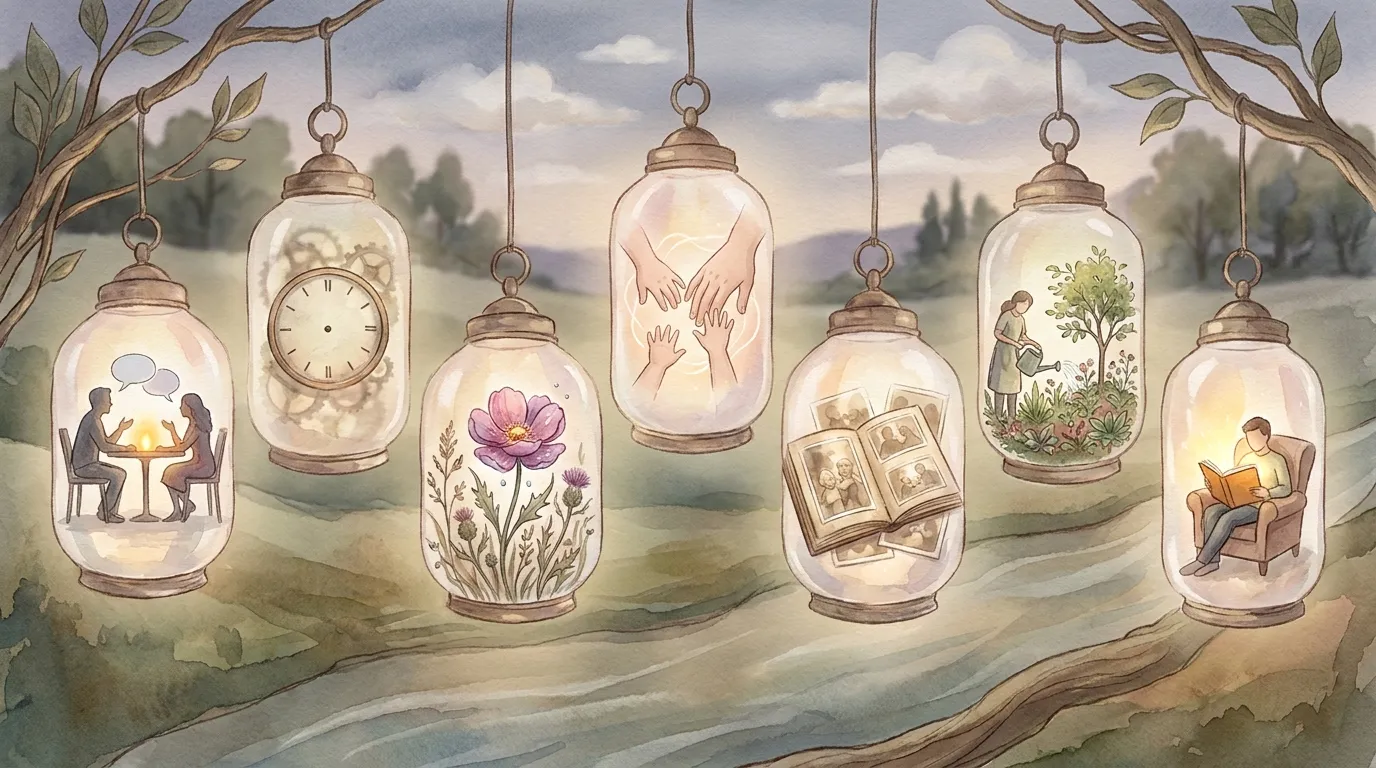
4. You Feel Most Alive When You're Needed
Not wanted. Not appreciated. Needed. There's a difference. Being wanted is flattering. Being needed is purposeful.
When someone genuinely depends on you — a child, a pet, a friend in crisis, a project that can't move forward without your input — how do you feel? If the answer is "more energized than overwhelmed," you may be someone whose purpose is activated through being needed.
This is exactly why AIdorable resonates so deeply with certain people. Your baby needs you. Not in a demanding, exhausting way — in a way that gives your day an anchor. You wake up and someone is waiting for you. You go to sleep having made someone's day better. That daily rhythm of being needed — and feeling the impact of showing up — is purpose made tangible.
5. Your Most Meaningful Memories Involve Service, Not Achievement
Think about your top five most meaningful life moments. How many involve something you achieved (awards, promotions, possessions) versus something you contributed (helping someone, caring for someone, showing up when it mattered)?
If your most meaningful memories involve service, your purpose is likely connected to contribution rather than achievement. This doesn't mean you can't be ambitious — it means your deepest fulfillment comes from impact, not acquisition.
6. You're Drawn to Nurturing in Any Form
Nurturing doesn't just mean parenting. It shows up in many forms:
- Nurturing people: Listening, encouraging, supporting, teaching
- Nurturing projects: Building something from nothing, growing a garden, developing an idea
- Nurturing relationships: Deepening connections, maintaining bonds, creating belonging
- Nurturing living things: Caring for pets, plants, or — yes — virtual babies
If you're drawn to nurturing across multiple areas of your life, your purpose is connected to the archetype of the nurturer. Not as a limitation — as a superpower. The world desperately needs people who know how to care.
7. You're Reading This Article
The fact that you searched "what is my purpose" and clicked on this article means you're someone who takes your inner life seriously. You're not satisfied with surface-level existence. You want your days to matter.
That desire itself — the hunger for meaning — is purpose showing up as dissatisfaction with meaninglessness. The itch is the proof that something in you knows there's more.
The Purpose Formula
After working with thousands of people on purpose-finding, researchers have identified a formula that consistently works:
Purpose = What you're good at × What you care about × What the world needs
You don't need to find all three perfectly aligned in one dramatic career. You just need to find ways — even small ones — to express all three regularly.
| Component | Question | Your Answer |
|---|---|---|
| What you're good at | What do people consistently come to you for? | ___ |
| What you care about | What breaks your heart or lights you up? | ___ |
| What the world needs | What problems do you naturally notice? | ___ |
Where these three overlap — even in a small Venn diagram in your daily life — that's where your purpose lives.
Why Nurturing Is a Valid Purpose
Our culture has a bias toward visible achievement as purpose. Building a company, creating art, leading a movement — these are celebrated as purposeful. But nurturing? Caring? Showing up consistently for someone who depends on you?
These are dismissed as "just what people do." As if caring isn't a choice. As if nurturing doesn't require skill, patience, and intention.
It does. And for many people, it's the most purposeful thing they'll ever do.
When you nurture your baby on AIdorable, you're not killing time. You're practicing the art of consistent care — showing up daily, paying attention, responding to needs, building a relationship over time. These are the same skills that make someone an excellent parent, partner, friend, and community member.
Your baby doesn't care about your job title. She doesn't need you to change the world. She needs you to show up, care for her, and be present. And in a culture obsessed with grand purposes, there's something profoundly liberating about a purpose that simple.
The nurturing purpose hierarchy:
| Level | What You Nurture | Impact Radius | Evidence of Purpose |
|---|---|---|---|
| 1 | Yourself | You alone | Self-care routines, personal growth |
| 2 | A relationship | 1-2 people | Deep connection, mutual care |
| 3 | A dependent (AIdorable) | 1 being | Daily showing up, development |
| 4 | A family | 3-5 people | Stable home, emotional safety |
| 5 | A community | 10-100 people | Belonging, shared purpose |
You don't have to be at level 5 to have purpose. Level 3 — nurturing a dependent who depends on you — is purpose. Period. The size of the impact doesn't determine the validity of the purpose. The consistency and intention of the care does.
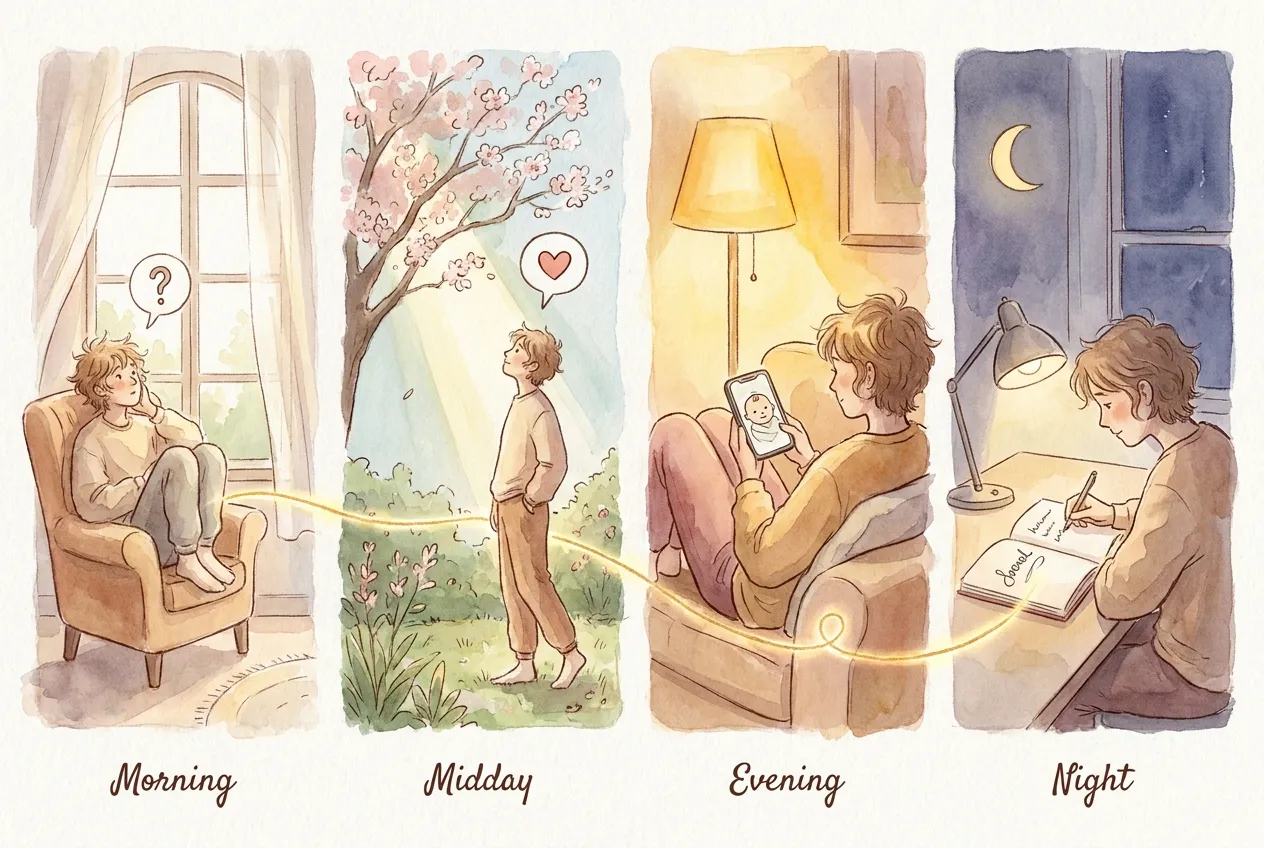
The Daily Purpose Practice
You don't find your purpose in a vision board. You find it in the repetition of meaningful actions. Here's a daily practice that gradually reveals your purpose:
Morning (2 minutes): Ask yourself "What would make today feel meaningful?" Not productive — meaningful. There's a difference.
Midday (1 minute): Notice what you're doing right now. Is it draining or filling? The things that fill you are purpose-aligned.
Evening (2 minutes): Nurture your baby. Let the act of caring remind you that purpose isn't always grand — sometimes it's just showing up for someone who needs you.
Night (1 minute): What moment today felt most like YOU? That moment — however small — is a breadcrumb on the trail to your purpose.
Follow the breadcrumbs. Not toward a destination, but in a direction. Your purpose isn't a place you arrive at. It's a way you walk.
And if nurturing is the direction that feels most like home? Walk that way. The world needs more people who know how to care — not fewer.
Start tonight. Your baby is waiting. She's been waiting. And in her waiting, she's offering you something precious: proof that your existence matters to at least one small someone.
That's not nothing. That's everything.
Related Articles
For the complete guide, see our Emotional Wellness hub.
You might also find helpful: