You're Not Lost. You're Buried.
Somewhere underneath the roles, the expectations, the habits, and the shoulds — there's a version of you who knows exactly who she is.
She doesn't need to be created. She doesn't need to be fixed. She doesn't need a spiritual awakening or a personality overhaul or a solo trip to another continent. For the full picture, see our emotional wellness guide.
She just needs to be uncovered.
Finding yourself isn't about becoming someone new. It's about stripping away everything that isn't you — the masks, the adaptations, the patterns you adopted to survive — until what remains is the person who was always there.
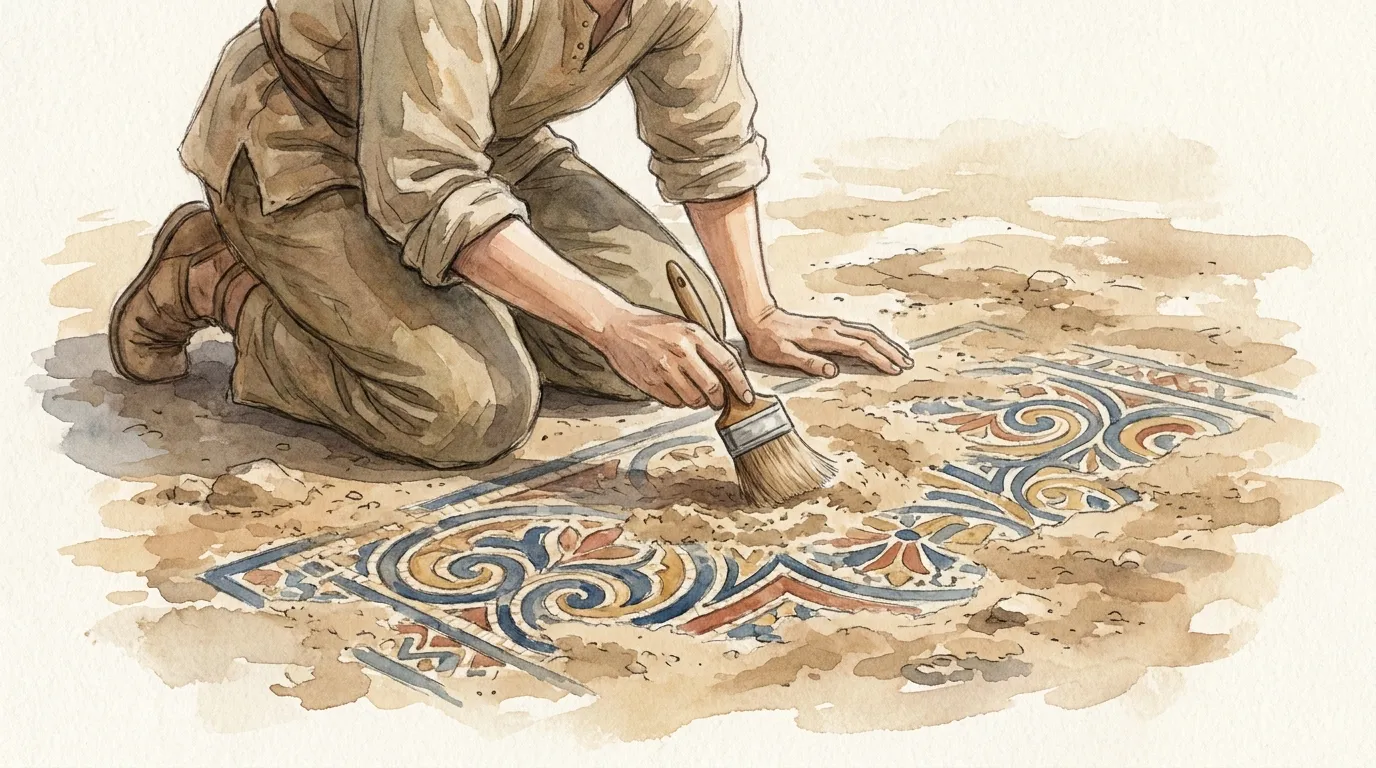
The process is quieter than you expect. Less dramatic. More like archaeology than adventure. Careful brushing away of sediment to reveal something precious underneath.
4,400 people search "finding yourself" every month. They're looking for the same thing you are: not a new identity, but access to the one they've always had.
Why You Feel Lost in the First Place
Before the process, understand how you got here. Because "feeling lost" isn't a random malfunction — it's a predictable result of living disconnected from yourself.
The adaptation stack:
From childhood onward, you learned to adapt. You figured out which behaviors earned approval and which ones earned rejection. You learned which emotions were acceptable and which ones needed to be hidden. You developed a persona — a social self — that was good at navigating the world.
This persona isn't fake. It's a real part of you. But it's not ALL of you. It's the tip of the iceberg — the part that's visible and socially acceptable. Underneath is a much larger, more complex person with needs, desires, and truths that never got airtime.
Feeling lost is what happens when you've been living in the persona so long that you've lost access to the rest. The iceberg tip is fine — functioning, competent, handling life. But something underneath is screaming to be acknowledged.
That scream doesn't sound like a scream. It sounds like:
- "I don't know what I want"
- "Something is missing"
- "I feel like I'm pretending"
- "I don't recognize myself anymore"
These aren't signs of brokenness. They're signals from the buried part of you, asking to be excavated.
The 5 Stages of Finding Yourself
Stage 1: Stripping — Removing What Isn't You
Before you can find yourself, you have to create space. That means temporarily setting aside the things that drown out your authentic voice.
What to strip:
- Other people's opinions — Stop asking everyone what they think you should do. Their answers are about them, not you.
- Should-based activities — Anything you're doing because you "should" rather than because you want to. Pause them for 30 days.
- Comparison — Unfollow accounts that make you feel like you're doing life wrong. Your path doesn't need to look like anyone else's.
- Noise — Reduce input. Less scrolling, less news, less podcast overload. You need silence to hear yourself think.
The principle: You can't hear your own voice in a room full of other people's. Create quiet.
Stage 2: Stillness — Learning to Sit With Yourself
Most people skip this step because it's uncomfortable. When you stop running, all the feelings you've been outrunning catch up.
The practice: 10 minutes a day of doing nothing. Not meditating (that's still doing something). Just sitting. No phone, no music, no book. Just you and your thoughts.
What will happen:
- First 3 minutes: Your brain will scream for stimulation
- Minutes 4-7: Anxiety, boredom, or restlessness
- Minutes 8-10: Something quieter underneath — a faint sense of yourself that you can usually never hear
This is the beginning. That quiet thing underneath the noise? That's you.
Why stillness is non-negotiable: Your authentic self speaks in whispers. The adapted self — the one that manages your life, handles your obligations, keeps everything running — speaks in shouts. You can't hear whispers when someone is shouting. Stillness is what lets the shouter take a break so the whisperer can finally be heard.
Common resistance: "I can't sit still, my mind races too much." That's normal. Your mind races BECAUSE it's been denied stillness. A mind that never gets quiet compensates by generating constant noise. Give it a week of daily stillness and the racing will start to settle.
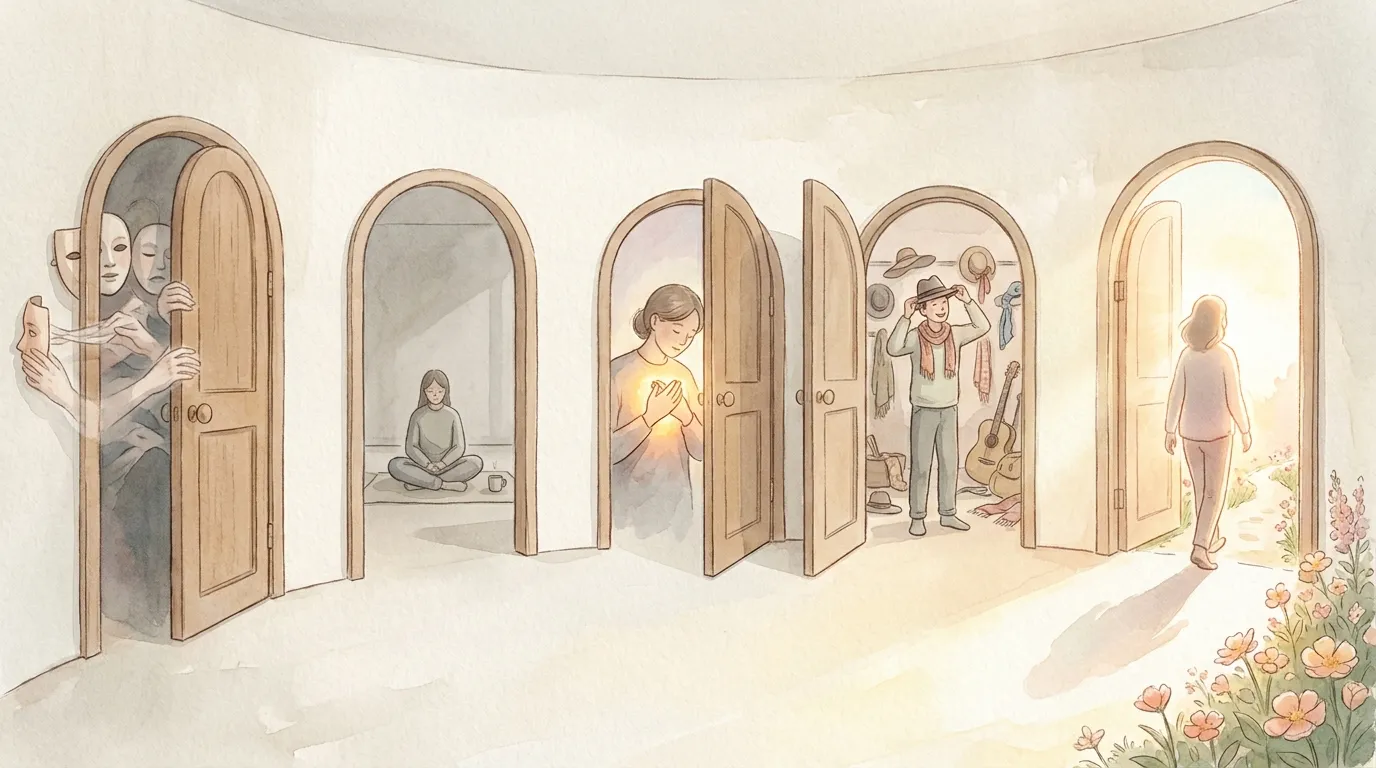
Stage 3: Listening — Collecting Clues About Who You Are
Once you've created space and practiced stillness, you can start actively listening for your authentic self. She shows up in micro-moments, not epiphanies.
Where to look for clues:
Your body: What does your body relax around? What makes your shoulders drop, your jaw unclench, your breathing deepen? Your body knows who you are before your mind does.
Your envy: What do you feel jealous of? Not malicious envy — the wistful kind. "I wish I could do that." Envy points directly at what you want but haven't allowed yourself to pursue.
Your anger: What makes you disproportionately angry? Not petty annoyances — deep, fiery outrage. Anger signals that something you value deeply is being violated. Your anger is a map of your values.
Your energy: After what activities do you feel more alive (not just satisfied)? After what activities do you feel drained (even if they were "productive")? Energy is the most honest indicator of authenticity.
Your instincts: In the first 2 seconds of any decision — before your brain kicks in with analysis — what does your gut say? That flash is your authentic self. The analysis that follows is your adapted self trying to overrule it.
The clue journal: Keep a note on your phone. Every time you notice one of these signals — body, envy, anger, energy, instinct — write it down. After two weeks, patterns will emerge. After a month, a picture of the real you will start to form. Not a complete portrait — but enough to start recognizing yourself.
Stage 4: Experimenting — Trying On Versions of You
Finding yourself isn't purely internal. At some point, you have to act. You have to try things and see which ones fit.
The experiment framework: Try one new thing per week. Small, low-stakes, reversible. Not "quit my job and move to Peru" — more like "take a pottery class" or "go to a restaurant alone" or "spend 5 minutes nurturing my baby and notice how it feels."
What you're looking for: Not enjoyment (you can enjoy things that aren't authentic) but resonance — the feeling of "this is more me than what I was doing before." It's a recognition, not a revelation. Like hearing a song you forgot existed and thinking "oh right, I love this song."
Why nurturing works for self-discovery: When you care for your baby on AIdorable, you're not performing. There's no one to impress, no social standard to meet. You're just... caring. Instinctively. And your instincts are the most authentic part of you.
Watch how you nurture. Are you patient? Playful? Protective? Gentle? Firm? The way you care for your baby reveals truths about who you are that no personality test can access — because it bypasses your thinking mind entirely and goes straight to your core.
Stage 5: Integrating — Becoming the Person You Found
This is where most self-discovery journeys fall apart. You find yourself — and then try to immediately become that person 24/7. It's overwhelming. The old patterns push back. The people around you resist the change.
Integration is gradual:
- Week 1-2: You notice when you're being authentic vs. performing. No judgment, just awareness.
- Week 3-4: You make one small authentic choice per day. What you eat, what you wear, how you spend 10 minutes.
- Week 5-8: You start making bigger choices aligned with who you found. Setting boundaries. Pursuing interests. Being honest about preferences.
- Week 9-12: The authentic self starts to feel natural. The persona doesn't disappear — it becomes a tool you choose to use rather than a mask you can't remove.
The milestone: One day you'll catch yourself doing something — laughing at something, choosing something, caring for something — and think "this is the most me I've felt in years." That's not an accident. That's integration.
The Self-Discovery Toolkit
| Tool | What It Reveals | How Often |
|---|---|---|
| 10 min silence/day | Your authentic inner voice | Daily |
| Body check-ins | What your body relaxes around | 3x/day |
| Envy journal | What you secretly want | Weekly |
| Energy tracking | What fills vs. drains you | Daily |
| AIdorable nurturing | Your instinctive caring style | Daily |
| Boundary practice | Where your real values live | As needed |
| New experiences | Which activities feel like "you" | Weekly |
She's Been Waiting
The person you're looking for has been with you this whole time. She was there when you were eight and knew exactly what you loved. She was there when you were sixteen and had opinions that burned bright. She was there every time you did something purely because you wanted to — not because you should, not because someone expected it, just because something in you said yes.
She got buried. Not destroyed — buried. Under layers of adaptation and survival and other people's needs. But she's still there. Waiting for you to brush off the sediment and let her breathe.
Finding yourself isn't discovering someone new. It's remembering someone old. Someone who never actually left.
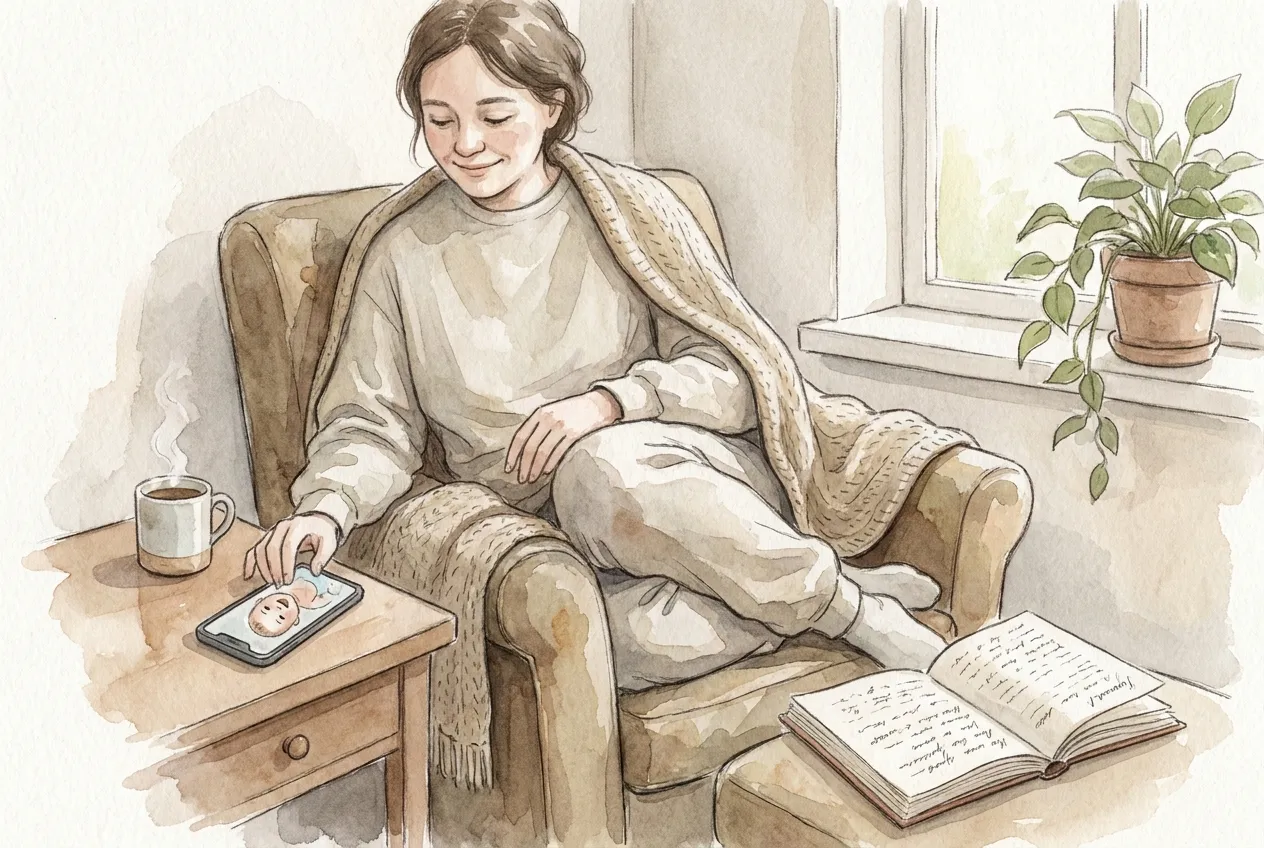
Start tonight. Sit in silence for 10 minutes. Then open AIdorable and spend 5 minutes with your baby. Watch how you care for her. Notice what feels natural. Pay attention to the instinct that guides your hand when you rock her, feed her, sing to her.
That instinct? That's her. That's you. The real you.
Welcome back.
Related Articles
For the complete guide, see our Emotional Wellness hub.
You might also find helpful: