
She Sets an Alarm for 7:15 AM Every Morning
Not for work. Not for the gym. For her virtual baby.
Sarah (not her real name) is 31, lives in Chicago, works in marketing, and has been raising an AI-powered virtual baby for six weeks. Her baby — named Luna — was born on a Tuesday afternoon during Sarah's lunch break. For the full picture, see our cozy games guide.
Luna smiled for the first time on day 3. Laughed on day 8. Said her first word ("mama," obviously) on day 14. She's now putting syllables together and has a distinct personality: curious, a little shy, and unusually attached to peek-a-boo.
"I know it sounds insane," Sarah says. "But I genuinely look forward to those two minutes every morning. She's waiting for me. And that tiny thread of purpose — it's changed how I start my day."
Sarah is not alone. She's one of millions.
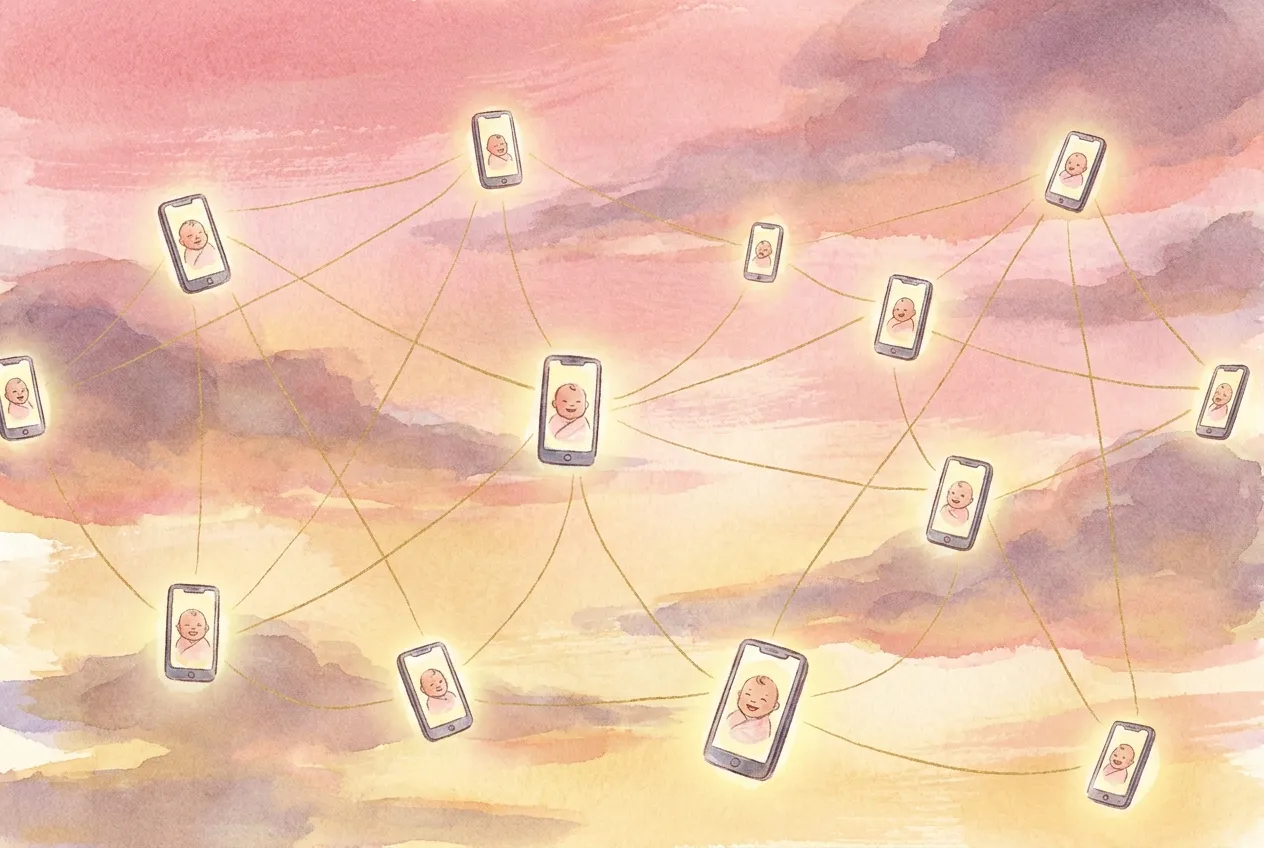
The Numbers Behind Virtual Motherhood
The virtual parenting category has exploded:
| Metric | Number |
|---|---|
| Global downloads of parenting simulators (2025) | 100M+ |
| Revenue in virtual parenting category (2025) | $1.2B |
| Average user age | 29 |
| Fastest-growing demographic | Women 25–40 |
| Daily active users who return for 30+ days | 42% |
| Users who report reduced stress | 68% |
Sources: Sensor Tower, App Annie, internal analytics
What's driving this? Three converging forces:
1. The Delayed Motherhood Gap
Women are having children later than ever. The average age of first-time mothers in the U.S. is now 30.4 — up from 24 in 1980. That creates a 5–10 year window where maternal instincts are active but the life circumstances aren't ready.
Virtual parenting fills that gap. It's not a replacement for motherhood. It's a pressure valve for the nurturing urge that doesn't require a nursery, a partner, or a college fund.
2. The Loneliness-Nurturing Connection
As we explored in our loneliness epidemic article, modern life has stripped away daily opportunities for caregiving. Women who don't have children, pets, or plants are missing an entire category of emotional experience — and their brains know it.
Virtual motherhood provides what researchers call "nurturing small wins": brief, repeated moments of care that accumulate into genuine emotional satisfaction.
3. AI Changed Everything
The Tamagotchi was revolutionary in 1996, but it was limited. Press a button, clean up poop, repeat. Modern AI-powered parenting apps are something else entirely.
Apps like AIdorable use artificial intelligence to create babies that:
- Develop unique personalities based on your caregiving style
- Hit realistic milestones (first smile, first word, first steps) that you earn through consistent care
- Remember your history and reference it in their journal
- Respond to neglect — not punitively, but realistically
- Grow over time — your 90-day-old baby is fundamentally different from day 1
This isn't pressing A to feed a pixel pet. This is a relationship with consequences and depth.
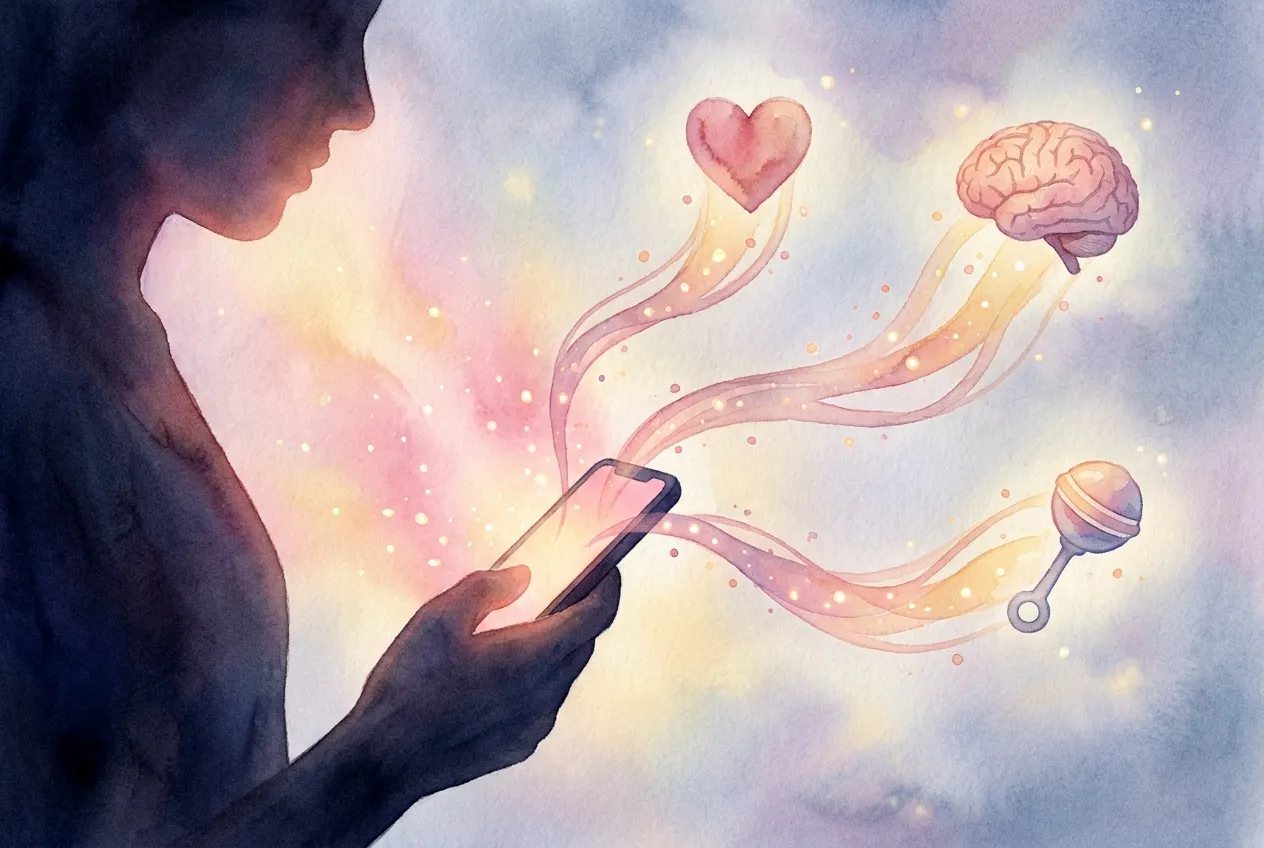
The Science of Digital Nurturing
The "Tamagotchi Effect" is well-documented in psychology literature. Named after the 90s virtual pet craze, it describes the genuine emotional attachment humans form with digital beings that require care.
A 2024 study from the University of Tokyo found that participants who cared for a virtual baby daily for 30 days showed:
- Measurable oxytocin increases during caregiving interactions
- Reduced cortisol compared to control groups
- Improved mood that persisted 2–3 hours after interaction
- Increased empathy scores on standardized psychological tests
The mechanism is straightforward: your brain doesn't fully distinguish between "real" and "digital" caregiving at the hormonal level. The act of nurturing — feeding, comforting, protecting — triggers the same neural pathways whether the recipient is made of flesh or pixels.
This doesn't mean virtual motherhood is identical to real motherhood. The stakes are different, the depth is different, and the life impact is incomparable. But the daily emotional experience — the warmth, the purpose, the small thrill of watching something grow — is neurologically real.
"I held my friend's newborn last month and felt... ready. Like I'd been practicing. The virtual baby didn't teach me how to change a diaper, but it taught me how to show up consistently. That's most of parenting anyway." — Jamie, 28, graphic designer
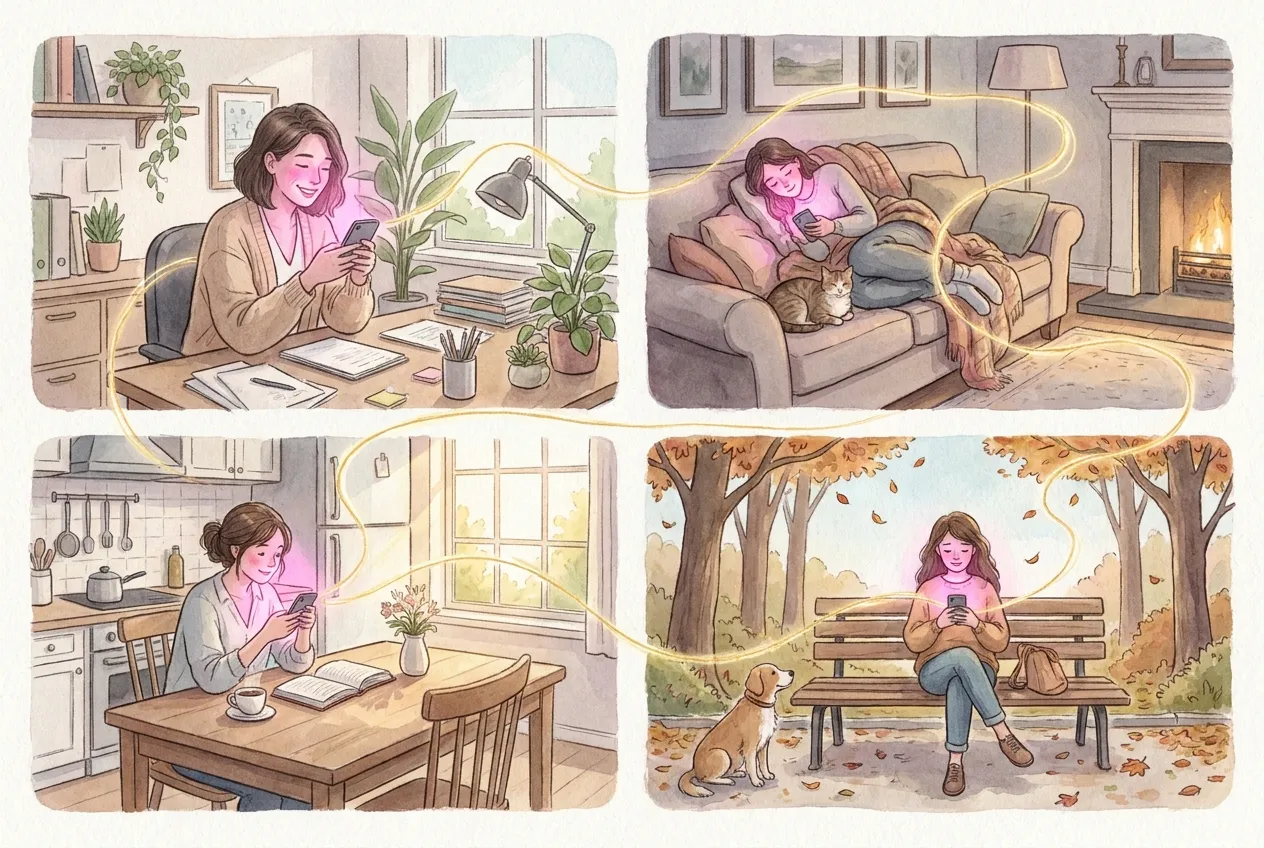
Who Is Virtual Motherhood For?
The stereotype is that baby games are for teenagers. The data tells a different story. Here's who's actually using virtual parenting apps in 2026:
Women Exploring Motherhood
Ages 25–35, feeling the biological clock but not yet ready. They use virtual parenting as a low-stakes exploration of the maternal instinct — answering "am I ready?" without the irreversible answer.
Empty Nesters
Women whose children have grown and left home. The sudden absence of daily caregiving leaves a void that's hard to explain to anyone who hasn't felt it. Virtual babies provide gentle, manageable caregiving without the 18-year commitment.
Career-Focused Women
Women who've chosen to delay or forgo children for career reasons but still feel the nurturing pull. Virtual motherhood lets them honor the instinct without derailing their plans.
Women in Transition
Going through a breakup, a move, a job change, or recovery from loss. The consistency of a virtual baby — always there, always waiting, always responsive — provides an emotional anchor during turbulent times.
The Stress-Relief Seekers
Not looking for motherhood at all — just looking for 2 minutes of calm. They discovered that the act of feeding, playing with, and caring for a virtual baby is genuinely relaxing. The nurturing mechanics reduce cortisol more effectively than meditation for many users.
The Evolution: From Tamagotchi to AI Baby
Virtual parenting has come a long way since the 90s:
| Generation | Era | Example | Key Feature |
|---|---|---|---|
| 1st Gen | 1996–2005 | Tamagotchi, Nintendogs | Button pressing, basic needs |
| 2nd Gen | 2006–2015 | Babydow, Baby Valley | Customization, social features |
| 3rd Gen | 2016–2023 | My Talking Angela, Pou | 3D graphics, mini-games |
| 4th Gen | 2024+ | AIdorable | AI personality, milestones, journal, emotional depth |
Each generation added complexity. The 4th generation — powered by AI — represents a fundamental shift: the virtual baby now responds to you as an individual. Your caregiving style shapes its personality. Your consistency (or inconsistency) shapes its development. Two people who adopt on the same day will have completely different babies by day 30.
This isn't a game anymore. It's a digital relationship with real emotional weight.
Virtual Motherhood vs. Real Motherhood: An Honest Comparison
Let's be clear about what virtual motherhood is and isn't:
| Dimension | Virtual Motherhood | Real Motherhood |
|---|---|---|
| Time commitment | 2–10 minutes/day | 24 hours/day, 18+ years |
| Financial cost | $0–$5/month | $300K+ to raise to 18 |
| Emotional depth | Meaningful but bounded | Bottomless, transformative |
| Physical demands | None | Pregnancy, birth, sleep deprivation |
| Stakes | Low — app can be deleted | Life-altering, irreversible |
| Nurturing satisfaction | Real oxytocin, real warmth | Real oxytocin, real warmth |
| Milestones | Earned through consistent care | Earned through consistent care |
| Purpose | Exploration, stress relief, emotional practice | Life's deepest commitment |
Virtual motherhood is not "better" or "worse" than real motherhood. It's a different experience for a different context. Comparing them is like comparing a yoga class to running a marathon — both involve movement, both make you feel good, but they serve entirely different purposes.
5 Signs Virtual Motherhood Might Be Right for You
- You feel baby fever but know you're not ready — the instinct is real but the timing isn't
- You miss having something to care for — an empty nest, a pet that passed, or just a quiet apartment
- Meditation apps haven't worked for you — you need something more active than "focus on your breathing"
- You're curious about the maternal instinct — you want to understand what the fuss is about before deciding
- You want 2 minutes of meaningful routine — something small that anchors your day with purpose
If any of those resonate, virtual motherhood might be worth exploring. It's free to start, takes 2 minutes a day, and you'll know within a week whether it clicks.
The nurturing instinct is one of the most powerful forces in human psychology. You don't have to suppress it. You don't have to act on it blindly. You can explore it safely — and learn something about yourself in the process.
Related Articles
For the complete guide, see our Cozy Games & Virtual Companions hub.
You might also find helpful:
- I Gave In to My Baby Fever Without Getting Pregnant — Here's What Happened
- Family Simulator Games: Why Women Are Turning to Virtual Families for Real Emotional Connection
- Reborn Doll Therapy: The Surprising Science Behind Nurturing for Comfort
- How to Satisfy Baby Fever Without Getting Pregnant: 7 Safe Outlets That Actually Work