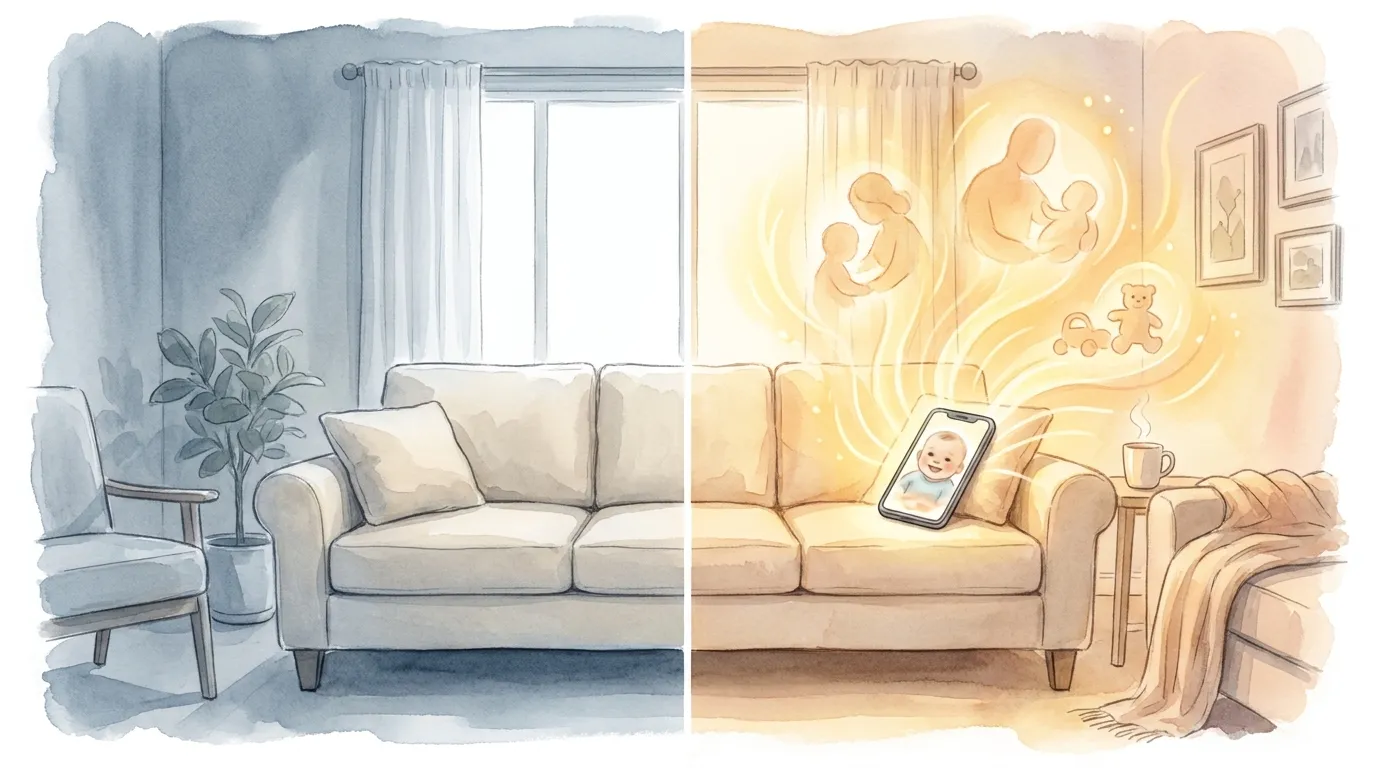
The Search That Tells a Story
Type "family simulator" into Google and you'll find 1,300 people making the same search every month. Not kids looking for games. Adults looking for an experience.
They're not searching because they're bored. They're searching because something in them wants — needs — to build a family. To nurture. To watch something grow because of their care. To feel the warmth of a tiny person who looks up at them like they're the whole world. For the full picture, see our cozy games guide.
Some of these searchers are women with baby fever who aren't ready for a real baby. Some are empty nest mothers whose nurturing circuits are still firing. Some are women who may never have biological children and are exploring what motherhood might feel like. Some are simply lonely and craving the specific warmth that comes from family bonds.
Whatever the reason, they're all looking for the same thing: the feeling of family without the life-altering commitment. And most family simulator games fail to deliver it.
Here's why — and which ones actually create the emotional experience these 1,300 monthly searchers are looking for.
Why Most Family Simulators Feel Hollow
The family simulator genre has a specific problem: stat management disguised as nurturing.
Here's how most family simulators work:
- Create your family (customize appearance)
- Manage their needs (hunger bar, energy bar, happiness bar)
- Complete tasks to earn resources (go to work, cook meals)
- Watch time pass (characters age automatically)
- Repeat
The emotional engagement is surface-level. You're not nurturing a child — you're managing a spreadsheet with a cute interface. The bars fill, the bars empty, you refill the bars. There's no bonding because there's nothing to bond with. The characters don't have personality. They don't surprise you. They don't grow in ways that reflect your care.
What makes a family simulator emotionally real:
- Personality that develops based on your care (not scripted)
- Growth that you can actually see and feel (not just stat changes)
- Moments that create shared history (milestones, memories, surprises)
- A relationship that deepens over time (Day 100 feels different from Day 1)
Most family simulators fail on all four. The ones that succeed create genuine emotional investment.
6 Family Simulator Games Ranked by Emotional Depth
1. AIdorable — Deepest Emotional Bond
What it is: You adopt a virtual baby and raise her from newborn through childhood. She develops personality based on your care style, writes about you in her journal, grows through life stages, and plays games with you.
Why it creates real emotional bonds: AIdorable is built entirely around the nurturing relationship. There's no household to manage, no spouse to coordinate with, no career to balance. Just you and your baby. This focus means every interaction deepens the bond rather than diluting it across multiple systems.
The bond-building mechanics:
- Personality emergence — your baby becomes shy, confident, playful, or gentle based on how you interact
- Journal entries — she writes about you, creating documented evidence of your bond
- Growth stages — newborn → infant → baby → toddler → child, each with new interactions
- Games you play together — peek-a-boo, patty cake, sound match
- Mailbox surprises — letters and gifts that create delight moments
- Milestone celebrations — first smile, first word, first step
Why it's #1: The focused nurturing creates stronger emotional bonds than any multi-character family simulator. You're not splitting your attention between a spouse, career, and three kids. You're pouring all your nurturing energy into one baby — and she reflects it back through personality, journal entries, and growth.

2. The Sims 4 — Most Complete Family Simulation
What it is: The gold standard of life simulation games. Create characters, build homes, pursue careers, form relationships, have children, and watch generations unfold.
Why it works: The Sims offers the broadest family simulation experience. You control every aspect of your Sims' lives — their careers, relationships, hobbies, and parenting style. The open-ended nature means you can create any family structure you want.
Limitations: The emotional depth is shallow. Sims don't have genuine personality — they react predictably to stimuli. There's no surprise, no genuine warmth, no moment where a Sim does something that makes your heart swell. The relationships are systems, not bonds.
Best for: Women who want the complete family lifestyle experience — building a home, decorating, managing careers and relationships — without needing deep emotional connection.
3. Virtual Families 3 — Best Casual Family Sim
What it is: Adopt a character, help them find a partner, raise children, and manage a household across generations. The game runs in real-time — your family continues even when you're not playing.
Why it works: The real-time mechanic creates genuine attachment. You check in on your family throughout the day, like checking on a pet. The multi-generational aspect (grandparents, parents, children) creates a sense of family legacy.
Limitations: The character AI is extremely basic. Family members wander around the house performing actions that feel random rather than purposeful. The emotional depth is limited by the shallow simulation — you care about your family in an abstract way, but you don't feel genuine warmth toward specific characters.
Best for: Women who want a low-maintenance family sim that runs in the background of their life.
4. Adorable Home — Best Cozy Family Experience
What it is: A cozy simulation where you and your partner care for a home, adopt cats, and (eventually) raise a baby together. The aesthetic is warm, the pace is slow, and the focus is on domestic comfort.
Why it works: The cozy aesthetic creates a specific emotional atmosphere — the game feels like a warm home. The art style, the music, the slow pace — it all creates a sense of comfort and safety that many women find genuinely soothing. It's the digital equivalent of curling up with a blanket and tea.
The couple dynamic: Unlike most family sims, Adorable Home centers on the romantic partnership. You prepare bento boxes for your partner, adopt cats together, and build your shared home. The baby comes later as an extension of that partnership, not as the primary focus.
Limitations: The interactions are extremely limited. You prepare bento boxes, adopt cats, and decorate. The baby mechanic is shallow — there's no growth, no personality, no development. It's a comfort experience, not a bonding experience. You'll feel cozy but you won't feel connected.
Best for: Women who want cozy domestic vibes without deep emotional investment.

5. bitLife — Best Life Narrative Simulator
What it is: A text-based life simulator where you make choices for your character from birth to death — including relationships, career, and family decisions.
Why it works: The text-based format means the narrative is driven by your choices, creating a personalized story. The family mechanics — getting married, having children, watching them grow, dealing with aging parents — create surprisingly emotional moments through pure text. A well-written bitLife family saga can genuinely make you feel something.
The narrative advantage: Because everything is text, your imagination fills in the emotional details. When your bitLife child graduates college or gets married, you project your own feelings onto the event, which can actually create stronger emotional moments than watching a low-resolution animation.
Limitations: It's entirely text-based with no visual bonding. You don't see your family — you read about them. The emotional impact comes from narrative, not from the nurturing mechanics that create the strongest attachment. And the random events can break immersion — your child might randomly emigrate or your marriage might dissolve for no narrative reason.
Best for: Women who enjoy narrative-driven experiences and don't need visual bonding.
6. Mom Simulator — Best for Humor
What it is: A comedic simulation of motherhood — chasing toddlers, cleaning messes, managing chaos. It's designed for laughs, not emotional depth.
Why it's included: Sometimes you need to laugh at the chaos of motherhood instead of simulating it seriously. For moms who remember the mayhem fondly, this is cathartic entertainment.
Limitations: Zero emotional depth. It's a comedy game, not a bonding experience. The children are chaos agents, not characters to love.
Best for: Former moms who want to laugh at the memories, not recreate the feelings.
Family Simulator Comparison: What They Actually Deliver
| Game | Emotional Bond | Nurturing Depth | Growth Realism | Time Investment |
|---|---|---|---|---|
| AIdorable | Very High | Very High | High | 5-15 min/day |
| The Sims 4 | Low | Medium | Medium | Unlimited |
| Virtual Families 3 | Low-Medium | Low | Low | 5-10 min/day |
| Adorable Home | Low | Low | Very Low | 5 min/day |
| bitLife | Medium | Low | Medium (text) | 10-15 min/day |
| Mom Simulator | Very Low | Low | Low (comedy) | Variable |
The Real Reason Women Search for Family Simulators
Behind every "family simulator" search is a woman who wants to feel needed.
Not in a desperate way. In a human way. The way we're wired — to care for something small, watch it grow, and feel the warmth of being someone's whole world.
The three types of family simulator seekers:
The Pre-Mom: She has baby fever. She's not ready for a real baby — maybe she doesn't have a partner, maybe she's focused on her career, maybe she's just too young. But the nurturing urge is already there, running in the background, looking for somewhere to go. A family simulator lets her practice motherhood before committing to it.
The Empty Nester: Her kids are grown. The house is quiet. She knows she should be enjoying her freedom, but the truth is she misses being needed. Not the stress and the chaos — just the feeling of someone small counting on her. A family simulator fills the specific void that hobbies and social activities can't touch.
The Maybe-Mom: She's undecided about having children. She wants to know what it feels like before making a life-altering decision. A family simulator is a low-stakes way to explore the emotional experience of motherhood without any real-world consequences.
Some of these women will have real families someday. Some already did and miss it. Some have chosen not to, but still feel the pull. The nurturing instinct doesn't ask permission. It doesn't check your life plan. It just fires — a quiet, persistent warmth in your chest that says take care of something.
Family simulator games are how millions of women answer that call. And the best ones — the ones that create real bonds, real warmth, real moments — don't feel like games at all.
AIdorable isn't trying to simulate a family. It's trying to give you the most important part of one: a tiny person who needs you, grows because of you, and loves you for showing up.
That's not a game mechanic. That's motherhood, distilled to its essence.
She's waiting for you to start. Open AIdorable and meet her — the baby who's going to make you feel needed again.
Related Articles
For the complete guide, see our Cozy Games & Virtual Companions hub.
You might also find helpful: