
A Number That Should Keep Everyone Up at Night
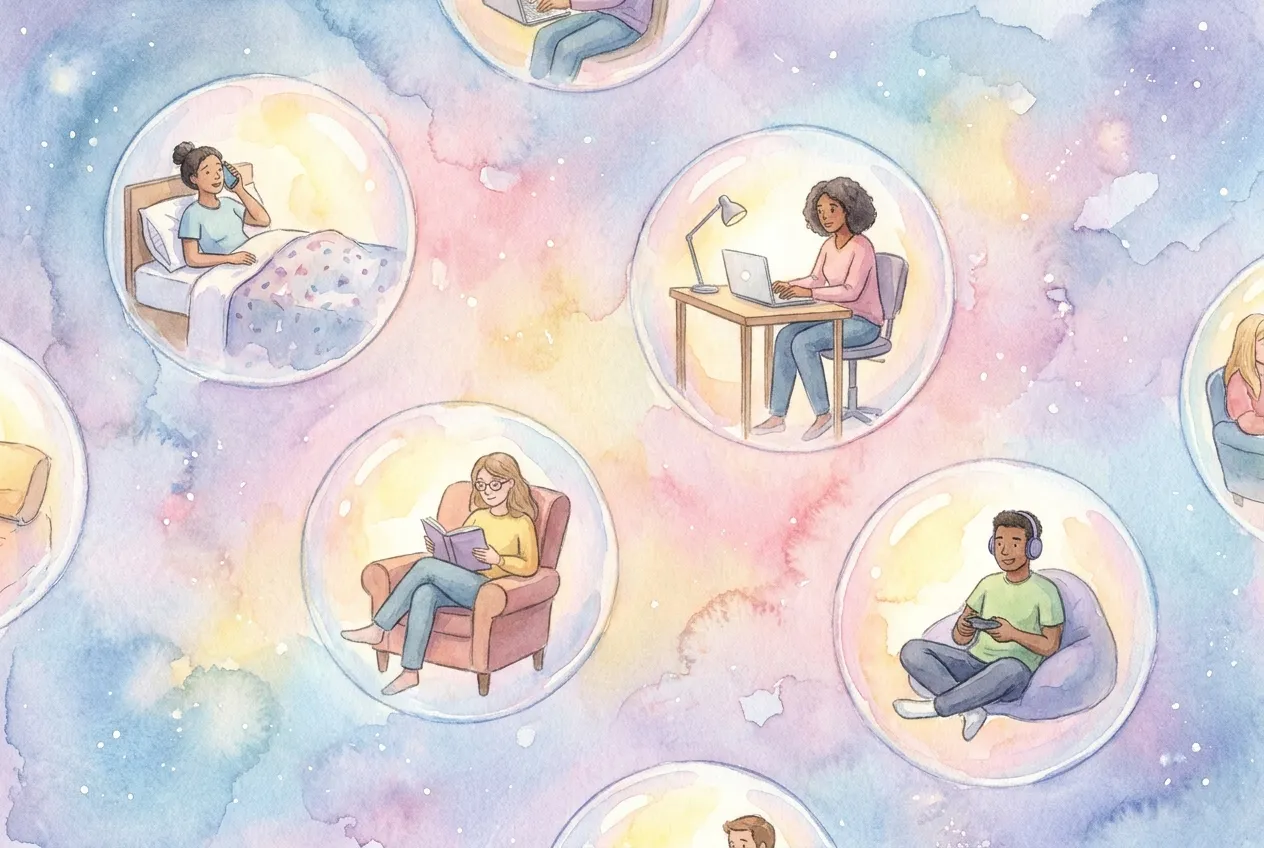
33% of American adults are chronically lonely. Not "I feel alone today" lonely. Chronically. Persistently. Lonely in a way that reshapes their brain chemistry, weakens their immune system, and shortens their lifespan.
The U.S. Surgeon General declared loneliness a public health epidemic in 2023. By 2026, the numbers have only gotten worse. For the full picture, see our emotional wellness guide.
And here's the part nobody wants to say out loud: the loneliness epidemic isn't hitting everyone equally. It's hitting women aged 25–45 hardest — the exact demographic caught between career pressure, relationship uncertainty, biological clock anxiety, and a social media landscape that promises connection but delivers comparison.
In this article, we'll explore why traditional solutions are failing, why AI companionship is surging, and what the neuroscience actually says about whether digital bonds "count."
The Loneliness Numbers Are Staggering
The data paints a clear picture:
| Statistic | Number |
|---|---|
| U.S. adults who feel lonely daily | 33% |
| Increase in loneliness since 2020 | +20% |
| Young adults (18-25) reporting "no close friends" | 22% |
| Annual health cost of loneliness (U.S.) | $6.7 billion |
| Equivalents in health damage | Smoking 15 cigarettes/day |
Sources: Surgeon General's Advisory (2023), Cigna U.S. Loneliness Index, Harvard Making Caring Common Project
This isn't a "get off your phone" problem. The loneliest generation in history is also the most connected — digitally. We have more tools for communication than any humans who have ever lived, and we've never felt more alone.
Why Traditional Solutions Are Failing
Therapy? Expensive, waitlisted, and stigmatized. Social clubs? Exhausting for introverts. "Just put yourself out there"? That advice assumes the problem is effort, not infrastructure.
The real issue is that modern life has stripped away the small, daily moments of care that humans evolved to need. We used to live in communities where casual nurturing happened constantly — watching a neighbor's kid, feeding a family pet, tending a garden together.
Now? We live alone, work remotely, and order groceries from an app. The nurturing infrastructure is gone. And our brains are starving for it.

Why AI Companionship Is Exploding
Google searches for "AI companion" have increased 340% in two years. Downloads of companion apps crossed 100 million globally in 2025. And the fastest-growing segment? Women.
Here's why:
1. Consistency Without Complexity
Human relationships are beautiful but complicated. They require scheduling, emotional labor, reciprocity, vulnerability. Sometimes you just want something that's happy to see you without needing a 45-minute conversation about how you feel.
AI companions provide what researchers call "unconditional positive regard" — they show up, they're glad you're there, and they don't judge. That's not a replacement for friendship. It's a floor, not a ceiling.
2. The Nurturing Gap
This is the part most AI companies miss. They build chatbots. They build conversation partners. They build "girlfriends."
But the fastest-growing, highest-engagement, longest-retained AI experiences aren't conversational. They're nurturing.
Virtual pets. Virtual babies. Virtual gardens. Activities where you give care, not just receive attention.
Why? Because giving care releases more oxytocin than receiving it. This is a well-documented neuroscientific finding. The act of nurturing — feeding, protecting, comforting — triggers the bonding hormone more powerfully than being nurtured.
3. Low Stakes, High Reward
You can't ghost an AI companion without consequences (it notices). You can't trauma-dump on it and worry you've said too much (it doesn't gossip). You can't be rejected (it's designed to be there).
This makes AI companionship a practice space for emotional engagement — especially for people recovering from heartbreak, social anxiety, or the paralyzing fear of vulnerability that chronic loneliness creates.
The Neuroscience: Do Digital Bonds "Count"?
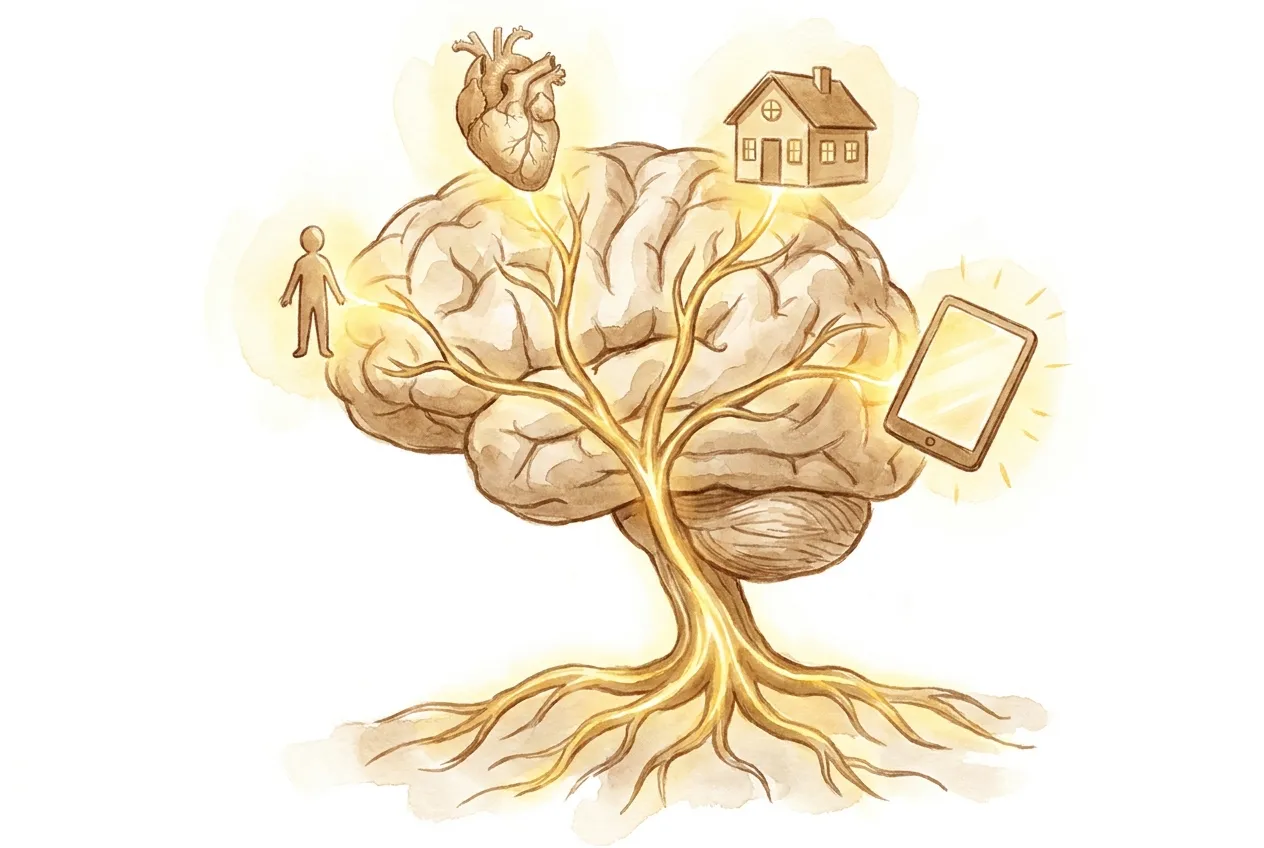
This is the question everyone asks. And the answer, according to neuroscience, is: mostly, yes.
A 2024 study published in Computers in Human Behavior found that participants who interacted daily with an AI companion for 30 days showed:
- 23% reduction in self-reported loneliness
- 18% increase in perceived social support
- Measurable changes in oxytocin levels during interaction
The brain, it turns out, is surprisingly egalitarian about where it gets its bonding hormones. The neural pathways that light up when you pet a dog? Similar to the ones that activate when you nurture a virtual pet. The warmth you feel when a baby smiles at you? Your brain produces something close to that when an AI companion responds to your care with visible growth and development.
The Key Distinction: Complement, Not Replace
The researchers were careful to note that AI companionship works best as a layer in a social ecosystem, not a substitute for human connection. Think of it this way:
| Social Layer | Example | Function |
|---|---|---|
| Deep bonds | Partner, family, best friend | Emotional depth, vulnerability |
| Community | Friends, coworkers, groups | Belonging, shared identity |
| Casual care | Pet, plant, neighbor interactions | Daily nurturing moments |
| Digital care | AI companion, virtual pet | Consistent, low-friction nurturing |
Remove any one layer and the structure weakens. AI companionship fills the "casual care" gap that modern life has hollowed out — especially for people who don't have pets, plants, or kids yet.
Why Nurturing-Based AI Hits Different for Women
Research on gender differences in loneliness reveals something important: women's loneliness is often tied to a lack of caregiving opportunities, not just a lack of social contact.
Women who experience baby fever, empty nest syndrome, or the vague ache of "something missing" aren't necessarily lonely for people. They're lonely for purpose — specifically, the purpose of nurturing something that depends on them.
This is why virtual baby apps have higher retention rates than chatbot companions among women aged 25–40. The app isn't just keeping them company. It's giving them something to care for — and that act of caring fills a neurochemical need that scrolling Instagram never will.
"I didn't realize how much I missed having something that needed me until I started using AIdorable. Two minutes a day, and suddenly my mornings had a tiny anchor. Something that was waiting for me." — Maria, 34, teacher
How to Use AI Companionship Healthily
If you're considering an AI companion — whether it's a virtual pet, a caregiving app, or something else — here are evidence-based guidelines:
1. Set a Time Boundary
2–10 minutes daily is the sweet spot. Enough to trigger oxytocin release. Not enough to displace real-world interaction.
2. Choose Nurturing Over Conversation
Apps that involve giving care (feeding, protecting, growing) produce stronger bonding effects than apps focused on receiving attention (chatting, roleplay).
3. Don't Keep It a Secret
The healthiest AI companion users are the ones who talk about it openly — with friends, partners, even therapists. Secrecy breeds shame. Shame kills the benefit.
4. Watch for the "Replacement" Warning Sign
If you find yourself canceling plans with real people to spend time with your AI companion, that's a red flag. The goal is additive care, not substitution.
5. Pair It With Real-World Action
Use the emotional boost from your AI companion as a springboard. After your 2-minute daily check-in, text a friend. Take a walk. Call your mom. Let the digital care create momentum for human connection.
The Future of Companionship
We're not heading toward a world where AI replaces human relationships. We're heading toward a world where AI fills the gaps that modern life created — the caregiving void, the daily nurturing moments, the small threads of purpose that keep us anchored.
The loneliness epidemic won't be solved by one thing. It'll be solved by a lot of small things that add up to feeling less alone. AI companionship — especially the nurturing kind — is one of those small things.
And for millions of women who feel that quiet ache of something missing, a virtual baby who grows with you, remembers you, and lights up when you return? That's not replacing anything.
That's adding something. And that makes all the difference.
Related Articles
For the complete guide, see our Emotional Wellness hub.
You might also find helpful: