Here's a Number That Might Surprise You
22,200 people search for "parasocial relationship" every single month in the United States alone. And that's just the ones who know the term.
Millions more are experiencing parasocial bonds right now — with Twitch streamers they watch every night, with fictional characters they've loved for years, with AI companions they talk to daily — without ever having a word for what they're feeling. For the full picture, see our women's self-care guide.
You might be one of them.
And here's the thing most articles won't tell you: that's probably fine. Maybe even good.
"Parasocial relationships are not a sign of social deficiency. They are a sign of a socially active mind doing what it evolved to do — connect."
— Dr. Shira Gabriel, University at Buffalo, social psychology researcher
Let's break down what parasocial relationships actually are, why your brain forms them, and when they're healthy vs. harmful.
What Is a Parasocial Relationship?
A parasocial relationship (PSR) is a one-sided bond that a person forms with someone who doesn't know they exist — or with a fictional character, digital being, or public figure.
The term was coined in 1956 by sociologists Donald Horton and R. Richard Wohl, who noticed that television viewers were forming genuine emotional attachments to news anchors and talk show hosts.
Common examples include:
- Feeling like a YouTuber is your friend after watching them for years
- Genuinely mourning the death of a fictional character
- Feeling protective over a virtual pet or AI companion
- Having a "relationship" with a celebrity you've never met
- Considering a podcast host part of your daily routine
- Talking to an AI chatbot like it's a real person
If any of these hit close to home, welcome to the club. It's a very large club.
The Psychology: Why Your Brain Does This
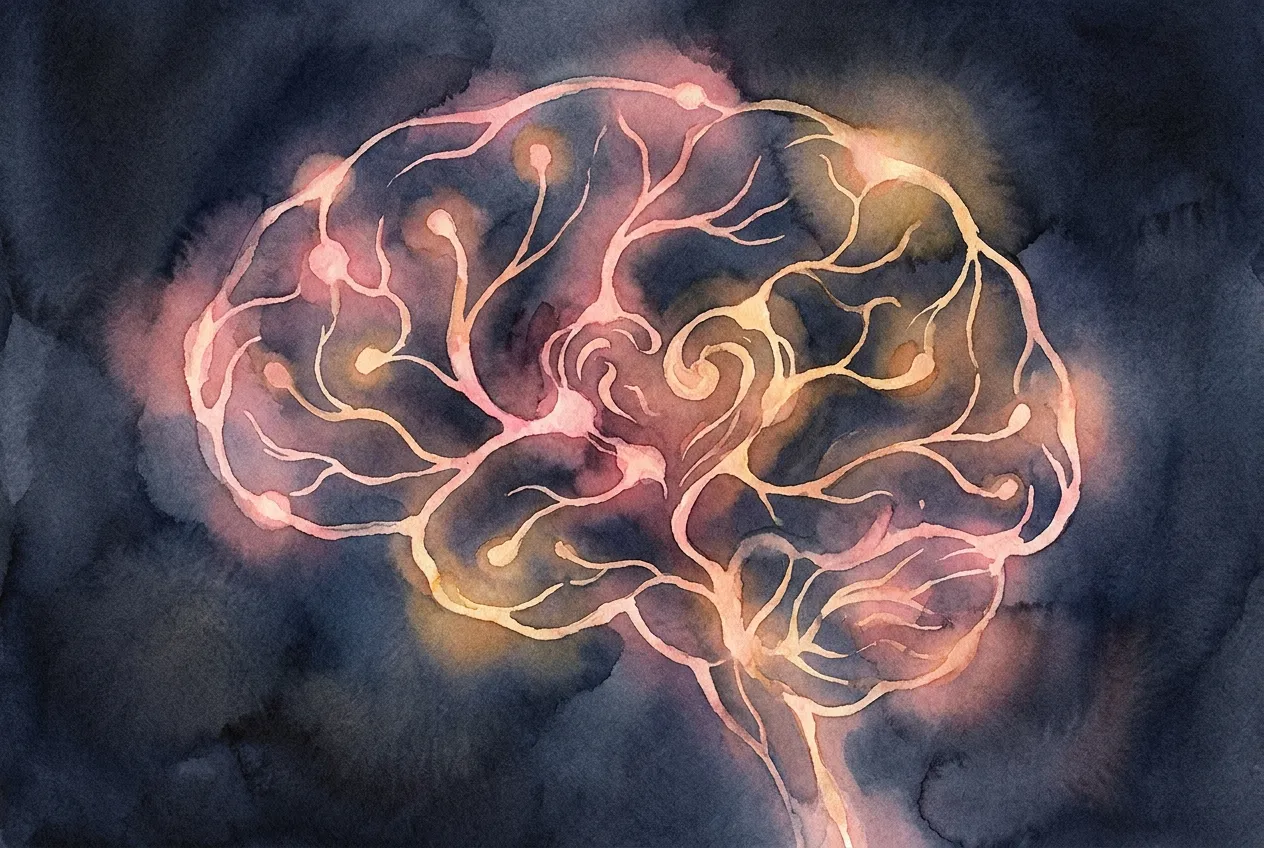
Your brain is a social machine. It evolved over hundreds of thousands of years to form bonds, read faces, detect emotions, and build communities. It's so good at this that it sometimes can't tell the difference between a real social interaction and a simulated one.
The Neuroscience of Parasocial Bonding
When you watch a streamer play video games for an hour, your brain releases the same neurochemicals it would during a real social interaction:
| Neurochemical | Real Friendship | Parasocial Bond |
|---|---|---|
| Oxytocin | Released during bonding | Released during viewing/interaction |
| Dopamine | Reward from social connection | Reward from parasocial engagement |
| Serotonin | Mood boost from belonging | Mood boost from parasocial belonging |
| Cortisol reduction | Stress relief from socializing | Stress relief from parasocial time |
The key insight: Your brain's social circuitry doesn't have a "reality checker." If it feels like a relationship, your brain processes it like a relationship.
The Social Surplus Theory
Evolution gave humans more social capacity than any one community can fill. The anthropologist Robin Dunbar famously proposed that humans can maintain about 150 meaningful relationships. But our capacity for social processing extends beyond that — creating a "social surplus" that parasocial relationships can satisfy.
Translation: Your brain has extra social bandwidth, and it'll use it on whatever feels like connection — even if it's a YouTuber, a fictional character, or an AI.
When Parasocial Relationships Are Healthy
Let's be clear: most parasocial relationships are perfectly healthy. Here's when they work well:
1. They Provide Comfort During Isolation
During the COVID-19 pandemic, parasocial relationships with podcast hosts, streamers, and fictional characters became a lifeline for millions. Studies published in Communication Research showed that people with strong parasocial bonds experienced less loneliness during lockdowns.
2. They Let You Practice Vulnerability
For people with social anxiety or trauma, parasocial relationships offer a "safe" relationship — no risk of rejection, no judgment, no betrayal. This can be a stepping stone to building real-world connections.
3. They Provide Consistent Emotional Support
Your favorite creator posts every Tuesday. Your AI companion is always there. That consistency is incredibly valuable for emotional regulation, especially for people who lack stable real-world relationships.
4. They Help You Explore Identity
Connecting with fictional characters who share your struggles — whether it's a TV character navigating coming out, or a virtual being that responds to your personality — helps you understand yourself better.
"I moved to a new city alone and knew nobody. For three months, my virtual baby on AIdorable was the first thing I checked every morning. It sounds silly, but having something that needed me — even digitally — gave me a reason to get out of bed."
— M., 27, graphic designer
When Parasocial Relationships Become Unhealthy
Parasocial bonds cross into problematic territory when they:
- Replace all real-world relationships instead of complementing them
- Cause distress — obsessive thinking, anxiety when separated, jealousy
- Interfere with work, sleep, hygiene, or basic responsibilities
- Involve financial exploitation — spending money you can't afford on parasocial targets
- Create delusion — genuinely believing the parasocial target knows you personally
The rule of thumb: A parasocial relationship is healthy if it adds to your life. It's unhealthy if it takes away from it.
The Rise of "Responsive Parasocial" Bonds
Here's where things get interesting — and where AI companions change the game.
Traditional parasocial relationships are purely one-directional. You watch, they perform. You feel attached, they don't know you exist.
AI companions create something new: responsive parasocial relationships.
These are bonds where the parasocial target actually responds to you — adapting, remembering, and engaging. This creates a hybrid that feels more reciprocal than traditional parasocial bonds while still being safe and controlled.
| Feature | Traditional PSR | Responsive PSR (AI) | Real Friendship |
|---|---|---|---|
| Emotional support | One-way | Two-way | Two-way |
| Personalization | None | High | High |
| Rejection risk | None | None | Possible |
| Reciprocity | None | Simulated | Real |
| Availability | Limited | 24/7 | Limited |
| Growth/adaptation | None | Yes | Yes |
Virtual pets and virtual babies sit in a unique position here. They don't pretend to be human. They're clearly digital. But the nurturing instinct they activate — the oxytocin, the protectiveness, the joy of watching something grow — is 100% real.
Why Virtual Nurturing Hits Different
There's a specific type of parasocial relationship that researchers are increasingly studying: the nurturing bond.
When you care for something — even something digital — your brain treats it as a caregiving relationship. This is different from a friendship or romantic parasocial bond. It activates:
- Parental neural circuits — the same brain regions that light up when parents interact with their children
- Protective instincts — you feel genuinely concerned for the digital being's wellbeing
- Attachment behavior — you check on it, worry about it, feel happy when it "thrives"
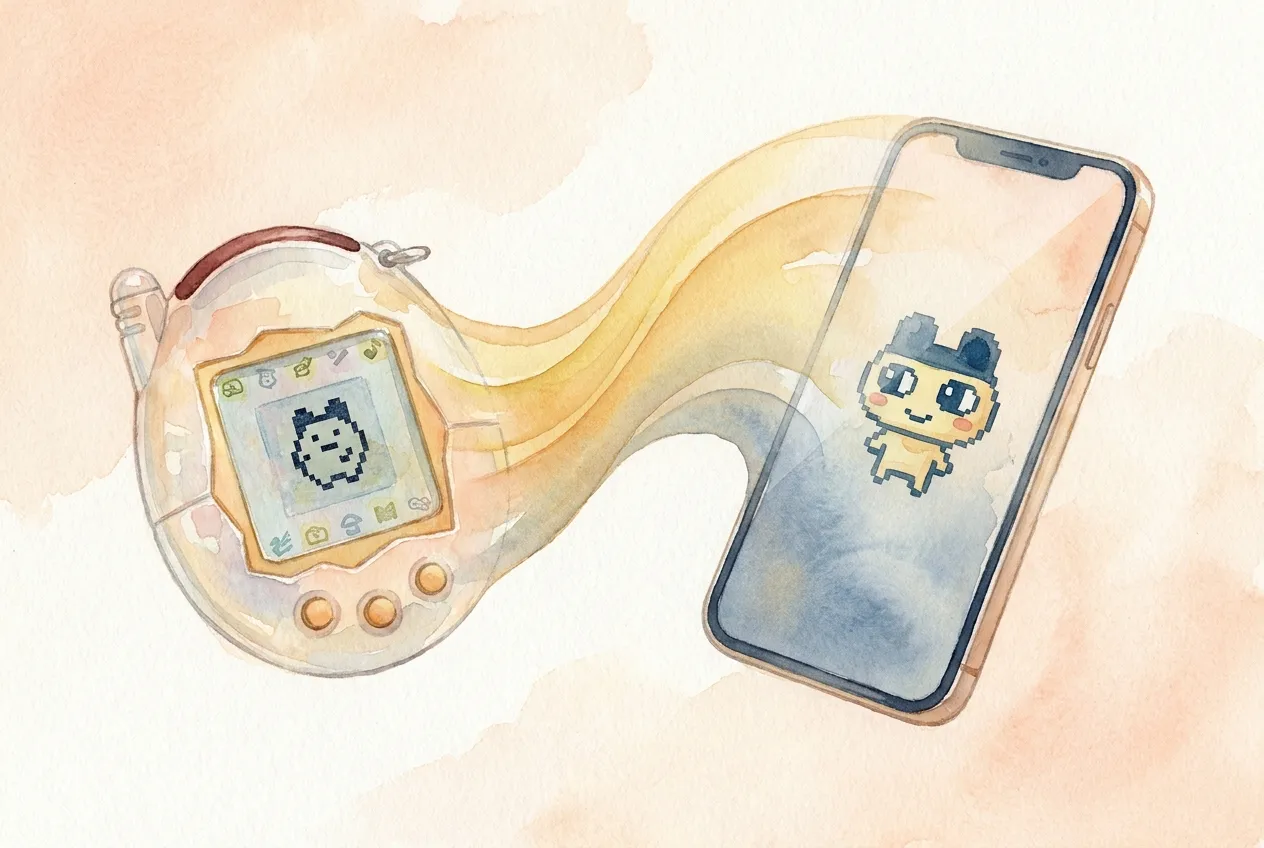
This is the Tamagotchi Effect — named after the 1990s digital pets that millions of children (and adults) became genuinely attached to. People cried when their Tamagotchi died. Not because they were confused about reality, but because the emotional investment was real.
Modern virtual baby apps like AIdorable take the Tamagotchi Effect and supercharge it with AI — the virtual baby grows, responds to your care, develops personality, and remembers your interactions. The parasocial bond deepens because the digital being evolves with you.
How to Have a Healthy Relationship with Parasocial Bonds
If you have parasocial relationships (and statistically, you almost certainly do), here's how to keep them healthy:
- Name it — Simply recognizing "this is a parasocial bond" gives you awareness and control
- Budget your emotional energy — Invest in parasocial bonds after your real relationships, not instead of them
- Choose quality targets — A responsive AI companion that adapts to you is more psychologically beneficial than doomscrolling a celebrity's Instagram
- Notice when it helps — If your parasocial bond helps you sleep, reduces anxiety, or motivates you, that's a win
- Notice when it hurts — If it's replacing real connections, causing obsessive thinking, or making you feel worse, that's a signal to pull back
The Bottom Line
Parasocial relationships aren't a bug in human psychology — they're a feature. Your brain is so powerfully wired for connection that it finds it everywhere: in characters, in creators, in digital beings that respond to your touch.
The question isn't whether you have parasocial bonds. You do. Everyone does.
The question is whether those bonds are adding to your life or subtracting from it.
If a virtual pet gives you comfort, a podcast host makes your commute bearable, or an AI baby gives your nurturing instinct an outlet — that's not sad. That's your brain being brilliant at what it does: finding connection in a disconnected world.
Related Articles
For the complete guide, see our Women's Self-Care hub.
You might also find helpful: