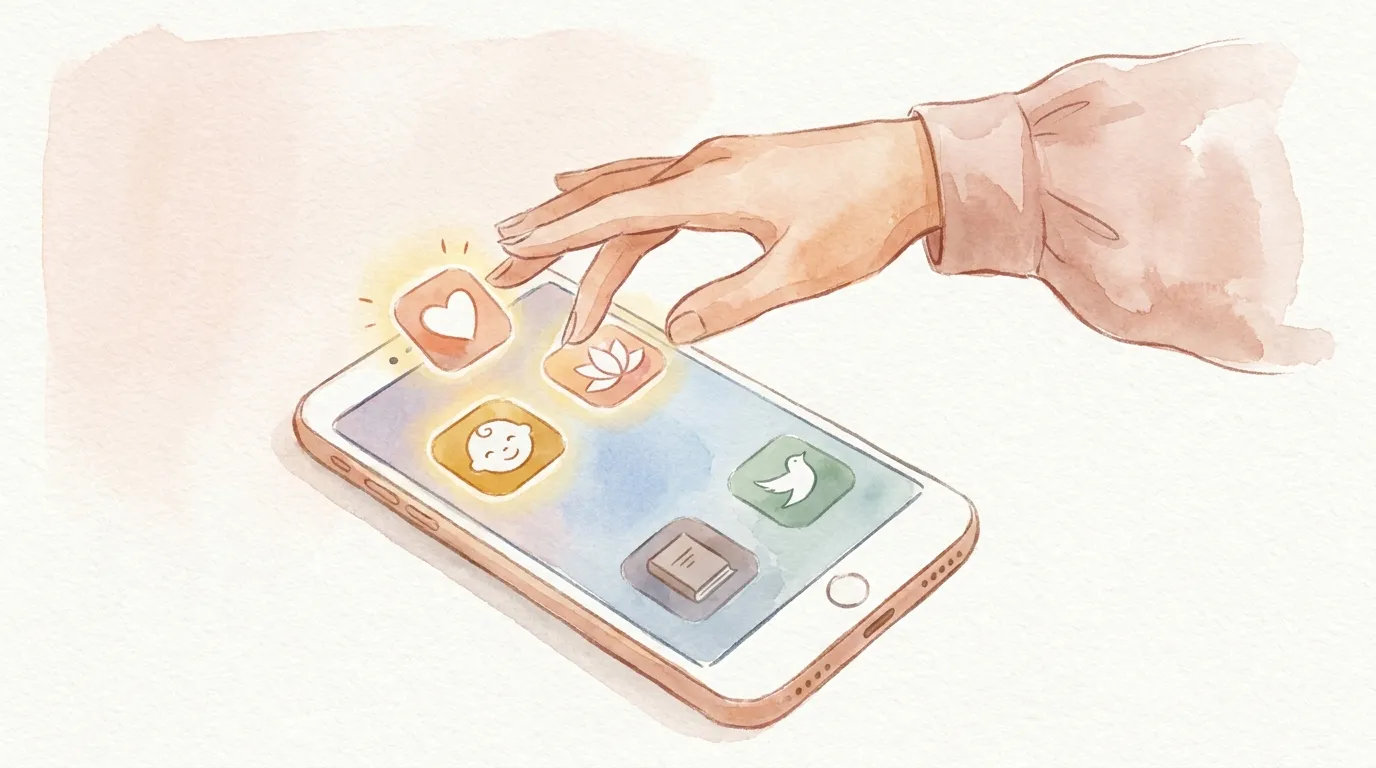
I Spent 15 Months Testing Self-Care Apps So You Don't Have To
Self-care apps are a $4 billion industry. The average person has 3 health/wellness apps on their phone. And the average person abandons each one within 14 days.
I wanted to know why. So I did something slightly obsessive: I tested 15 of the most popular self-care apps, spending 30 days on each, tracking my actual stress levels (using a wearable), sleep quality, and daily mood ratings. For the full picture, see our women's self-care guide.
Fifteen months. Fifteen apps. One spreadsheet that would make a statistician proud.
Here's what I learned about what actually works, what's just pretty UI, and the app that genuinely changed my daily routine.
How I Tested (Methodology)
Before the rankings, here's how this worked:
- Testing period: 30 consecutive days per app
- Metrics tracked: Resting heart rate (stress proxy), sleep hours, self-reported mood (1-10 scale, three times daily)
- Baseline: 30 days of tracking with no self-care app (my "control" period)
- Commitment: I used each app as directed — no skipping days, no half-effort
- Scoring: Based on measurable outcomes (did my numbers improve?) AND subjective experience (did I enjoy it?)
My Baseline Numbers (No App)
| Metric | 30-Day Average |
|---|---|
| Resting heart rate | 72 bpm |
| Sleep quality (self-reported) | 5.8/10 |
| Morning mood | 5.2/10 |
| Evening mood | 5.5/10 |
| Daily stress events | 4.3 |
These numbers represent "normal life without any self-care intervention." Every app was measured against this baseline.
S-Tier: Actually Changed My Life
These three apps produced measurable improvements across ALL metrics AND I'm still using them.
1. AIdorable — Virtual Baby Companion
Time per day: 2-5 minutes What it is: You adopt a virtual baby who grows and develops based on your care What changed:
| Metric | Baseline | With AIdorable | Change |
|---|---|---|---|
| Resting heart rate | 72 bpm | 68 bpm | -5.6% |
| Sleep quality | 5.8/10 | 7.2/10 | +24% |
| Morning mood | 5.2/10 | 7.0/10 | +35% |
| Daily stress events | 4.3 | 2.8 | -35% |
Why it worked: The nurturing mechanic is the key. Most self-care apps ask you to focus on yourself — your breathing, your mood, your habits. AIdorable asks you to focus on something else. And paradoxically, shifting focus away from yourself is one of the most effective stress-reduction techniques in psychology. It's called "behavioral activation" — doing something meaningful reduces rumination.
The 2-minute daily commitment is also crucial. It's short enough that you never skip it. And the emotional reward (your baby smiling at you, hitting milestones, writing journal entries about your bond) provides immediate positive feedback.
What surprised me: The journal. AIdorable's AI writes journal entries about your interactions, and reading them creates this unexpected sense of... being appreciated? Being seen? It's hard to describe, but it's genuinely moving.
Cost: Free to start. Premium $4.99/month.
2. Headspace — Guided Meditation
Time per day: 10 minutes What it is: Guided meditation and mindfulness exercises
| Metric | Baseline | With Headspace | Change |
|---|---|---|---|
| Resting heart rate | 72 bpm | 69 bpm | -4.2% |
| Sleep quality | 5.8/10 | 6.9/10 | +19% |
| Morning mood | 5.2/10 | 6.3/10 | +21% |
Why it worked: Headspace is the gold standard for a reason. The guided sessions are well-designed, the progression system keeps you engaged, and Andy's voice is genuinely calming. The 10-minute commitment is at the upper edge of what I'd maintain daily — some days it felt like a chore.
The catch: Meditation isn't for everyone. If you find sitting still stressful (yes, this is real), Headspace might increase your anxiety rather than reduce it. I enjoyed it, but I can see why some people bounce off it.
Cost: $12.99/month or $69.99/year.
3. Finch — Gamified Self-Care
Time per day: 3-5 minutes What it is: A virtual bird you take care of by completing self-care tasks
Why it worked: Finch takes the "Tamagotchi Effect" and applies it to self-care. You complete daily tasks (drink water, take a walk, write a gratitude) and your bird grows and gets happier. It's simple, cute, and surprisingly motivating.
The genius is linking YOUR self-care to SOMETHING ELSE'S wellbeing. You're not drinking water for yourself — you're doing it for your bird. And somehow that tiny reframing makes it easier.
Cost: Free with premium at $3.99/month.
A-Tier: Good, Would Recommend
These apps produced measurable improvements in some metrics but not all, or had drawbacks that prevented S-Tier status.
4. Daylio — Mood Tracker
Time per day: 1 minute What it is: Quick mood logging with activities and icons
Daylio is the fastest app on this list — tap your mood, tap what you did, done. The value comes from the data: after a month, patterns emerge. "I'm happiest on days I walk." "I'm saddest after social media." It's not a self-care app exactly — it's a self-awareness app.
Improvement: Moderate. Mood awareness improved (+12%), stress events reduced slightly (-15%). But it doesn't DO anything — it just shows you data. You have to act on it yourself.
5. Calm — Sleep Stories + Meditation
Time per day: 15-20 minutes What it is: Meditation, sleep stories, music
Calm's sleep stories are genuinely helpful — my sleep quality improved by 15%. But the time commitment is heavy, and the app's massive content library can feel overwhelming. Paradoxically, having too many choices made me less likely to open it.
6. Reflectly — AI Journal
Time per day: 5 minutes What it is: AI-powered journal that asks you questions and tracks mood
Reflectly is pretty and well-designed, but the AI questions felt repetitive after two weeks. "How are you feeling today?" for the 14th time loses its therapeutic value. Good for people new to journaling; less useful for experienced journalers.
B-Tier: Decent But Forgettable
7. Insight Timer — Free Meditation
Great free library, terrible UI. Found good meditations but spent too much time searching. If they had Headspace's curation with their free model, it would be S-Tier.
8. Fabulous — Habit Builder
Beautiful design (it won a Google Play award), but the habit-building framework felt rigid and school-like. Reminders became annoying rather than helpful. Dropped after 18 days.
9. Sanvello — Anxiety Management
Clinically grounded (uses CBT techniques) and effective for anxiety specifically. But the clinical feel made it feel like homework, which reduced my motivation to open it daily.
10. Woebot — AI Therapy
Effective for what it is (CBT-based chatbot), but positioning it as a self-care app feels wrong. It's a therapeutic tool, not a daily wellness practice. Useful for anxiety management, overkill for general self-care.
C-Tier: Pretty But Pointless
11. Hue — Color-Based Journaling
You pick colors to represent your mood. That's... it. It looks gorgeous. It tells you nothing. Deleted after 10 days.
12. Serenity — Breathing Exercises
There are only so many ways to do box breathing. This app does them all. It does nothing else. Your phone's built-in breathing reminder does the same thing for free.
13. Shine — Daily Self-Care Texts
Daily motivational texts and audio. Nice idea, but the content felt generic — like scrolling past an Instagram quote. No interactivity means no engagement.
D-Tier: Actively Annoying
14. Calm — The Premium Paywall Experience
Calm's free tier is so aggressively limited that using it felt like being nickel-and-dimed. Every third tap was "upgrade to premium!" It increased my stress, which is the opposite of the point.
15. Most Habit Trackers (Streaks, Habitica, etc.)
Habit trackers are productivity tools, not self-care tools. The gamification creates pressure ("don't break your streak!") that adds stress rather than reducing it. For some people, this works. For me, it was just another source of anxiety.

The Pattern: What Actually Works
After 15 months of testing, a clear pattern emerged. The apps that produced real, measurable improvements all shared three traits:
Trait 1: Under 5 Minutes
Every S-Tier app takes less than 5 minutes per day. Every app that asked for 10+ minutes saw declining usage by week 3. This isn't laziness — it's physics. Your day has finite minutes, and any self-care practice that competes with your actual life will lose.
Trait 2: Emotional Reward, Not Data
Apps that showed me data (mood graphs, streak counters, habit completion rates) were less effective than apps that made me FEEL something (my baby smiling, my bird growing, my mind calming). Data informs. Emotion motivates.
Trait 3: Focus Outside Yourself
The most effective apps redirect your attention away from your own problems. AIdorable has you nurture a baby. Finch has you care for a bird. Headspace has you focus on breath. The common thread: you're not sitting alone with your thoughts, stewing. You're DOING something.
This aligns with a well-established psychological principle: behavioral activation — engaging in meaningful activity is one of the most effective interventions for low mood and stress. Not thinking about your feelings. Not tracking your emotions. DOING something that matters.
The Self-Care App Stack I Actually Use
Based on everything I learned, here's my current daily routine:
Morning (3 minutes): Open AIdorable, feed and play with my baby, read the journal entry. Starts my day with a small caregiving win and oxytocin boost.
Midday (optional, 2 minutes): Quick Daylio check-in. Log my mood and one thing I did. Builds self-awareness without being demanding.
Evening (10 minutes): Headspace sleep meditation before bed. The one longer commitment I've maintained because it directly improves sleep quality.
Total daily time: ~15 minutes. That's it. And it produces better results than the months I spent trying to use 4-5 apps simultaneously.
The Uncomfortable Truth About Self-Care Apps
Here's what nobody in the self-care app industry wants you to hear:
Most self-care apps don't work because they're designed for engagement, not outcomes. They want you to open the app daily (for their metrics), but they don't particularly care whether your life actually improves. The best gamification and notification systems in the world can't fix an app whose core mechanic is "sit with your feelings."
The apps that work are the ones that give you something meaningful to DO — not something to track, not something to think about, not something to log. Something that requires your attention, rewards your consistency, and creates a small daily win.
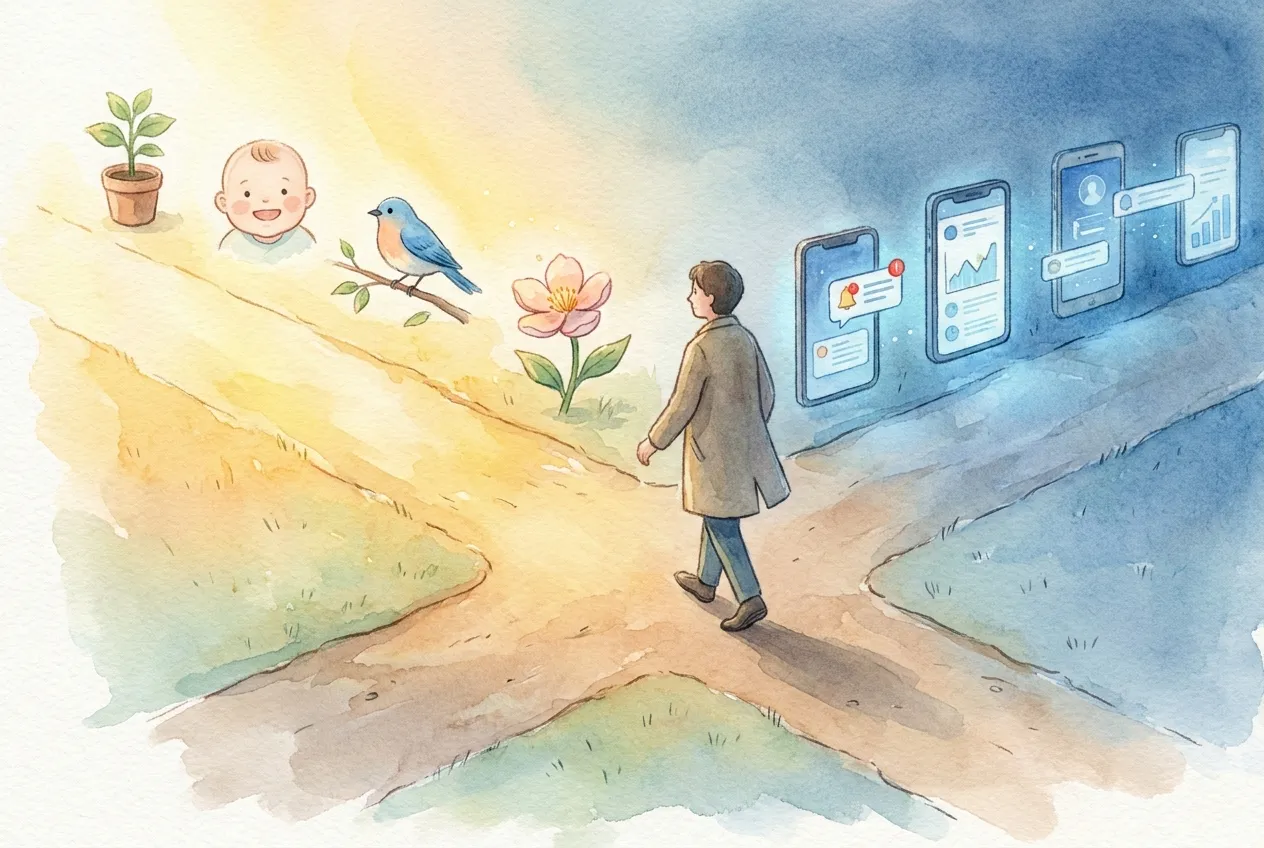
Nurturing something — whether it's a virtual baby, a digital bird, or a real plant on your windowsill — is one of the most effective self-care practices available to humans. Not because it's trendy. Because it's how we evolved to regulate our emotions.
The best self-care isn't self-focused at all. It's other-focused. And your brain doesn't care whether the "other" is made of pixels or flesh.
It just cares that you showed up.
Related Articles
For the complete guide, see our Women's Self-Care hub.
You might also find helpful:
- Self Care Apps: 7 That Actually Make You Feel Better (Not Just Track Things)
- Best Cute Self-Care Apps and Free Self-Care Apps for Softer Daily Care
- Self-Care Pet App Guide: Finch, Virtual Pets, and Softer Daily Care
- Apps Like Finch: Softer Self-Care Apps for Women Who Want More Than Habit Tracking
- Calming Apps: 6 That Actually Soothe Your Nervous System (Not Just Play Sounds)
- Best Meditation Apps 2026: I Tested 12 So You Don't Have To
- Best Journaling & Diary Apps 2026: I Tested 15 to Find the Ones Worth Your Time