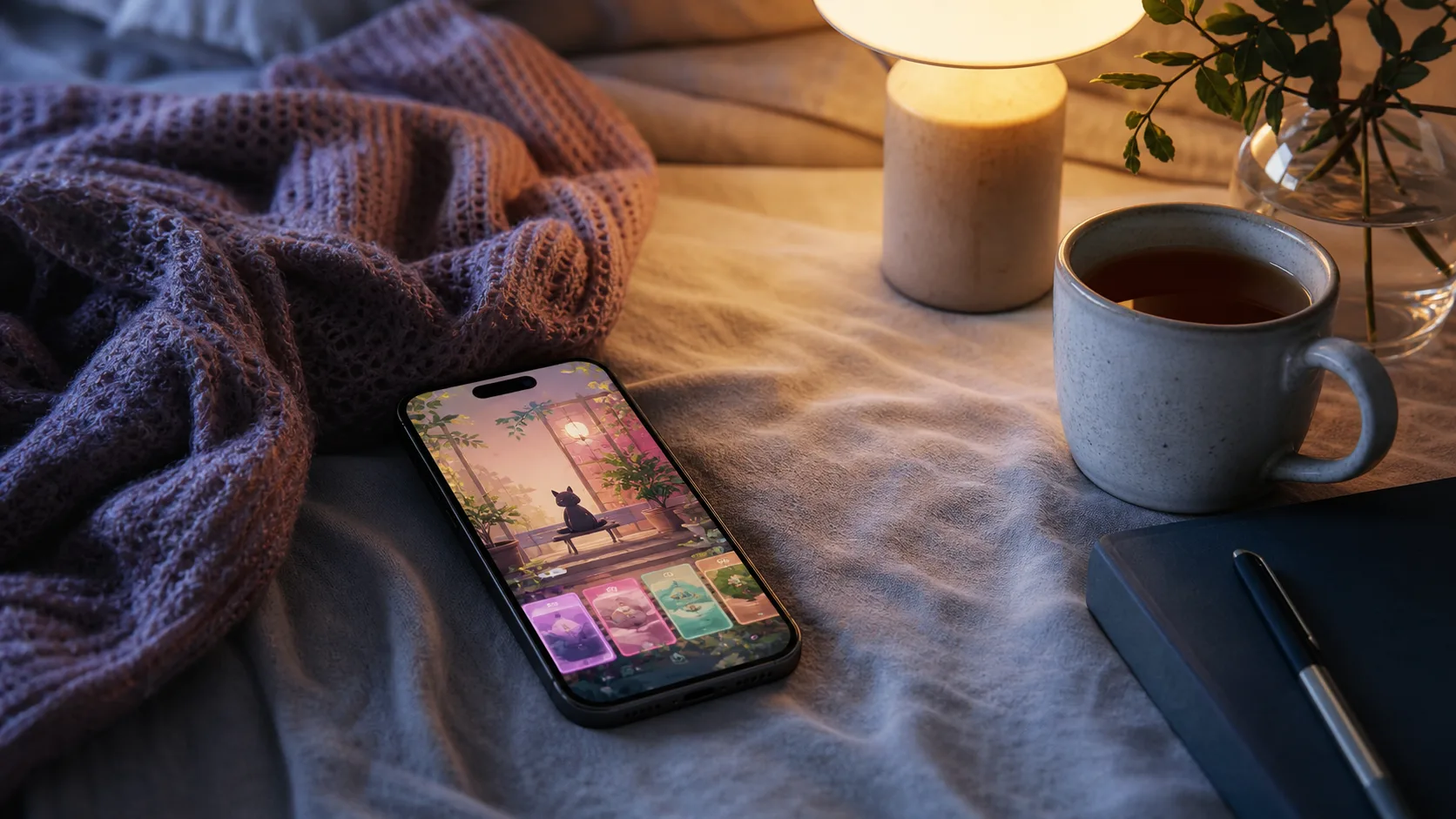
Self Care Game App: The Short Answer
You know that moment when the self-care advice is technically correct and still makes you want to throw your phone under the couch?
Drink water. Journal. Meditate. Stretch. Sleep earlier. Track your mood. Build positive habits. Complete the task. Earn the better life. Lovely. Exhausting. Another little to-do list wearing lip gloss.
That is why the self care game app category keeps growing. It takes the coldest part of wellness, the part where you are expected to manage yourself like a spreadsheet, and gives it shape: a virtual pet, an avatar, a quest, a reward, a streak, a tiny world that changes because you showed up.
But which app is actually worth opening tomorrow?
The best answer is not simply "the one with the most features." A good self-care game app makes one small act feel possible at the exact moment you would normally avoid it. It can turn self-care into a game, but the game has to feel kind, not like your phone hired a tiny productivity manager.
As of 2026, top search results for this topic mix app store pages, Reddit threads, wellness app lists, and articles about apps that turn self-care into a game. NEURONwriter's live SERP brief for this article surfaced Finch, Habitica, SuperBetter, Pokemon Sleep, Brili, and Daylio as recurring comparison points. That tells us the real search intent: people want playful support, but they also want to know whether gamification will feel motivating or childish, helpful or stressful, soothing or just loud.
The right self-care game does not make you perform wellness. It makes one caring action feel small enough to begin.
This guide breaks down how gamified self care apps work, what features to look for, when the popular options fit, and why AIdorable belongs in the softer corner of the category: nurturing, ritual, and emotional response instead of endless tasks.
How Gamified Self Care Apps Turn Self-Care Into a Game
A self-care game app uses game mechanics to make care visible. Instead of asking you to "build a habit," it gives you something concrete to do and a little feedback when you do it.
Common mechanics in gamified self care apps include:
- points, coins, stars, or gems
- quests by completing self-care activities you input
- virtual pet care
- avatars, outfits, rooms, or worlds you can customize
- reminders and notifications
- mood tracking or a mood journal
- breathing exercises, meditation, or reflection prompts
- streaks, levels, badges, and rewards
That sounds simple, but the emotional difference is real. "Drink water" can feel like another demand. "Give your pet bird energy" feels warmer. "Go to bed" can feel like discipline. Pokemon Sleep makes sleep habits part of gameplay. "Finish your to-do list" can feel flat. Habitica makes completing tasks part of an RPG, while Brili turns daily routines into a more guided schedule.
The trick is that gamification should reduce friction. If the app adds more guilt, more daily demands, or more pressure to be perfect, it has missed the point.
Why Gamification Can Help
Gamification works because the brain likes clear loops:
| Loop | What happens | Why it helps |
|---|---|---|
| Cue | The app reminds you or invites a check-in | You do not have to invent the next step |
| Action | You complete a small self-care task | The task becomes specific instead of vague |
| Reward | You see points, progress, a pet, or a response | Your effort becomes visible |
| Return | The app gives you a reason to come back | The routine has emotional continuity |
That loop can be especially helpful when self-care feels foggy. If you are tired after work, "improve your mental well-being" is too big. "Open the app, check in, feed the baby, breathe for 60 seconds" is small enough to do.
Still, game mechanics are seasoning, not the meal. The best app is the one where the emotional loop matches your actual life.
The Main Types of Self-Care Game Apps
Not every gamified app is trying to solve the same problem. Before downloading five free apps and abandoning all of them by Friday, decide which kind of support you want.
1. Nurturing Apps
These apps make self-care relational. You care for a virtual pet, baby, creature, room, garden, or tiny companion, and the care loop gives your routine emotional warmth.
Finch is the best-known example: you care for a little bird by completing self-care tasks. AIdorable sits near that emotional lane but with a different feel. Instead of building a checklist around a pet bird, AIdorable gives you a tiny AI baby to care for as a short daily ritual. You open the app, tend to her, notice her response, and get the soft feeling of being needed without pretending the app is therapy or real parenting.
This type fits when you want self-care to feel like comfort, not optimization. It also overlaps with self-care pet apps, virtual pet apps for adults, and something to take care of.
2. Quest and RPG Apps
Habitica is the classic example. You turn a to-do list into quests, earn rewards, and treat habits like an RPG. This can be fun and rewarding if your brain likes structure, fantasy framing, and visible achievement.
The risk is that task-heavy apps can quietly become another workplace. If your issue is not "I need more motivation" but "I am already tired of being managed," an RPG task tracker may feel sharp after the novelty fades.
3. Resilience and Challenge Apps
SuperBetter turns real-life goals into challenges and power-ups. It can make hard days feel more navigable because the app frames coping skills as small missions instead of abstract advice.
This type may fit if you like naming obstacles, choosing allies, and breaking stress into steps. It may not fit if you want a softer, more meditative ritual.
4. Sleep, Mood, and Wellness Trackers With Game Layers
Pokemon Sleep, Daylio, and many wellness apps use game elements around tracking. Pokemon Sleep makes sleep habits part of collecting and caring. Daylio makes mood tracking visual. Some meditation apps and wellness apps add streaks, soundscapes, badges, or guided meditations.
These can be useful when you want data and reflection. Just watch the tone. A mood tracker should help you notice patterns, not make your feelings look like a failing grade.

What to Look For Before You Download
A beautiful app can still be wrong for you. Use this checklist before you invest a week setting everything up.
The Session Should Be Short
The strongest self-care game apps work in the margins: morning coffee, lunch break, after work, before bed. If the app needs 30 minutes before it feels satisfying, it may not survive your actual Tuesday.
AIdorable works best as a tiny ritual. Finch can be a daily check-in. Pokemon Sleep is tied to bedtime and waking up. Habitica takes more setup because you are building tasks and habits. None of those are inherently better; they are different shapes.
The Reward Should Feel Emotionally Right
Ask yourself: what kind of reward makes me return?
- If you want warmth, choose nurturing.
- If you want progress, choose quests.
- If you want data, choose tracking.
- If you want calm, choose meditation or breathing exercises.
- If you want play, choose customization and collectibles.
Do not force yourself into an app because other people love it. If a pet bird makes you smile, good. If an RPG quest makes you cringe, also useful data.
The App Should Be Forgiving
Streaks can help, but brittle streaks can punish. A self-care app should understand that people miss days because they are human, not because they lack moral fiber.
Look for grace: pause options, flexible reminders, low-pressure language, easy re-entry, and no shame spiral if you disappear for a week.
Privacy Should Be Easy to Understand
Self-care apps may touch mood, sleep, journaling, habits, reminders, or thoughts and feelings. That does not mean you should panic; it means you should check what the app collects and whether you are comfortable with it.
Before using any mental health app or wellness tracker, review the current App Store privacy label, Google Play Data safety section, and in-app privacy policy. Especially if the app includes a journal, mood tracking, analytics, or personal notes.
Best Fits: AIdorable, Finch, Habitica, SuperBetter, and Pokemon Sleep
Here is the honest matching guide.
| App | Best for | Watch out for |
|---|---|---|
| AIdorable | Nurturing micro-ritual, emotional check-in, caring for a tiny AI baby | Best as comfort and ritual, not therapy or crisis care |
| Finch | Self-care pet app, mood check-ins, goals, journaling, pet bird rewards | Can feel task-heavy if goals and reminders create pressure |
| Habitica | RPG fans who want a to-do list, quests, avatar rewards, and habit structure | Setup and task management may feel like work |
| SuperBetter | Turning coping skills and goals into challenges | Less cozy if you want a soft companion loop |
| Pokemon Sleep | Making sleep habits more playful | Sleep tracking can become too interesting when you need to simply rest |
| Daylio | Mood journal, patterns, and simple tracking | Reflection can feel flat if you want a relationship-based loop |
| Brili | Guided routines and reminders, especially for structured daily demands | More schedule than cozy companion |
If you are comparing broader lists, our cute self-care apps guide covers the aesthetic side, while apps like Finch is better if you already know you want the Finch-style lane. This is the difference between "self care apps we love" as a pretty list and a real fit check for your nervous system.
When AIdorable Makes the Most Sense
Choose AIdorable when you are not looking for another productivity system.
Maybe you already know what to do. You know you should drink water, get ready for bed, breathe, stop scrolling, and stop treating yourself like an unpaid intern. The missing piece is not information. It is a tiny moment that makes care feel emotionally worth doing.
AIdorable gives that moment a face. You are not completing a wellness checklist to prove you are becoming a better person. You are checking on your baby. You are giving care and receiving a small emotional response. The app turns self-care into a ritual that feels relational.
That matters for the person who opens a self-care game app at 11:17 PM, not because she wants to optimize her life, but because she wants one soft thing in the day to notice her.
When Finch Makes More Sense
Choose Finch if you want a fuller self-care pet system with goals, mood check-ins, journaling, breathing exercises, and a clear pet bird progression loop. It is especially good if you like completing self-care activities and seeing your little bird grow from that effort.
Finch is more structured than AIdorable. For some people, that is the magic. For others, it is the reason the app eventually starts to feel like a chore. Read our Finch app reviews guide if Finch is your main comparison.
When Habitica or SuperBetter Makes More Sense
Choose Habitica if your brain likes RPG structure. You can gamify chores, habits, and to-do list items with an avatar, quests, and rewards. It is not the softest option, but it can be powerful if you like seeing daily tasks become gameplay.
Choose SuperBetter if you want a more challenge-based approach to resilience. It can be a helpful tool for reframing goals, but it is not the same as a cozy companion or virtual pet.
Can Gamified Apps Help With ADHD, Anxiety, or Mental Well-Being?
They can help some people, but the wording matters.
Gamified apps can support reminders, goal setting, positive habits, reflection, hydration, sleep habits, breathing exercises, and mindfulness exercises. For some people with ADHD, a reward loop or avatar makes boring tasks easier to start. For someone dealing with anxiety, a calm prompt or grounding task may make the next minute feel more manageable.
But a self-care game app cannot diagnose, create a treatment plan, replace a therapist, or handle emergencies. It is a helpful tool when the fit is right.
The best way to test fit is small:
- Pick one app.
- Use the free version or trial if available.
- Choose one daily ritual, not twelve.
- Notice whether you feel softer after opening it.
- Delete it if the app creates more guilt than care.
That last step is underrated. You do not owe loyalty to an app that makes you feel bad.
A Gentle Setup Plan
If you want to try a self-care game app without turning your phone into a casino of wellness notifications, start with a seven-day experiment.
Day 1: Pick the Emotional Loop
Choose nurturing, quests, sleep, mood tracking, or calm. Do not download three categories at once. Your brain needs one door.
Days 2-4: Keep the Task Tiny
Use one action: check in, drink water, breathe, write one sentence, feed the virtual pet, soothe the baby, or mark bedtime. The point is not transformation. The point is repetition without dread.
Days 5-7: Watch the Aftertaste
After you close the app, ask: do I feel cared for, rewarded, judged, bored, or pulled into more screen time?
The aftertaste is the truth. A self-care game app should make daily care feel more reachable. If it makes you tense, it is not your app.

Bottom Line: Choose the App You Will Return To Kindly
The best self care game app is not the loudest, cutest, or most optimized. It is the one you can open when you are tired and still feel like a person.
If you want tasks to become quests, try Habitica. If you want a famous self-care pet app, try Finch. If you want sleep habits to feel playful, try Pokemon Sleep. If you want resilience challenges, try SuperBetter. If you want a mood journal, try Daylio.
And if you want something smaller, warmer, and more nurturing, try AIdorable.
Not because it will fix everything. It will not. But because one tiny daily care loop can change the emotional shape of your phone. Instead of another app asking you to become impressive, it can become a place where you check in, care for someone small, and remember that care counts even when it is brief.
That is the kind of game worth keeping.