The Anti-Burnout Revolution
In 2025, the global gaming industry made $187 billion. Shooters, sports, and battle royales dominated the revenue charts. But quietly, in a corner that gaming journalists kept calling "niche," a different category was growing three times faster than the industry average.
Cozy games — farming simulators, virtual pet apps, decorating games, nurturing companions — reached $3.2 billion in revenue with 22% year-over-year growth. That's not a trend. That's a movement.
And it's not driven by casual gamers or children. 70% of cozy game players are women aged 18-45. These are women with careers, responsibilities, and limited free time who are choosing to spend that time planting virtual tomatoes instead of shooting virtual enemies.
Here's why — and why it matters more than you think. For the full picture, see our cozy games guide.

The Psychology of Cozy
Why do millions of people choose farming over fighting? The answer has nothing to do with gaming and everything to do with psychology.
The Need for Control
Modern life is unpredictable. Jobs restructure, relationships shift, housing costs rise, news cycles accelerate. You can work hard and still lose. The connection between effort and outcome has weakened.
Cozy games restore that connection. Plant a seed → it grows. Feed an animal → it's happy. Clean a room → it stays clean. The effort-outcome relationship is reliable and immediate — exactly what real life often isn't.
This isn't escapism. It's control restoration — the psychological process of rebuilding your sense of agency through predictable, rewarding activities. Studies show that perceived control is one of the strongest predictors of mental health. Cozy games provide it on demand.
The Need for Routine
Humans are routine creatures. Our circadian rhythms, hormone cycles, and cognitive patterns all thrive on predictable daily structures. Modern flexible schedules — remote work, gig economy, social media-driven socializing — have dissolved many traditional routines.
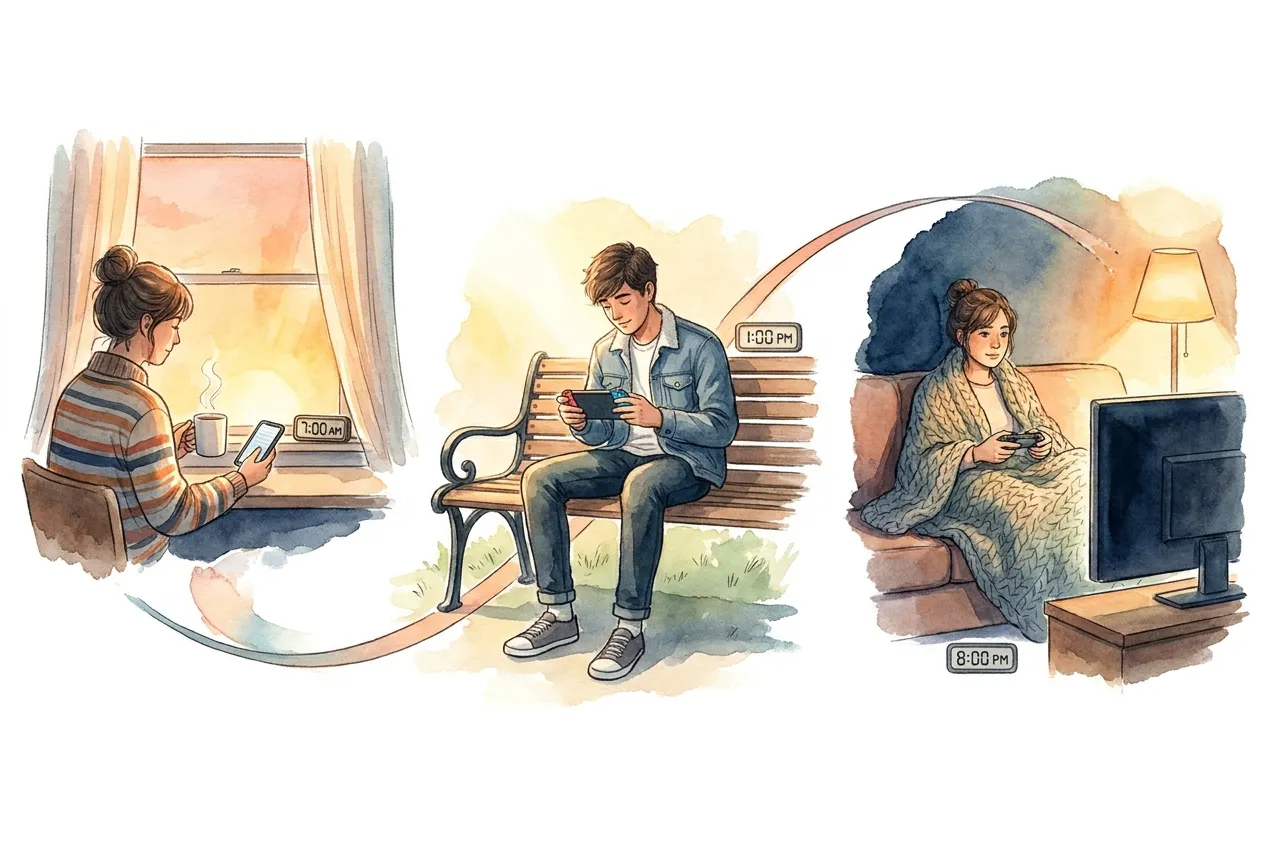
Cozy games create micro-routines — small, daily actions that structure your day. Water your crops in the morning. Feed your virtual baby after lunch. Check on your island before bed. These tiny routines serve as anchors in otherwise unstructured days.
The psychological benefit isn't about the game itself. It's about having something reliable that you do every day, that feels good, and that you control completely.
The Need to Nurture
This is the deepest driver, and the one most people don't articulate. As discussed in our maternal instinct article, humans evolved to nurture constantly. Modern life provides fewer and fewer outlets for this drive.
Cozy games fill the nurturing gap. You care for farms, animals, virtual children, gardens, communities. The caregiving is safe (nothing dies permanently), manageable (you choose the pace), and rewarding (visible growth and gratitude).
The nurturing drive doesn't disappear when ignored — it finds expression elsewhere, often as anxiety, restlessness, or the vague "something missing" feeling. Cozy games give it a healthy channel.
The 4 Traits of Therapeutic Cozy Games
Not all cozy games are equal for mental health. Through extensive community feedback and psychological analysis, four traits separate genuinely therapeutic cozy games from merely pleasant ones:
Trait 1: No Fail States
The game cannot punish you. No game-over screens, no permanent loss, no time pressure. You can take a week off and come back to find your farm slightly overgrown but recoverable. Your virtual baby might be sad but is never harmed.
Why it matters: Punitive mechanics trigger the sympathetic nervous system (fight-or-flight). Cozy games work precisely because they NEVER do this. The absence of threat allows the parasympathetic system (rest-and-digest) to activate.
Trait 2: Nurturing Mechanics
You must be able to care for something — feed it, protect it, watch it grow. Pure decoration games (arranging furniture) are pleasant but lack the oxytocin-releasing caregiving component.
Why it matters: As we showed in our neuroscience article, nurturing triggers the bonding hormone cascade that produces genuine stress relief.
Trait 3: Daily Rhythm
The game should have a natural daily rhythm — things to do each day that take 5-15 minutes. Games that require 2-hour binge sessions to progress are less therapeutic than games with satisfying daily micro-sessions.
Why it matters: Daily micro-routines provide more mental health benefit than occasional long sessions. Consistency beats intensity.
Trait 4: Visible Growth
Your actions must produce visible, permanent progress. Crops grow. Babies develop. Houses expand. Collections fill. The game world should visibly reflect your investment over time.
Why it matters: Visible growth provides the dopamine reward that sustains engagement and creates the sense of meaningful investment that distinguishes therapeutic play from passive distraction.
The Cozy Game Spectrum
Cozy games exist on a spectrum from "quick daily check-in" to "immersive second life." Here's where popular titles fall:
| Time/Day | Games | Best For |
|---|---|---|
| 2-5 min | AIdorable, Viridi, Neko Atsume | Morning/evening micro-routine |
| 10-15 min | Finch, Animal Crossing (daily tasks) | Lunch break reset |
| 20-30 min | Stardew Valley, Spiritfarer | Weekend winding down |
| 1+ hours | Disney Dreamlight Valley, Minecraft (peaceful) | Deep relaxation sessions |
The sweet spot for daily stress relief is 5-15 minutes — enough to trigger the neurochemical benefits without consuming significant time. This is why AIdorable's 2-5 minute daily care sessions are particularly effective: they fit into the margins of any schedule.
Why Women Specifically gravitate Toward Cozy Games
The 70% female player base for cozy games isn't random. It reflects three gendered dynamics:
Socialization. Women are socialized toward caregiving, cooperation, and community building. Cozy games center these exact mechanics. Competitive and combative games center mechanics (competition, dominance, destruction) that align more with masculine socialization.
Time poverty. Women report 30% less leisure time than men on average. Cozy games with short daily sessions fit into time-poor schedules better than games requiring 2-hour competitive sessions.
Emotional permission. Many women report feeling "allowed" to enjoy nurturing and caregiving in games in a way they don't always feel allowed to prioritize in real life. The game creates a space where caregiving is the primary activity, not something squeezed in around "more important" tasks.
The Cozy Gaming Practice
To get the maximum mental health benefit from cozy games, treat them like a practice, not a hobby:
Same time daily. Attach your cozy game to an existing routine — morning coffee, lunch break, before bed. The consistency is more important than the duration.
Low expectations. Don't optimize. Don't min-max your farm layout or research the fastest progression path. The point is presence, not productivity. Plant what feels nice. Decorate what looks pretty. Feed your baby because she's cute.
No guilt. If you miss a day, you miss a day. The game will be there tomorrow. Guilt transforms nurturing into obligation, which eliminates the therapeutic benefit.
Savor it. Play slowly. Notice the colors, the sounds, the tiny animations. The sensory experience is part of the therapy — gentle visuals and calming audio directly stimulate the parasympathetic nervous system.
The Bigger Picture
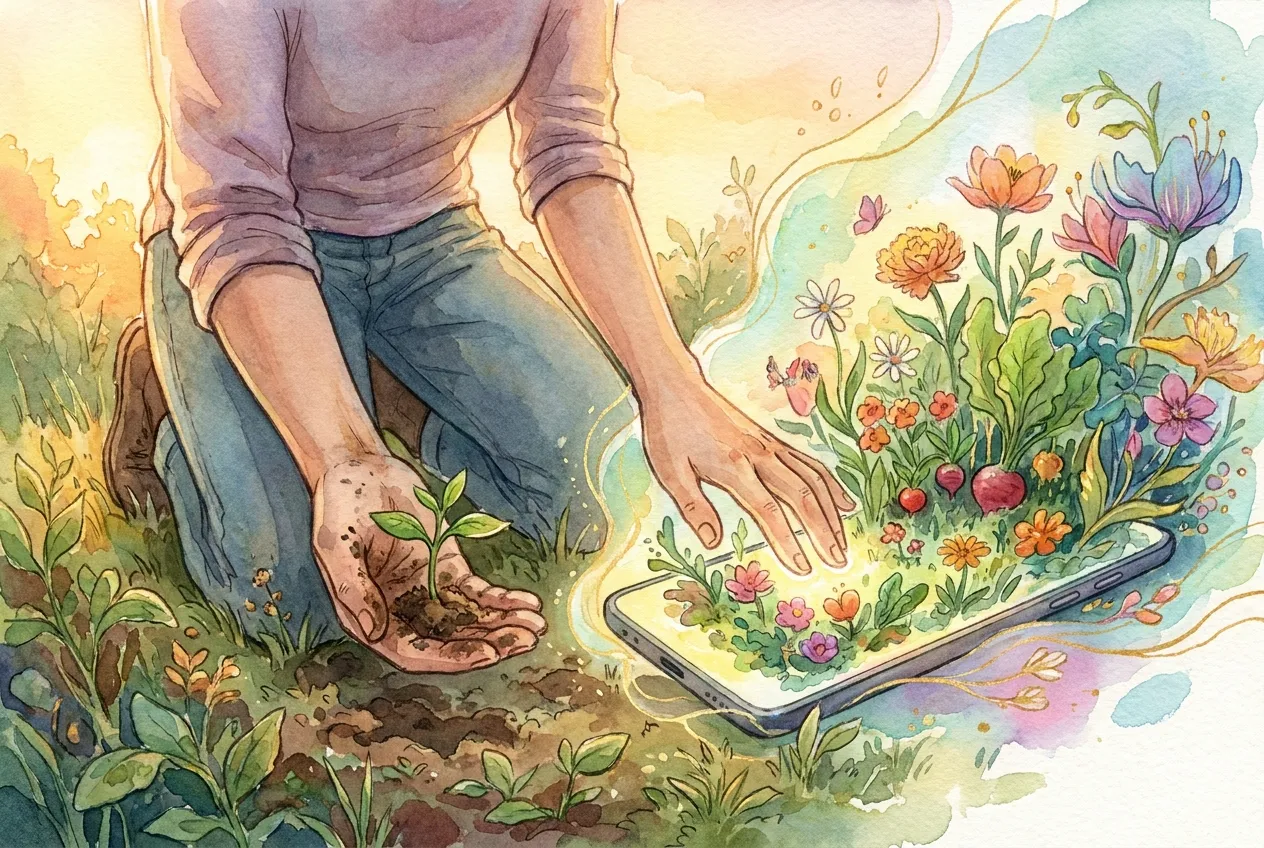
Cozy gaming's explosive growth isn't about gaming at all. It's about a generation of people discovering that nurturing is therapeutic — often by accident, through a cute farming game they downloaded on a stressful Tuesday.
The players planting virtual tomatoes at 7 AM aren't avoiding reality. They're giving their brains five minutes of the predictability, control, and caregiving reward that the real world stopped providing reliably.
The cozy game industry will keep growing because the need it fills is fundamental. As life gets more chaotic, the appeal of a small, controlled space where your effort always produces growth will only increase.
Your virtual farm. Your digital baby. Your pixel garden. They're not "just games."
They're the daily practice of a very old, very human skill: making something grow.
And in a world that often feels like it's doing the opposite, that practice is more valuable than any high score.
Related Articles
For the complete guide, see our Cozy Games & Virtual Companions hub.
You might also find helpful: