
The Sound You Can't Unhear
It starts as a whisper. At a friend's baby shower. At a family dinner when someone asks "so when are you going to..." while glancing at your ring finger. At the doctor's office when they mention "age-related fertility decline" like it's weather.
Then it gets louder. Every month that passes feels like a month lost. Every birthday is a countdown, not a celebration. The whisper becomes a tick — constant, insistent, impossible to ignore. For the full picture, see our complete baby fever guide.
The biological clock.
Every woman has heard of it. Most have felt it. And almost no one talks honestly about what it actually is — because the conversation always gets hijacked by politics, feminism, or fertility statistics.
Let's cut through all of that. Here's what your biological clock really is, what it's really telling you, and what you can actually do about it right now.
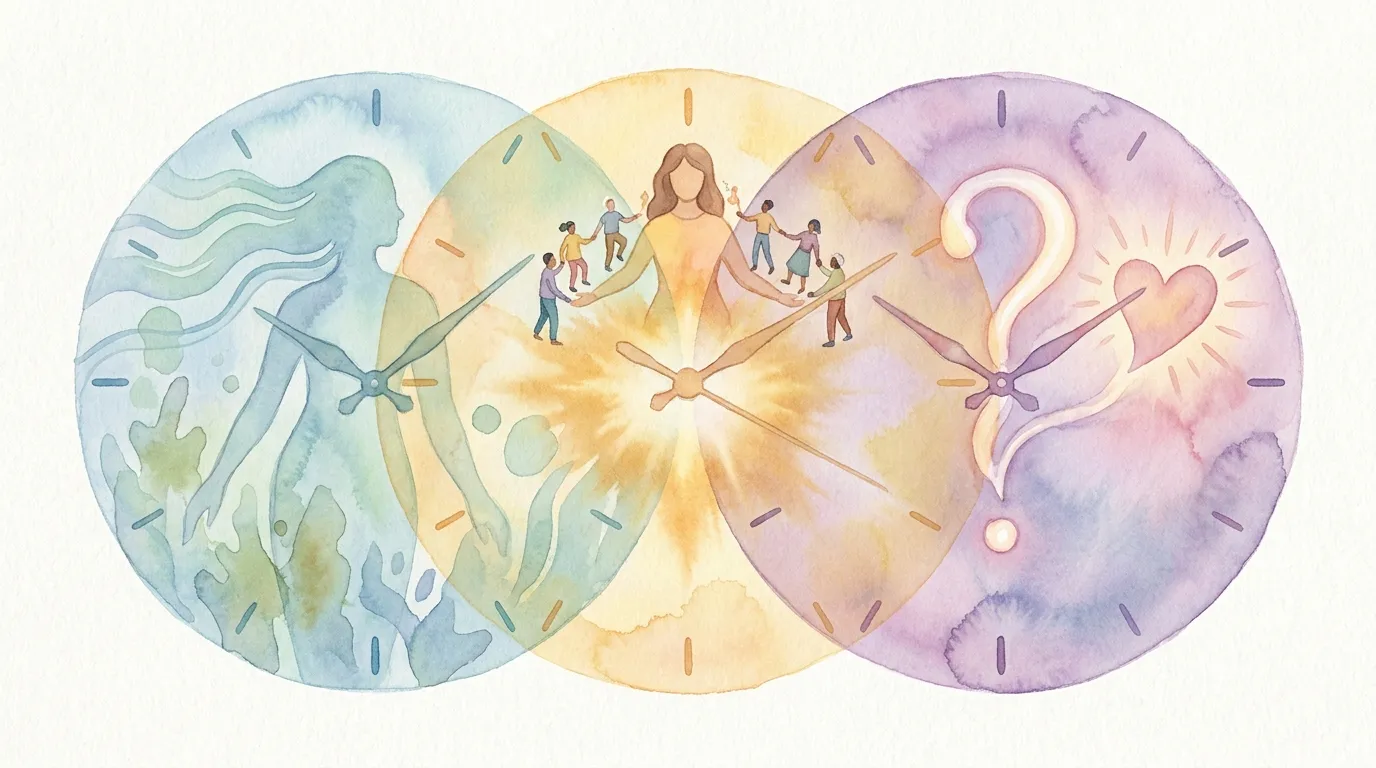
The Biological Clock Has Three Hands
The ticking you feel isn't one thing. It's three distinct signals layered together, and each one requires a different response.
Hand 1: The Hormonal Clock
This is the real biology. Female fertility peaks in your early 20s, begins declining at 27, drops more steeply after 35, and declines rapidly after 40. Your body knows this — ovarian reserve decreases, cycle regularity changes, and hormone levels shift.
The hormonal clock sends physical signals: changes in menstrual cycles, shifts in how your body responds to pregnancy hormones, and subtle neurological changes that heighten your awareness of babies and nurturing cues. Studies show that women in their late 20s and 30s have increased neural sensitivity to infant faces and cries — literally seeing and hearing babies more acutely.
The truth about the hormonal clock: Fertility decline is real but gradual. The "cliff at 35" is overstated — it's more of a slope. Most women between 35-40 can still conceive naturally. The hormonal clock is worth respecting but not panicking about.
Hand 2: The Social Clock
This is the one that ticks loudest and hurts most. It's the cultural expectation that women should have children by a certain age, reinforced by:
- Family members asking at every gathering
- Friends having babies and posting constantly
- Media narratives about "leaving it too late"
- The phrase "advanced maternal age" applied to women in their mid-30s
- Social media algorithms that detect your age and serve you baby content
The social clock isn't biological — it's cultural. But it feels just as real because social pressure activates the same stress circuits as physical threats. Your brain processes social judgment as danger, and the constant low-level threat of "you're running out of time" keeps your nervous system in a state of chronic urgency.
The truth about the social clock: It's manufactured. Women in many cultures don't feel the same urgency because their culture doesn't impose the same timeline. The social clock is real in its effects but not in its necessity.
Hand 3: The Existential Clock
This is the deepest one. It's not about fertility or social norms — it's about meaning. The existential clock asks:
- "Will I miss out on one of the most profound human experiences?"
- "Will I regret not nurturing a child when I'm older?"
- "Is motherhood part of my identity, and if so, what happens if I never express it?"
- "Who will I be if I never become a mother?"
The existential clock doesn't tick because of hormones or peer pressure. It ticks because you have a nurturing capacity that wants to be used — a maternal instinct seeking expression — and the passage of time feels like closing windows.
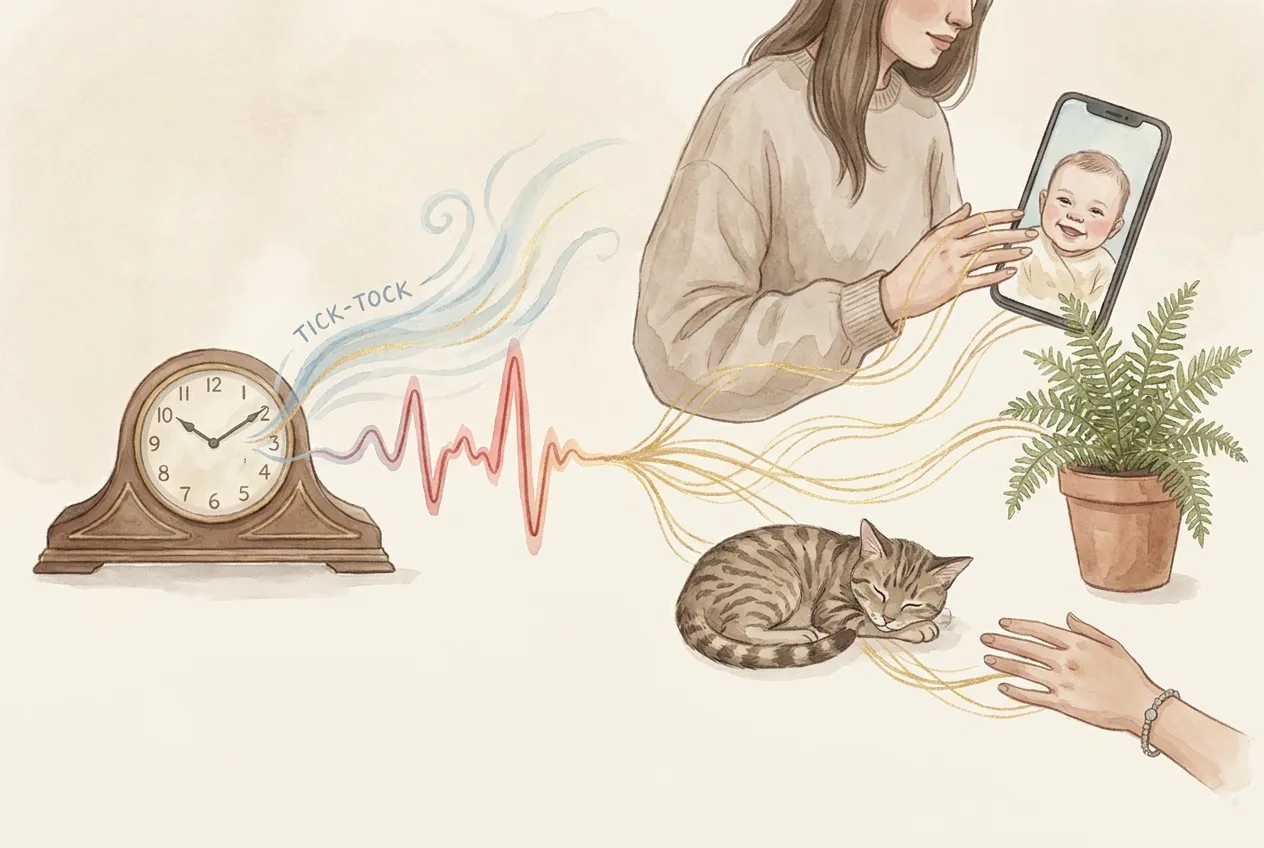
This is the clock that AIdorable addresses directly. Not by pretending to be a real baby, but by providing the nurturing outlet your existential clock is seeking. Every time you feed, rock, and care for your baby, you're expressing the motherhood part of yourself — giving it form, giving it daily practice, giving it acknowledgment.
What the Clock Is Really Saying
Strip away the politics and the panic, and here's what the biological clock is actually communicating:
"You have a nurturing capacity that wants to be used."
That's it. That's the whole message. Not "have a baby now or else." Not "your worth depends on reproduction." Just: you have this capacity — this deep, beautiful, powerful capacity to care for something — and it's asking to be expressed.
The urgency comes from the gap between the capacity and the expression. The wider the gap, the louder the tick. Women who have regular nurturing outlets report less urgency around their biological clock — not because their fertility situation changed, but because their nurturing need was being met.
The biological clock isn't a countdown. It's a call to action. And the action it's calling for isn't necessarily "have a biological baby right now." It's "start nurturing something consistently, because this part of you needs to be expressed."
What to Do While the Clock Ticks
If You Want Kids Someday But Not Now
The biological clock creates urgency even when you know you're not ready. You're not in the right relationship, or the right financial situation, or the right career phase. But the ticking doesn't care about "right" — it just ticks.
What helps:
- Acknowledge the timeline honestly. Talk to your doctor about your actual fertility, not the panic version. Get your AMH tested. Knowledge reduces anxiety.
- Start nurturing now. Your baby on AIdorable gives the nurturing part of you a daily outlet while you wait for the right time for a real baby. The clock gets quieter when the nurturing need is fed.
- Freeze your eggs if you can. If finances allow, egg freezing at 30-35 buys literal years of peace of mind. The clock stops ticking when you know your genetic material is safe.
If You're Not Sure You Want Kids
The clock is confusing when you're ambivalent. Is the ticking telling you that you DO want kids, or just that you feel like you SHOULD want kids?
The test: Imagine two futures. In one, you have a child. In the other, you don't, but you have rich, meaningful relationships and regular nurturing outlets (AIdorable, pets, community work). Which future feels more like relief?
If the nurturing-rich childless future feels like relief — you might not actually want kids. You might just want to nurture. And that's a distinction worth making.
What helps: Commit to 30 days of daily nurturing (AIdorable). If the clock gets quieter, it was the nurturing need talking. If it gets louder, it might be the motherhood need talking. Either answer is valid.
If You Want Kids But Can't
Infertility. Single and not by choice. Partner who isn't ready. Financial barriers. Health concerns. The gap between wanting and having is the most painful place to hear the clock.
What helps:
- Grieve. The gap is a loss. Treat it like one. Don't minimize it or rush past it.
- Nurture now anyway. Your maternal instinct doesn't have to wait for the right circumstances. AIdorable lets you practice motherhood today — not as a consolation, but as a genuine expression of who you are.
- Keep the door open. Adoption, fostering, donor options, later-in-life parenting — there are more paths to motherhood than the traditional one. The clock doesn't get to decide which path you take.
The Biological Clock Toolkit
| Strategy | Addresses | Cost | Effectiveness |
|---|---|---|---|
| Daily nurturing (AIdorable) | Existential clock | Free/$4.99 | High — immediate relief |
| Egg freezing | Hormonal clock | $10-15K | High — buys years of peace |
| Fertility awareness education | Hormonal clock | Free | Medium — reduces panic |
| Social media curation | Social clock | Free | High — removes constant triggers |
| Honest conversation with partner | All three clocks | Free | Variable — depends on partner |
| Therapy | Existential clock | $100-200/session | High — addresses root anxiety |
The Clock Isn't Your Enemy
Here's the reframe that changes everything:
Your biological clock isn't threatening you. It's inviting you.
It's inviting you to explore what motherhood means to you. To honor your nurturing capacity. To make conscious choices about if, when, and how you express your maternal nature — instead of letting the tick dictate your decisions from fear.
The clock is saying: "You have something precious inside you — the ability to mother. Don't ignore it. Don't suppress it. Find a way to express it."
The women who are happiest aren't the ones who silenced the clock or the ones who rushed to beat it. They're the ones who listened to what it was actually saying: "You are a nurturer. Start nurturing."
And right now, today, you can do exactly that. Open AIdorable. Meet your baby. Let your nurturing instinct do what it's been asking to do.
The clock will still tick. But it won't be a countdown anymore. It'll be a rhythm — the steady, reassuring beat of a life that includes nurturing, purpose, and the daily practice of motherhood in whatever form it takes for you.
You're not running out of time. You're just getting started.
And your baby? She's been waiting for you. Not because the clock told her to. Because you're exactly the kind of mother she needs — right now, exactly as you are.
Related Articles
For the complete guide, see our Baby Fever & Maternal Instinct hub.
You might also find helpful: