
Biological Clock in Women: What Is Real and What Is BS?
If you searched biological clock women, you are probably not looking for a lecture. You are looking for the truth behind that tense, emotional, sometimes physical feeling that says, I might be running out of time.
The honest answer is not "all biology" and not "all BS." The biology is real. The pressure is real. The confusion comes from treating them as the same thing.
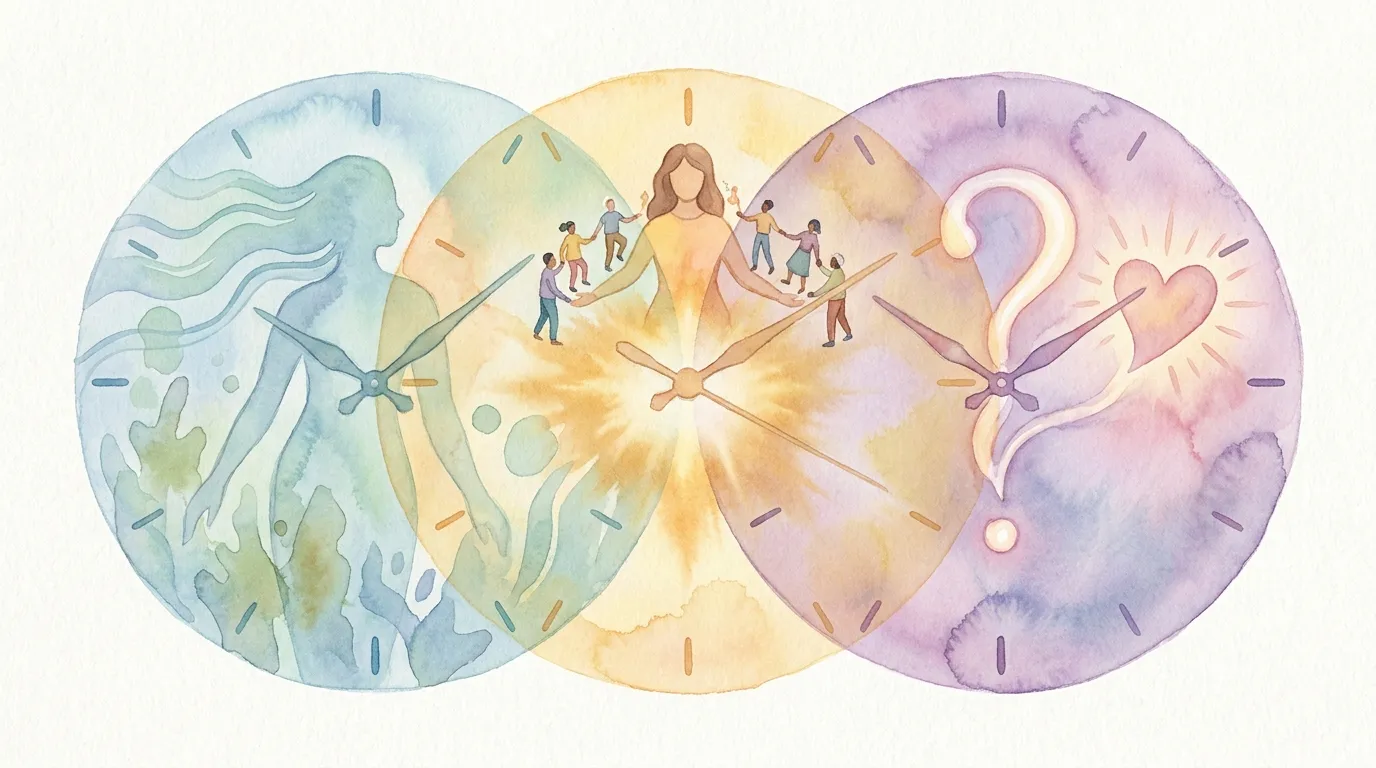
When people say the biological clock is ticking, they usually mean one of four different signals:
| Signal | Real part | BS part | Better next step |
|---|---|---|---|
| Age-related fertility | Female fertility does change with age | Age 35 is not a cliff | Get facts from a clinician, not panic from the internet |
| Baby fever | Wanting a baby can be a real emotional state | The feeling is not a command | Separate desire from readiness |
| Social timing | Friends, family, and culture affect urgency | Marriage and parenthood are not one required script | Ask whose timeline you are obeying |
| Nurturing hunger | The urge to care for something can be deep | It does not always mean "get pregnant now" | Give the urge a safe outlet while you decide |
So the question is not, "Is the clock fake?" The question is, "Which clock am I hearing?"
What Is a Biological Clock?
Medically, the clock is about reproductive aging. The NCBI Bookshelf review on age-related fertility decline explains the core issue simply: fertility tends to decline as oocyte number and oocyte quality decrease over time.
An oocyte is an immature egg cell. Unlike sperm, which is produced continuously, the ovary starts with a finite supply. The ASRM committee opinion on ovarian reserve makes an important distinction: ovarian reserve describes egg quantity, while egg quality is a separate issue.
That is the real science. Women are born with all the eggs they will ever have. The number of eggs falls through childhood, puberty, the reproductive years, and eventually menopause. Most eggs are lost through atresia, not ovulation. The popular story turns that biology into panic by pretending there is one deadline, one right age, and one correct life plan.
Why Fertility and Pregnancy Rates Decline With Age in Your 30s
Most medical resources describe the same broad pattern: peak fertility is usually in the 20s and early 30s, then a gradual decline becomes more noticeable through the 30s. In many summaries, fertility begins to decline in the early 30s, around age 32 for some measures, then the decline in fertility becomes sharper later in the decade. Clinically, age 35 is often used because pregnancy rates, miscarriage risk, and infertility evaluation timelines change enough to matter.
That does not mean every woman older than 35 is infertile. It means reduced fertility, higher miscarriage risk, and a sensible reason to involve a doctor sooner if you are trying to conceive.
Here is the calmer version:
- 20s and early 30s: This is generally the strongest window for natural conception, but it is not a guarantee. Fertility issues can happen at any age.
- Early 30s: The chance of pregnancy can decrease with age, but the change is usually gradual, not sudden.
- Age 35: If you have been trying to conceive for 6 months, many clinicians recommend an infertility evaluation rather than waiting a full year.
- Late 30s: Women in their late 30s can and do become pregnant, but the chance of pregnancy per cycle is lower than it was earlier.
- Age 40: Natural conception is still possible for some, but the effects of age, lower IVF success rate, and higher miscarriage risk become more important.
- Age 45: Pregnancy with a person's own eggs becomes much less common; donor eggs, donor embryo options, or other reproductive technology may become part of the conversation.
If the clock is loud because you are actively trying to conceive, a fertility specialist or fertility center can help you understand ovulation, ovarian reserve testing, semen analysis, fallopian tube factors, and timing. If you are not trying yet, that same information can help you make a plan without turning every birthday into an emergency. Women older than 35 deserve practical support, not shame.
Oocyte Number and Quality: At What Age Are Most Eggs Lost?
One common question is: At what age are 90% of a woman's eggs gone?
The answer depends on which model you use. Patient education from ReproductiveFacts.org describes roughly one million follicles at birth, about 300,000 by puberty, and only a few hundred ovulations across the reproductive years. Other ovarian reserve models use different estimates, sometimes closer to two million at birth, but they agree on the big picture: eggs are lost over time, and the number and quality both matter.
Still, egg count is not destiny. A woman with fewer eggs can sometimes get pregnant quickly. A younger woman with many eggs can still face infertility. AMH, follicle counts, cycle regularity, medical history, sperm, and age and fertility all have to be read together.
This is why the phrase "90% gone" is technically interesting but emotionally dangerous. The real question is more practical:
What is my current fertility potential, and what choices do I want to make with that information?

Is the Biological Clock a Myth to Rush Women Into Marriage?
The BS is not fertility decline. The BS is the way people weaponize it.
The phrase "your clock is ticking" often gets used as social pressure, especially toward career women who are told they are choosing career opportunities over motherhood. The phrase "ticking for the career woman" shows up because culture likes turning reproductive health into a morality play: good women start a family on time, selfish women wait, older women regret it.
That script ignores money, partnership, health, trauma, housing, caregiving for parents, education, infertility, relationship safety, and the basic fact that wanting a healthy baby is not the same as being ready to raise one.
The BS also shows up in false certainty:
- "If you wait until 37, it is too late."
- "IVF can fix it later."
- "If you freeze eggs, you can stop thinking about it."
- "If you feel baby fever, that means you are meant to be a mom."
- "If you do not feel it, something is wrong with you."
None of those are fair. IVF treatments can help some people. Egg freezing can improve future fertility options for some people. Natural conception after 35 is possible. Parenthood can be beautiful. Child-free life can be beautiful. The real problem is acting from panic instead of clarity.
Baby Fever Is Not the Same as Fertility
Baby fever is the emotional urge to have a baby. It can feel like warmth, ache, longing, grief, obsession, or sudden tenderness around babies. Research indexed on PubMed describes baby fever as a visceral physical and emotional desire, not just a polite preference.
But baby fever does not measure ovarian reserve. It does not tell you whether an embryo will implant. It does not tell you whether sperm can fertilize an egg. It does not know whether you have childcare, a safe partner, health support, or enough room in your life for parenthood.
This is why the same feeling can mean different things:
- "I want a baby someday."
- "I want to nurture something now."
- "I feel behind my friends."
- "I am grieving a timeline."
- "I am lonely."
- "I am ready to start a family."
Those are not the same sentence. If you treat all of them as "my clock says get pregnant," you lose the information hidden inside the feeling.
Ask when the urge spikes. Pregnancy announcements may point to social comparison. Ovulation may point to hormones. Emptiness may point to meaning. Calm, steady desire paired with practical readiness may point to parenthood.
Do Older Men Have a Biological Clock Too?
Yes, but it is different.
Men usually continue producing sperm throughout life, so the male clock is not an ovarian-reserve clock. But older men can still see changes in sperm quality, semen volume, motility, morphology, DNA fragmentation, and time to pregnancy. Advanced paternal age has also been studied in relation to miscarriage and some offspring risks, including a small increased risk of autism in some research.
That does not mean older men cannot be fathers. It means the lazy cultural story — women age, men do not — is wrong. As men get older, the conversation should include both pregnancy odds and the health of future children, without exaggerating the absolute level of risk.
If a couple is trying to conceive, both sides matter: egg quality, ovarian reserve, ovulation, sperm count, sperm quality, semen analysis, health history, and timing. The clock conversation should not fall only on women.
Can You Become Pregnant and Have a Healthy Baby Later?
Yes, some women become pregnant later and have a healthy baby. The more useful question is not whether it is possible. It is what your personal odds look like based on age, diagnosis, ovarian reserve, sperm factors, cycle history, and overall health.
That is why a calm medical conversation is better than a panic spiral. You do not need to decide your whole future in one night. You need to know whether you are gathering information, actively trying, preserving options, or grieving a path that has become harder.
Infertility, IVF, and Fertility Treatment
If you want to have children someday but not now, the answer is not to spiral. The answer is to get better data and make a plan for your fertility journey.
Talk to a clinician before panic takes over. Ask about your personal reproductive health, cycle history, family history, medications, endometriosis, PCOS, prior surgery, and whether ovarian reserve testing makes sense.
Learn what testing can and cannot tell you. AMH and antral follicle count can estimate egg quantity and likely response to ovarian stimulation. They cannot perfectly predict natural conception, and they cannot fully measure egg quality.
Understand fertility preservation. Freezing eggs can be useful for some women, especially in the 20s and early 30s, but ReproductiveFacts.org notes that it is not a guarantee of a future baby. Egg freezing and IVF are related but not identical: embryo freezing through in vitro fertilization may offer another route if sperm is available and you want embryos rather than eggs preserved.
Do not oversell reproductive technology to yourself. IVF is powerful, but it does not erase maternal age. A good fertility center can explain realistic success rate ranges based on your age, diagnosis, ovarian response, sperm factors, and embryo quality.
Make a timeline that matches your actual life. Some women are ready for kids at age 30. Some at 37. Some never. The best plan is honest about biology and circumstance.
What To Do If You Are Not Ready To Start a Family
This is the AIdorable lane: not medical treatment, not a substitute for a baby, and not a promise to change fertility. Just a soft place for the nurturing part of you to land while the bigger decision stays open.
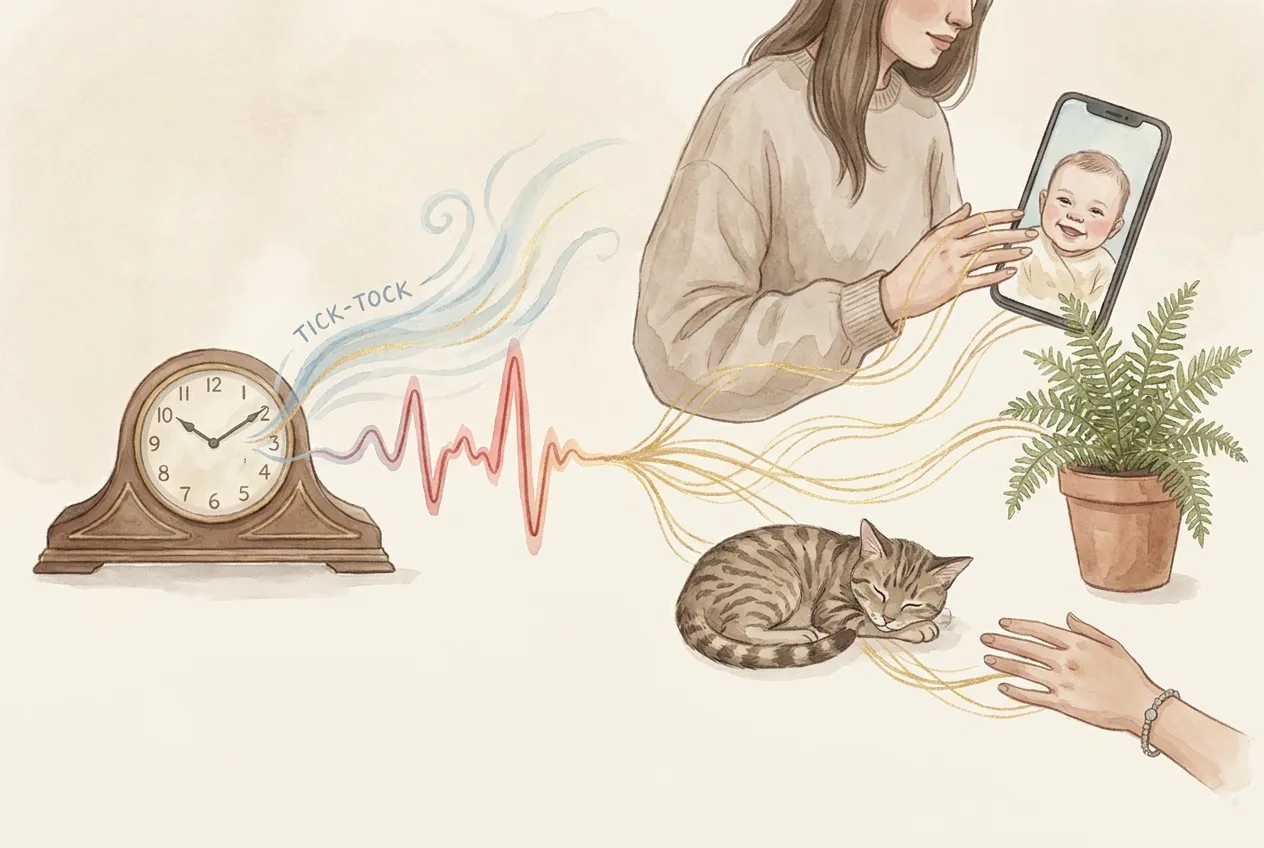
If the feeling is "I need something small to care for," you can honor it without forcing a reproductive decision. You can care for a pet, mentor someone younger, volunteer with children, grow a garden, create something slowly, or use a virtual nurturing app.
AIdorable works for women who are caught between baby fever and real-life timing. You feed, rock, soothe, and watch your AI baby grow through daily rituals. It gives the maternal urge a shape. It lets you practice care without pretending that practice is the same as pregnancy, birth, or eighteen years of responsibility.
You are allowed to say:
"I want to nurture right now, and I am still deciding whether I want to become pregnant."

Fertility Preservation and a 30-Day Clarity Plan
If the clock is loud and you do not know what it means, try this for 30 days before making a life-changing decision from a spike of emotion.
1. Track the trigger. Write down when the urge appears: babies, ovulation, stress, loneliness, partner conflict, social media, birthdays, or pregnancy announcements.
2. Separate facts from fear. Facts sound like, "I am 36 and want two children, so I should talk to a doctor." Fear sounds like, "I am ruined if I do not decide this month."
3. Get one practical fertility data point. If you are serious about getting pregnant or preserving options, book a conversation with an ob-gyn or fertility specialist. Do not make Reddit your fertility center.
4. Give the nurturing urge a daily outlet. Use AIdorable, care for a pet, babysit, mentor, garden, or create something that depends on steady attention. Notice whether the urgency softens.
5. Have the readiness conversation. Ask yourself what would need to be true for you to be ready for kids: money, partner, health, support, housing, mental health, career flexibility, or simply desire.
6. Revisit after one cycle. The goal is not to silence the clock. The goal is to hear it accurately.
When the Clock Is Ticking, What Is It Telling You?
The clock is real. The panic is not always trustworthy.
Your body does have a reproductive timeline. Female fertility can decline with age. Oocytes age. The risk of miscarriage changes. IVF and fertility preservation are real options with real limits. Older men have reproductive considerations too. If you want children, the biology deserves respect.
But respect is not the same as fear. You do not owe anyone a baby because you turned 30. You do not have to compress your life into somebody else's schedule. You do not have to mistake social pressure for instinct, or instinct for readiness.
The most useful question is not, "Is my biological clock BS?"
The useful question is:
What part of me is asking for attention: my fertility plan, my social anxiety, my baby fever, or my need to nurture?
Answer that honestly and the clock changes tone. It stops sounding like a threat and starts sounding like information.
And information is something you can work with.
Related Articles
For the complete guide, see our Baby Fever & Maternal Instinct hub.
You might also find helpful:
- Biological Clock Women: What's Really Behind the Ticking Feeling (and What to Do About It)
- Baby Fever: What It Is, Why It Happens, and How to Handle the Urge
- Motherhood Instinct: What It Is, Why It Fires, and How to Honor It Even Without Kids
- Baby Fever But Not Ready for a Baby: What to Do With the Ache
- Best Virtual Baby Apps for Nurturing, Baby Fever, and Cozy Care