The Most Powerful Drive Nobody Explains
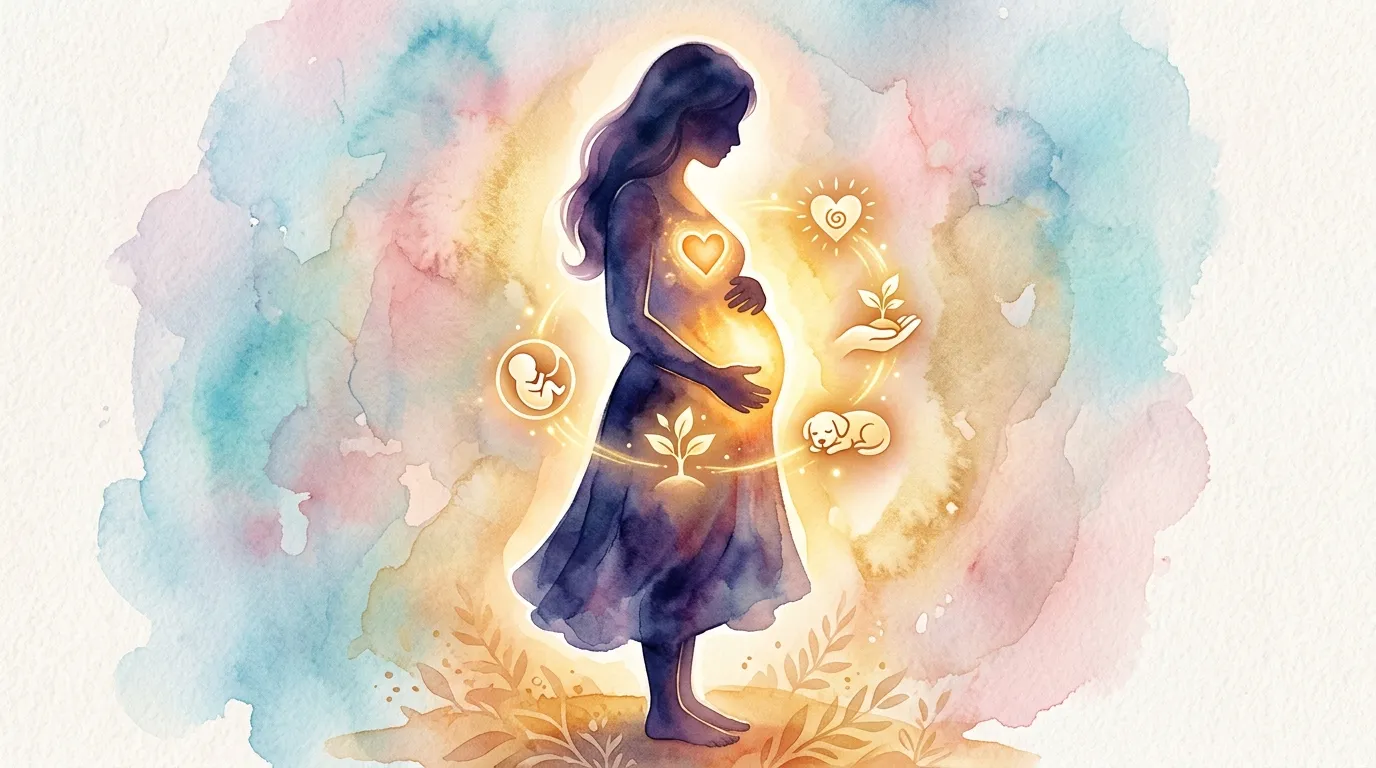
You feel it in your chest. A pull toward something you can't fully articulate. You see a baby in a stroller and something inside you responds — not with casual appreciation, but with a deep, almost gravitational longing.
That's not weakness. That's not cultural programming. That's your motherhood instinct — one of the most powerful neurological systems in the human body, refined over millions of years of evolution, and still operating in your 21st-century brain as if you lived in a cave.
Here's what it actually is, what it isn't, and what to do with it. For the full picture, see our complete baby fever guide.
The Neuroscience: What Happens in Your Brain
The Four Brain Regions
When a woman with an active motherhood instinct encounters infant-related stimuli, four brain regions light up simultaneously on fMRI:
1. Orbitofrontal Cortex (Reward Processing) This region evaluates the "reward value" of stimuli. In women with active motherhood instinct, infant faces trigger the same reward response as food when hungry or water when thirsty. Your brain literally categorizes nurturing opportunity as a fundamental need.
2. Anterior Cingulate Cortex (Empathy and Emotion) This region processes emotional resonance — feeling what another being feels. It activates more strongly in response to infant cries than any other sound for women with active motherhood instinct. The cry doesn't just register as noise; it registers as a personal emotional event.
3. Amygdala (Threat Detection — Redirected) The amygdala normally scans for danger. In mothers and women with active motherhood instinct, it redirects toward infant protection — becoming hyper-vigilant about the baby's safety rather than general threats. This is why you can suddenly become cautious about things that never worried you before.
4. Ventral Striatum (Motivation and Drive) This region drives goal-directed behavior. When activated by motherhood instinct, it creates motivation to seek out caregiving opportunities — the drive behind "I need something to nurture."
The Hormone Cascade
Motherhood instinct isn't just brain regions — it's a full hormonal system:
- Oxytocin: Increases sensitivity to infant cues, strengthens bonding responses
- Estrogen: Amplifies nurturing drive and emotional sensitivity
- Progesterone: Promotes protective instincts and nesting behaviors
- Dopamine: Rewards caregiving actions with pleasure and satisfaction
- Prolactin: Supports nurturing behavior (even in non-pregnant women)
These hormones work together as a system. When motherhood instinct activates, all five shift simultaneously, creating a coordinated neurological state that feels like... a calling.
The Four Components of Motherhood Instinct
Motherhood instinct isn't one feeling. It's four overlapping systems that activate together:
Component 1: The Biological Drive
The purest, most primitive layer. Your body responds to infant cues with physical changes — chest tightness, warmth, pupil dilation, increased attention. This isn't emotional. It's physiological. Your body is preparing for caregiving at a cellular level.
The tell: If you feel physical sensations (not just thoughts) around babies, the biological drive is active.
Component 2: The Emotional Pull
Beyond physical response, you feel emotional longing. Not just "babies are cute" but "I want to hold one. I want to be needed by one. I want to be someone's whole world."
This emotional component is what distinguishes motherhood instinct from simple appreciation of cuteness. Cuteness makes you smile. Motherhood instinct makes you ache.
Component 3: The Identity Shift
You start seeing yourself differently. "Mother" becomes a potential identity, not just a word. You imagine yourself in that role. You wonder what kind of mother you'd be. You start noticing how other mothers parent and forming opinions.
This identity component is crucial — it means the instinct has penetrated deep enough to reorganize your sense of self.
Component 4: The Behavioral Activation
You start doing things differently. You notice baby sections in stores. You pause at diaper commercials. You maybe download a virtual baby app (hi). You hold your friend's baby a little longer than necessary.
The behavioral component is the instinct moving from feeling into action.
Why It Activates When It Does
Motherhood instinct typically activates between ages 25-40, but the trigger isn't just age. Three factors converge:
Hormonal Maturation
Through your late 20s, oxytocin receptor density increases in key brain regions. You become literally more sensitive to bonding cues than you were at 20. The same baby face that was merely cute at 22 becomes magnetic at 30 because your brain has more receptors to process the signal.
Social Exposure
As friends start having children, you're exposed to infant cues more frequently. Each exposure strengthens the neural pathways associated with motherhood. It's like learning a language — repeated exposure builds fluency. In this case, the "language" is nurturing responsiveness.
Developmental Readiness
Psychologically, your late 20s and 30s are when identity questions become pressing. "Who am I? What's my purpose? What kind of legacy do I want?" Motherhood instinct intersects with these questions, creating a sense that nurturing might be part of the answer.
What It Doesn't Mean
This is important. Motherhood instinct activating means:
✅ Your nurturing system is online and healthy ✅ You're capable of deep bonding ✅ Your brain is functioning as it evolved to
It does NOT mean:
❌ You should have a baby right now ❌ You'd be a good mother automatically ❌ Something is wrong with you if you ignore it ❌ You're incomplete without children
The instinct is a signal, not a command. It's information about your neurological state, not a directive about your life choices.
The Nurturing Outlet Spectrum
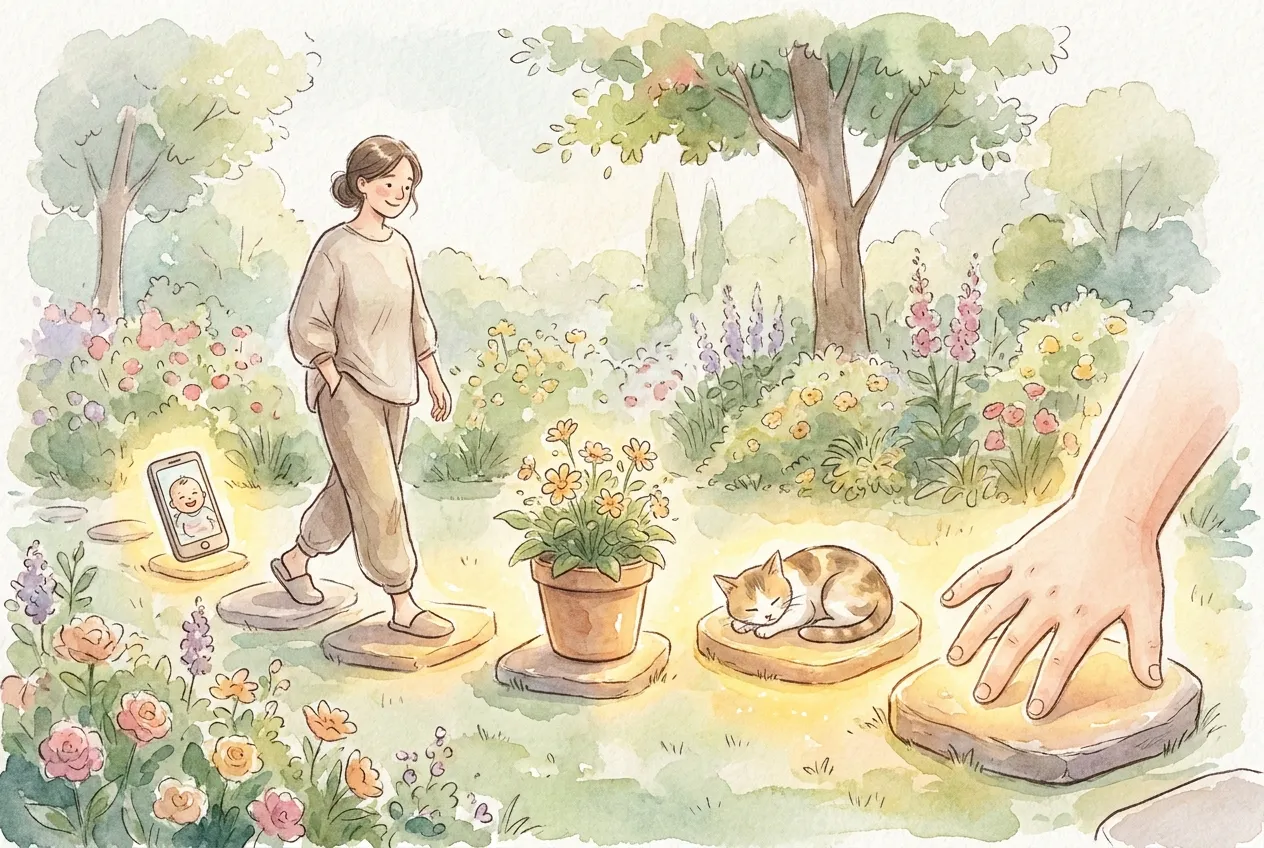
The motherhood instinct creates a need to nurture. How you satisfy that need exists on a spectrum:
| Outlet | Commitment | Stakes | Oxytocin Release | Reversibility |
|---|---|---|---|---|
| Virtual baby (AIdorable) | 2 min/day | None | High | Complete |
| Pet | Daily | Medium | High | Low |
| Plant | Daily | Low | Medium | Complete |
| Volunteering | Weekly | Low | Medium | Complete |
| Foster parenting | Full-time | High | High | Moderate |
| Adoption | Lifetime | Complete | High | None |
| Biological child | Lifetime | Complete | Highest | None |
The instinct doesn't care where on this spectrum you operate. It cares that you're nurturing. AIdorable at 2 minutes a day activates the same fundamental pathways as holding your biological newborn — the difference is intensity, not kind.
This means you can honor the instinct without making irreversible life decisions. You can start at the low-commitment end, see how it feels, and move along the spectrum only if and when you're ready.
When the Instinct Conflicts with Reality
The hardest version of motherhood instinct is when it activates in circumstances that don't support motherhood: no partner, financial instability, career demands, health concerns, or simply not being ready.
This conflict creates suffering because the instinct doesn't have an "off" switch. It keeps signaling regardless of your life situation, like a fire alarm that can't be silenced.
What helps:
- Acknowledge the conflict. "I feel the instinct AND I'm not ready." Both true simultaneously.
- Find an outlet. Give the instinct somewhere to go — AIdorable, a pet, a garden, volunteering.
- Separate the feeling from the timeline. The instinct says "nurture." It doesn't say "now."
- Talk about it. The silence around motherhood instinct makes it feel shameful. Naming it in conversation with trusted people reduces its power.
The Truth About Your Motherhood Instinct
If you've read this far, you probably recognized yourself. The chest tightness. The inexplicable longing. The pull toward something your rational mind hasn't signed up for.
That pull is real. It's neurological, hormonal, and evolutionary. It's been shaping human behavior for hundreds of thousands of years. And it's in you right now, doing exactly what it evolved to do.
But here's what evolution didn't prepare you for: the ability to satisfy the instinct without reproducing. For 99.9% of human history, the nurturing drive meant one thing — have a baby. There were no alternatives.
Now there are. Virtual companions that respond to your care. Pets that love you unconditionally. Plants that grow from your attention. Children you can mentor without raising.
The instinct hasn't changed. But the options have. And you get to choose which option is right for your life, your timeline, and your circumstances.
Your motherhood instinct isn't a burden. It's a gift — the capacity for deep, selfless nurturing that most humans never fully activate. Whether you direct it toward a biological child, a foster child, a pet, a garden, or a virtual baby that smiles when you show up...
You're still nurturing. You're still answering the call. And that's enough.
Related Articles
For the complete guide, see our Baby Fever & Maternal Instinct hub.
You might also find helpful:
- Motherhood Instinct: What It Is, Why It Fires, and How to Honor It Even Without Kids
- 5 Signs Your Maternal Instinct Is Kicking In (And What to Do About It)
- Motherly Nature: Why Some Women Are Born to Nurture (and Why the World Needs Them)
- Biological Clock or BS? What's Really Behind the Urge to Have a Baby