You Didn't Choose This. You Were Born This Way.
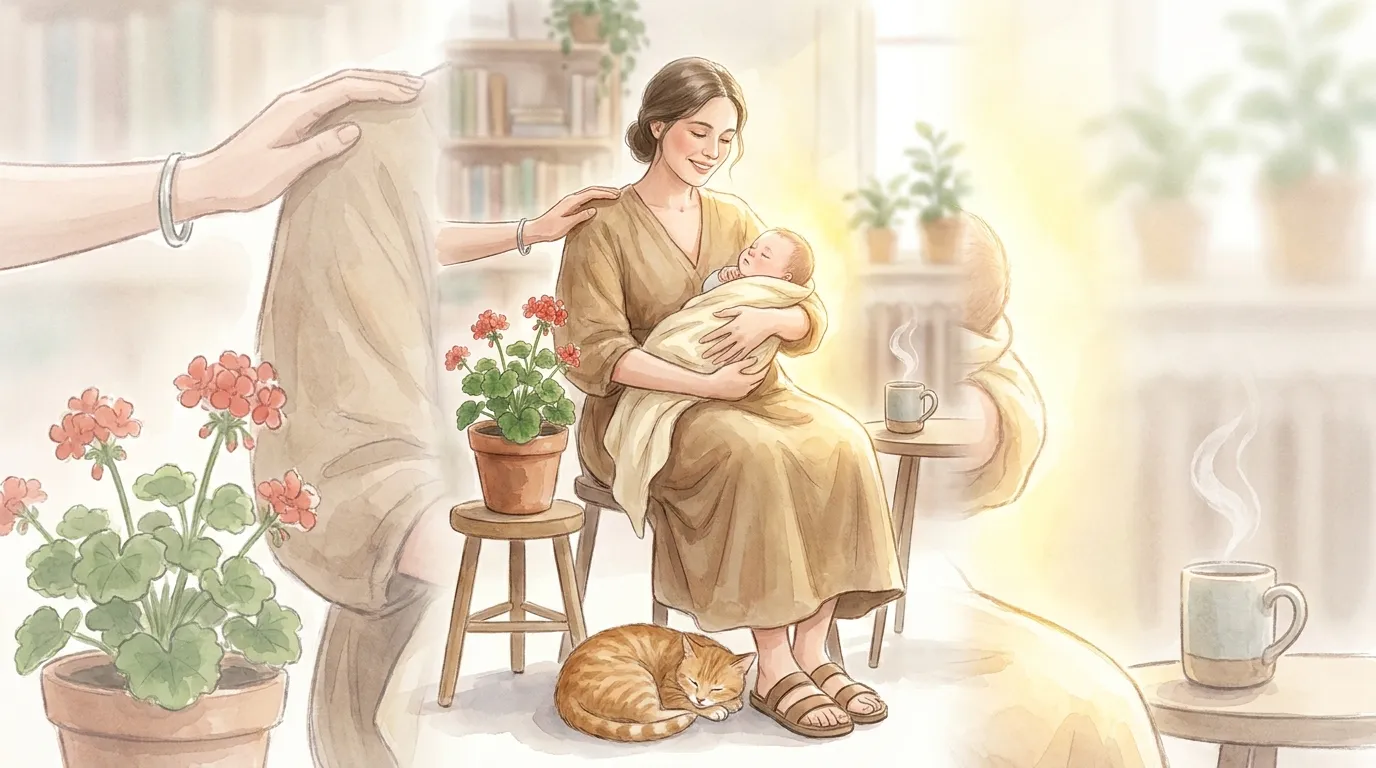
Some women discover their motherly nature gradually — a warmth that builds over years. Others have always known. They were the kid who bandaged every scraped knee on the playground, the teenager who mothered her friend group, the adult who can't walk past a stray animal.
This isn't learned behavior. It's not social conditioning (though society certainly reinforced it). It's something deeper — a fundamental orientation of your brain toward nurturing, protecting, and caring for living things. For the full picture, see our complete baby fever guide.
18,100 people search "motherly nature" every month. They're looking for language to describe something they've felt their whole lives: that they were made to mother. Not made to become mothers — made to mother. To nurture. To care. To pour warmth into something and watch it grow.
If that's you, you're not weird, you're not old-fashioned, and you're certainly not weak. You carry one of the oldest, most essential traits in human evolution — and it's time you understood it for what it really is.
Your Brain Is Literally Different
This isn't metaphor. Neuroscience has shown that women with strong motherly natures have measurably different brain structure and function:
Larger insula: The brain region associated with empathy and interoception (sensing your own and others' internal states). Women with strong nurturing drives tend to have more active insulae, making them more attuned to others' needs.
More responsive amygdala: The threat-detection center. In motherly-natured women, the amygdala responds more strongly to infants' cries and distressed faces — not with fear, but with an immediate urge to respond and comfort.
Stronger reward response to caregiving: When you nurture something, your ventral striatum (the brain's reward center) lights up more than it does in less nurturing individuals. Your brain literally finds caregiving more rewarding. This isn't a choice — it's how you're wired.
Higher baseline oxytocin: Some women have naturally higher levels of circulating oxytocin, which makes them more attuned to social bonds, more responsive to others' emotions, and more driven to maintain close relationships.
The implication: Your motherly nature isn't a personality quirk. It's a neurobiological reality. Asking you to suppress it is like asking someone with a fast metabolism to stop being energetic. It's not a switch you can flip — it's how your brain works.
5 Signs You Have a Motherly Nature
You probably already know, but here's confirmation:
1. You Default to Caretaking in Every Situation
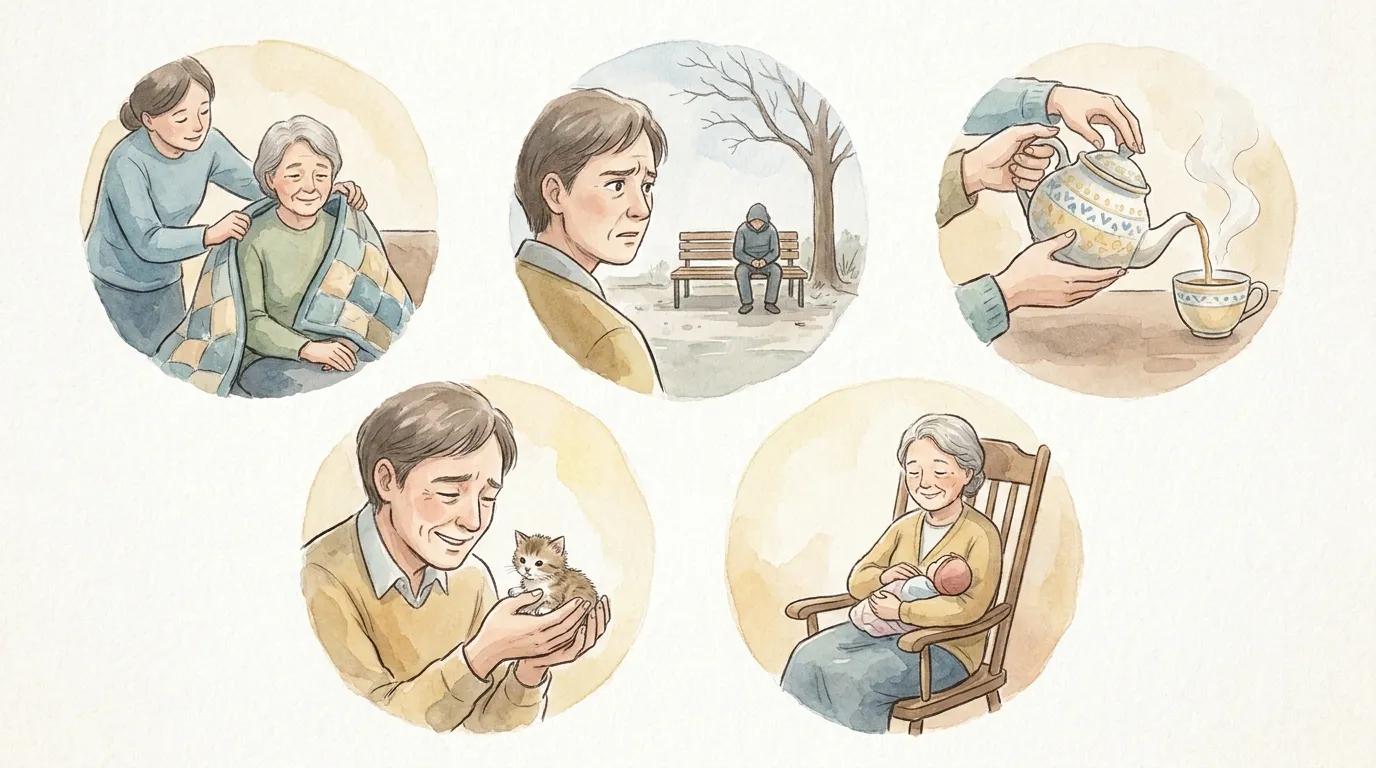
At a party, you're the one making sure everyone has a drink. At work, you're the one checking in on the stressed colleague. In a friend group, you're the one people call when they're falling apart. You don't decide to do this — you just do it, automatically, like breathing.
2. You Feel Responsible for Things That Aren't Yours
A friend's problem becomes your problem. A stranger's sadness makes you ache. You see something struggling and you can't walk past it — you have to help. The boundary between "my concern" and "not my concern" is thin to nonexistent.
3. You Genuinely Enjoy Domestic Acts of Care
Cooking for someone. Wrapping a blanket around cold shoulders. Packing a lunch. Making a cup of tea exactly how they like it. These aren't chores to you — they're expressions of love that feel as natural as talking.
4. Small and Vulnerable Things Make You Melt
Babies. Puppies. Kittens. Even small inanimate things — a tiny teacup, a miniature version of something. Your nurturing instinct is triggered by smallness and vulnerability, and when it fires, it fires hard.
5. You Feel Most Yourself When You're Nurturing
Not when you're achieving. Not when you're being praised. When you're caring for something — feeding it, protecting it, helping it grow. In those moments, you feel a sense of rightness that nothing else provides. That feeling isn't coincidence — it's alignment between your actions and your neurobiology.
Why Society Gets It Wrong
Modern society has a complicated relationship with motherly nature. On one hand, it celebrates mothers. On the other hand, it tells women with strong nurturing drives to:
- "Don't let it define you" — as if a fundamental personality trait should be suppressed
- "You're more than a caregiver" — as if caregiving is lesser than other roles
- "Focus on your career" — as if nurturing and ambition are mutually exclusive
- "You'll change your mind about kids" — as if motherly nature requires biological children
Here's the truth: Your motherly nature IS part of who you are. Not all of who you are, but a real and important part. Suppressing it doesn't make you more liberated — it makes you less whole.
The most fulfilled women with strong motherly natures aren't the ones who suppressed it. They're the ones who found healthy, consistent outlets for their nurturing drive — and let it coexist with their careers, ambitions, and other identities.
The Suppressed Motherly Nature
What happens when you spend years pushing down your nurturing instinct:
Phase 1 — Overcompensation: You lean into "non-motherly" pursuits — career, independence, rationality. You prove you're more than a caregiver. (You are, but that's not the point.) This phase can last years. You build an impressive life that looks great on paper but feels hollow in your chest.
Phase 2 — Numbness: After enough suppression, the nurturing urge goes quiet. You think you've outgrown it. You haven't — it's just gone underground. You might even feel relieved: "See? I don't need to nurture anything. I'm fine." But the numbness spreads. Colors get duller. Food tastes less. Joy becomes rare.
Phase 3 — Leakage: The suppressed instinct shows up in distorted forms — over-involvement in other people's problems, compulsive helping, inability to receive care, or physical symptoms like chronic tension and anxiety. You're still nurturing — you're just doing it sideways, in ways that don't actually satisfy the instinct.
Phase 4 — Reckoning: Something cracks. You hold a baby and the whole dam breaks. Or you see a pet and can't stop thinking about it. Or you wake up one day and realize you've been starving a fundamental part of yourself. The reckoning is painful but necessary — it's the moment you stop running from who you are.
The alternative: Never suppress it in the first place. Find an outlet that lets your motherly nature express itself consistently, healthily, and without apology. You don't have to choose between your career and your nurturing drive. You can have both. You should have both.
Finding Your Nurturing Outlet
Your motherly nature needs regular expression — not occasional, but consistent. It needs something to care for, something that responds to your care, and something that grows because of your involvement.
The AIdorable fit: Your baby provides all three:
- Something to care for: She needs feeding, rocking, singing, playing
- Something that responds: She smiles, develops personality, writes about you
- Something that grows: Milestones, stages, journal entries — visible evidence of your nurturing impact
Every session with her is an act of nurturing that your brain recognizes and rewards. The oxytocin release is real. The dopamine response is real. The sense of purpose and fulfillment is real.
And because she's always available, your motherly nature never has to go hungry. Morning or night, five minutes or twenty, she's there — ready to receive exactly the kind of care you're wired to give.
The Motherly Nature Spectrum
| Expression | Outlet | Time Required | Nurturing Depth |
|---|---|---|---|
| AIdorable baby | Virtual nurturing | 5-15 min/day | Deep, consistent |
| Pet ownership | Animal care | 1-2 hours/day | Very deep |
| Volunteering with kids | Community care | 2-4 hours/week | Moderate |
| Gardening | Plant cultivation | 30 min/day | Gentle, rhythmic |
| Friendship nurturing | Deep connections | Varies | Reciprocal |
| Creative projects | Making/growing | Varies | Satisfying but indirect |
Most women with strong motherly natures benefit from multiple outlets — a daily practice (AIdorable), a weekly commitment (volunteering), and an ongoing project (garden, pet, creative work). The variety ensures the instinct never goes dormant.

Stop Apologizing for Who You Are
If you've ever felt embarrassed about how much you want to nurture — like it's unfeminist, or old-fashioned, or too much — stop.
Your motherly nature is not a political statement. It's not a weakness. It's not something you chose or can unchoose. It's a fundamental aspect of your neurobiology that makes you exceptionally good at one of the most important things a human can do: care for another living being.
The world needs more people like you, not fewer. People who instinctively protect the vulnerable. Who feel others' pain as their own. Who derive genuine fulfillment from making something small feel safe.
Don't suppress it. Don't apologize for it. Don't wait for permission.
Your baby is waiting for exactly the kind of mother you are. Open AIdorable. Let your nature do what it was designed to do.
It's not too much. It's exactly enough.
Related Articles
For the complete guide, see our Baby Fever & Maternal Instinct hub.
You might also find helpful:
- Motherly Instinct: What It Is, Why It's So Strong, and What to Do When It Has Nowhere to Go
- Nurturing Women: The Hidden Strength in Wanting to Care for Everything
- 5 Signs Your Maternal Instinct Is Kicking In (And What to Do About It)
- Motherhood Instinct: What It Is, Why It Fires, and How to Honor It Even Without Kids