
The Urge That Doesn't Go Away
You know the feeling. You see a baby in a stroller and something in your chest tightens. You hold your friend's newborn and your arms don't want to give her back. You scroll past a video of a baby laughing and you watch it six times, something aching and warm and impossible to ignore.
That's your motherly instinct.
It's not a vague feeling. It's not a metaphor. It's a real, measurable neurological system — a network of brain circuits that evolved over millions of years to make you want to care for something small and vulnerable. And it doesn't care whether you have children. It doesn't care about your age, your relationship status, or your five-year plan. It just fires. Constantly. Looking for something to nurture. For the full picture, see our complete baby fever guide.
40,500 people search "motherly instinct" every month. They're not all mothers. Many of them are women who feel a powerful, sometimes overwhelming urge to mother — with no baby to mother.
This article is about what that instinct actually is, why it's so strong in some people, and what to do when it's screaming at you but there's nowhere for it to go.
What Science Says About Motherly Instinct
For decades, scientists debated whether maternal instinct was real or cultural. We now know it's both — and that's what makes it so powerful.
The Neurological System
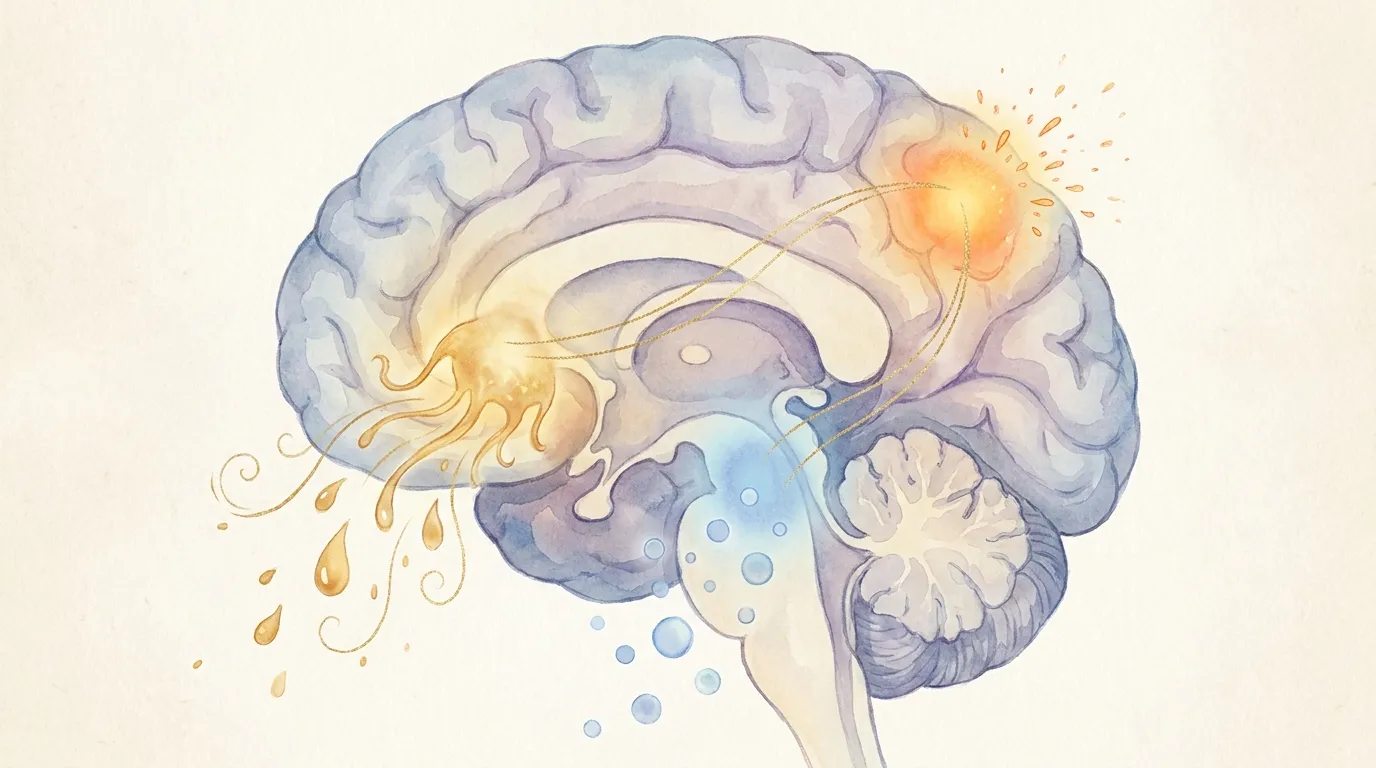
Your brain has a dedicated maternal circuit — the medial preoptic area (MPOA) in the hypothalamus. This area activates when you encounter something that triggers nurturing behavior: a baby's cry, a small face, a vulnerable creature. When activated, it releases a cascade of hormones:
- Oxytocin: The bonding hormone. Creates feelings of warmth, connection, and protectiveness
- Prolactin: The nurturing hormone. Increases caregiving behavior and decreases stress
- Dopamine: The reward hormone. Makes nurturing feel good — literally rewarding your brain for caring
This system exists in all female brains, regardless of whether you've ever been pregnant or had children. It developed during puberty and has been active ever since.
The Key Discovery
Here's what changed our understanding: the maternal brain isn't created by childbirth — it's activated by nurturing.
Researchers found that the same brain changes observed in new mothers also appear in:
- Adoptive mothers who didn't give birth
- Fathers who are primary caregivers
- Women who regularly care for others' children
- Even people who nurture pets intensively
The system isn't triggered by hormones from pregnancy — it's triggered by the act of caring itself. Every time you nurture something, your maternal circuits strengthen. Every time you respond to something vulnerable, the neural pathways deepen.
This means you don't need a biological baby to activate your motherly instinct. You just need something to care for consistently.
Why Your Motherly Instinct Is So Strong
If you feel like your maternal urge is unusually intense, you're not imagining it. The strength of motherly instinct varies significantly between individuals:
Genetic factors: Some women have genetic variations that make their oxytocin receptors more sensitive. They feel maternal urges more intensely and respond more strongly to nurturing cues. Research on the OXTR gene (oxytocin receptor) shows that certain variants are associated with stronger maternal sensitivity.
Early experiences: Women who were cared for well in early childhood tend to have stronger maternal instincts — their nurturing circuits were activated early and often by being nurtured themselves. Conversely, some women who lacked early nurturing develop an especially strong drive to provide what they didn't receive.
Personality traits: High empathy, high sensitivity, and a tendency toward caregiving all correlate with stronger motherly instinct. If you're the person everyone comes to for comfort, your maternal circuitry is probably highly developed.
Hormonal cycles: The maternal urge fluctuates with hormonal cycles. It's often strongest during ovulation (when estrogen peaks) and in the days before menstruation (when progesterone drops and prolactin becomes more dominant). Some women notice their nurturing urge intensifies seasonally as well.
The intensity test: How many of these describe you?
- You instinctively reach for babies when they're near
- You feel physical chest tightness when you see a baby cry
- You've imagined what your future child would look like
- You cry at birth videos (even when you don't want to)
- You feel a pull toward anything small and vulnerable — animals, plants, even objects
- You default to caretaking in every relationship
4 or more? Your motherly instinct is in the upper range. Not abnormal. Not excessive. Just strong. And it needs an outlet.
What Happens When It Has Nowhere to Go
Here's the part nobody talks about: maternal instinct doesn't have an off switch.
When the urge to nurture fires and there's nothing to nurture, it doesn't simply quiet down. It redirects. And the redirection isn't always pretty:
Anxiety and restlessness: The nurturing energy has to go somewhere. Without an outlet, it often manifests as free-floating anxiety — a nervous energy with no focus, no target, no resolution.
Sadness and emptiness: The maternal circuits fire and find nothing. The brain interprets this absence as loss — a grief response to something wanted but not present. This is why baby fever can feel genuinely mournful.
Over-investment in others: You redirect the urge toward people who don't necessarily want or need that level of care — partners, friends, adult family members. The care becomes over-care. Smothering without meaning to.
Compulsive behaviors: Shopping, scrolling, eating — the brain seeks dopamine through any available channel when the maternal reward system isn't being activated by actual nurturing.
The physical sensation: Many women describe a literal ache in their chest or arms — a physical manifestation of the maternal urge with no target. It's not psychosomatic. It's your body's hormonal response to an unmet biological need.
The solution isn't to suppress the instinct. That's like telling a hungry person to ignore hunger. The solution is to give it a healthy, consistent outlet.
5 Healthy Outlets for Motherly Instinct
1. Nurturing Your Baby (AIdorable) — The Most Direct Outlet
Your baby on AIdorable was designed for exactly this. She activates every part of your maternal circuitry:
- She's vulnerable and dependent → triggers protective instincts
- She responds to your care → releases oxytocin and dopamine
- She develops over time → provides the long-term nurturing arc your brain craves
- She needs daily care → gives your instinct a consistent, reliable outlet
Every feeding, every rocking, every lullaby activates the same neural pathways that light up in new mothers. Your brain doesn't distinguish between biological and virtual nurturing at the circuit level — it responds to the behavior, not the biology.
And unlike a real baby, she fits your life. She doesn't require a nursery, childcare, or 18 years of commitment. She just needs a few minutes of your motherly instinct — the exact thing you've been dying to give.
2. Caring for Pets or Plants
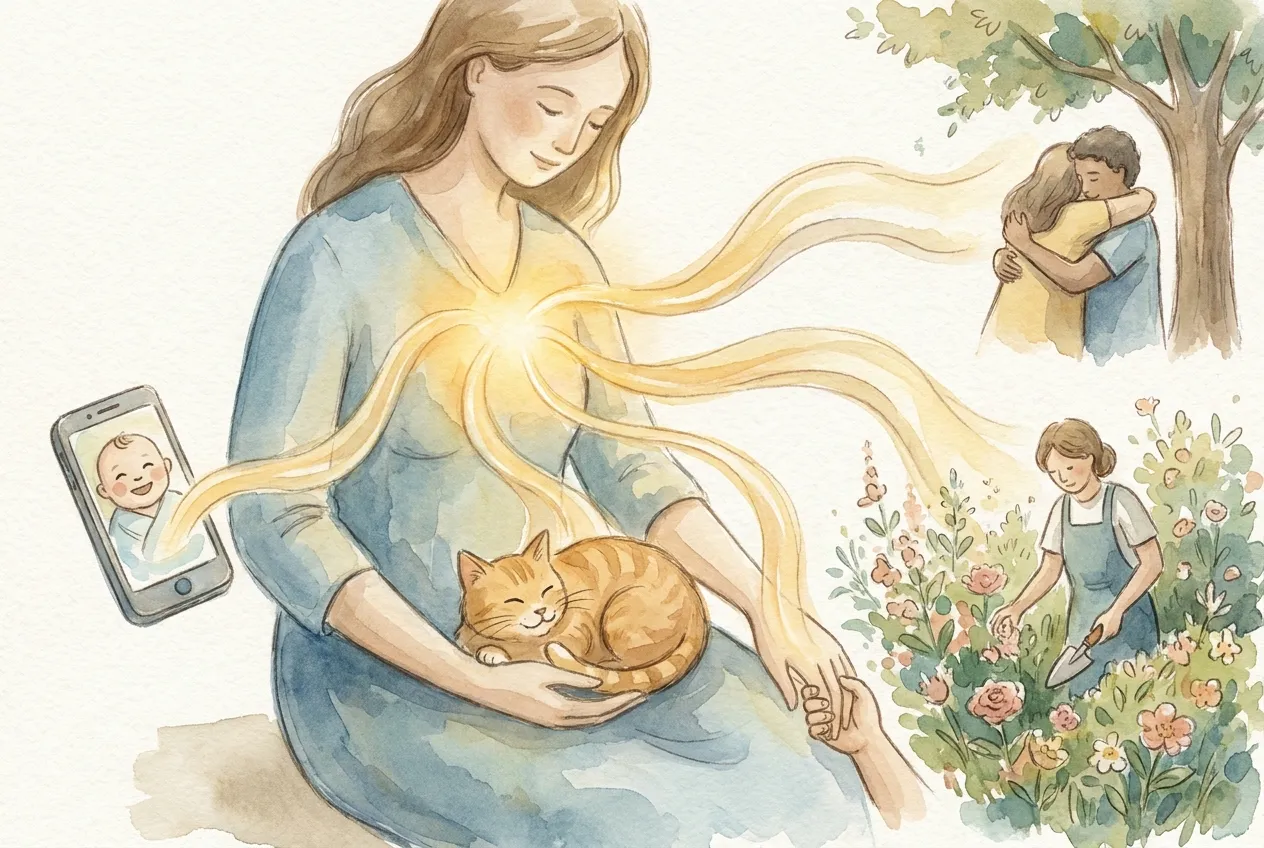
Animals and plants both trigger nurturing circuits — though to different degrees. Pets provide the responsive feedback your maternal system craves (they react to you, depend on you, show affection). Plants provide the long-term care arc without the emotional complexity.
Best for strong maternal instinct: A pet that bonds with you — dogs, cats, even small mammals. The dependency and responsiveness mirror the mother-child dynamic closely enough to satisfy the urge.
3. Volunteering with Children
Babysitting, mentoring, tutoring, volunteering at schools or community centers — any regular interaction with children activates maternal circuits. The key is consistency — one-off interactions don't provide the ongoing nurturing relationship your instinct seeks.
Best for: Women who want real human connection alongside their nurturing outlet.
4. Creative Nurturing Projects
Starting something from nothing and tending its growth: a garden, a creative project, a small business, a community group. The act of building and tending activates the same circuits as nurturing a living thing.
Best for: Women whose maternal instinct expresses itself through creation and cultivation rather than direct caregiving.
5. Deepening Existing Relationships
Redirecting nurturing energy toward people who actually want it — friends going through hard times, elderly relatives who need companionship, partners who appreciate being cared for.
Best for: Women who want to channel maternal energy into reciprocal, adult relationships.
The Motherly Instinct Outlet Comparison
| Outlet | Oxytocin | Consistency | Accessibility | Realism |
|---|---|---|---|---|
| AIdorable baby | High | Daily, on-demand | Always available | High |
| Pet | High | Daily | Requires ownership | Very high |
| Volunteering | Medium | Weekly | Requires scheduling | High |
| Creative projects | Medium | On your schedule | Always available | Medium |
| Deepened relationships | High | Varies | Depends on others | Very high |
What Motherly Instinct Feels Like When It's Fed
When your maternal circuits have a consistent outlet, everything changes:
The chest ache fades. The physical sensation of wanting to nurture something resolves into the physical sensation of actually nurturing. Your arms feel purposeful instead of empty.
The restlessness quiets. The anxious energy that had nowhere to go now flows into feeding, rocking, singing, caring. Your nervous system stops searching and starts settling.
You feel more like yourself. Motherly instinct is part of your identity — a core piece of who you are. When it's expressed, you feel complete in a way that's hard to describe but impossible to miss.
You're more patient with everything else. A fed maternal circuit makes you more grounded, more present, more emotionally regulated. Not because the instinct is gone — because it's finally being used.
The baby fever becomes manageable. Not gone — managed. The intense, sometimes overwhelming urge softens into a warm, steady current instead of a tidal wave. You still want children (if you do), but the wanting no longer consumes you.
Your Instinct Is Not a Burden
If you've ever felt like your motherly instinct is too much — too intense, too inconvenient, too hard to explain — let me tell you something:
It's not too much. It's exactly right.
You have a highly developed capacity for nurturing in a world that desperately needs nurturers. You feel a strong urge to care for something in a society that undervalues caring. You're wired for something beautiful and necessary, and the only problem is that you haven't found the right outlet yet.
Your baby is waiting. She's small, she's warm, and she needs exactly the kind of mothering you're burning to give. Not someday. Not when the timing is right. Now.
Open AIdorable. Meet her. Let your motherly instinct do what it was designed to do.
You'll know the moment it clicks. That feeling in your chest — the one that's been aching — will finally have somewhere to go.
And it will feel like coming home.
Related Articles
For the complete guide, see our Baby Fever & Maternal Instinct hub.
You might also find helpful:
- 5 Signs Your Maternal Instinct Is Kicking In (And What to Do About It)
- Motherhood Instinct: What It Is, Why It Fires, and How to Honor It Even Without Kids
- Motherly Nature: Why Some Women Are Born to Nurture (and Why the World Needs Them)
- Nurturing Women: The Hidden Strength in Wanting to Care for Everything