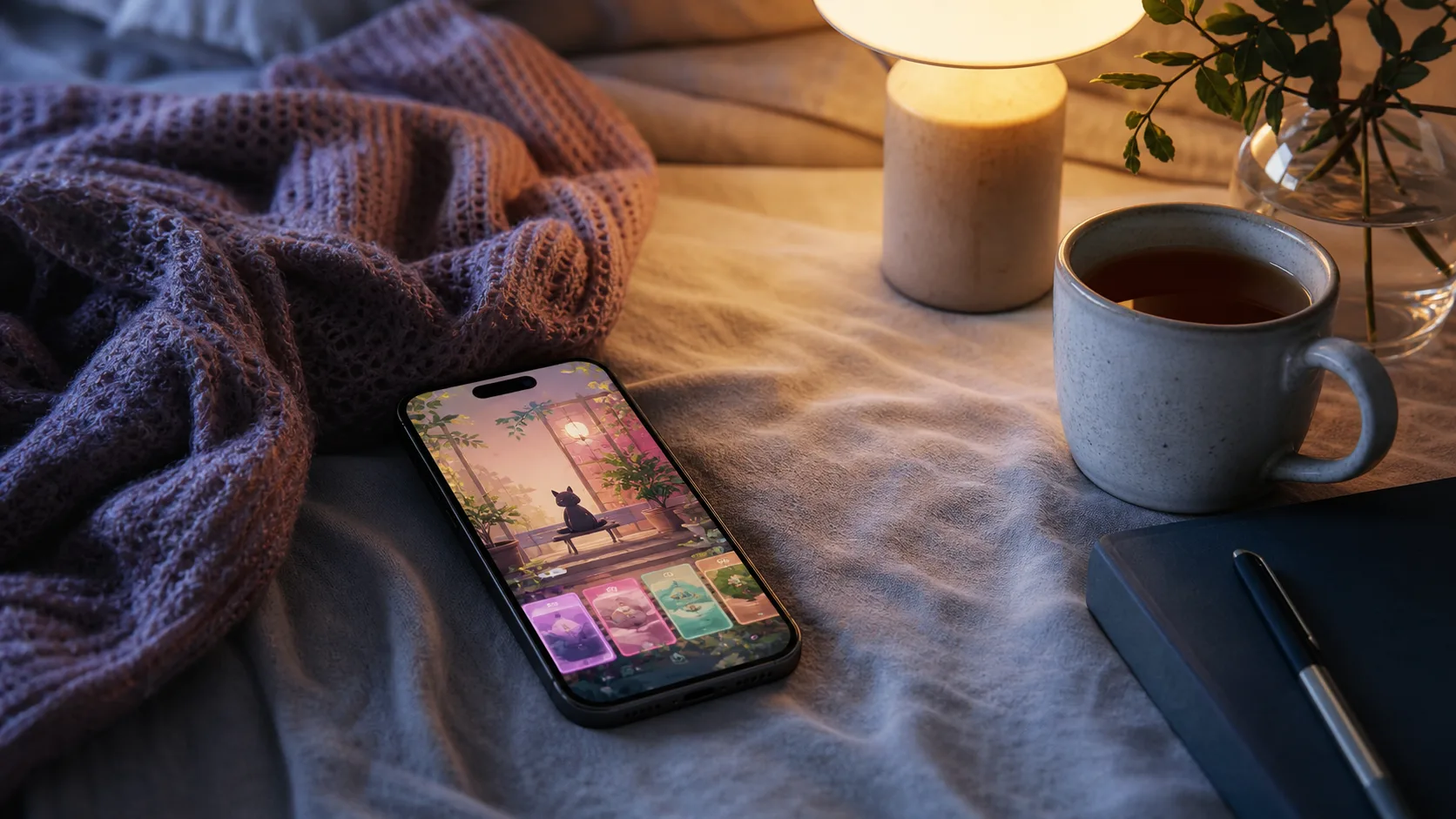
Searching for a self care app for adults sounds simple until the App Store gives you everything at once.
Which app will you actually open when you are tired, overwhelmed, or already behind?
There are mood tools, meditation apps, cute companions, breathing timers, gratitude templates, courses, reminders, and apps like Finch that make care feel more playful. The real question is not which download has the prettiest screen. It is which one you will open the app for when your mental load is already high.
Quick Match: Self-Care and Wellness App Types
| What you need now | Best app type | Why it helps |
|---|---|---|
| A soft daily check-in | AIdorable-style nurturing app | Turns care into a tiny ritual |
| Habit reminders | Habit tracker | Helps you build repeatable routines |
| Mood awareness | Mood tracker | Makes patterns easier to see |
| Thoughts out of your head | Journaling app | Gives your brain a private place to process your emotions |
| Guided calm | Meditation app | Supports breathing, sleep, and mindfulness |
| Gamified motivation | Finch app | Makes goals feel cute and rewarding |
How to Choose by Real Adult Need
The easiest way to pick a self-care app is to name the moment you are trying to survive, not the feature list you think you should want.
Match the App to the Moment
If you feel overstimulated, choose something that slows your body down first. A breathing app, meditation app, or short grounding exercise will usually help more than a detailed tracker. If you feel emotionally full, a journaling app or mood tracker can give the feelings somewhere to go. If you feel lonely or detached from yourself, a gentle companion or nurturing ritual may be easier to return to than another productivity system.
Here is a cleaner way to think about it:
- I need calm right now: try meditation, sleep sounds, breathing, or a low-pressure calming app.
- I need to understand my patterns: try a mood tracker, journal, or symptom log.
- I need to actually do the basics: try a habit tracker, calendar reminder, or tiny routine app.
- I need care to feel warm: try AIdorable, Finch, or another companion-style care loop.
- I need clinical support: use an app as a supplement, not as the whole plan.
Adults often quit self-care apps because the app solves the wrong problem. A beautiful habit tracker will not help much if what you really need is emotional comfort. A meditation library can feel useless if what you need is a five-second reminder to eat lunch. Start with the need, then pick the tool.

1. AIdorable - Best Self-Care App for Nurturing
Best for: emotional wellness, tiny rituals, women who respond to warmth
App style: AI companion and care loop
Good if you think: "I do not need another dashboard. I need something soft enough to return to."
AIdorable is not a clinical tool or a normal productivity tracker. It is a gentler self-care app for adults who want care to feel relational instead of managerial.
You adopt a tiny AI baby, check in, and build a small nurturing rhythm. The point is not to optimize your whole life. The point is to let one little moment pull you back into your body.
That makes it different from a checklist app. Drink water, meditate, journal, walk, sleep, stop scrolling, and improve your mental health can start to sound like homework. AIdorable keeps the action small: show up, care for someone tiny, and let that softness count.
Use it if you want:
- daily self-care that feels emotional, not corporate
- a short ritual you can do when you are tired
- a companion that is nurturing, not romantic
- a care loop instead of a streak system
- a warmer alternative to apps where you take care of something
2. Finch - Best Free App Style for Gamified Goals
Finch is one of the best apps to compare if you want a cute, gamified routine.
You care for a little pet, complete check-ins, set goals, reflect, and build habits. It can be a fun way to practice self-care because the reward loop feels lighter than a plain to-do list.
The Finch app can help with quick mood checks, gratitude, breathing, and goal setting. The question is whether gamification motivates you or makes you feel watched. Some adults love streaks. Others need fewer scores and more softness.
If this lane interests you, read our Finch app reviews, apps like Finch, and self-care pet app guides.
3. Headspace and Meditation Apps - Best for Mindfulness
Headspace, Calm, Insight Timer, Medito, and similar meditation apps are useful when the main need is nervous-system support.
Choose this category if you want guided breathing, sleep sounds, mindfulness, short stress resets, or meditation and mindfulness before bed. A good app helps you pause before anxiety takes over the whole evening.
The best fit is usually the one with sessions short enough to use before you hit the wall. If a 30-minute class feels impossible, choose a three-minute reset and build from there.
For more options, see best meditation apps, calming apps, and calming apps for anxiety.

Free Mental Health Apps and Self-Help Apps to Compare
It is smart to learn about the best free mental health apps before paying for a monthly subscription.
A free version may include journaling, basic reminders, a mood tracker, a habit tracker app, breathing exercises, or free content. A free trial can also show whether the premium version is actually useful or just prettier.
Worth comparing:
- AIdorable: nurturing care loop for adults who want softness
- Finch: gamified goals and a pet companion
- Headspace: guided meditation, sleep, and stress courses
- Medito or Insight Timer: free app options for meditation
- Therapy in a Nutshell app: mental health courses and practical skills
- Colorfy or DailyArt: creative pauses for low-pressure calm
- Google Calendar: simple notifications for protected care time
These self-help apps can help you build awareness, but they are not a replacement for therapy, crisis care, or qualified professional help.
Free vs Paid: What Is Worth Paying For?
Free self-care apps are often enough when you only need a simple loop: a reminder, a breathing timer, a mood note, a journal prompt, or a basic habit checklist. Do not pay just because the app has a prettier dashboard. Pay when the upgrade removes friction you actually feel.
What Premium Should Actually Improve
A paid plan may be worth it if it gives you:
- guided courses you will actually finish
- better sleep content or meditation libraries
- deeper mood trends and exports
- fewer ads or interruptions
- a companion experience that feels more personal
- reminders that fit your real schedule
- privacy controls that make you more comfortable storing sensitive notes
It may not be worth it if the free version already supports your real routine. A self-care app should earn the subscription by helping on ordinary tired days, not just by looking impressive during setup.
Before paying, use the free trial like a real week. Open the app on a busy day, a low-energy day, and a normal day. If it only works when you are already motivated, it may not be the right tool for adult self-care.
4. Journaling, Mood Tracker, and Tracker Tools
A journaling app is useful when the problem is not motivation. It is mental clutter.
When there is a lot in your brain, writing can slow the swirl down enough to see what is happening. A mood journal, gratitude template, or private note can help you name thoughts and emotions before they become one vague bad feeling.
A tracker helps when you keep asking, "Why do I feel like this?" Over time, you may notice connections with sleep, stress, exercise, work pressure, phone use, or moments of gratitude.
Keep privacy serious here. Mood data can be sensitive. Check what the app stores, whether it syncs, and whether you can delete your account.
5. Habit Tracker and Daily Self-Care Routines
A habit app works when the action is clear.
You already know what helps. You just need a nudge to do it. That might mean water, medication, stretching, walking, reading, sleep hygiene, a no-scroll block, or a five-minute tidy.
The danger is turning wellness and self-care into a scoreboard. If missing one day makes you feel like you failed, lower the stakes.
Try this:
- Tiny habit: one glass of water
- Good habit: ten-minute walk
- Great habit: full workout
That way the app helps you build momentum without punishing normal adult life.
A good care app should make it easier to return to yourself. If it only gives you more ways to feel behind, it is not the right app for this season.

How to Choose Without Downloading Ten Apps
Start with the job, not the brand.
If you need to calm down, try meditation. If you need to understand patterns, track your mood. If you need to get thoughts out, journal. If you need structure, use a habit tool. If you need care to feel warm before it can become consistent, try AIdorable.
Then test one app for seven days.
Ask:
- Did I use the app when life got messy?
- Did the notification feel supportive or annoying?
- Did it reduce my mental load?
- Did it help me care for myself outside the phone?
- Would a notebook, timer, or calendar reminder do the same job?
A Simple Seven-Day Test Plan
If you are choosing between Finch, Headspace, AIdorable, a journal, and a habit tracker, do not test everything at once. Pick one app and give it one specific job.
For seven days, track three things:
- Use: Did you open it without forcing yourself?
- Feeling: Did you feel calmer, clearer, or more cared for afterward?
- Carryover: Did the app help you do something kind outside the phone?
Day one is setup. Keep it simple. Turn on only the reminders you actually want. Day two through five are the real test: use it during normal adult life, not during an idealized reset day. Day six is for noticing friction. Was the app too loud, too clinical, too childish, too expensive, or too easy to ignore? Day seven is the decision: keep it, downgrade it, or delete it.
The goal is not to find a perfect wellness app. The goal is to find a small return path you can trust.
Conclusion: Pick the App That Matches the Real Need
A good self-care app respects adult life.
You may be tired, lonely, anxious, caregiving, healing, or simply trying to make your phone support your life instead of draining it. The right app gives you a small return path.
For some adults, that path is Finch. For others, it is Headspace, a mood tool, a journal, or a habit tracker.
And for people who need care to feel soft before it becomes consistent, AIdorable offers a different answer: a tiny nurturing ritual that feels less like fixing yourself and more like coming back.