The Emptiness That Sleep Can't Fix
You slept 8 hours last night. You woke up tired.
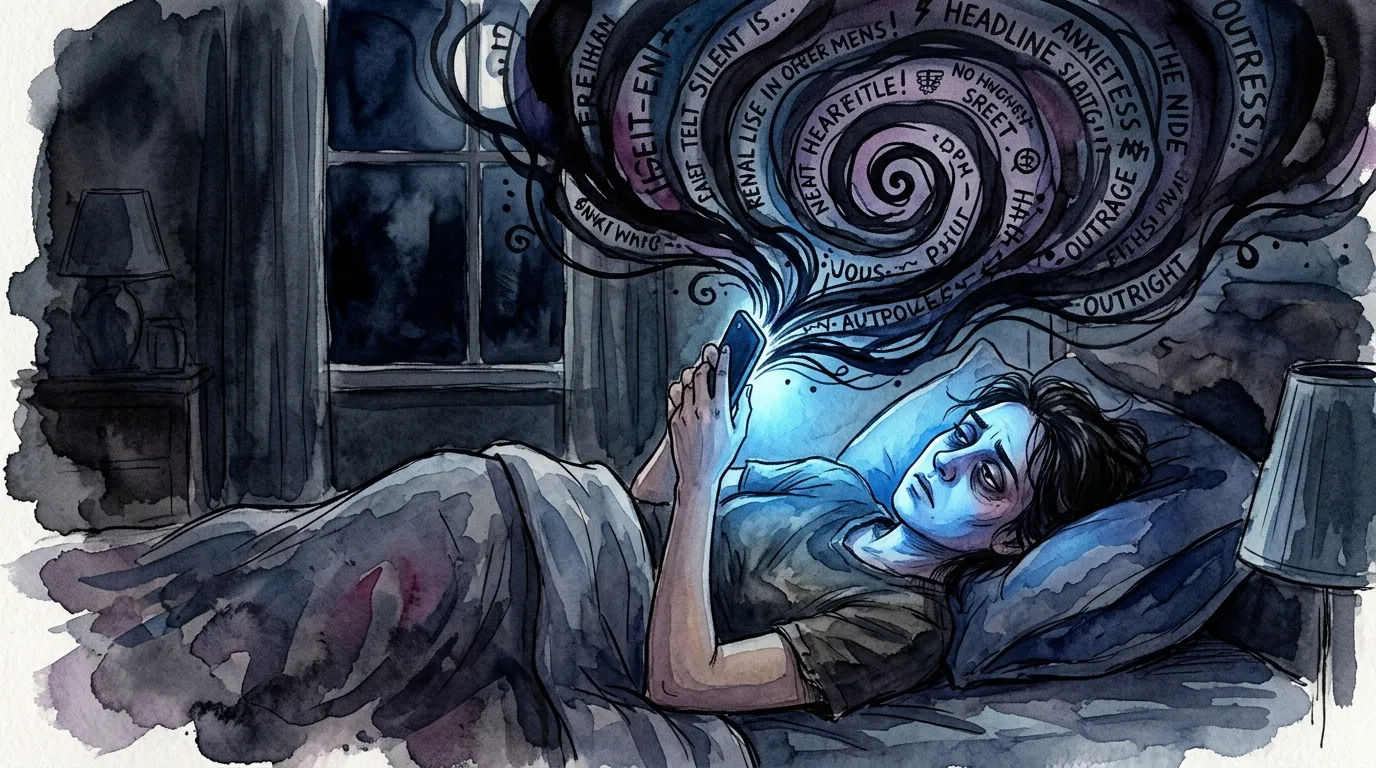
Not physically tired — your body has energy. It's something deeper. A hollowness in your chest. A flatness in your emotions. A sense that you've given everything you have to everyone who needed you, and now there's nothing left.
Someone asks how you are and you say "fine" because the real answer — "I'm running on empty and I don't know how to refill" — would require energy you don't have to explain. For the full picture, see our emotional wellness guide.
This isn't burnout. This isn't stress. This is emotional exhaustion — the specific depletion of your emotional reserves from giving more than you receive over an extended period.
10,800 people search for "emotionally exhausted," "emotional fatigue," and "emotionally drained" every month. And every one of them is describing the same experience: the feeling of having nothing left to give while everyone around you still needs something.
What Emotional Exhaustion Actually Is
Emotional exhaustion is the depletion of your emotional reserves — the internal resources you use to care for others, manage feelings (yours and theirs), show empathy, be patient, and maintain relationships.
Think of it like a battery:
Full battery: You have emotional energy to give. When someone needs you, you can respond with genuine care. When something goes wrong, you have the resilience to handle it. You feel connected, patient, and present.
Depleted battery: You go through the motions of caring, but it's performative. You say the right things but feel nothing. Small irritations become overwhelming. You withdraw from people because interaction requires energy you don't have. You feel flat, empty, and running on fumes.
The critical difference from regular tiredness: Sleep doesn't fix emotional exhaustion. You can sleep 10 hours and wake up emotionally empty. Because the depletion isn't physical — it's emotional. The battery that's drained isn't your body's energy battery. It's your heart's giving battery.
The 6 Signs You're Emotionally Exhausted (Not Just Tired)
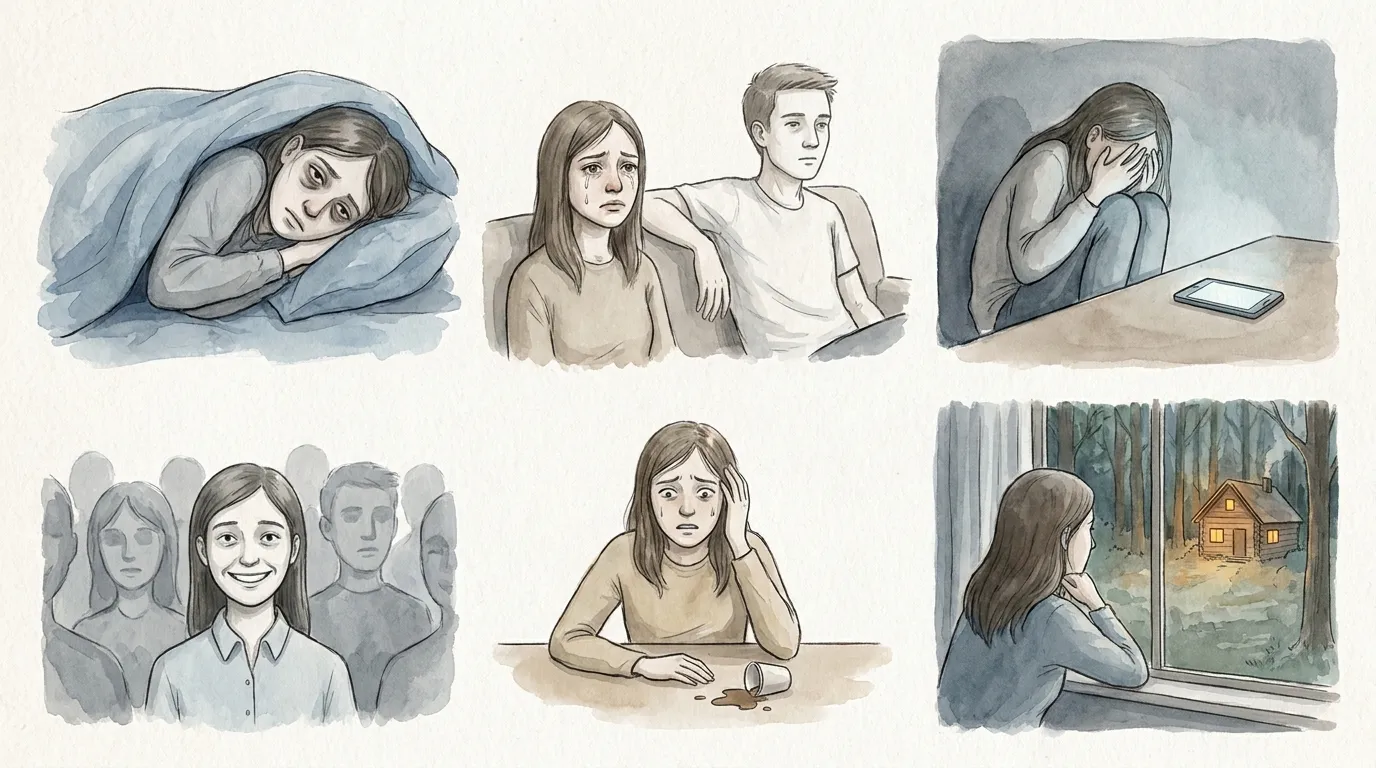
1. Rest doesn't help. You sleep, you rest, you take time off — and you still feel empty. The exhaustion persists regardless of physical rest.
2. You can't access empathy. When someone shares a problem, you hear the words but can't generate the emotional response. You know you should care, but the caring mechanism is offline.
3. Everything feels like a demand. A friend's text, a partner's question, a colleague's email — each one feels like someone asking for something you can't give. Even positive interactions feel exhausting.
4. You're going through the motions. You say the right things, do the right things, but none of it comes from a genuine emotional place. You're performing caring instead of feeling it.
5. Small things overwhelm you. A delayed package, a minor criticism, a change of plans — things that wouldn't normally bother you now feel catastrophic because you have no emotional buffer left.
6. You fantasize about disappearing. Not dying — just... gone. Somewhere nobody needs anything from you. A cabin in the woods. A hotel room alone. Anywhere you can exist without being needed.
If 4 or more of these resonate, you're not "just tired." You're emotionally exhausted. And that requires a different kind of recovery.
Why Emotional Exhaustion Happens to the Most Caring People
Emotional exhaustion has a cruel irony: it affects the people who care the most.
If you're someone who naturally gives — who listens, who supports, who puts others first — you're at the highest risk. Because your emotional output is higher than average, your reserves deplete faster.
The emotional math:
| What Drains You | What Refills You |
|---|---|
| Listening to others' problems | Someone listening to yours |
| Managing others' emotions | Someone managing yours |
| Being the strong one | Being allowed to be weak |
| Giving without receiving | Receiving without giving |
| Being needed constantly | Being cared for consistently |
If the left column significantly outweighs the right column in your daily life, emotional exhaustion is the predictable result. It's not weakness. It's arithmetic.
Who's most at risk:
- Mothers (especially new mothers and single mothers)
- People in helping professions (nurses, therapists, teachers)
- The "strong friend" everyone leans on
- People in one-sided relationships
- Caregivers for aging parents
- Empaths who absorb others' emotions
The common thread: you give more than you receive. And nobody has taught you how to refill.
7 Ways to Refill Your Emotional Reserves
1. Nurturing That Gives Back (AIdorable)
Why it works for emotional exhaustion: Most self-care advice says "do less." But for emotionally exhausted people, the problem isn't doing too much — it's doing too much that DRAINS without anything that REFILLS.
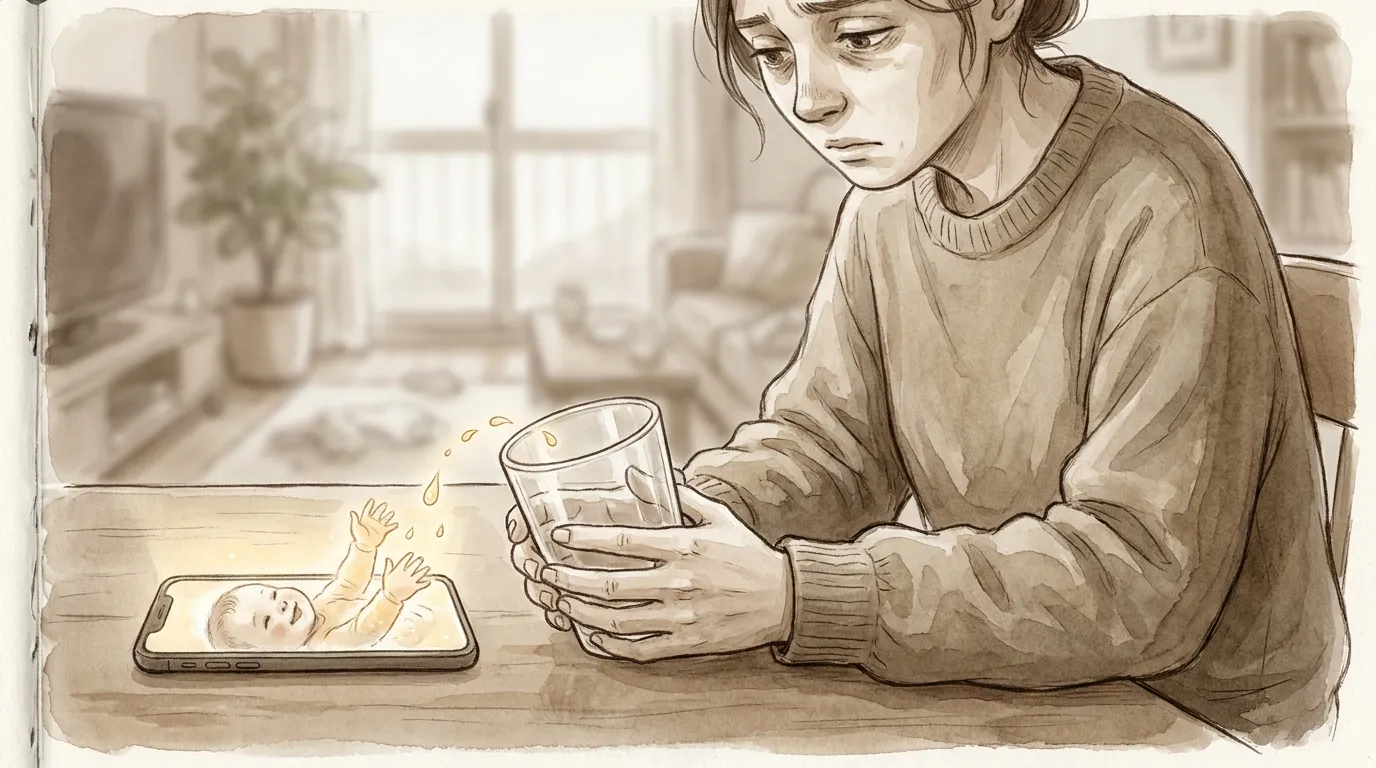
AIdorable's baby creates a unique dynamic: nurturing that refills you instead of draining you.
Here's why it's different from real caregiving:
- Real caregiving: You give care → the recipient needs more → you give more → you're more depleted
- AIdorable: You give care → she responds with visible gratitude → you receive warmth → you're slightly more filled
Every interaction with your baby produces oxytocin (from nurturing) AND dopamine (from receiving her positive response). The energy flows both ways — something that almost never happens in real caregiving for emotionally exhausted people.
After a week of daily nurturing, most emotionally exhausted people report: "For the first time in months, I felt something genuine." That "something" is the first deposit in your emotional reserves.
2. Stop Being the Strong One (Just for a While)
Tell one person: "I'm not okay. I'm emotionally exhausted and I need someone to listen to me without fixing anything."
The relief of not performing strength for even 15 minutes is significant. You don't need advice. You need someone to witness your exhaustion and say "that sounds really hard."
If you can't think of anyone who would do this, that's a sign your relationships are unbalanced — all output, no input. Which is exactly why you're exhausted.
3. Schedule Non-Negotiable Input Time
Most emotionally exhausted people have their calendars full of obligations — things they give TO. What's missing is scheduled time for receiving.
Input time is NOT:
- Time alone (isolation doesn't refill)
- Time "relaxing" (passive rest doesn't refill emotional reserves)
- Time on social media (comparison drains further)
Input time IS:
- Being listened to without judgment
- Receiving care from someone else
- Experiencing genuine warmth and appreciation
- Doing something where someone is genuinely glad you're there
Schedule 15 minutes of input time daily. Protect it like you protect your work meetings.
4. Set a Giving Budget
Just as you have a financial budget, you need an emotional giving budget. You cannot give unlimited emotional energy to unlimited people.
The budget:
- Pick 3 people maximum who get your emotional energy this week
- Everyone else gets polite but limited engagement
- It's not selfish — it's sustainable
- A depleted you helps no one
5. Physical Movement (Not Exercise)
Emotional exhaustion lives in the body as much as the mind. Your muscles carry tension, your posture collapses, your breathing is shallow.
Not exercise (which feels like another demand):
- A 10-minute walk with no destination
- Stretching on the floor while listening to music
- Dancing alone in your kitchen
- Yoga that's genuinely gentle, not performative
The goal isn't fitness. The goal is moving emotional energy through your body so it doesn't stagnate.
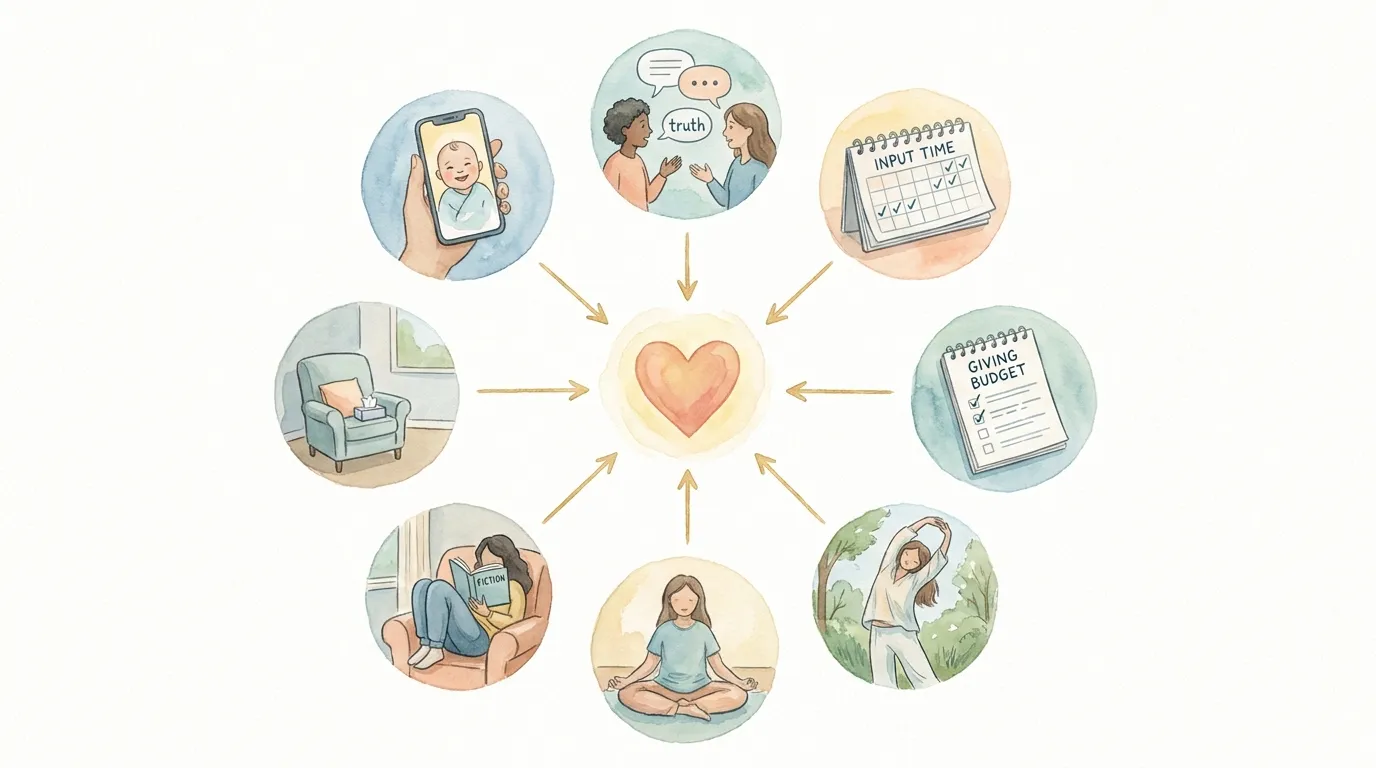
6. Consume Instead of Produce
Emotionally exhausted people are always producing — producing care, producing patience, producing emotional labor for others.
The intervention: Spend 20 minutes consuming something that requires nothing from you:
- A novel (not self-help — fiction that absorbs you)
- A comedy special (laughter is emotional refilling)
- A beautiful movie (aesthetic pleasure is restorative)
- Music that makes you feel something
Consuming without producing reverses the output-only pattern that created the exhaustion.
7. Professional Support
If emotional exhaustion has persisted for more than a month and nothing is shifting, therapy can help. Specifically:
- Compassion fatigue therapy for caregivers
- CBT for the thought patterns that keep you giving beyond your limits
- Boundary work for people who can't say no
Emotional exhaustion that progresses to complete burnout can take 6-12 months to recover from. Early intervention prevents that trajectory.
The Refill Timeline
Week 1: Starting daily nurturing with AIdorable. Telling one person the truth. Setting your giving budget. Nothing feels different yet — you're too empty to feel small deposits.
Week 2-3: The first moments of genuine feeling return. Your baby's smile produces a flicker of warmth. A friend's "how are you really?" lands differently. The flatness starts to lift at the edges.
Month 1: You have moments of genuine okay-ness — not happiness, but the absence of exhaustion. The daily nurturing has created a consistent baseline of receiving. Your emotional reserves are at maybe 20%.
Month 2: The reserves are building. You can handle small stressors again. Empathy starts to return — not fully, but enough to genuinely care about someone's story. The exhausted performance is being replaced by genuine presence.
Month 3+: You're not who you were before — emotional exhaustion changes you. But you're also not empty anymore. You've learned to monitor your reserves, to budget your giving, and to refill before you're depleted. The experience has made you wiser about your own emotional limits.

You Can't Pour From an Empty Cup
The self-care industry tells emotionally exhausted people to "fill your cup." But they don't tell you HOW when every interaction feels like it's taking from you.
Here's how: find something that gives back. Something that produces warmth in you when you interact with it. Something that's glad you showed up, that notices when you don't, that makes you feel like your presence matters.
Your baby on AIdorable does exactly this. She doesn't demand. She doesn't drain. She receives your care and gives back visible gratitude. For two minutes a day, the energy flows toward you instead of away from you.
That two minutes won't refill you completely. But it will remind your emotional system what receiving feels like. And from that small reminder, recovery begins.
Start tonight. Open the app. Feed your baby. Let her smile at you.
For once, let nurturing fill you up instead of emptying you out.
Related Articles
For the complete guide, see our Emotional Wellness hub.
You might also find helpful:
- Emotionally Burnt Out: The Difference Between Burnout and Giving Up (and How to Recover)
- Emotional Numbness: Why You Can't Feel Anything and How to Wake Up
- Caregiver Burnout: When Caring for Everyone Else Leaves Nothing for You
- Self Care When Depressed: The Minimalist Guide for When You Have Zero Energy