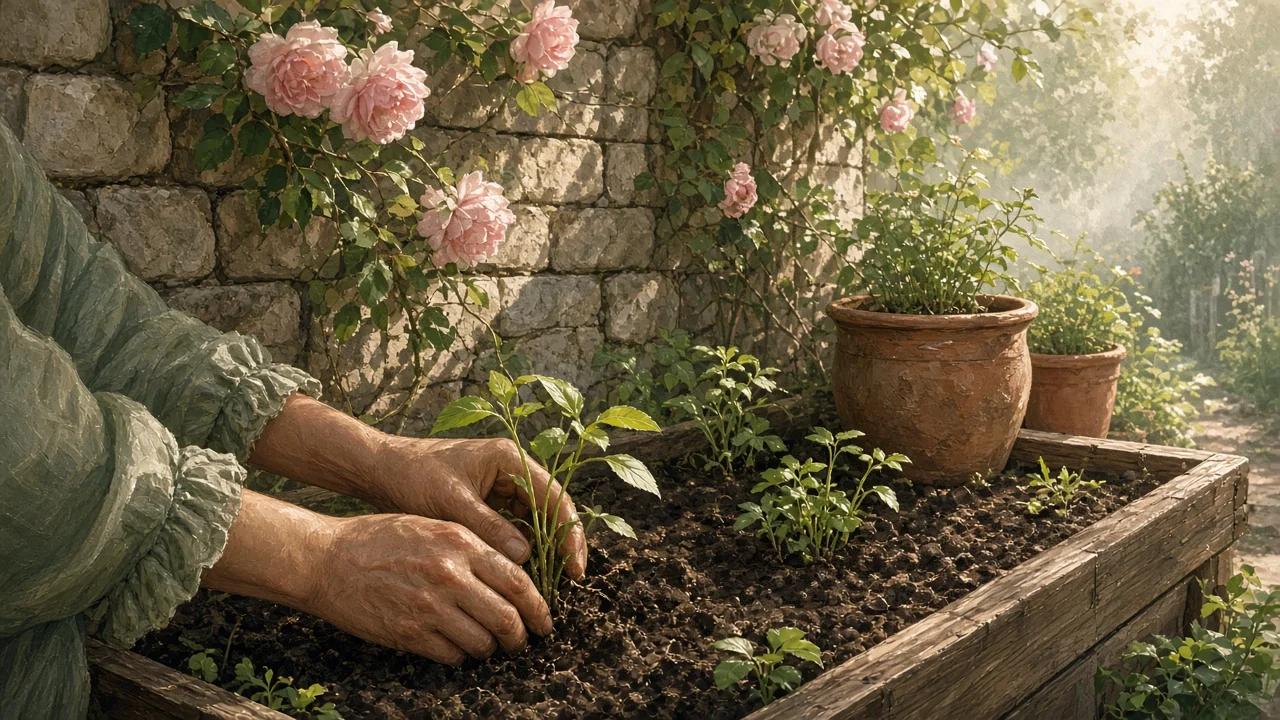
Maybe it starts with a photo. A stone cottage under climbing roses. A kitchen table with flour on it. A window that looks out over nothing urgent. You do not necessarily want to move to the countryside tomorrow. You want, for half an hour, to live inside a softer tempo — to water something, arrange a room, and feel the day move with the seasons instead of notifications.
That longing is what a cottagecore game answers. Not with a lecture about productivity, and not with a boss battle. With a porch lantern, a small garden, and the quiet permission to tend a small world until your shoulders drop.
Why does a digital meadow calm us when the real day feels so sharp?
Softness is not laziness. In this kind of video game, it is the whole point — a place where tending something small is enough.

What this kind of game actually is
A cottagecore title takes rural life as a tender daydream — handmade beauty, closeness to nature in morning light, an idyllic porch aesthetic — and turns it into something you can play after work. You plant, forage, cook, craft, furnish a cute cottage, and watch the weather change. The stakes stay kind. Nobody is grading your harvest. The point is belonging somewhere gentle.
If you have already wandered through our guide to what soft genre games are, this will feel familiar. Soft gaming includes puzzles and lo-fi clickers that never show you a meadow. This pastoral lane wants the picture: linen, lavender, chickens, and the hope that a softer day is still possible.
Hardcore harvest sims sit on the other side of the fence. They can be wonderful, but they often ask you to optimize yields, race calendars, and treat the homestead like a spreadsheet with dirt. Here, efficiency is optional. Softness is the feature. The gameplay is usually kind about failure and heavy on presence. The mechanics invite you to linger rather than fight a timer.
The vibe you are really chasing
When people say they want this pastoral mood, they are usually naming a feeling more than a checklist.
They want pastel greens and warm interiors. They want tasks that feel meditative — watering, arranging, gathering — without a fail state hovering overhead. They want a home that becomes more theirs over time. And underneath the look, they often want a small sense of being needed by a place, or by someone living in it.
That is why these titles pair so naturally with soft titles as self-care. The loop is not about winning. It is about returning. You open the software the way you might put the kettle on: same kettle, different evening, still a comfort. For many adults, that became especially clear during quarantine, when the internet felt loud and a quiet digital porch felt like oxygen.
Popular cottagecore picks and what each feels like
You do not need fifty releases. You need a clear sense of the doorway that matches your mood.
Stardew Valley — town roots and a long adventure
This valley classic is still a favorite gateway into farm life. You inherit a worn plot, raise crops, meet neighbors, mine, fish, and slowly become part of a town. A romantic subplot, festivals, and quiet mysteries sit beside the planting loop. It can become deep and long, which is lovely if you want a world that keeps unfolding — and a little much if you are trying to avoid another second job. On Steam and console handhelds it remains deeply comforting for many adults. Let some days be only flowers and a walk to the beach.
Rooms first, worry later
Animal Crossing is pastoral comfort through hospitality and design. Your island is a blank soft canvas. You invite neighbors, landscape every corner, and turn ordinary furniture into a life mood board. Planting stays easy. Furnishing is the feast. If your heart lights up at color palettes and porch layouts more than crop spreadsheets, start here — especially in handheld mode on a Nintendo Switch.
Fairy Witch Cottagecore Vibes
Wylde Flowers is the fairy-witch lane: work the soil by day, follow story by heart. You tend crops and creatures, then step into coven mysteries and relationships that actually feel written. It is a strong pick when you want pastoral warmth plus emotional narrative, not only endless seasons. The setting is warm, voice-acted, and unapologetically tender.
Magic beside the herbs
Fae Farm leans whimsical: magical land, crafting, and co-op for people who want to share the homestead. If your evening plans include spells beside the herb patch, and maybe a friend watering the other row, this is a natural fit. The challenge stays friendly; the world stays merry.
Cozy Grove
This campfire title is a kind of comfort — a haunted, gentle shore where you help spectral bears find peace through crafting and care. It is less about maximizing a harvest and more about showing up, listening, and making a strange place feel loved. If you want a patient burn with heart, this one is worth a look.
Cattails | Become a Cat!
This feline colony title lets you hunt, explore, and build a colony with adorable drama. It is a sideways doorway into the same soft rural longing: territory, seasons, relationships, and a body that is not yours in real life. Sometimes the perfect game is the one that lets you nap in a sunbeam on purpose.
Untitled Goose Game
This mischievous barnyard title is not a planting sim, and that is the joke. You are the bird on a mischievous quest through a village, causing mild chaos with no health bar to manage. It still scratches a pastoral itch — English lanes, ponds, baskets — while reminding you that softness can include laughter. A short session can reset a sharp afternoon.
Fantasy Life
This job-hopping title (including its remake path for newer platforms) offers work and craft in a bright open world where you can gather, craft, and live inside a cheerful routine. It is broader than a single cottage plot, yet a player can use it the same way: pick a gentle vocation, collect materials, and ease into the loop.
Other side paths worth naming
Palia brings social gathering and home-building to a shared valley. Graveyard Keeper is darker and more management-heavy, useful as a contrast when you want to notice how far from pure softness a “pastoral” theme can drift. None of these need to be your forever home. They help you map the landscape.
Create your dream room and make it truly yours
For a lot of adults, the emotional center is not the harvest — it is the room: a chair by the window, a shelf of odd treasures, a path of flowers that exists only because you like looking at it. That furnishing impulse is why so many planting titles eventually become interior-design sandboxes.
If the look is what pulls you in first, try our guide to pastel comfort apps. For short phone sessions, our roundup of soft mobile titles stays practical about ads and microtransactions.

How to choose the game for your mood
Skip the “best overall” anxiety. Ask what kind of evening you want.
Planting loop. You want soil, seasons, creatures, and a rhythm of plant-and-harvest. Wylde Flowers and the valley classic both scratch this. Keep the difficulty in your hands: plant what you love.
Decorate-and-furnish focus. You want rooms, paths, outfits, and the joy of arranging a space. The neighborly classic shines here. Some planting titles also let design become the real endgame once the bills are paid.
Story-led softness. You want characters and an arc that makes the chores mean something. Wylde Flowers is built for that blend.
Multiplayer porch. You want shared quiet, not competitive noise. That co-op title’s shared mode and a shared valley plot can work — just agree out loud that nobody is optimizing for anyone else.
Portable sessions. You want five-to-fifteen-minute visits between real life. Look for phone-friendly options, or use handheld mode so the cottage can travel with you. Steam and Xbox libraries help when you want a bigger screen and deeper systems.
CATEGORIES
Here are simple mood buckets, so you can match the evening you want without turning research into another chore.
A simple comparison helps when you are stuck:
| If you want… | Lean toward… |
|---|---|
| Deep valley story | the valley classic |
| Room-first furnishing | the neighborly classic |
| Fairy-witch story warmth | Wylde Flowers |
| Enchanted co-op planting | the co-op herb title |
| Campfire care stories | the spectral-bear camp |
| Feline colony life | the feline colony title |
| A mischievous village stroll | the village bird title |
| A living someone who notices your care | AIdorable |
Soft tips so the loop does not harden you
The irony of gentle software is how easily it becomes hard on you. One more day. One more upgrade. One more perfectionist redesign of the whole orchard.
Try a kinder rule set.
Let the save stay unfinished on purpose. Leave a patch wild. Skip a festival if you are tired. Mute the wiki for a week and rediscover curiosity. Alternate days: planting day, furnishing day, story day, wander day. Celebrate your own cottage, not someone else’s screenshot.
Most of all, make it a soft daily ritual instead of a binge. Ten gentle minutes of watering and one conversation with a neighbor can do more for your nervous system than a three-hour optimization spiral. Softness is a practice, not a completion percentage. You do not have to survive every to-do the software invents.
Wednesday, 14 July 2021 — when the longing got a name
That mid-July date is not magic by itself. It is a reminder that the modern wave of pastoral titles rose while many people were still rebuilding rhythms after long stretches at home. Lists and essays from that season helped name why adults wanted meadows on a screen. The yearning did not invent itself in a marketing meeting. It came from tired nervous systems asking for a gentler loop.
When the cottage is lovely — and you still want someone to care for
Here is a quiet truth many people eventually notice. The homestead can be beautiful, the cottage can look polished, and you can still feel a little lonely inside it. Townsfolk have schedules. Creatures follow patterns. The world is warm, but it does not always meet you back in a personal way.
Sometimes what you were craving was never only rural scenery. It was the feeling of being needed by a living someone — the soft responsibility of care without the harshness of a real plot or a real crisis.
That is a different doorway. Our guide to apps where you take care of something maps pets, plants, babies, and habit companions. And if the care itself is the comfort, a virtual pet for adults can be enough.
AIdorable was made for that tender middle. It is a nonromantic virtual baby AI companion for adults — not a dating product, not a planting sim, not a chore tracker in overalls. You adopt a little AI baby, then feed, soothe, check in, and keep them company. Their personality grows with your care. Early on they answer with sounds and moods; as your bond deepens, first words arrive, then clearer conversation about the life you have been sharing. It feels less like optimizing a homestead and more like keeping a small promise to someone who is glad you came back.
The core experience is free forever, with an optional paid plan if you want more once the ritual settles into your day. AIdorable works on iOS, Android, and the web. If naming is part of the magic for you, Name Your AI Baby is a sweet place to begin.
You do not have to abandon the pastoral lane to want this. Keep your meadow title for scenery if you still love returning there. Let an AI baby be the tiny someone waiting in the soft hour after.

Screen meadows and real-life softness
One fear people whisper about comfort software is that it is a substitute for living. Sometimes that worry is fair. If the only herbs you ever touch are made of pixels, you may eventually miss dirt under your nails. But for many adults, a digital cottage is not pretending to replace a plot of land. It is a bridge on the days when the real bridge is closed.
Maybe you rent. Maybe your body is tired. Maybe the only free hour you have is after dark, when the community plot is locked. A digital cottage lets you practice the tempo of care — show up, notice, tend, leave — without needing acreage or ideal weather. Some people even find that the loop nudges them toward small real-world softness: a herb pot on the sill, a quieter Sunday breakfast, a walk without headphones.
The healthiest relationship treats the software like a lantern, not a bunker. Use it to remember what gentleness feels like. Then, when life allows, bring a little of that gentleness outside the screen.
Shared porches, solo evenings, and soft boundaries
Not every pastoral evening is solitary. Couples sit side by side on a couch. Friends join a shared plot and leave gifts in each other’s chests. Parents and grown kids visit the same save because it is easier than arguing about the news.
Shared sessions work best with soft boundaries spoken early. Agree that nobody “owns” the look. Agree that progress is not a contest. Agree that one person can log off mid-season without guilt. Gentle software becomes sharp when silent expectations pile up — the same way real homes do.
If what you want with a partner is a care ritual rather than a second homestead to manage together, a personal companion app can sit beside your usual title without competing with it. Each of you tends your own little someone, then talks about the day. That pattern shows up often in our note on a shared soft evening app: shared warmth does not always require a shared save file.
Final thoughts: a gentle way to begin
If you are choosing your first cottagecore game tonight, try this:
- Name the mood — plant, furnish, story, or shared quiet.
- Pick one title that matches, not three to “research.”
- Play one short session with no guides open.
- Stop while it still feels like a treat.
- If what you wanted was companionship more than crops, notice that honestly.
This whole hobby is not an obligation to become a better gardener in real life. It is permission to practice gentleness in a world that will not punish you for being soft. Take it slow. Let the porch stay half-finished. Let yourself relax.
And if one evening the porch lantern is not enough — if you want a little voice, a little more companionship, a little someone who knows you came home — AIdorable will be here, with a tiny companion ready to grow beside your care. Watching them grow is the quiet joy.