
The call ends and the quiet arrives a little too fast. One of you is winding down for sleep; the other still has three hours of daylight. You love each other. You also miss the ordinary stuff — shared silence on the couch, a look across the kitchen, the sense that your days still touch.
That ache is usually what sits under apps for couples long distance and the wider hunt for a kinder long-distance relationship toolkit. Not a hunt for someone new. Not a dating-market swipe reel. A practical, tender wish: How do we keep a life that feels shared when the map says otherwise?
Good news: you do not need one mythical tool that “fixes” an LDR. Plenty of long distance couples — people living in LDRs on purpose — still feel close when a few small rituals help them stay connected. Distance tends to break a few different jobs — daily warmth, a private shared space, scheduling across time zones, and ways to do something together. The couples who feel steadier usually pick a small stack for the jobs that hurt most, then protect the off switch so phones stay a bridge, not a second job.
Apps for Couples Long Distance: What You’re Really Looking For
When people look for apps for long distance couples, they are almost never shopping for matchmaking. They already have a partner — a boyfriend, girlfriend, spouse, or long-term love — and they want tools that honor that choice. They want tools that help a long distance relationship feel less like two parallel lives and more like one ongoing us.
That distinction matters on the App Store. Listings blur. Romance language, “couple games,” and “stay connected” can sit next to dating products that solve a completely different problem. If the pitch sounds like finding a match, leave. If it sounds like holding a bond you already chose, stay and read the privacy label.
A useful mental model: long distance relationship apps (and any solid app for couples built for miles, not matchmaking) are closer to shared rituals and logistics than to dating. Think FaceTime, WhatsApp, or even a familiar Skype night for the call, then one or two lighter tools for the hours between calls.
Long Distance Relationship Apps by the Job You Need

Daily warmth and messages when you cannot be in the same room
Silence between calls can feel heavier than the miles. Daily-question apps such as Paired or lighter options like Agapé give both of you the same prompt, then reveal answers after you each reply. Some newer LDR tools (Connected, FeelClose, and similar) add mood check-ins, nudges, or weekly structure.
These work when the prompt feels like curiosity, not a performance review. If answering starts to feel like homework, shorten the ritual or switch to something ambient.
A private shared space for your long-distance relationship
Between has been a long-standing answer for a two-person pocket: messages, photos, notes, and a memory timeline that feels like a place rather than a group chat of two. Couples stay for the sense that your little archive lives somewhere soft and separate from work Slack and family threads.
Widgets for ambient presence on the home screen
Locket Widget and similar photo widgets put a fresh picture on the lock or home screen with almost no ceremony. For some couples that tiny visual ping does more for intimacy than another long text thread — especially on days when energy is low but love is not.
Shared calendars so long distance couples can find time
Romance that never gets a calendar slot often does not happen. Cupla, TimeTree, or a shared Google Calendar make free windows visible before you text “you up?” into a sleeping time zone. Booking the call like it matters is not unromantic. It is how care survives logistics.
Games, Netflix, and doing something together
Watch-together tools (Teleparty, Apple SharePlay, Rave) sync playback for Netflix or another comfort show so video calls can turn into a shared living-room laugh again. Games — from turn-based classics to co-op nights — deserve their own deep dive; we already wrote a full guide to long distance games for couples on phone if that is the job you need most.
Soft parallel care when competition feels wrong
Some evenings you do not want quizzes, scoreboards, or “who cared more.” You want a quiet thing each of you can tend, then talk about. That is the lane of shared pets in whimsical couple apps, Finch-style self-care pets kept in parallel, and nurturing companions like AIdorable — covered more below, and related to our notes on a cozy app for couples and Tamagotchi for couples.
Best Apps for Long Distance Couples: A Soft Comparison
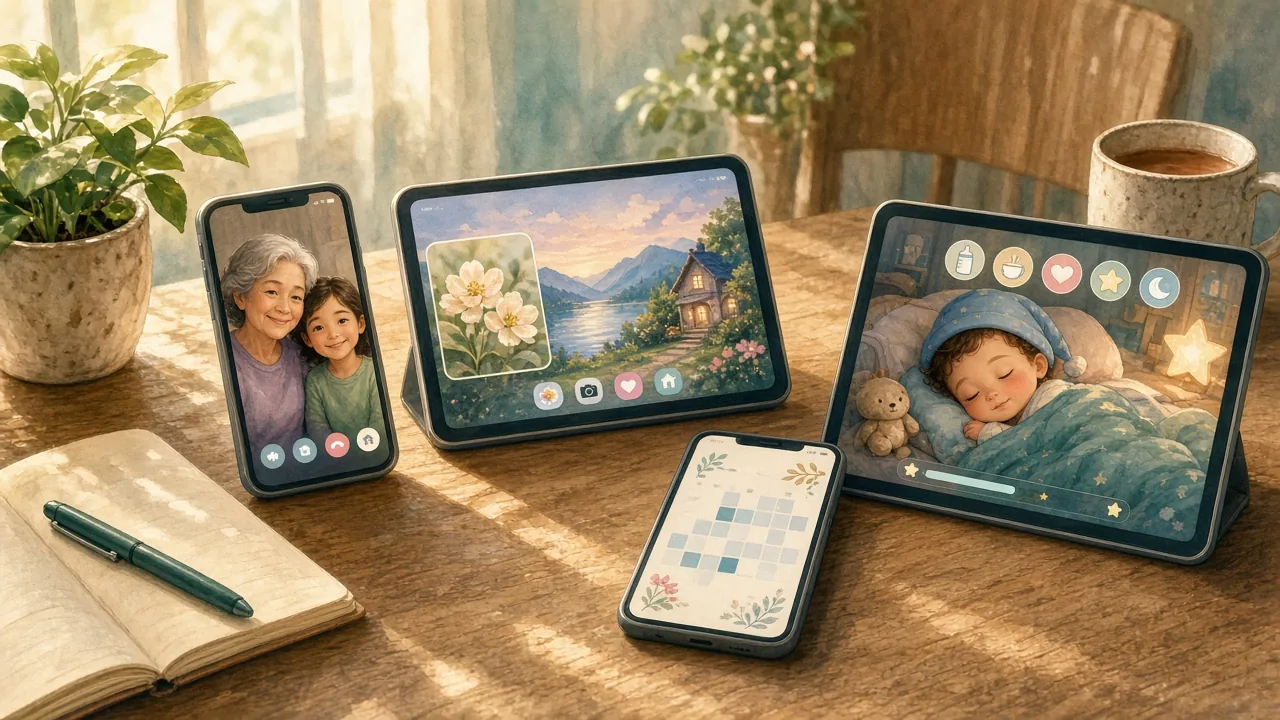
| Job you need | Typical picks | Best when… | Watch-outs |
|---|---|---|---|
| Daily questions | Paired, Agapé, Connected | Conversations feel flat | Streak pressure; paid tiers |
| Shared space / memories | Between | You want a private “us” archive | Another inbox to check |
| Ambient photos | Locket, Widgetable | Low-energy days still need presence | Photo privacy / who can see |
| Calendars / visits | Cupla, TimeTree, Google Calendar | Time zones keep colliding | Feels logistical (that is the point) |
| Watch together | Teleparty, SharePlay, Rave | You miss shared media nights | Live sync needs overlapping free time |
| Games | Words With Friends, GamePigeon, co-op titles | You want play, not processing | Competition can spike if you are tender |
| Soft parallel care | Couple pet apps, Finch-style pets, AIdorable | You want nurture without a scoreboard | Not a substitute for repair talks |
You do not need every row. Most long-distance couples feel better with two or three tools total: the call app they already trust, one daily warmth habit, and one “do something together” option when energy allows.
Sometimes the “best” pick is boring infrastructure you already pay for — iMessage or Google Duo-style video, a shared album, and a calendar — plus one dedicated couple app for the gap. Other times you want a playful thumbkiss, a virtual hug or kiss in an older-style LDR messenger, or a doodle thread. Skip heavy location sharing unless you both truly want it; intimacy is usually built from attention, not a map pin. What matters is that both of you reopen it without resentment.
What to Look for in an App for Couples (and What to Skip)
Useful signals on a listing:
- Works on both phones if you are mixed iPhone / Android
- Clear free tier vs what a subscription unlocks (ideally one plan covers both partners)
- Async options for mismatched schedules
- Privacy labels that do not shrug at your photo album
- Tone that matches you — playful, calm, or structured — without shame notifications
Skip or pause when you see:
- Dating / “meet singles” framing
- Heavy streak shame or “relationship score” energy
- Overpromised “one app replaces everything”
- Fake multiplayer co-care claims that disappear after download
For game-heavy nights, lean on the sister guide. For baby-fever or readiness conversations held gently through care, see virtual baby app for couples and raise virtual baby with friends.
Date Night Ideas and Video Calls When You’re Miles Apart
A creative date night still counts when you are apart. Virtual date nights are not a consolation prize. They are how some couples keep a weekly “we” on the calendar. A few patterns that stay soft:
- Same recipe, two kitchens, video call while you cook
- Synced movie with chat on the side
- A short quiz or “would you rather” round, then phones down
- Parallel gratitude or care rituals, then a five-minute debrief — overlapping with ideas from gratitude app with friends
Keep the night shorter than your ideal. Ending while you still like each other beats a three-hour call that frays.
Widgets, Reminders, and Little Ways to Stay Connected
Distance widgets, anniversary reminders, and home-screen photos sound small. In an LDR they often carry the day. A glance at their smile between meetings. A nudge that tomorrow is your monthly “first message” anniversary. A shared countdown to the next visit.
Use reminders as kindness, not surveillance. If a ping starts to feel like proof-of-love homework, turn it off. The goal is to feel closer, not audited.
Accessibility So Both Partners Can Stay Connected
A great app for couples fails quietly if one partner cannot use it comfortably — tiny text, no Android build, or an interface that fights tired eyes after night shift. Prefer tools both of you can open without friction. If one of you is always the “app admin,” simplify the stack until the lighter partner can participate without tutoring.
A Soft Care Ritual Beside Couple Apps for LDRs

AIdorable is a non-romantic virtual baby AI companion for adults. You adopt, name, and nurture through short daily care rituals. There is a free forever tier, optional Growth when you want more, on iOS, Android, and web.
It is not a dating app. It is not therapy. It is not a synced two-player nursery where you both press the same bottle button in real time.
What long-distance partners often do instead is simple and kind: each of you keeps a personal care ritual with your own little one, then you share a voice note, a screenshot, or a sleepy “she finally settled” text. That pattern respects time zones. It gives you something gentle to tend on nights when quizzes feel wrong. It overlaps with the soft-life wish for less hustle and more ease — the same mood we explore in soft life app.
If naming is part of the fun for you, Name Your AI Baby is a sweet place to start before the first care loop.
How Long Distance Couples Can Choose Without Overwhelm
- Name the job that hurts most this month (silence, logistics, shared fun, or soft nurture).
- Pick one tool for that job and use it for two weeks.
- Keep your existing call app. Do not migrate chats unless you both want to.
- Add a second tool only if a different job is still aching.
- Protect a weekly off-switch evening where phones are not the relationship.
If you already feel cozy-app adjacent rather than “LDR logistics,” the cozy app for couples guide may match the mood better. If play is the missing piece, return to long distance games for couples on phone.
Real Evenings: A Small Stack of Apps for Long Distance Couples
A stack only helps if both of you remember it exists. Try this soft default for the first month of a stretch apart:
- Always on: the call app you already use (FaceTime, WhatsApp, Discord — whatever both of you reopen without thinking).
- Daily thread: one warmth tool — either a question app or a photo widget — not both at once unless you are hungry for it.
- Weekly together: one watch night or game night on the calendar, or a parallel care evening if competition feels wrong.
When life gets loud, drop the weekly “together” first and keep the daily thread. Consistency at a small scale beats an ambitious suite that dies after week two.
Partners who travel for work sometimes invert the pattern: heavier tools during the stretch of nights apart, lighter when reunited so the apps do not compete with being in the same room. That is allowed. Software should follow the season of the relationship, not the other way around.
Messaging, Intimacy, and Kindness Across Miles
Apps cannot fix tone. A few habits help long distance couples more than another download:
- Prefer voice notes or short video calls when text keeps getting misread.
- Name the time zone in plans (“your Thursday 8pm / my Friday 9am”).
- Leave room for boring updates — grocery lists and dull meetings are how ordinary life stays shared.
- Agree on a “bad day” signal that means comfort, not problem-solving, unless someone asks for advice.
If you notice yourselves using apps to avoid a hard talk, pause the stack for a night and have the talk on a call. Tools are for connection; they are a poor hiding place.
Privacy, Payments, and Store Reality Checks for Couple Apps
Before you both invest emotion in a new couple app, skim:
- What photos and contacts it wants
- Whether chats are end-to-end encrypted (many relationship apps are not)
- How cancellation works if only one of you pays
- Recent reviews that mention broken sync, spammy notifications, or surprise paywalls
It is okay to stay on boring infrastructure — Messages + calendar + a shared album — if the specialized apps feel noisy. Specialized apps for couples long distance earn their place when they reduce friction, not when they invent a second social network for two people.
Soft Care Rituals for Long Distance Couples Who Need Gentleness
Some stretches of distance arrive with grief, burnout, or baby fever that is hard to name. In those seasons, a quiz streak can feel weirdly loud. Parallel nurture — each of you tending a small digital life, then exchanging a short check-in — can feel more like sitting on the same porch than competing for points.
That is where AIdorable’s non-romantic care loop often sits beside, not instead of, your call app. One partner might soothe their AI baby after a night shift; the other might do a morning care ritual before class; later you trade what the quiet care made room for. Friends and partners explore similar parallel patterns in raise virtual baby with friends and the virtual baby app for couples guide.
Keep claims honest: a companion ritual can soften a lonely evening. It does not diagnose, treat, or replace human support when the distance is truly crushing.
Final Thoughts on Apps for Couples Long Distance
Apps for couples long distance are bridges. The best ones help you stay connected through ordinary care — a question, a photo, a calendar block, a shared Netflix laugh, a tiny ritual — without pretending software can replace a visit, a hug, or a hard conversation.
Choose by the job, keep the stack small, and let the tools serve the tenderness you already have. When you want a soft parallel care ritual that is free to start and honest about what it is (and is not), AIdorable is here on iOS, Android, and web — a little one to nurture, then a story to send across the miles.