
Some days, even choosing entertainment feels like work. You may want a game to take your mind somewhere softer, but a crowded inventory, punishing boss, or loud competitive lobby is the last thing you need.
This guide to games for sad people starts with a simpler question: what kind of comfort can you handle today? The answer might be a tiny task, a familiar world, a story that understands, or another person quietly sharing the same space.
Games cannot cure depression, and play is not a substitute for professional mental health care. But the right video game can create a manageable pocket of time: one crop watered, one room decorated, one kind message sent, one reason to stay for the next small moment.
Quick Picks: Games to Play When You Feel Sad
| If you need... | Try | Why it can fit |
|---|---|---|
| A two-minute care ritual | AIdorable | Nurturing without a long session or difficult controls |
| A familiar daily rhythm | Stardew Valley | Farming, neighbors, seasons, and self-directed goals |
| Soft social presence | Animal Crossing: New Horizons | Friendly residents and low-pressure decorating |
| Quiet connection | Journey | Wordless co-op companionship without small talk |
| Kind human messages | Kind Words | Anonymous notes, gentle music, and no public performance |
| A story about grief | Spiritfarer | Caregiving and goodbyes handled with warmth |
| A challenge with meaning | Celeste | Precise platforming alongside a story about anxiety and self-acceptance |
| A world to disappear into | Skyrim or The Legend of Zelda | Exploration, autonomy, and a strong sense of place |
The best choice is not necessarily the “happiest” title. It is the one that asks the right amount from you.
A comfort game does not have to make you cheerful. Sometimes its job is simply to make the next ten minutes feel possible.
What Games Help You Cope with Depression?
Comfort comes from different kinds of gameplay. When you are exhausted, a game with one clear action can reduce decision fatigue. When you are restless, exploration can give that energy somewhere harmless to go. When loneliness is the sharpest part, co-op or a persistent virtual companion may help you feel less alone.
People living with depression often search for games to play that can distract without becoming numbing. No title can treat major depressive disorder, but a manageable goal, welcoming world, or familiar soundtrack may help cope with one difficult stretch. The aim is not to make me forget every feeling; it is to create enough breathing room for the next healthy choice.
Useful qualities include:
- Low punishment: You can pause, quit, or make a mistake without losing an hour of progress.
- Small complete goals: A five-minute task still counts as a session.
- A predictable soundtrack and art style: Familiar sensory cues can help you relax.
- Agency: You decide whether to craft, wander, decorate, talk, or do nothing ambitious.
- Warmth without pressure: Characters or players are present, but you are not forced to perform.
- A gentle return point: The game welcomes you back instead of shaming you for missing a streak.
Some gamers want a bright distraction. Others want a somber narrative adventure game that tells a story close to their own. Both are valid. Coping with mental strain is personal, and the same title can soothe one person while overwhelming another.
Ask what kind of game has helped you feel steadier before. For one gamer, precise platforming can captivate attention; for another, gentle craft systems or a game they already play can provide a safe rhythm. If you are looking for something to take your mind elsewhere, choose gameplay that is absorbing but easy to leave.
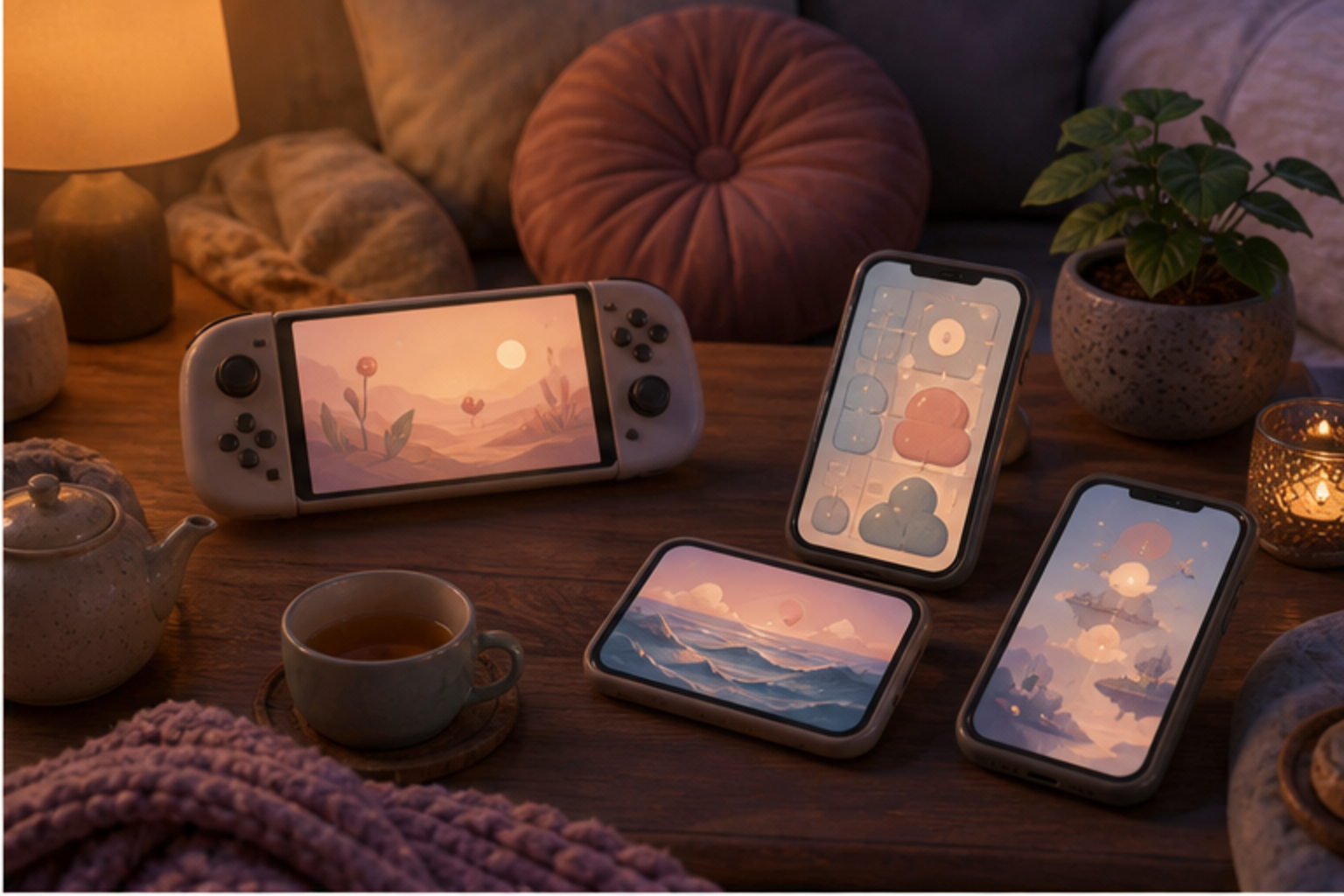
1. AIdorable: Best When You Want to Feel Needed
AIdorable is less about winning and more about returning to a tiny being that grows through care. You adopt an AI baby, check in, and build a relationship through short nurturing interactions.
That makes it a useful option when a full gaming session feels impossible. The loop is deliberately small: show up, offer care, receive a response, and leave with a completed moment. It belongs beside other apps where you take care of something, but its focus is emotional continuity rather than resource grinding.
AIdorable will not replace a friend or therapist. Its value is narrower and more practical: on a rough patch, caring for something gentle can interrupt the feeling that the whole day is shapeless.
2. Stardew Valley: Best for Rebuilding a Rhythm
Stardew Valley is a go-to recommendation because it gives you structure without demanding one correct path. You can plant crops, fish, organize a chest, visit a neighbor, or spend the day walking through town.
The calendar, seasons, and recurring residents create a dependable rhythm. Yet the game also lets you sleep early or ignore optimization. If min-maxing the farm makes you tense, play it as a tiny-life simulator instead of a productivity test.
Its nostalgic pixel art and soundtrack can feel grounding, especially for anyone who wants cozy games with clear routines. A day in Pelican Town is short enough to feel complete and open enough to meet you where you are.
3. Animal Crossing: Best for Soft Social Presence
Animal Crossing: New Horizons offers neighbors who notice you, a home you can shape, and an island that changes gently over time. There is no final boss waiting for you. Picking weeds or moving a lamp can be the whole achievement.
That light social layer matters. The villagers are not human friends, but their presence gives the world a lived-in feeling. Visiting another player can add connection when you want company without a demanding conversation.
The real-time clock may be soothing for some people and guilt-inducing for others. If daily tasks begin to feel like obligations, ignore them. A comfort game should not become another job.
4. Kind Words: Best for Low-Pressure Human Warmth
In Kind Words (lo fi chill beats to write to), players write anonymous requests and send supportive replies. The interaction is brief, moderated, and built around kindness rather than followers, likes, or debate.
For people living with depression, a sincere sentence from a stranger can provide a small sense of validation. Writing one back can also help you get a sense of participation without entering a voice chat or busy multiplayer space.
Because the messages come from real people, boundaries still matter. Share only what feels safe, and use qualified support for anything that needs more than a kind note.
5. Journey: Best for Quiet Connection
Journey pairs exploration with occasional, anonymous companionship. You cannot trade biographies or explain your mood. You communicate through movement and musical calls, then travel together for as long as your paths align.
That design can resonate when ordinary social interaction feels too demanding. Another player can help without asking you to be entertaining. The desert, ruins, flight, and score make the experience emotionally rich without filling every silence.
Journey is short, beautiful, and easy to revisit. It is a strong game to play when you want to feel accompanied but not observed.
6. Spiritfarer: Best for Grief and Gentle Release
Spiritfarer combines management, exploration, crafting, and caregiving with a story about helping spirits move on. You cook favorite meals, improve a boat, listen, and eventually say goodbye.
The game is compassionate, but it is not emotionally light. Its themes of death and grief have helped some players feel understood; on another night, the same scenes may be too much. Read content notes and trust your response.
If you want emotional games rather than simple distraction, Spiritfarer can offer language for love, loss, and the work of letting go. If you need uncomplicated comfort, save it for later.
7. Celeste: Best for Challenge, Anxiety, and Self-Acceptance
Celeste is an indie platformer about climbing a mountain while confronting anxiety, self-doubt, and the parts of yourself you would rather outrun. Its platforming is demanding, but instant restarts make failure quick rather than catastrophic.
The story does not pretend determination fixes every mental health symptom. Instead, it treats fear and self-criticism as experiences to understand. Assist Mode can adjust speed, stamina, or invincibility, so you can meet the narrative without proving anything.
Choose Celeste when focused challenge helps you cope. Skip it when repeated failure is likely to damage your self-esteem. Accessibility settings are not a sign of weakness; they are part of the game.
8. Skyrim or The Legend of Zelda: Best for Immersion
Sometimes you do not need a lesson. You need a world large enough to hold your attention.
The Elder Scrolls V: Skyrim lets you wander, gather ingredients, clear a cave, buy a home, or simply follow a road. The Legend of Zelda games offer a similar invitation through exploration, puzzles, discovery, and memorable music. They can captivate without forcing a particular emotional interpretation.
Open worlds are good when you want to immerse yourself and take your mind off a hard hour. They can also make time disappear. Decide on a natural stopping point—a quest, shrine, meal, or in-game sunset—before you begin.
9. Indie and Narrative Games: Best When You Want to Feel Understood
Games like GRIS, Night in the Woods, and What Remains of Edith Finch use art, music, and interaction to explore grief, stagnation, family, and loss. A narrative can make me feel recognized in a way that forced positivity cannot.
These are not always “feel-good” games. What Remains of Edith Finch includes death and upsetting family stories. Night in the Woods addresses mental health and disconnection. GRIS communicates grief through visual metaphor. Interactive fiction such as Depression Quest explores what limited choices can feel like during depression. Look up content warnings when you are vulnerable.
A carefully chosen sad story can create catharsis. Depressing games can also deepen rumination. A character does not need to overcome everything to resonate; seeing someone still feel pain while moving forward may be enough. You are allowed to stop midway and choose something gentler.
10. Familiar Favorites: Best When Choosing Is Too Much
The best game may be one you already know. A familiar save file removes tutorials, new rules, and the pressure to decide whether you are having fun correctly. If you play games mainly to relax, repetition can be a feature rather than a flaw.
That might be one of the platformers you loved as a child, a puzzle game, a building sandbox, or an old role-playing game whose soundtrack feels like home. Nostalgic play gives your brain fewer surprises. You know where the safe town is. You know what the next button does.
When I’m feeling overloaded, familiarity often matters more than novelty. Your own comfort title deserves a place on the list even if no critic would call it relaxing.
How to Choose the Right Kind of Game Tonight
Before opening a store page, check your energy and name the need as plainly as you can.
If you feel exhausted
Pick a game with simple controls and short loops. Try AIdorable, a gentle puzzle, decorating, or one in-game day of Stardew Valley. Avoid sprawling menus and optimization.
If you feel restless or trapped
Choose exploration: Skyrim, Zelda, Journey, or a walking game. Movement and discovery can redirect nervous energy without requiring a competitive win.
If you feel lonely
Try quiet co-op, Kind Words, Animal Crossing, or one of these games for loneliness. The goal is not maximum social interaction. It is enough presence to soften the room.
If you need emotional release
Consider Spiritfarer, GRIS, Celeste, or another story that approaches pain with care. Check themes first. Validation is useful; emotional flooding is not.
If nothing sounds fun
Do not force play. A depressed person can have fun, but depression can also reduce pleasure and motivation. That does not mean you chose the wrong game or failed at relaxing.
Try a smaller action: drink water, open a curtain, take medication as prescribed, sit near another person, or send a one-line message. If persistent sadness is affecting daily life, consider speaking with a qualified professional.
A Gentle Boundary: When a Game Is Not Helping
Gaming can help cope with a difficult evening, but pay attention to the aftertaste. Even intense games like Dark Souls help some players focus through clear rules and earned progress, while the same difficulty can flatten someone else. If you regularly finish more agitated, ashamed, isolated, or sleep-deprived, change the game, the session length, or the plan.
A simple stopping ritual can help:
- Save at a clear endpoint rather than after “one more” task.
- Put both feet on the floor and notice the room.
- Drink water or eat something easy.
- Ask whether you need rest, movement, a shower, or contact with someone safe.
- Choose one next action that takes under five minutes.
If sadness becomes unbearable, you have suicidal thoughts, or you may be in immediate danger, a game is not enough. Contact local emergency services or a crisis service where you live, and reach out to someone who can stay with you. You deserve real support, not just better distraction.
Conclusion: Let the Game Meet You Where You Are
There is no universal list of games for sad people because sadness does not ask the same thing of everyone. One person needs a farm. Another needs a mountain, a wordless traveler, a kind note, or a tiny companion waiting to be cared for.
Choose the smallest experience that feels kind rather than impressive. Play for ten minutes if ten minutes helps. Stop if it does not. The point is not to overcome every feeling through gaming; it is to create one softer place from which the next real-life step becomes possible.