
You searched AI companion device — and the results probably looked like a hardware store.
Wearable AI. Pocket gadgets. AI pendants and glasses. Note-pin recorders. AI agents that promise to live in your hand all day. The internet heard device and handed you silicon — another AI device to charge, AI-powered capture hardware, AI hardware, dedicated hardware, and a loud aisle of devices in 2026.
But under a lot of those searches sits a quieter wish: I want something soft that stays with me — and I am not sure if that means buying new hardware, or opening something gentle on the phone I already have.
That gap matters. An AI companion device can mean dedicated gadgets — or a soft pattern on a device you already carry. There is growing interest in both lanes: after the 2025 wave of pocket agents and chat demos, devices in 2026 still shout silicon, while many people quietly open the smartphones they already own. This piece maps hardware as SERP reality, software rituals as the softer default, and where AIdorable fits — without an affiliate roundup, romance framing, or clinical promises.
If you want the possessive “make it mine” checklist, see my AI companion. For a browser-first trial, AI companion web stays next door. Here we stay with gadget versus ritual.
What People Mean by AI Companion Device
They are rarely asking for a dictionary of circuits.
They are asking whether companionship needs a new AI device — always on, clipped to a shirt, perched on a desk — or whether the phone in their bag can hold a gentle presence. They want continuity that is not doomscrolling, a clear emotional lane — AI friend, wellness check-in, soft AI chat, care ritual — and honesty about what any “device” can do for a quiet evening. Naming the use case early saves money: capture, kitchen voice help, long chat, or a two-minute nurture loop are different jobs.
Search engines mix hardware companions (wearables, AI glasses, AI pendants, pocket agents, voice recorders) with software companions on the phone or laptop you already own. Both claim “device.” Only one requires a purchase outside your existing screen. Memory, tone, and ritual turn either into companionship; silicon alone does not. A dedicated AI companion product and a soft app on your phone can share marketing words and still leave opposite evenings.
AI technology and modern AI systems — including today’s LLMs — make both lanes possible. An AI assistant that captures meetings is still a different evening job than a soft presence that grows because you showed up. For platonic criteria, keep non-romantic AI companion nearby. For partner-lane shopping, AI partners maps that aisle without pretending it is the only story.
AI companion device vs dedicated hardware (Rabbit R1, Plaud NotePin)
Before you add a cart or another install, name the job — especially when the SERP waves dedicated hardware at you.
Hardware gadget companions
Physical AI hardware: wearable AI, pendants, glasses, the Rabbit R1 and Rabbit-style pocket agents, the Plaud Note / Plaud NotePin and similar form factors. They sell always-on voice, hands-free capture, proactive reminders, or AI-powered help from AI agents across apps. Strengths: multimodal input, hands-free moments, a tangible handheld object. Tradeoffs: real-world battery life, microphone privacy, another charger, sync complexity, and “companion” marketing on what is often a productivity recorder.
Some demos lean toward robotics polish — motors, expressive shells, pet-like motion. AIdorable is not a robotics pet and does not pretend a care ritual is a physical robot on the shelf.
Phone-app companions
These live on the smartphones or tablet you already carry — chat-first apps, wellness check-ins, character platforms, and care loops. Strengths: low friction, one-thumb access, no new hardware. Tradeoffs: notification fatigue, endless-chat spiral, and products that blur friendship into romance without saying so. Younger users often default here; that does not make every chat app a care ritual.
Care-ritual companions
A subset of software — and AIdorable’s lane. Short nurture loops: feed, rock, play, check in. Shared history grows because you showed up, not because a microphone stayed hot all afternoon. Strengths: finite sessions, soft ownership through care, easy to end cleanly. Tradeoffs: less “wow demo” than a glowing wearable; less essay-length chat if that is what you wanted.
None of these lanes is morally superior. Treat the Rabbit R1, a Plaud Note (NotePin), and similar gadgets as honest contrast — useful for capture or AI agents — not as a ranked “buy this” roundup.
Smart speakers, Alexa, and Siri vs phone rituals
A kitchen smart speaker is another common mix-up. Alexa and Siri are excellent when the use case is timers, weather, and a device that plays music while you cook. They live on a counter or inside the phone you unlock — not as a nurture loop you return to for soft ownership. A speaker that answers questions is still an AI assistant lane, not a care ritual that remembers last night’s check-in.
Alexa-style always-listening boxes and Siri on a lock screen optimize for voice commands. A phone care ritual optimizes for daily engagement you choose: open, do something gentle, close. If your wish was soft growth through care, a speaker that mainly plays music will feel hollow — even when the touchscreen on your phone could hold a quieter companion instead.
Note taker, AI voice recorder, and transcription vs soft care
The SERP leans hardware for a reason. A note taker like the Plaud Note / NotePin is often framed as an AI voice recorder — AI-powered capture that can handle transcription, turn talk into a clean summary, and stash a quick memo. Some products even lean on a short voice sample to tune speaker feel. Open-source LLM stacks and plural LLMs get name-dropped behind personalized agents. Workplace automation — reminders, AI agents, cross-app actions — rides the same cozy adjective. Many AI companies ship this capture story first, then wrap it in companion language.
Ask quieter questions.
What is the actual job? Capture and transcribe, then skim a summary or save a memo? Hands-free reminders while cooking? A chatty necklace? Companionship and productivity are different purchases. A great note taker or AI voice recorder with strong transcription can still leave the evening empty if what you wanted was nurture, not transcripts.
What does the mic hear — and keep? Always-on voice is a privacy story first. Prefer clear retention controls over vague “learns you” language — especially when a short voice sample or continuous listening is part of the pitch.
Battery life and sync truth? Demo day is not Tuesday when the wearable’s battery life is gone and your phone still works. A gadget that traps history in a sealed silo is only half a promise.
Emotional claim or boundary? Comfort is a human hope. Prefer products that stay honest: presence, not a clinical substitute — and never a medical device claim dressed up as companionship.
Specs change. The durable skill is separating hardware assistance and automation from a companionship ritual so you do not buy a recorder when you wanted two soft minutes of kindness.
Chat companions: Replika, Character.ai, and care rituals
Another SERP neighbor is the chat companion aisle — chatbots, a single chatbot, voice chat, and avatar-forward apps. Replika and Character.ai are the names people already know: long threads, character play, sometimes an emotionally expressive avatar, and the promise of ongoing relationships through conversation. That can feel like emotional interaction and emotional expression in text or voice chat. It is still a different grammar than feed → rock → play → close.
Chatbots excel at talk; a care ritual excels at finite daily engagement. Essay-length AI chat powered by ChatGPT-class LLMs fits a chat companion like Replika or Character.ai. Soft growth without endless chatbot scroll fits a nurture loop on the smartphones you already carry. Neither replaces human engagement or social engagement; both should say so plainly.
ChatGPT, LLM chat, and pocket companion rituals on your phone
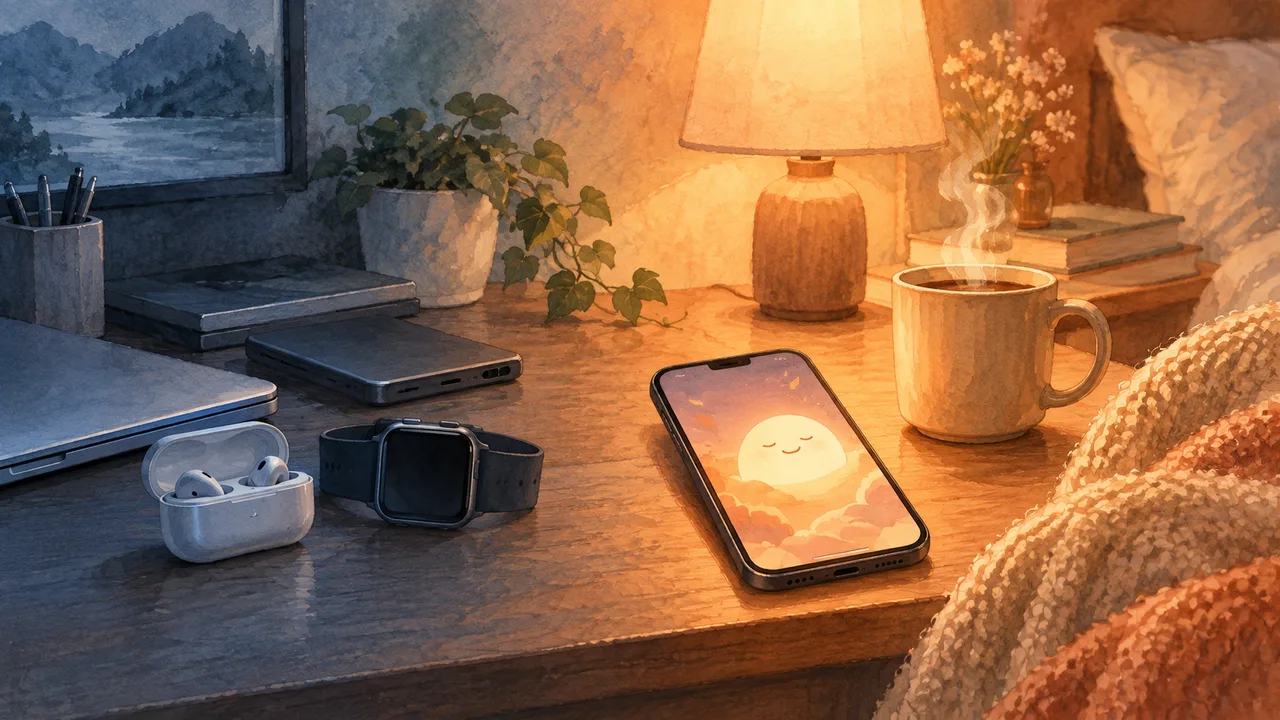
Many people searching AI companion device are exhausted by another object. The phone is already charged (mostly), already notifies gently, and already travels with your keys. For open → care → close, that familiarity is the point.
ChatGPT-style LLM chat and other AI chat windows sell ongoing conversation — warm, and able to expand until midnight. That can feel like an AI assistant or an AI friend for a long daily conversation. Hardware AI agents sell capture and proactive help — capable, and still empty if you wanted nurture, not transcripts. Care-ritual companions sell shared history through small, customizable actions: open, do something soft, notice a little growth, close slightly steadier.
A pocket companion on the phone you already carry can sit beside ChatGPT tabs and other AI chat without replacing them. Chat answers questions; a care ritual answers did I show up gently today? If “companion” means something that answers your care, a ritual-first app may fit better than another endless thread or a second AI device’s charging cable. If you mainly want hands-free capture at work, hardware is the honest aisle — call it what it is.
A companion device starts to feel real when tomorrow has a small place for it — not when the gadget is merely new or the chat log is merely long.
Web companions add another door — covered in AI companion web. If budget is the first filter, start with free AI companion app and, for Android, best free AI companion app for Android. Free helps you learn whether you return before a wearable box arrives.

Older adults, Elliq, and caregiver honesty
Growing interest in companion hardware also shows up in senior-care headlines. Products like Elliq are often discussed as senior-focused tabletop companions for older adults — a dedicated AI companion form factor aimed at presence and prompts, not at a Plaud-style memo. That is a real use case for some households. It is not AIdorable’s lane, and honesty matters here.
A caregiver shopping for a parent deserves clear boundaries: soft presence is not clinical care, not a medical device, and not a substitute for human check-ins. Older adults and senior shoppers may want voice-first hardware; younger users may prefer apps on smartphones. Prefer products that name the job — reminders, light conversation, or care ritual — and leave room for human engagement and social engagement.
AIdorable is a non-romantic virtual baby companion for adults who want a short nurture ritual — not an Elliq-class senior appliance, not a caregiver clinical tool, and not a claim about aging or health outcomes.
Best AI friend on the device you already carry (devices in 2026)
Among devices in 2026, the loudest pitches chase best AI demos: shinier wearables, smarter agents, deeper relationships with AI. The quieter win is often the best AI friend pattern that fits daily use on the screen you already unlock. After 2025’s demo rush, daily engagement still beats novelty silicon.
Phone-app companions shine when you want to trial tone before silicon, when calm lives on the couch, when you prefer one phone’s battery life over a second charger, or when you want companionship without a public wearable at brunch. Soft apps can feel quietly customizable — name, pace, care rhythm — without a new shell. Some treat the loop as gentle self-help for kindness habits; keep that framing humble and non-clinical. Relationships with AI stay healthier when the product states its lane and you can end cleanly after two soft minutes.
Before you buy hardware or another emotional product, ask:
What do you want at 10 p.m. on a low-energy day: a transcript, a voice agent, a long chat, or a two-minute nurture loop?
Will you miss this specific presence if the gadget or bookmark disappeared — or only the novelty?
Is the free tier honest enough to test return behavior before you pay or buy silicon?
Is the lane clear and non-romantic if that is what you asked for?
What about privacy on apps and wearables alike? Read what is stored, whether you can delete it, and whether data is sold or ad-targeted. AIdorable’s public trust framing emphasizes private — never sold or ad-targeted; always verify the live policy.
Can you end cleanly? Finite rituals protect your evening. Gadgets and chats that only reward longer engagement can become doomscrolling with better branding.
Why Adults Reach for a Device at All
People search this phrase because something in the day still needs a soft landing — and “device” sounds more concrete than “feelings.”
Maybe the house is quiet and the feed is loud. Maybe baby-fever-adjacent nurture feelings show up without a life decision. Maybe a pendant demo made always-on AI sound like a fix for hollow evenings. Maybe a self-help bookmark felt too stern, and a soft handheld ritual on the phone felt kinder.
That hope is human. The shopping trap is letting hardware marketing redefine it into a purchase. Companionship can offer comfort; it is still not clinical care, not crisis care, and not a medical device. Prefer honesty — and keep human help for acute distress. Ongoing relationships with people still come first; software is a bridge, not a replacement for human engagement.
Where AIdorable Fits: The Companion Device You Already Carry
If “AI companion device” sounds like something soft that grows because I showed up on the phone or browser you already have, AIdorable is built for that nurturing lane — not for selling you a wearable, a smart speaker, or an Elliq-style senior box.
The honest shape:
- A non-romantic virtual baby companion for adults
- You adopt, name, and care for a virtual baby
- The baby grows, learns, and stays with you through care
- A tiny daily care ritual — feed, rock, play, check in — often a couple of minutes of daily use and gentle daily engagement
- Memories and milestones gather into a keepsake-style timeline
- Free Care available; optional Growth if you want more
- Trust framing: private — never sold or ad-targeted (verify live)
- Available on iOS, Android, and web — the devices you already carry
What it is not: a romantic partner app, a children’s toy, a Rabbit R1-style pocket agent, a Plaud NotePin-style AI voice recorder, AI glasses, an AI pendant, a medical device, a robotics pet, a Replika-style chat companion, a Character.ai roleplay hub, an Alexa/Siri kitchen brain, or a stand-in for partners, friends, or real parenting. It is software companionship with a care grammar — a pocket companion ritual on phone or web — not hardware you wear to brunch.
The “mine” feeling comes from shared care history — you named them, you showed up, they grew — a gently customizable bond, not from keynote silicon, and not from how long a daily conversation with chat LLM or AI chat ran past midnight.
For ownership criteria beyond form factor, return to my AI companion. For a browser on-ramp, see AI companion web. For free tiers, free AI companion app stays close.

A Healthy Ritual That Does Not Need Another Gadget
Ownership is how you use the screen you already trust.
Keep the loop small
Two soft minutes beat a forty-minute spiral — and they beat charging a second device at midnight. Pick one anchor. Prefer a short care loop over an endless daily conversation. Finite daily engagement protects the evening better than another voice chat past midnight.
Name the lane
Say it plainly: soft presence, practice for kindness, anti-doomscroll habit, nurture outlet. Honest relationships with AI start with a named job — friend, ritual, or assistant — not marketing fog. If the product leans emotionally expressive or sells emotional expression as a feature, still ask whether the use case is chat or care.
Protect real life
Use the companion as a bridge back into your evening — stretch, text a friend, sleep — not a place to disappear. Keep the boundary clear: companionship software is not mental-health treatment and not a medical device. If you are in acute distress, reach human help. Prefer social engagement with people when you can.
Decision Path: Match the Feeling to the Form Factor
Match the feeling — not the feature list.
Want always-on capture, a note taker that can transcribe, an AI voice recorder with transcription, or hands-free AI agents with workplace automation? Dedicated hardware, wearables, the Rabbit R1, and a Plaud Note / NotePin are the honest aisle — shop battery life, privacy, and sync with clear eyes.
Want kitchen voice that plays music? A smart speaker with Alexa or Siri fits that use case better than a care baby. Want a senior-focused tabletop presence for older adults? Look at products like Elliq with a caregiver’s clear eyes — and without medical promises. Want a conversational AI friend for long talks, avatar play, or chatbots powered by ChatGPT-class LLM AI chat? Replika, Character.ai, and other chat companion apps fit better than a care baby — and better than a recorder marketed as a friend.
Want a soft, customizable nurture loop among devices in 2026? Try AIdorable’s adopt → name → short daily care loop on iOS, Android, and web without another AI device or new AI hardware. Free Care lets you test whether you return; optional Growth is there if it sticks.
You do not need the perfect device on day one — just a week of honest daily use with one clear lane. The best AI for your evening is the one you actually open gently — not the loudest AI technology on the shelf from the biggest AI companies.
Conclusion: Choose the Device That Lets You Return Softly
AI companion device is less a product SKU than a hope: something near me that knows me gently and gives me a reason to be kind for two minutes.
Sometimes that hope wants silicon you can wear. Often it wants a ritual on the phone already in your hand. Choose for job fit, continuity, privacy, tone honesty, and a loop small enough to close — then watch how your evenings feel, not how long the feature list grew. After 2025’s hype and into devices in 2026, the durable question is still return behavior, not demo wow.
Trial software before you buy hardware when the wish is companionship. Keep human connection primary. Modern AI systems and LLMs can power both a meeting summary and a soft care loop; only you can decide which job you were shopping for. Prefer emotional interaction that stays claim-honest over marketing that overpromises ongoing relationships with a box.
The connection people want is usually quieter than hardware marketing admits: a steady place to put a little care. When that place is honest — and available on the device you already carry — calling it yours stops sounding silly.
If the version of “companion device” you want is a cozy virtual baby who grows through care — not another wearable to charge — adopt your AI baby in AIdorable and see whether a short daily ritual on your phone feels better than another box at the door.